
"A Diverse Portrait of Saudi Arabia's Beauty"
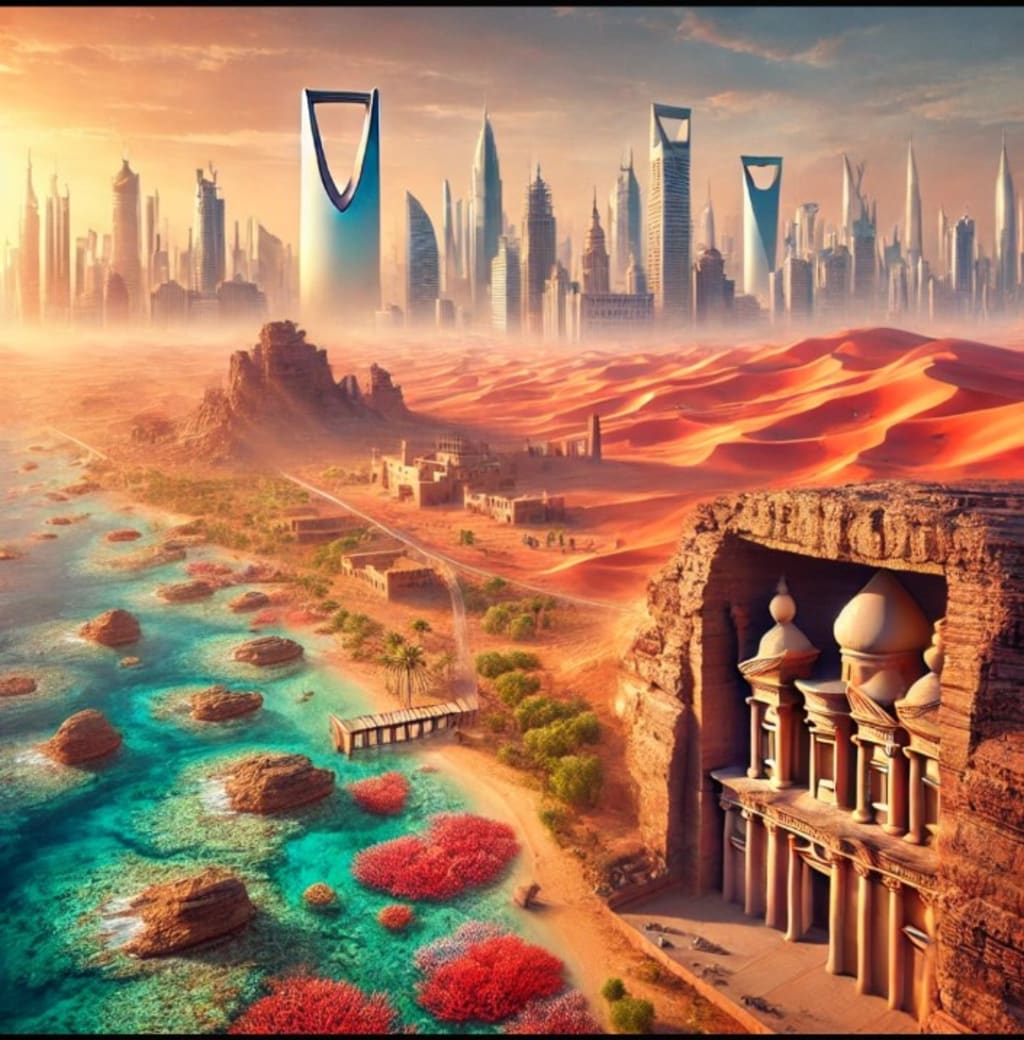
This digital artwork beautifully encapsulates the essence of Saudi Arabia's unique landscapes and landmarks. The foreground showcases the vibrant coral reefs of the Red Sea, transitioning into the endless golden dunes of the Rub' al Khali desert. The middle ground highlights the historic AlUla rock formations and ancient Nabatean tombs, while the futuristic Riyadh skyline, including the iconic Kingdom Tower, rises in the background. Warm sunlight bathes the scene, symbolizing the harmony between the country's rich history and its modern ambitions.

Saudi Arabia: A Land of Rich Heritage and Modern Ambitions
Saudi Arabia, officially known as the Kingdom of Saudi Arabia (KSA), is a country located on the Arabian Peninsula. Known for its vast deserts, historical significance, and as the cradle of Islam, Saudi Arabia is a blend of ancient traditions and rapid modernization.
Geography and Landscape
Saudi Arabia is the largest country in the Middle East, covering approximately 2.15 million square kilometers. It is bordered by Jordan, Iraq, Kuwait, Qatar, Bahrain, the UAE, Oman, and Yemen. The country also boasts coastlines along the Red Sea and the Arabian Gulf, which have been crucial for trade and tourism.
Key geographic features include:
Rub' al Khali (Empty Quarter): The largest continuous sand desert in the world.
Hijaz and Asir Mountains: Providing a contrasting landscape to the arid deserts.
Red Sea Coral Reefs: Home to diverse marine life, making it a hotspot for divers.
Historical and Cultural Heritage
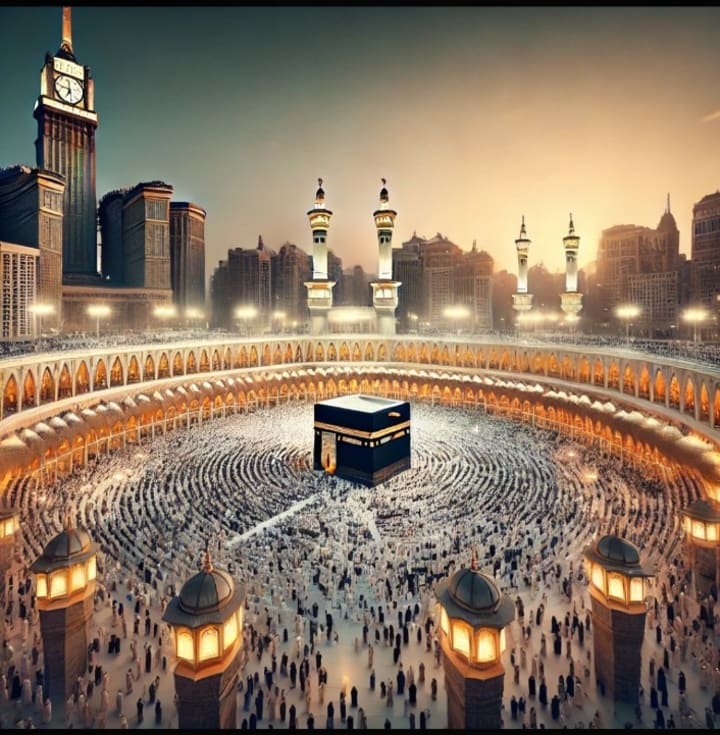
Saudi Arabia is home to two of the holiest cities in Islam: Mecca and Medina. These cities attract millions of Muslims annually for the Hajj pilgrimage, one of Islam's Five Pillars.
The country also has a rich pre-Islamic history. Sites like AlUla, home to the ancient Nabatean city of Hegra (Madain Saleh), reflect the architectural and cultural brilliance of past civilizations.
Saudi traditions are deeply rooted in Bedouin culture, with practices like hospitality, poetry recitation, and camel herding still celebrated today.
Economy: From Oil to Vision 2030
Saudi Arabia has one of the largest economies in the Middle East, largely driven by its vast oil reserves. The discovery of oil in 1938 transformed the country into a global energy powerhouse, with the oil sector contributing a significant share of its GDP.
However, recognizing the need to diversify its economy, the government launched Vision 2030, a strategic framework aimed at reducing dependence on oil and developing sectors like tourism, entertainment, technology, and renewable energy. Notable initiatives include:
Saudi Arabia's Role in Global Affairs
Saudi Arabia is a major player on the global stage, particularly in the energy sector. As the world's largest oil exporter and a leading member of the Organization of the Petroleum Exporting Countries (OPEC), it influences global oil markets and energy policies. Additionally, the country has hosted major international summits such as the G20, highlighting its growing diplomatic and economic significance.
Cultural Heritage
Saudi Arabia is rich in intangible cultural heritage, including traditional music, dance, and cuisine.
Al-Ardah: A traditional Saudi sword dance performed during national celebrations.
Cuisine: Dishes like kabsa (a spiced rice and meat dish), and traditional beverages like qahwa (Arabic coffee), reflect the culinary diversity of the kingdom.
Traditional Markets: Souks like the Al-Balad market in Jeddah offer a glimpse into the country's trading history.
Technological and Educational Advancements
Saudi Arabia is investing heavily in technology and education as part of its Vision 2030 goals.
Technological Hubs: Neom, the futuristic smart city, symbolizes the country's aspirations to become a leader in artificial intelligence and green technologies.
Educational Reforms: Programs to enhance education, particularly in science, technology, engineering, and mathematics (STEM), aim to empower the younger population.
Religious and Spiritual Significance
Beyond Hajj, the kingdom is also focusing on promoting Islamic heritage tourism. Sites like Diriyah, the birthplace of the Saudi state, are being restored to educate visitors about the origins of the kingdom and its Islamic history.
Wildlife and Conservation Efforts
Saudi Arabia is home to unique wildlife such as the Arabian oryx and gazelle. Conservation projects aim to protect these species and restore ecosystems in protected areas like the Asir National Park. Efforts are also underway to combat desertification and promote sustainable water use.
Vision 2030 and Economic Reforms
Under Vision 2030, Saudi Arabia is reducing its dependence on oil by investing in sectors like:
Tourism: AlUla, the Red Sea Project, and Diriyah Gate Development.
Entertainment: The Saudi Seasons initiative, hosting concerts, sports events, and festivals.
Renewable Energy: Solar and wind projects, like Sakaka PV and Dumat Al-Jandal Wind Farm.
Including these aspects will provide readers with a comprehensive view of Saudi Arabia's history, culture, economy, and future aspirations. Let me know if you'd like to expand on any specific section!
Neom: A $500 billion futuristic smart city.
Red Sea Project: A luxury sustainable tourism destination.
Renewable Energy Projects: Investments in solar and wind energy.
Tourism and Modernization
Under Vision 2030, Saudi Arabia has opened its doors to international tourists with the introduction of e-visas. The country offers a range of attractions:
Religious Tourism: Mecca and Medina for Hajj and Umrah pilgrims.
Cultural Sites: AlUla, Diriyah, and Jeddah’s historic Al-Balad district.
Natural Wonders: The Red Sea for diving, and the Edge of the World, a dramatic escarpment near Riyadh.
Modernization efforts have also led to reforms in areas like women's rights, allowing women to drive and work in various fields. Entertainment options have expanded with concerts, sports events, and the opening of cinemas.
Challenges and Opportunities
Saudi Arabia faces challenges, including:
Balancing modernization with cultural and religious traditions.
Environmental concerns like desertification and water scarcity.
Economic diversification amidst fluctuating oil prices.
However, its ambitious projects, strategic location, and young, tech-savvy population position it as a rising global leader.
Conclusion
Saudi Arabia is a country of contrasts—where ancient traditions meet futuristic ambitions. With its rich heritage, pivotal role in Islam, and transformative vision for the future, Saudi Arabia continues to be a significant player on the global stage. It invites the world to witness its past, present, and bold strides into tomorrow.
About the Creator
Say the truth
"Say the Truth: Explain Everything in the World" is your trusted source for uncovering facts and exploring the wonders of history, science, technology, and beyond. We simplify complex ideas and reveal truths to inspire curiosity .
Keep reading
More stories from Say the truth and writers in Earth and other communities.
Mahlab Spice - A Timeless Treasure in Culinary Arts
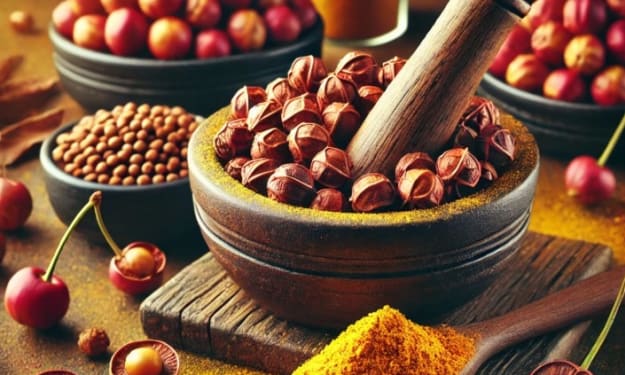
The Essence of Mahlab: History, Comestible Uses, and Significance Mahlab, additionally accepted as mahleb or mahlepi, is a ambrosial balm acquired from the seeds of the St. Lucie blooming timberline (Prunus mahaleb). Accepted for its aerial balm and different flavor, mahlab has a affluent history and plays a axial role in Middle Eastern, Mediterranean, and Greek cuisines. Its versatility makes it a admired additive in both acceptable and avant-garde recipes.
By Say the truth about a year ago in Earth
Without Democracy, Donald Trump’s Venezuelan Oil Quest Will Fail
Donald Trump’s renewed interest in Venezuelan oil may seem, on the surface, like a hard-nosed geopolitical calculation. Venezuela holds the world’s largest proven oil reserves, and amid global energy uncertainty, access to those resources is undeniably tempting. But history, economics, and politics all point to the same conclusion: without democratic reform in Venezuela, any attempt by a Trump-led US administration to secure reliable Venezuelan oil will ultimately fail.
By Aarif Lashari4 days ago in Earth
So You Decided To Become a Nurse Practitioner:
So you decided to become an "Advanced Practice" nurse. Congratulations!... is what I would say if this was a good idea. Grad school? In this economy? What were you thinking? Likely it was something along the lines of either 1) “I've seen these other chucklefucks do it— Why can't I?” or even 2) “I've got a nice career, I should shake it up. I miss feeling like I have no clue what I'm doing.”
By Sandor Szaboa day ago in Fiction



Comments
There are no comments for this story
Be the first to respond and start the conversation.