
A Comprehensive Guide to Buckwheat Farming in India
Buckwheat Farming: Key Insights
Buckwheat is an extremely versatile crop with high nutritional benefits and is easy to grow. It is commonly applied to make buckwheat flour, which is free from gluten and very nutritious. However, growing buckwheat on your farm would require that you know all about the processes involved, from the preparation of the soil right to harvesting. Therefore, this guide will take you through the entire process as well as insight into the successful growing and harvesting of the crop.
Process to Grow Buckwheat:
In the following section, various processes related to buckwheat farming are given. These processes are very important for the proper growth of this crop. Hence, read them carefully.
About Buckwheat
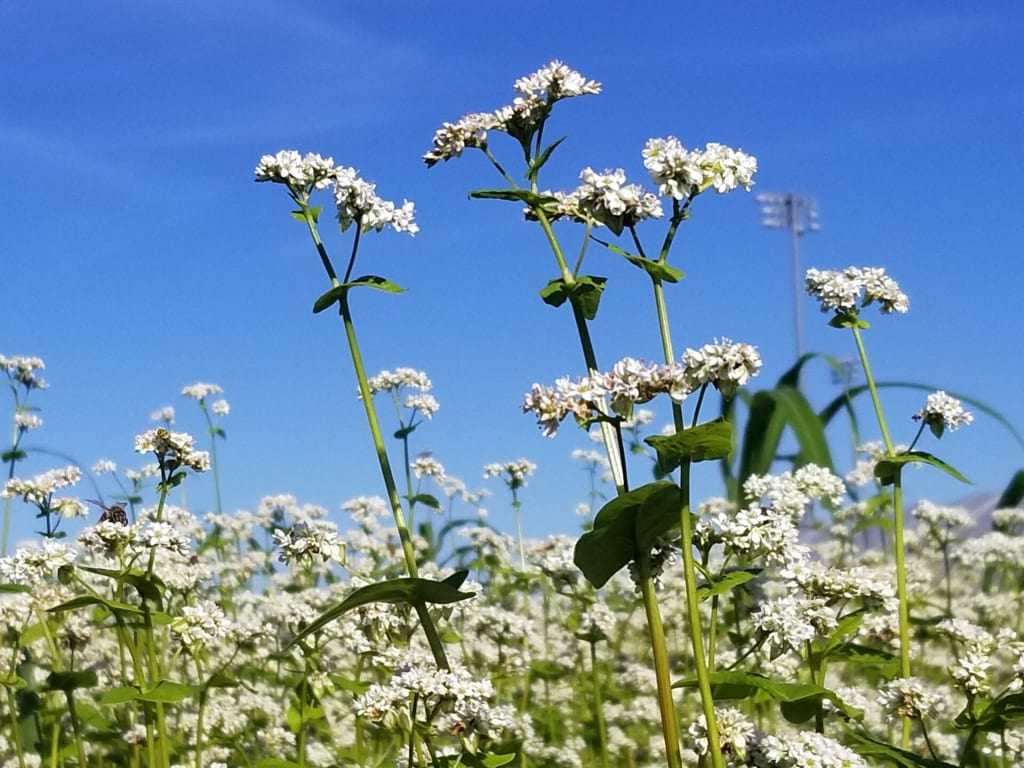
Buckwheat is a hardy crop that is fast to grow, has high suitability on diverse soil types, is ideal for cool climatic regions, and is easy to manage; thus, it is preferred by most farmers. The crop requires no other input for maturity and ready availability after 10 to 12 weeks, providing easy returns for farmers. Its nutritional value, with both fibre and protein content coupled with the essential nutrients needed, makes the crop more than valuable to be integrated into any diet.
Land Preparation
Soil preparation is the first and most important step in growing buckwheat. Buckwheat grows best in well-drained, fertile soil with a pH level between 6 and 7. It’s advisable to test the soil before planting to check for pH and nutrient levels. If the soil is too acidic, you can amend it by adding lime. If nutrients are lacking, applying organic matter or fertilizers can help.
Prepare the soil by clearing any weeds, rocks, or debris from the land. Your buckwheat plants, therefore, will not face competition for necessary resources from weeds and other unwanted stuff. A Sonalika Tractor can be used for this work. It is a strong and efficient tractor which can be used for both ploughing, tilling, and harrowing. Due to its superior lifting capacity, it allows easy tilling of enormous areas so that soil under it gets well prepared for sowing.
After ploughing, use a disc harrow to break up clumps of soil and create a smooth seedbed. The seed will have good contact with the soil, ensuring a better germination rate and healthy growth.
Plantation Process
Buckwheat is usually sown in the spring or early summer season when temperatures are warm but not hot. The seeds should be planted at a depth of 1 to 2 inches, and the rows about 8 to 10 inches apart. In large areas, you can use a seed drill to plant the seeds much more easily.
Since buckwheat is a fast-growing crop, it takes about 10 to 12 weeks to mature, depending on environmental conditions. It requires minimal care during the growing season. However, it is important to ensure that the plants receive adequate water, particularly during dry spells. On the other hand, buckwheat prefers well-drained soil, so it is essential not to overwater.
Maintenance Stage
Buckwheat hardly requires care after planting. Since it's so dense in growth, it automatically suppresses weeds and is very low in maintenance unless necessary, where light herbicides can be applied or mulched to contain weeds.
Buckwheat is not much of a feeder crop, so it does not need too much fertilizers. However, if your soil lacks nutrients, fertilizing with a balanced fertilizer during the growing season may improve plant development. Do not over-fertilize because excessive fertilization will also be bad for the crop.
Harvesting Time
The timing of when to harvest buckwheat is crucial. The grains are ready to be taken when they turn dark brown, and the plants start getting yellowish. If harvested prematurely, the seeds will appear underdeveloped, but if the crop is held for too long, they will fall off the plants, which will lead to a loss in yield.
The most efficient method for collecting buckwheat is done by a combine harvester, which cuts the plants and separates the seeds from their husks, collecting the grain. For smaller farms or in fields with uneven land areas, a tractor-pulled reaper can be used to cut the plants. They then thresh the seeds by hand or with a mechanical thresher.
After harvesting, post-harvest handling is very essential to maintain the quality of the seeds. Here comes the sonalika tractor at its best, as it helps transport the harvested crop, move heavy loads, or operate threshing equipment efficiently. Thus, this reduces labour costs and eases post-harvest operations.
Post-Harvesting Stage
After harvesting, the buckwheat seeds are dried to further decrease moisture content. This is done to avoid mold and spoilage. The seeds can be dried in an open space or in mechanical dryers to speed up the drying process.
Once the seeds have dried to a moisture content of about 14% or less, they should be kept in a cool, dry place. Buckwheat seeds are not very long-lived, so it is important to store them well to preserve their quality. Sealed containers are good for keeping pests from reaching the stored grain and keeping the seeds fresh.
You should use a powerful tractor like a Sonalika Tractor, Mahindra 575 DI Tractor or New Holland 3630 Tractor for post-harvest activities. It can be used for transporting dried seeds to storage facilities, making it an essential piece of equipment to manage the entire post-harvest phase. Furthermore, the Sonalika Tractor price comes in a competitive range so you can buy it.
The Final Words:
Buckwheat farming is an excellent opportunity for farmers who wish to cultivate nutritious, easy-to-grow crops. Since the growing season is relatively short and with little care, buckwheat can be a good asset to your farming portfolio by providing a healthy crop which can be used in many different culinary applications. The investment in quality equipment like Sonalika tractors will ultimately make your farming journey smoother and more productive.
About the Creator
Mahira Kaur
Hello! I'm Mahira and I have a deep passion for agriculture & farming. My interest lies in exploring innovative agricultural techniques and sustainable farming practices that can enhance productivity and ensure environmental stewardship.
Keep reading
More stories from Mahira Kaur and writers in Earth and other communities.
Best Practices for Planting and Harvesting Different Crops
Cultivating and planting both have their advantages and downsides. Utilizing proper planting and collecting techniques is significant to accomplishing exceptional returns. In this article, we'll talk about the methods you'll need to cultivate your crops effectively.
By Mahira Kaur2 years ago in Earth
Could AI Trigger World War III?
Could AI Trigger World War III? Artificial Intelligence is changing how wars are planned, predicted, and possibly started. Unlike past technologies, AI does not only build weapons—it makes decisions. This is why many experts now ask a frightening question: could AI trigger World War III? The danger does not come from evil machines, but from how humans are using speed, automation, and data in a world full of mistrust.
By Wings of Time 3 days ago in Earth
Bartender
On the heels of grief, pain bears down hard. On the heels of death, pain awakens the quiet place between the end of our own life and now. Feeling anything is like seeing a film and in black and white, slow motion, all sound turned off. Just watching. Gritting teeth, awkward smiles and bloody red eyes move around, scanning the others who are feeling something I don't want to feel, but I do. Escapism is all I have ever known. ~
By ROCK aka Andrea Polla (Simmons)2 days ago in Poets




Comments
There are no comments for this story
Be the first to respond and start the conversation.