
5 Reasons Why Climate Is Changing Drastically
Facts Explained
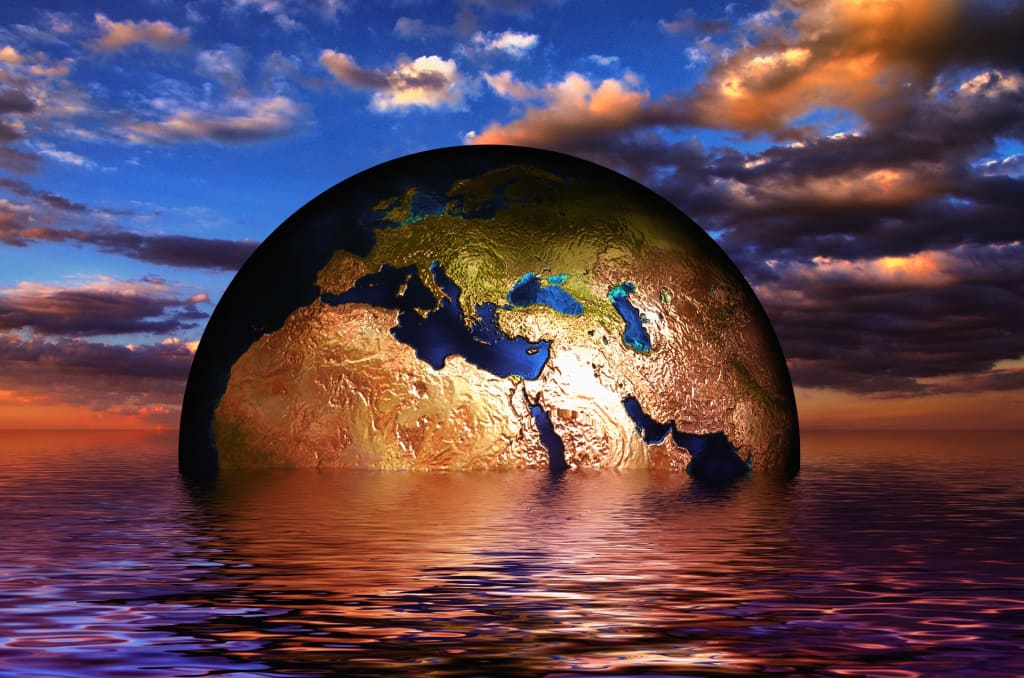
Contrary to what you might believe, the science behind climate change is more established and widely accepted. The breadth of the subject and the prevalence of misinformation, however, can make it challenging to distinguish between reality and fiction. Here, we've done our best to provide you with the most up-to-date scientific data as well as an explanation of how we came to that conclusion.
1. How can we be sure that climate change is a real phenomenon?
The idea that climate change is predicted by sophisticated computer models is frequently used. However, there is a far broader scientific foundation for climate change than only models, despite the fact that they are fairly accurate. The fundamental physics underlying why greenhouse gases like carbon dioxide generate warming have been known to scientists for more than a century. By capturing part of the planet's heat before it escapes into space, these gases, which make up a tiny portion of the atmosphere, have a significant impact on the temperature of Earth. Because of the greenhouse effect, a planet that far from the sun possesses liquid water and life.
However, during the Industrial Revolution, people began using coal and other fossil fuels to run smelters, steam engines, and factories, which increased the amount of greenhouse gases in the atmosphere. Since then, the globe has been getting warmer due to human activity. There is a substantial amount of evidence that confirms this, starting with temperature readings made at weather stations and aboard ships beginning in the middle of the nineteenth century. Later, scientists started using satellites to monitor surface temperatures and started investigating the geologic past for signs of climate change. These information taken as a whole show that the Earth is becoming hotter.
Since 1880, average worldwide temperatures have risen by 2.2°F (1.2°C), with the late 20th century seeing the largest fluctuations. Land areas have warmed more than the ocean's surface, and the Arctic has warmed the most—by more than 4 degrees Fahrenheit—just since the 1960s. The range of temperatures has also changed. Daily record highs have now surpassed record lows in the US. In recent geologic history, there has never been a warming like this. The hockey-stick graph, which was first presented in 1998, is a well-known image that depicts how temperatures first remained relatively flat for centuries before abruptly going higher. It is based on information from ice cores, tree rings, and other organic markers. The general picture also indicates that Earth is currently hotter than it has been in at least 1,000 years, and possibly much longer. This basic image has weathered decades of investigation from both climate experts and detractors.
Because 90% of the heat captured by greenhouse gases has been absorbed by the ocean, surface temperatures actually conceal the true extent of climate change. Every layer of the ocean is warming, according to measurements taken over the last 60 years by networks of floating sensors and oceanographic expeditions. One study found that the ocean absorbed the same amount of heat between 1997 and 2015 as it had in the previous 130 years. Due to the widespread manifestation of its impacts, we also understand that climate change is occurring. In contrast to rising sea levels, ice sheets and glaciers are thinning. Sea ice in the Arctic is thinning off. Snow melts more quickly and plants begin to bloom in the spring. For colder weather, animals are travelling to higher altitudes and latitudes. Additionally, extreme cases of drought, flooding, and wildfires have all occurred. Many of these changes were anticipated by models, but observations reveal that they are finally materialising.
2. How much scientific consensus exists regarding climate change?
It cannot be denied that scientists enjoy a good, old-fashioned debate. However, there is essentially no disagreement regarding climate change: Numerous studies have revealed that more than 90% of climate scientists concur that people are the primary cause of the planet's warming. From NASA to the World Meteorological Organisation, the majority of important scientific organisations support this viewpoint. Given the sceptic, rivalry-filled nature of the scientific enterprise, where issues like what wiped out the dinosaurs are still hotly discussed, that is an incredible amount of agreement.
In the late 1980s, when the influence of warming induced by human activity began to outweigh natural climatic fluctuation, scientific consensus on climate change began to develop. An early consensus study conducted in 1991 found that two-thirds of earth and atmospheric scientists agreed that human activity was causing global warming. And in 1995, the Intergovernmental Panel on Climate Change—a notoriously conservative organisation that annually assesses the level of scientific understanding—came to the conclusion that "the balance of evidence suggests that there is a discernible human influence on global climate." The majority of climate scientists who publish their findings today (more than 97 percent) and the majority of Americans (almost 60 percent) concur that climate change exists and has a cause.
Where do we get the notion that there is still disagreement over climate change, then? A large portion of it was the result of concerted message campaigns by businesses and politicians opposed to climate action. Despite being false, many people promoted the idea that scientists were still undecided on the effects of climate change. Republican consultant Frank Luntz provided a controversial 2002 email to conservative politicians outlining his justification: "Should the public come to believe that the scientific issues are settled, their views about global warming will change accordingly," he said. Today, there is still a lot of discussion over whether or not consensus exists, and the 97 percent statistic has taken on a life of its own.
Some have used initiatives such as the Global Warming Petition Project, which encouraged the US government to oppose the Kyoto Protocol of 1997, an early international climate deal, to support the fallacy of persisting scientific doubt. According to the petition, even if climate change were to occur, it wouldn't be harmful to people. It has been endorsed since 1998 by more than 30,000 scientists. Only 39 climatologists were among the signatories, and approximately 90% of them were engaged in studies unrelated to Earth, atmospheric, or environmental science. Most of them had degrees in fields other than physics, such as engineering, medicine, and other professions.
The scientific consensus is nonetheless contested by a few well-known researchers. Some have connections to the fossil fuel sector, such as Willie Soon, a researcher with the Harvard-Smithsonian Centre for Astrophysics. Others disagree, but the weight of the evidence has not supported their claims. At least one well-known denier, physicist Richard Muller, had his opinion overturned after the Berkeley Earth project's reevaluation of historical temperature data. He was left fully convinced that human activity was warming the world as a result of his team's research, which essentially corroborated the conclusions he had set out to study. He stated, "Call me a converted sceptic," in a 2012 Op-Ed for the Times. The Republican pollster Mr. Luntz has likewise changed his mind about climate change, and he now counsels lawmakers on how to spur climate action.
Last but not least, denialists frequently cite ambiguity as proof that the science of global warming isn't conclusive. But in science, doubt doesn't signify ignorance. Instead, it's a gauge of how well-known something is. Scientists have identified a variety of potential future changes in temperature, precipitation, and other crucial variables related to climate change, which will primarily depend on how quickly we reduce emissions. However, they remain confident that human activity is to blame for climate change and that it is occurring.
3. Is the period of climatic data we have available only 150 years? What about centuries of change does that teach us?
The weather on Earth is always changing. There are hot years and cold years, more hurricanes in some years than others, and long droughts in the distant past. Throughout many millennia, glacial cycles take place. Why then do scientists believe that people are warming the world based on data that has only been gathered over a very short period of time? The information provided by our instrumental temperature data, while helpful, does not provide all of the information we need.
The first regular temperature measurements at weather stations and on ships as they travelled the world's oceans started in the 1880s (and frequently far earlier). These numbers demonstrate a definite warming trend over the 20th century.
Some have questioned whether these records could be distorted by factors including the fact that a disproportionate number of weather stations are located close to cities, which frequently experience higher temperatures than nearby areas due to the so-called urban heat island effect. When re-creating global temperatures, researchers do, however, frequently account for these inherent biases. Furthermore, independent evidence like as global satellite measurements and other methods of monitoring temperature changes support global warming.
The minor pauses and dips that interrupt the 150-year trend of rising temperatures have also received a lot of attention. But these are simply a product of the natural unpredictability of the climate or other human activities that momentarily offset greenhouse warming. For instance, internal climate dynamics and light-blocking pollution from coal-fired power plants temporarily stopped global warming in the middle of the 20th century. (The world eventually started warming up again as a result of increased greenhouse gases and pollution control legislation.) Similarly, the so-called warming pause of the 2000s was partially caused by natural climatic variability, which enabled more heat to enter the ocean instead of warming the atmosphere. Since then, the years have been the warmest on record.
However, may the entire 20th century simply have been a large natural climate fluctuation? We can look at other types of data that provide a longer perspective to answer that issue. To extend the climate record, scientists have employed geologic remnants that provide information about ancient climates, such as tree rings, ice cores, corals, and sediments. The resulting global temperature change picture shows a largely flat trend for centuries before abruptly turning upward over the past 150 years. It has long been the focus of those who deny climate change. The findings, which demonstrate that the earth hasn't been this hot in at least 1,000 years and perhaps longer, have been supported by research after study.
4. How do we know that humans are to blame for the climate change?
In order to comprehend the variables that can cause the globe to warm or cool, scientists have analysed past climate shifts. Changes in solar energy, ocean currents, volcanic activity, and the atmospheric concentration of greenhouse gases are the major ones. And at various points, they have all had a part to play.
For instance, regions of the world chilled to the point where Londoners could regularly ice skate on the Thames 300 years ago due to a combination of decreased solar output and increased volcanic activity. The Northern Hemisphere was thrust into a freezing state about 12,000 years ago due to significant changes in the Atlantic circulation. And 56 million years ago, the earth unexpectedly warmed by at least 9 degrees Fahrenheit due to a massive release of greenhouse gases caused by volcanic activity or massive methane deposits (or both). This change in temperature disrupted the climate, choked the oceans, and caused major extinctions.
Scientists have examined each of these elements in an effort to pinpoint the origin of the current climatic shifts. The first three have varied much throughout the past few centuries, and they most likely only had minor effects on climate before 1950. However, they are unable to explain the planet's rapid temperature increase, particularly during the second half of the 20th century, when volcanic eruptions had a cooling effect and solar output actually decreased.
The best explanation for that warming is an increase in greenhouse gas concentrations. See the following question for further information on how strongly greenhouse gases affect the climate. Since the Industrial Revolution, people have been releasing increasing carbon dioxide into the atmosphere, mostly through the extraction and burning of fossil fuels like coal, oil, and gas.
The amount of carbon dioxide in the atmosphere before 1750 was about 280 parts per million, according to bubbles of ancient air frozen in ice. Around 1900, it started to gradually rise and crossed the 300 p.p.m. barrier. The use of cars and energy as major components of modern living caused CO2 levels to increase, lately reaching 420 p.p.m. Methane, the second-most significant greenhouse gas, has more than doubled in concentration. Carbon is being emitted today far more quickly than it was 56 million years ago.
The dramatic warming of the planet has been brought about by these quick increases in greenhouse gases. In reality, according to climate models, the majority of the temperature change since 1950 may be attributed to greenhouse warming. The most current report by the Intergovernmental Panel on Climate Change, which evaluates public scientific literature, states that internal climate variability and natural factors can only partially account for warming in the late 20th century.
According to another study, the likelihood of the current warming occurring without human-caused greenhouse gas emissions is less than 1 in 100,000.
However, human activity doesn't simply result in the release of greenhouse gases into the atmosphere. Additionally, particulate pollution from burning fossil fuels cools the globe by reflecting sunlight. According to scientists, this pollution has obscured up to 50% of the warming caused by greenhouse gases that would have otherwise occurred.
5. How do we know that greenhouse gases, which are present naturally, are raising the Earth's temperature?
Carbon dioxide and other greenhouse gases play a significant role in regulating the climate. Humans wouldn't be here if it weren't for them since the Earth would be too cold to support liquid water! It works like this: The energy the Earth takes from the sun, which heats it up, and the energy it sends to space as infrared radiation, which cools it down, determine the temperature of the planet. A portion of the emitted infrared light is temporarily absorbed by greenhouse gases due to their molecular structure before being reemitted in all directions, heating the planet and returning some of the energy there. This technique has been well-understood by scientists since the 1850s.
Past variations in greenhouse gas concentrations were caused by nature. The amount of CO2 in the atmosphere has fluctuated throughout millions of years based on how much gas volcanoes released into the atmosphere and how much was removed by geologic processes. Concentrations have fluctuated over periods of hundreds to thousands of years as carbon has cycled between the ocean, soil, and atmosphere.
However, we are the ones responsible for today's extraordinary rate of CO2 growth since we use fossil fuels, which release ancient carbon from their geologic deposits into the atmosphere. Concentrations of carbon dioxide have risen by roughly 50% since 1750. The last 250 years have seen a rise in methane and nitrous oxide, two more significant anthropogenic greenhouse gases that are primarily emitted by agricultural activities.
According to the physics outlined above, this should result in a warming of the environment. Additionally, we notice several distinctive "fingerprints" of greenhouse warming. For instance, because greenhouse gases persist after the sun sets, evenings are warming more quickly than days. Additionally, because more energy is being retained by greenhouse gases in the lower atmosphere, the top layers of the atmosphere have actually cooled.
Not simply because we can monitor the CO2 pouring out of tailpipes and smokestacks, but also because we know that we are the cause of rising greenhouse gas concentrations. It is evident in the carbon's molecular chemistry in CO2.
There are three distinct masses of carbon: 12, 13, and 14. The amount of carbon-13 in objects made of organic material, such as fossil fuels, is often relatively lower. Volcanoes typically create CO2 with a higher relative carbon-13 content. Additionally, the atmospheric CO2's carbon content has decreased during the past century, indicating an organic source.
By examining for carbon-14, which is radioactive and decays over time, we may determine that it is old biological stuff. Since fossil fuels are too old to contain any carbon-14, if they were the cause of growing CO2 levels, one would anticipate a decrease in the atmospheric concentration of carbon-14, which is exactly what the statistics indicate.
The most prevalent greenhouse gas in the atmosphere is water vapour, which is significant to notice. It reacts to warmth rather than producing it, though. That's because moist air retains more moisture, and this leads to a snowball effect whereby human-caused warming makes it possible for the atmosphere to hold more water vapour, which further exacerbates climate change. The heat brought on by manmade greenhouse gas emissions has been twice by this so-called feedback cycle.
About the Creator
Keep reading
More stories from Universe Of Knowledge and writers in Earth and other communities.
According To Yogic Culture What Happens After Death?
Since the dawn of time, people have been fascinated and in awe by the issue of life after death. Concretized religious doctrines or significant advances in science have not resolved the issue. What follows death, then?
By Universe Of Knowledge3 years ago in Humans
Trump Slams UK Deal to Hand Over Chagos Islands After Previously Backing It
If you thought politics couldn’t surprise you anymore, Donald Trump just proved otherwise. In a dramatic U-turn, the former U.S. president criticized the United Kingdom’s decision to transfer sovereignty of the Chagos Islands to Mauritius—a deal he had previously backed. What was once considered a solution to a decades-long dispute has now become a hot topic, sparking debates about strategy, diplomacy, and international trust.
By Muhammad Hassanabout 22 hours ago in Earth
Inside Trump's $11 Billion Health Plan to Replace “Neo-Colonial” USAID
In the landscape of global health aid, few proposals have stirred as much debate as former President Donald Trump’s ambitious plan to restructure American assistance abroad. Dubbed an $11 billion health initiative aimed at replacing USAID’s current framework, the plan seeks to pivot away from what Trump and his allies have criticized as the “neo-colonial” approach of U.S. foreign aid. While the plan promises greater efficiency and impact, experts are split on whether it is a practical solution or a politically driven gamble. Trump’s Critique of USAID The United States Agency for International Development (USAID) has long been a central pillar of American foreign assistance, distributing billions in aid annually to address health crises, food insecurity, and development challenges worldwide. However, Trump’s administration and its supporters have often described USAID’s approach as bureaucratic, inefficient, and reflective of a “neo-colonial” mindset. In public statements, Trump argued that the U.S. was spending taxpayer dollars on programs that benefited foreign governments or contractors more than the intended local communities. Critics of the plan say that while USAID has flaws—as any large bureaucracy does—its extensive networks and decades of experience provide an unmatched capacity to deliver aid efficiently and safely. The Core of the $11 Billion Proposal At the heart of Trump’s proposal is an $11 billion fund designed to consolidate, modernize, and streamline U.S. health aid. Unlike the traditional USAID model, which relies heavily on long-term partnerships with governments and NGOs, the new plan emphasizes: Direct Impact Funding: Allocating resources to frontline health workers and local initiatives rather than intermediaries. Data-Driven Investments: Using real-time health data to target outbreaks and crises more efficiently. Private Sector Partnerships: Leveraging U.S. pharmaceutical companies, tech firms, and healthcare startups to deliver vaccines, treatments, and medical infrastructure. Shorter Program Cycles: Moving away from multi-year funding commitments in favor of more flexible, results-oriented programs. Proponents argue that this approach could reduce bureaucratic overhead and ensure U.S. aid reaches communities faster. By “cutting out the middlemen,” Trump supporters claim, America can avoid the pitfalls of slow-moving aid programs that sometimes fail to adapt to crises. Reactions from the Global Health Community Global health experts, however, have expressed concern about both the logistics and philosophy of the plan. Dr. Melissa Ortega, a senior researcher at the Global Health Policy Institute, explained, “The idea of bypassing established structures like USAID may sound appealing on paper, but in practice, it risks undermining decades of institutional knowledge. Health systems are complex, and short-term projects cannot replace long-term capacity building.” Some critics have also questioned the characterization of USAID as “neo-colonial.” While U.S. foreign aid has historically been tied to geopolitical interests, many programs today are designed collaboratively with recipient countries and local organizations. Reducing oversight could unintentionally increase the risk of misuse, corruption, or health inequities. On the other hand, supporters of Trump’s plan point to examples of inefficiency in USAID programs, citing cases where aid was delayed or mismanaged. By introducing more direct funding models, they argue, U.S. taxpayer dollars could achieve a higher “return on health outcomes.” Political Implications Trump’s health aid overhaul proposal is not just about international development—it is also deeply political. Framing USAID as a “neo-colonial” institution resonates with a populist narrative that America should prioritize its own citizens and assert greater control over how taxpayer money is spent abroad. Domestically, the $11 billion plan faces scrutiny from Congress. Lawmakers from both parties have questioned whether dismantling USAID’s systems could destabilize ongoing health programs in countries where the U.S. has long-term commitments. The potential impact on global health security—including the fight against pandemics like COVID-19—adds another layer of concern. Internationally, U.S. allies and partner nations are watching closely. Sudden shifts in aid delivery could disrupt health programs in low- and middle-income countries, many of which rely on predictable funding cycles to maintain vaccination campaigns, maternal health services, and disease surveillance. Possible Benefits and Risks If executed carefully, the Trump-backed model could bring several benefits: Faster Response Times: Direct funding could accelerate delivery of vaccines, treatments, and emergency support. Innovation Boost: By partnering with private sector companies, the plan could accelerate development of new health technologies. Accountability: With performance-based metrics, the plan may better measure the impact of U.S. aid. However, the risks are equally significant: Disruption of Existing Programs: Abrupt changes could destabilize ongoing health projects. Loss of Expertise: USAID’s decades of experience in navigating local governance, supply chains, and community engagement may be hard to replace. Geopolitical Fallout: Allies accustomed to collaborating with USAID might see the move as destabilizing, reducing cooperation on global health initiatives. Looking Ahead As Trump and his allies continue to advocate for this $11 billion overhaul, the debate over the future of U.S. health aid is intensifying. Proponents view it as a necessary modernization of an outdated system, while critics fear it could undercut decades of carefully built infrastructure and global partnerships. Ultimately, the success of this plan will hinge on its ability to balance efficiency with stability, innovation with oversight, and political objectives with humanitarian needs. For now, the proposal remains controversial, representing a dramatic departure from traditional approaches to U.S. foreign aid. Whether it will reshape global health for the better—or simply create more uncertainty—remains to be seen. In the end, the Trump health plan is as much about ideology as it is about dollars. It challenges the conventional wisdom of international development and asks whether a more streamlined, results-focused approach can truly replace a system built over decades. As the world watches, the stakes could not be higher: the future of U.S. global health aid—and the lives it touches—hangs in the balance.
By Muhammad Hassan7 days ago in Earth




Comments
There are no comments for this story
Be the first to respond and start the conversation.