

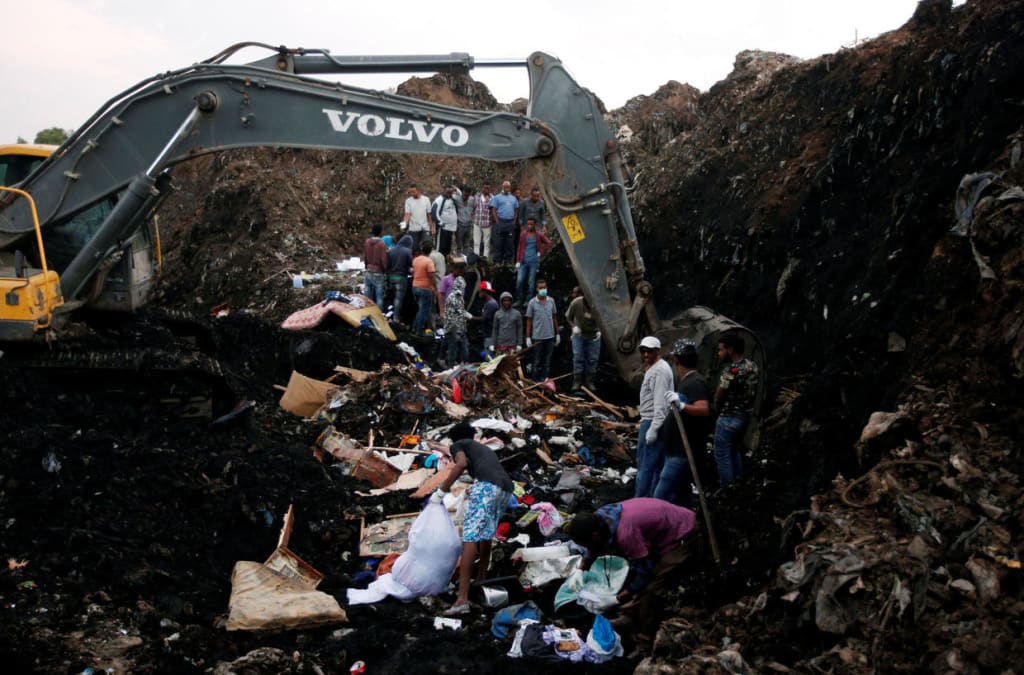
We exist in a disposable culture, with the world producing billions of tons of waste annually. Much of this waste finds its way to landfill sites, designated areas for the disposal of unwanted items. While these sites are far from ideal, emitting unpleasant odours, toxins, and posing environmental challenges, they are deemed a necessary evil for managing the waste we struggle to handle. In this exploration, we will delve into some unsettling real-life narratives involving landfills—prepare yourself for some disturbing tales.
In 2016, Waste Management workers in Newcastle, Australia, stumbled upon a startling discovery at a landfill site: two human legs protruding from a pile of refuse. Subsequent investigation revealed that these limbs, one left and one right, had been removed during legitimate surgeries. Alongside the legs were vials of blood and biohazard bags, indicating that this was clinical waste. Proper disposal of medical waste is imperative, usually involving secure containers and incineration. The exposure of amputated legs in a landfill raises questions about potential flaws in clinical waste disposal, risking the release of infectious materials and body parts into the community—an alarming prospect that lacks the respect due to the individuals to whom those legs once belonged.
Further instances highlight the disturbing trend of body parts ending up in landfills. In 2015, a severed leg with a name attached to it led Miami police to the doorstep of a man who had recently undergone a leg amputation. Instead of proper disposal, his leg had been discarded at a landfill. The man sued the hospital for emotional distress, prompting reflection on the frequency of such incidents going unnoticed.
On August 24, 1979, a landfill worker in Lena, Wisconsin, made a gruesome discovery: a human skull inside a discarded metal bread box. The initial assessment identified the skull as belonging to a female who had likely suffered a fatal head injury in 1969. Efforts to identify the victim proved challenging, and the case resurfaced in 2022 when advanced DNA testing revealed the skull belonged to a male. The passage of time renders identification nearly impossible, underscoring the mysterious nature of this case.
In some corners of the world, the stark reality persists that individuals scavenge for food in bins and dumps, a practice known as "pagpag." Originating from the Filipino language Tagalog, meaning to shake off dust or dirt, pagpag involves retrieving discarded food, ranging from restaurant leftovers to expired supermarket items. Despite the health risks associated with consuming such food—poisons, toxins, and foodborne illnesses—extreme poverty has turned pagpag into a profitable venture for some, who clean and sell the scavenged food to others in impoverished communities.
The issue of waste extends beyond human consumption, affecting wildlife as well. Approximately a third of globally produced food ends up in landfills, becoming a readily accepted food source for various animals. Birds, in particular, have shifted their behaviour, with some species abandoning traditional prey for the easily accessible food in landfills. However, the long-term health implications of consuming landfill food remain uncertain, with concerns about accidental ingestion of toxins and hazardous materials.
In a disturbing revelation from 2011, it was exposed that the remains of American soldiers killed overseas were not treated with the dignity they deserved. Some soldiers' body parts ended up in a Virginia landfill between 2003 and 2008, unbeknownst to their families who entrusted the military with a respectful disposal. This shocking practice, which also involved partial remains from the September 11th attacks, prompted investigations and eventually led to a change in policy, ensuring that all partial remains are now buried at sea.
These narratives underscore the unsettling and often overlooked consequences of our throwaway culture, revealing the dark side of waste disposal practices and the need for more conscientious and respectful handling of the aftermath of medical procedures and the deceased.
About the Creator
Keep reading
More stories from Jackie Jay and writers in Earth and other communities.
Why Australians Are Forced To Live Underground
Embark on a journey along an expansive road leading to Central Australia, approximately 527 kilometres north of Adelaide, and witness the emergence of mysterious sand pyramids from the landscape. This enigmatic sight unfolds in the vicinity of Coober Pedy, a distinctive opal mining town with a population of around 2,200, situated in an environment that conjures images of a post-apocalyptic scene. Salmon-pink dust stretches endlessly, interrupted only by tenacious shrubs that defy the harsh surroundings.
By Jackie Jay2 years ago in Earth
The Canals of Phoenix: How Waterways Made Life Possible in the Desert
In the heart of the Sonoran Desert, where summer temperatures regularly climb above 110°F (43°C), the existence of a sprawling metropolitan city like Phoenix, Arizona, may seem almost impossible. Yet Phoenix thrives, home to millions of residents, vast suburbs, and a growing economy. The secret behind this unlikely success lies in a remarkable system of canals that carry life-giving water across the desert landscape.
By Irshad Abbasi 4 days ago in Earth
Silken Chains
Silhouettes of the female form were given flesh and bone. Silken skin glistened under the spotlight. Dry ice rose around our Icons as they danced atop their podiums in the Square. Heralded for their beauty, their movements were slight, powerful, and sensual.
By Paul Stewart4 days ago in Fiction



Comments
There are no comments for this story
Be the first to respond and start the conversation.