


1., California Condor:

The California Condor (Gymnogyps californianus) is a large bird species that belongs to the New World vulture family. It is one of the most critically endangered bird species in the world. Here are the full details about the California Condor:
Description: California Condors are massive birds with a wingspan reaching up to 9.8 feet (3 meters), making them the largest land bird in North America. They have a black body with white patches under the wings and a featherless, wrinkled head that can vary in color from yellow to reddish-orange. Adults can weigh between 18 to 31 pounds (8 to 14 kilograms) and stand around 3.3 feet (1 meter) tall.
Habitat: Historically, California Condors inhabited a range that extended from western North America to the southern parts of Canada and Baja California in Mexico. However, today they are primarily found in the western coastal mountains of California and Baja California, Mexico. They inhabit rugged and mountainous terrains, including canyons, cliffs, and open woodlands.
Diet: California Condors are scavengers and feed mainly on carrion. They prefer large carcasses of mammals, such as deer, elk, and cattle, but they can also consume smaller animals like rabbits and rodents. Condors use their keen sense of smell to locate carcasses from long distances.
Behavior: These birds are known for their soaring ability and can travel long distances in search of food. They have excellent vision and can spot a carcass from high altitudes. California Condors are social birds and often gather in communal roosting and nesting sites. They have a lifespan of approximately 60 years in the wild.
Conservation Status: California Condors faced a severe decline in population due to habitat loss, poaching, lead poisoning from consuming bullet fragments in carcasses, and a lack of genetic diversity. By the early 1980s, the population dwindled to only 27 individuals. In a last-ditch effort to save the species, all remaining condors were captured and placed into a captive breeding program.
Conservation Efforts: The captive breeding program proved successful, and through meticulous conservation efforts, the California Condor population slowly began to recover. Today, there are over 400 California Condors, with around 200 individuals living in the wild and the rest in captive breeding facilities. Reintroduction programs have been implemented, releasing captive-bred condors into suitable habitats.
Threats: Despite conservation efforts, California Condors still face several threats. Habitat loss, including loss of foraging areas and nesting sites, remains a concern. Additionally, lead poisoning from ingesting bullet fragments in carrion is a significant issue. Collisions with power lines, poaching, and microtrash ingestion are also threats to their survival.
Legal Protection: The California Condor is federally protected under the Endangered Species Act, making it illegal to harm, harass, or possess these birds without proper permits. Efforts to reduce lead poisoning by implementing non-lead ammunition requirements in certain areas have been made.
Collaborative Conservation: The recovery of California Condors relies on collaborative efforts among multiple organizations, including government agencies, nonprofit organizations, zoos, and research institutions. These groups work together to monitor and protect condors, conduct research, manage breeding programs, and promote public awareness and education.
Significance: The California Condor holds significant cultural and ecological value. It is an iconic and revered species among indigenous cultures in the region. Ecologically, they play a vital role as scavengers, aiding in the decomposition process and preventing the spread of diseases.
2., Florida Panther:
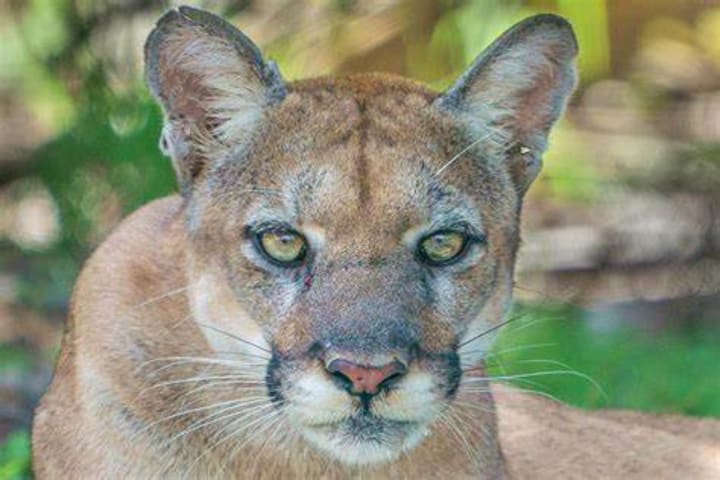
The Florida Panther (Puma concolor coryi) is a subspecies of cougar that is native to the state of Florida in the United States. It is one of the most endangered mammals in North America. Here are the full details about the Florida Panther:
Description: Florida Panthers are large, muscular cats with a slender and agile build. They have a tawny or brownish coat with lighter underparts. Their fur is short and sleek. Adult males typically weigh between 120 to 160 pounds (54 to 72 kilograms), while females are slightly smaller, weighing between 70 to 100 pounds (32 to 45 kilograms). They have a long tail and powerful limbs.
Habitat: Historically, Florida Panthers roamed across the southeastern United States, but their range has significantly diminished. Today, their habitat is primarily restricted to the southern tip of Florida, including the Big Cypress National Preserve, Everglades National Park, and surrounding areas. They inhabit a variety of ecosystems, including swamps, marshes, hardwood hammocks, and pinelands.
Diet: Florida Panthers are carnivorous and primarily feed on white-tailed deer, which makes up the majority of their diet. They are skilled hunters and rely on stealth and ambush to capture their prey. They may also consume smaller mammals, such as raccoons, rabbits, and rodents.
Behavior: Florida Panthers are solitary and elusive animals. They have large home ranges that can span hundreds of square miles. Panthers are most active during dusk and dawn, utilizing their keen senses of hearing and sight for hunting. They are excellent climbers and swimmers. Panthers mark their territories with scent markings and scratches on trees.
Conservation Status: The Florida Panther is classified as critically endangered by the International Union for Conservation of Nature (IUCN). Their population has drastically declined due to habitat loss, habitat fragmentation, and human activities. In the 1970s, their population was estimated to be as low as 20 to 30 individuals, prompting conservation efforts to save the species from extinction.
Conservation Efforts: Several conservation initiatives have been implemented to protect and recover the Florida Panther population. These include the establishment of protected areas and corridors to enhance their habitat connectivity. Efforts are made to reduce human-wildlife conflicts, such as implementing wildlife crossings and promoting responsible development practices. Captive breeding and reintroduction programs have also been conducted to increase the population size and genetic diversity.
Genetic Diversity: The Florida Panther population faces a significant threat from reduced genetic diversity. Inbreeding depression can lead to genetic abnormalities and decreased reproductive success. To address this, genetic restoration efforts have been made by introducing Texas cougars into the Florida Panther population to enhance genetic diversity.
Threats: The primary threats to Florida Panthers include habitat loss and fragmentation due to urban development, agriculture, and road construction. Vehicle collisions are a major cause of mortality for panthers, as they often attempt to cross busy roads. Diseases, such as feline leukemia virus and feline immunodeficiency virus, pose additional risks to their population.
Legal Protection: The Florida Panther is federally listed as an endangered species under the U.S. Endangered Species Act. It is illegal to harm, harass, or kill Florida Panthers without proper permits. Law enforcement efforts are in place to enforce protections and prosecute violations.
Public Awareness and Research: Public awareness campaigns are conducted to educate the public about the importance of Florida Panther conservation and the need to protect their habitat. Ongoing research focuses on monitoring panther populations, studying their behavior and ecology, and identifying strategies for their long-term survival.
Preserving the Florida Panther population is crucial not only for the species' survival but also for maintaining the ecological balance and biodiversity of the unique habitats in southern
3., Black-footed Ferret:

The Black-footed Ferret (Mustela nigripes) is a small, carnivorous mammal and is one of the most endangered species in North America. Here are the full details about the Black-footed Ferret:
Description: Black-footed Ferrets are small, slender mammals with a long, tubular body. They have a yellowish-buff colored coat with black markings on their face, feet, and tail. They possess a black mask around their eyes, giving them a distinctive appearance. They have short legs, sharp claws, and a long, flexible body measuring around 18 to 24 inches (46 to 61 centimeters) in length. Adults typically weigh between 1 to 2.5 pounds (0.45 to 1.1 kilograms).
Habitat: Historically, Black-footed Ferrets inhabited the grasslands and prairies of North America. However, their range has significantly declined. Currently, they are found in small areas within the Great Plains region of the United States, including parts of Wyoming, South Dakota, Montana, Kansas, and Colorado. They require large prairie dog colonies for their survival as they depend on prairie dogs for food and burrow systems for shelter.
Diet: Black-footed Ferrets are strict carnivores and rely almost entirely on prairie dogs for their diet. Prairie dogs make up more than 90% of their food intake. They prey on both adult prairie dogs and their young. This specialization in prairie dogs makes the survival of the ferret closely tied to the health and abundance of prairie dog populations.
Behavior: Black-footed Ferrets are primarily nocturnal, spending most of their time underground in prairie dog burrows during the day. They are solitary animals and only come together during the breeding season. They are agile and excellent burrowers, capable of navigating the complex tunnel systems of prairie dog colonies. They communicate through a variety of vocalizations and scent marking.
Conservation Status: The Black-footed Ferret is classified as endangered by the International Union for Conservation of Nature (IUCN) and is listed as endangered under the U.S. Endangered Species Act. By the 1980s, they were believed to be extinct in the wild, with the last remaining individuals placed in captive breeding programs. Through conservation efforts, reintroduction programs have been successful in establishing small populations of ferrets in the wild.
Conservation Efforts: Conservation initiatives for the Black-footed Ferret have focused on captive breeding and reintroduction programs. These programs involve breeding ferrets in captivity and releasing them into suitable habitats with thriving prairie dog populations. In addition, habitat restoration efforts and prairie dog conservation initiatives are crucial for the survival of the species.
Threats: The decline of the Black-footed Ferret population is primarily attributed to habitat loss and fragmentation, as well as the decline in prairie dog populations. Prairie dogs have been targeted for eradication due to their perceived agricultural and ecological impacts, resulting in the loss of suitable habitat for ferrets. Additionally, disease outbreaks, such as sylvatic plague, pose a significant threat to both prairie dogs and ferrets.
Legal Protection: Black-footed Ferrets are protected by various laws and regulations, including the U.S. Endangered Species Act. It is illegal to harm, capture, or possess these animals without proper permits. Efforts are made to enforce these protections and prevent illegal trade or harm to the species.
4., Hawaiian Monk Seal:

The Hawaiian Monk Seal (Neomonachus schauinslandi) is a critically endangered marine mammal and is one of the rarest seal species in the world. Here are the full details about the Hawaiian Monk Seal:
Description: The Hawaiian Monk Seal is a medium-sized seal with a robust, elongated body. It has a sleek and streamlined shape, ideal for swimming in the ocean. Adults have a grayish-brown or silver coat with lighter underparts. They have short, thick flippers and lack external ear flaps. Adult males can measure between 7 to 7.5 feet (2.1 to 2.3 meters) in length and weigh around 400 to 600 pounds (181 to 272 kilograms), while females are slightly smaller.
Habitat: Hawaiian Monk Seals are endemic to the Hawaiian Islands and are primarily found in the remote, low-lying atolls and islands of the Northwestern Hawaiian Islands (NWHI). They inhabit a variety of coastal habitats, including sandy beaches, rocky shores, and coral reefs. They spend most of their time in the water, foraging for food and resting on beaches or rocky areas.
Diet: Hawaiian Monk Seals are opportunistic predators, feeding mainly on a variety of fish, cephalopods, and crustaceans. They primarily hunt near the seafloor, using their excellent underwater vision to locate and capture prey. Their diet varies depending on the availability of food sources within their foraging areas.
Behavior: Hawaiian Monk Seals are solitary animals, and their behavior is adapted to a marine lifestyle. They are excellent divers and can stay submerged for extended periods, reaching depths of up to 1,500 feet (457 meters). They are most active during the day, spending much of their time foraging and resting on secluded beaches or rocky shores. They communicate through vocalizations and body postures.
Conservation Status: The Hawaiian Monk Seal is classified as critically endangered by the International Union for Conservation of Nature (IUCN). The population is estimated to be around 1,400 individuals, with the majority found in the NWHI. The main threats to their survival include habitat loss, human disturbance, entanglement in marine debris, disease, and predation by sharks.
Conservation Efforts: Numerous efforts are underway to protect and conserve the Hawaiian Monk Seal. The Hawaiian Monk Seal Recovery Program, led by the National Oceanic and Atmospheric Administration (NOAA), focuses on population monitoring, research, habitat restoration, and public education. The establishment of marine protected areas and the removal of marine debris from their habitats are also key conservation measures.
Threats: Hawaiian Monk Seals face various threats to their survival. Human disturbance, such as habitat destruction, coastal development, and recreational activities, can disrupt their natural behaviors and cause stress. Entanglement in marine debris, such as fishing nets and ropes, can lead to injuries or death. Predation by sharks poses a significant risk, especially to pups and juveniles.
Legal Protection: Hawaiian Monk Seals are protected by the U.S. Endangered Species Act and the Marine Mammal Protection Act, making it illegal to harm, harass, or kill these animals without proper permits. Special regulations and guidelines are in place to minimize human disturbance and ensure their protection.
Public Awareness and Research: Public awareness campaigns and educational programs are conducted to raise awareness about the importance of Hawaiian Monk Seal conservation. Ongoing research focuses on monitoring population trends, studying their behavior and ecology, and investigating potential threats and conservation strategies.
5., Houston Toad:

The Houston Toad (Anaxyrus houstonensis) is a small, critically endangered amphibian species native to the United States. Here are the full details about the Houston Toad:
Description: The Houston Toad is a medium-sized toad with a stout body. Adults typically measure between 2.5 to 4 inches (6.4 to 10.2 centimeters) in length. They have a rough, warty skin with colors ranging from light gray to dark brown. Their bellies are pale and often speckled with dark markings. The Houston Toad has distinct cranial crests, short hind legs, and enlarged parotoid glands behind its eyes.
Habitat: Historically, the Houston Toad inhabited a range of habitats, including longleaf pine forests, sandy areas, and prairie wetlands in the coastal regions of Texas. Today, it is limited to a small area in east-central Texas, primarily within Bastrop, Burleson, Lee, Fayette, and Milam counties. The toads require sandy or loamy soil near shallow, ephemeral pools for breeding.
Diet: Houston Toads are insectivores and primarily feed on a variety of invertebrates, including ants, beetles, spiders, and other small arthropods. They forage at night, using their long, sticky tongues to capture prey.
Behavior: Houston Toads are predominantly nocturnal, spending their days hiding under vegetation or in burrows to avoid heat and dehydration. During the breeding season, which typically occurs from February to June, males gather near temporary ponds or pools and emit loud, high-pitched mating calls to attract females. After mating, females lay long strings of eggs in the water.
Conservation Status: The Houston Toad is classified as critically endangered by the International Union for Conservation of Nature (IUCN). Habitat loss, degradation, and fragmentation are the main reasons for its decline. Additionally, droughts, disease, and predation by invasive species pose further threats to the species' survival.
Conservation Efforts: Numerous efforts are being made to protect and recover the Houston Toad population. These include habitat restoration, captive breeding and reintroduction programs, public education, and research initiatives. The Houston Toad Recovery Team, comprising various organizations and agencies, works collaboratively to implement conservation measures.
Habitat Restoration: Efforts are underway to restore and enhance the Houston Toad's habitat by reintroducing native vegetation, managing water levels in breeding ponds, and controlling invasive plant species. These measures aim to create suitable breeding and foraging areas for the toads.
Captive Breeding: The Houston Zoo and other institutions participate in captive breeding programs to maintain a genetically diverse population of Houston Toads. These programs help ensure the species' survival by providing a source for potential reintroductions into the wild.
Public Awareness and Education: Public awareness campaigns and educational programs are conducted to inform local communities about the Houston Toad's importance and the actions needed to protect its habitat. These initiatives aim to promote responsible land management practices and foster support for conservation efforts.
Research: Ongoing research focuses on understanding the Houston Toad's ecology, population dynamics, and the factors affecting its reproductive success. This information is used to inform conservation strategies and improve the effectiveness of recovery efforts.
Preserving the remaining Houston Toad population is crucial to maintaining the biodiversity of Texas ecosystems. Through collaborative conservation efforts, there is hope for the recovery and long-term survival of this unique amphibian species.
About the Creator
Keep reading
More stories from Mohammed thanvir and writers in Earth and other communities.
Top 10 sensitive animals in the world
African Elephant: African elephants are highly intelligent animals that are very social and emotional. They are known to grieve the loss of their herd members and show compassion towards injured or sick elephants. African elephants are highly sensitive to touch, sound, and smell, and have an acute sense of hearing and sight.
By Mohammed thanvir3 years ago in Earth
The Refrigerant Transition
Cooling seldom features in climate headlines, yet it is one of the quietest success stories of the last decade. Under the Kigali Amendment to the Montreal Protocol, countries are phasing down hydrofluorocarbons (HFCs)—super-pollutant refrigerants—while retailers and manufacturers rapidly switch to ultra-low-GWP “natural” refrigerants such as carbon dioxide (R744) and propane (R290). Fully implemented, Kigali alone can avert roughly 0.4–0.5°C of warming by 2100; paired with efficiency improvements, the avoided warming can be closer to ~1°C—an enormous contribution from a single policy family [1–2].
By Futoshi Tachino2 days ago in Earth
In Maduro’s Capture, Russia Sees a Great-Power Rival Act with Impunity
The world watched in early 2026 as U.S. special forces struck in Venezuela and captured President Nicolás Maduro. It was a dramatic move that upended politics in Caracas — and sent shockwaves through Moscow. For Russia, Maduro wasn’t just an ally; he was a key piece in a global chess game stretching from Latin America to the Middle East. His capture has forced Russian strategists to reconsider how far they can project power — and what it means when a rival acts seemingly without consequence. A Blow to Russian Influence Venezuela has long been one of Russia’s few footholds in the Western Hemisphere. Moscow supplied weapons, energy investments, loans, and political backing to Maduro. The goal was simple: counterbalance U.S. influence and maintain a strategic ally near American borders. Maduro’s capture has changed that calculus. Russia’s foreign ministry condemned the operation as “armed aggression” and demanded respect for Venezuela’s sovereignty. At the same time, Moscow backed Delcy Rodríguez as interim leader, framing it as support for Venezuela’s self-determination. But behind the formal statements, analysts suggest Moscow is feeling the sting. The U.S. operation was fast and effective — a stark contrast to Russia’s costly, prolonged campaigns elsewhere. For many, it exposed gaps in Russia’s ability to defend its allies abroad. The Kremlin’s Dilemma Inside Russia, commentators and analysts are debating what Maduro’s capture says about global power dynamics. Some see it as a glaring demonstration of U.S. military reach. Others point out the hypocrisy of international law, given Russia’s own record in Ukraine. But the underlying concern is strategic. Venezuela was one of the few places where Russia could claim a geopolitical win outside Europe and the Middle East. Losing leverage over Caracas diminishes Russia’s influence in energy markets, political alliances, and the narrative of great-power competition. A New Era of Great-Power Competition Russian experts are framing the event as evidence that international norms are eroding. In their view, powerful nations now act where it suits them, regardless of global rules — a logic Russia often uses to justify its own interventions. The U.S. capture of Maduro, framed as a law-enforcement operation targeting corruption and drug trafficking, has inadvertently reinforced Moscow’s messaging: great powers act with impunity. It’s a convenient narrative for Russian state media, even if the reality exposes Russia’s own limitations. Economic and Strategic Consequences Maduro’s removal isn’t just political; it has economic ramifications for Russia. Caracas was part of OPEC+ and home to joint energy ventures. U.S. access to Venezuelan resources could impact oil markets, squeezing Moscow’s budget further. Other projects, from weapons sales to industrial partnerships, now face uncertainty. What was once a partnership built on mutual opposition to the U.S. may now be a casualty of American assertiveness. Domestic Perception in Russia How Russians perceive the operation matters as much as the operation itself. Some voices call for a tougher stance to defend Moscow’s allies. Others acknowledge the gap between Russian and American capabilities. This debate influences both public sentiment and the Kremlin’s policy decisions. It shapes how Russians see their country’s role in the world — whether as a global power able to project influence, or a state constrained by geography, economy, and international reaction. What This Means for Global Politics Maduro’s capture is more than a headline. It signals a shift in global power dynamics. For the U.S., it shows the willingness to project force far from home. For Russia, it underscores limits in influence and credibility. Moscow may continue to use this event in propaganda and rhetoric, but the reality is stark: words without action may not sustain alliances or deter rivals. The event also raises questions about the rules-based international system. If powerful countries intervene militarily at will, what does that mean for global stability? The Takeaway Russia’s reaction to Maduro’s capture reflects a broader truth: modern power is measured not just by intent, but by capability. Russia may want to project global influence, but when rivals act decisively, even long-standing allies can be lost. Maduro’s removal also highlights a changing world order. Great powers no longer operate in isolated theaters. Every move, whether in Latin America or elsewhere, is scrutinized and reverberates globally. For Moscow, the message is clear: ambitions must match capability. For the world, it’s a reminder that power without action is only potential — while decisive, well-resourced rivals can act with apparent impunity.
By Muhammad Hassan7 days ago in Earth



Comments
There are no comments for this story
Be the first to respond and start the conversation.