
2025 Solar Storm: A Cosmic Power Surge Headed Our Way!
solar storm
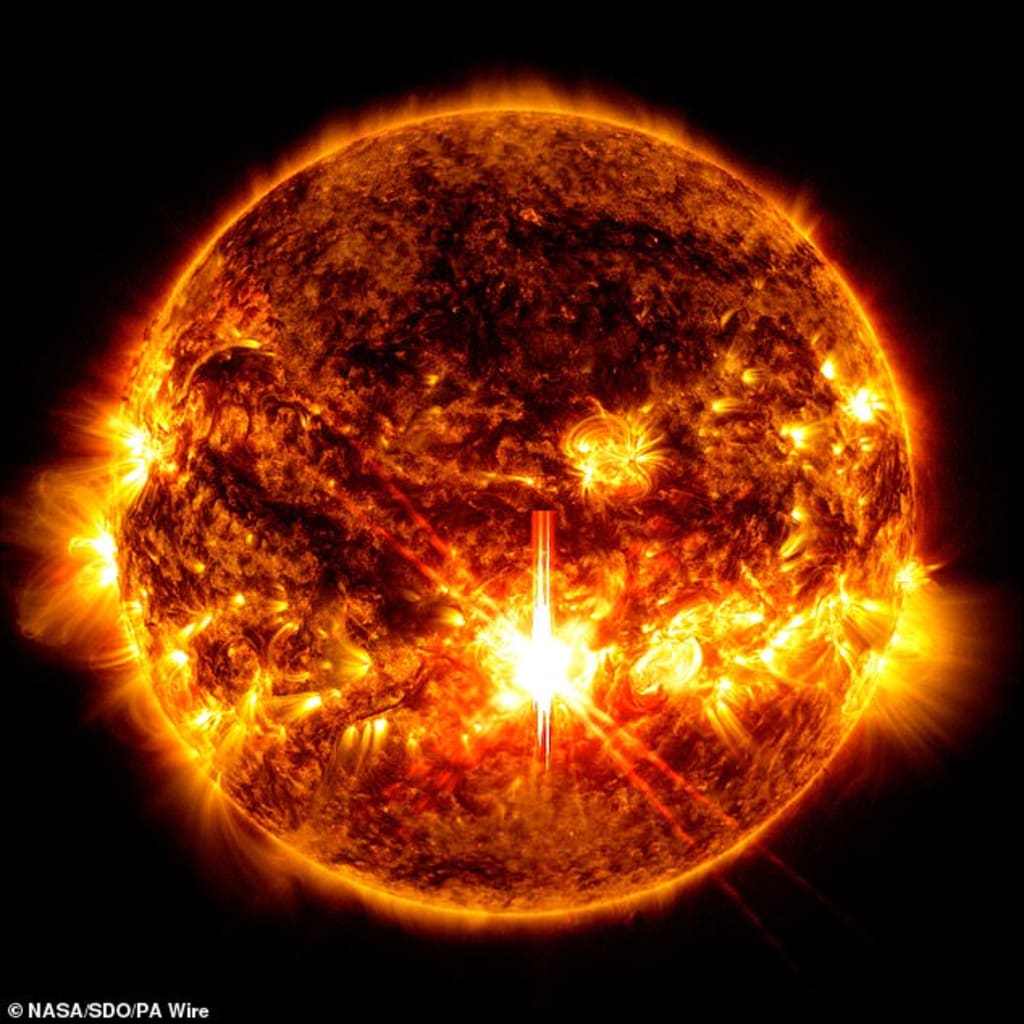
**The Solar Storm of 2025: Understanding the Phenomenon and Its Potential Impact**
In 2025, the Earth is expected to experience one of the most significant solar storms in recent history. While solar storms are not new—having been documented for centuries—the intensity and potential consequences of this event are drawing heightened attention from scientists, governments, and industries alike. This article delves into the nature of solar storms, why the 2025 event is particularly concerning, and what the implications might be for modern technology and society.
### What is a Solar Storm?
A solar storm, also referred to as a geomagnetic storm, is a disturbance in Earth’s magnetosphere caused by a massive burst of solar wind and magnetic fields rising from the Sun’s atmosphere. These solar winds, often accompanied by solar flares or coronal mass ejections (CMEs), can interact with Earth’s magnetic field, producing stunning auroras but also potentially wreaking havoc on satellites, communication systems, and power grids.
Solar storms are measured based on their intensity, with the most powerful ones being capable of causing widespread disruption. Although they occur regularly, major solar storms that significantly impact Earth’s infrastructure are rare. The 2025 solar storm, however, is expected to be particularly intense, with forecasts suggesting that it may be among the strongest in decades.
### Why 2025?
The year 2025 is marked as a key period for solar activity due to the Sun’s 11-year solar cycle. The Sun’s activity follows a cyclical pattern, with the Sun experiencing a peak in solar flares and CMEs roughly every 11 years. This cycle is divided into periods of high and low activity, known as solar maximum and solar minimum, respectively. 2025 falls near the expected peak of Solar Cycle 25, which is forecast to be one of the most active in recent years.
NASA and other space agencies have predicted that the 2025 solar storm will coincide with the solar maximum, meaning the frequency and severity of solar events will be at their highest. Scientists anticipate that the storm will involve intense solar flares and several large coronal mass ejections, making it a highly dangerous event for both spaceborne and ground-based systems.
### Potential Impacts of the Solar Storm
The potential impacts of the 2025 solar storm are both far-reaching and concerning. The most immediate concern is the effect on communication and navigation systems. Solar flares and CMEs can disrupt radio signals, particularly those used by aviation and maritime industries, which rely on high-frequency radio waves for communication. This disruption could make navigation and communication difficult, especially in remote areas or during critical operations.
Satellites are also at high risk during solar storms. CMEs can induce electrical surges in satellite circuits, causing damage to sensitive components or even rendering satellites inoperable. With the increasing reliance on satellite technology for everything from weather forecasting to GPS navigation, a significant loss of satellites could have cascading effects on daily life, from transportation systems to financial markets.
One of the most profound potential impacts of the 2025 solar storm is its effect on Earth’s power grids. A major solar storm could induce geomagnetically induced currents (GICs) that can overload power lines and transformers. In extreme cases, these GICs can cause large-scale blackouts, potentially lasting for weeks or even months, as the time and cost to repair the infrastructure would be considerable. Power outages of this scale could have devastating consequences for businesses, healthcare systems, and everyday life.
### Mitigation Strategies
While the threat of a solar storm cannot be entirely avoided, there are steps that governments and industries can take to mitigate its effects. Increased monitoring of solar activity through space observatories and satellites allows scientists to provide early warnings, giving sectors like aviation, telecommunications, and energy industries time to prepare and protect their systems. Power companies, for example, can temporarily shut down parts of the grid to prevent overloading or install surge protectors to safeguard critical infrastructure.
Space agencies like NASA and the European Space Agency (ESA) are also working on improving satellite shielding and designing spacecraft that can better withstand solar radiation. Moreover, continued research into the geomagnetic behavior of the Earth and the Sun’s activity will help in predicting solar storms with greater accuracy, providing more time for preventive measures.
### Conclusion
The solar storm of 2025 represents a formidable natural event with the potential to disrupt technology-dependent societies on a global scale. As the Sun reaches its solar maximum, scientists are monitoring its activity closely, preparing for a storm that could have far-reaching consequences for communication, navigation, power grids, and satellite systems. While the risks associated with the storm are real, proactive mitigation strategies and continued investment in space weather research offer hope for minimizing its effects. As we move into 2025, both individuals and industries alike must be aware of the storm’s potential and remain prepared for what could be a defining moment in the age of space exploration and technological reliance.
About the Creator
Keep reading
More stories from Faizan Afraz and writers in Earth and other communities.
El Paso's Most Wanted: Top Fugitives on the Run – Can You Help Catch Them?
El Paso, Texas – Crime Stoppers of El Paso has once again released its list of the Most Wanted fugitives for the week of April 19, 2025. These individuals are being actively sought by the El Paso Police Department and the El Paso County Sheriff’s Office for serious criminal offenses. The cooperation of the public is vital in helping law enforcement track down these fugitives, and Crime Stoppers is offering rewards for information that leads to their apprehension.
By Faizan Afraz11 months ago in Criminal
Manaslu Circuit vs. Langtang Valley: Which Nepal Trek Is Right for You?
Nepal offers some of the most extraordinary trekking routes in the world. While many travelers focus on famous trails like Everest Base Camp or the Annapurna Circuit, other routes provide equally memorable experiences with fewer crowds.
By Alex Winslowa day ago in Earth
TUS NUA - ch 53
TUS NUA – ch 53 New Beginnings – Mia and Midnight (*)(*)(*) Finola knew Ali’s brother-in-law needed to put his mind at rest. She fed her arm through his and led him outside. “We’ll sit here. If you like, I can put a block around us so our conversation will be private.”
By Margaret Brennan5 days ago in Fiction


Comments
There are no comments for this story
Be the first to respond and start the conversation.