
2 in 1 Continent and Country
Learn more about Australia
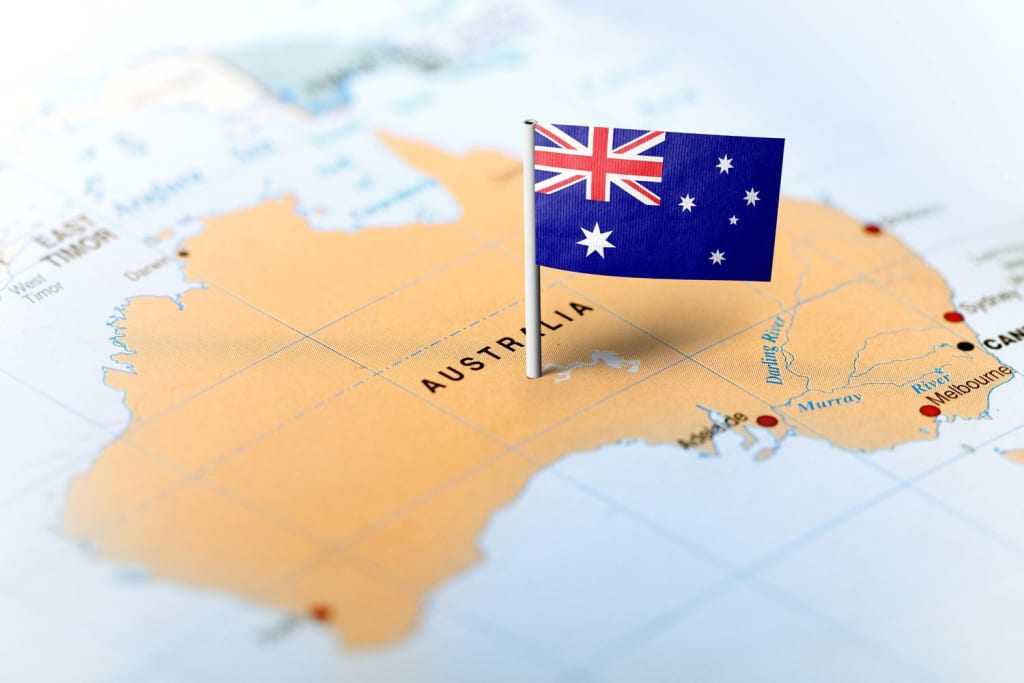
Australia is the smallest continent in the world and is entirely controlled by a single country. Despite its large land area, the population is relatively small with just over 26 million people. To put this into perspective, the lower 48 US states, which are comparable in size, have a population of over 300 million people. California and Texas alone have more people than the entire Australian continent. Even England, without factoring in the rest of the UK, has a population that is more than double that of Australia.
Despite being an entire continent, there are seven significantly smaller islands across the world that have higher populations than Australia and Great Britain. Honshu, Luzon, Mindanao, Java, Sumatra, and Madagascar are among these islands. Java alone has nearly six times Australia's tiny population despite being an island that is 60 times smaller than Australia. Moreover, there are several cities across the world that have more people than the entire continent. The Tokyo, Jakarta, and Delhi metropolitan areas all have greater populations than the entirety of Australia. The Shanghai and Seoul metro areas have roughly similar populations, while Sao Paulo, Mexico City, New York City, Cairo, Lagos, Mumbai, and Moscow all have largely comparable metropolitan populations to Australia as well. All things considered, Australia only has five actual major cities across its continent.
Australia is one of the most heavily urbanized nations in the world, with around 90 percent of its population concentrated in relatively small urban areas that account for only 0.22 percent of its total land area. Half of its overall population lives within the red areas, and the other half almost entirely lives in the blue areas. Around 85 percent of all Australians live within just 50 kilometers of the coastline, resulting in a unique population distribution. For example, the Shire of East Pilbara in Western Australia is roughly the same size as Japan, but only has a population of just over 10,000 people, with half of them living in the town of Newman.
In South Australia, there is a pastoral unincorporated area adjacent to the city of Adelaide, which is home to more than 1.3 million people. Despite being roughly the size of France, this area has a population of only 3,750 people, resulting in a population density of 178 square kilometers of land per person. Anna Creek, a privately owned cattle ranch, is also located nearby and is larger than Israel. However, it is not a country or a governmental entity and is only staffed by eight full-time employees.
Australia is a vast and sparsely populated continent. The towns of Esperance and Kununurra, both located in Western Australia, are separated by a distance of over 3,200 kilometers and a 35-hour drive. Along this entire route, you will encounter a population of less than 70,000 people. To put this into perspective, driving from Madrid to Istanbul across Europe would take a similar amount of time and distance, but with a significantly greater population. The reason for Australia's emptiness is largely due to its desert landscape.
Australia is often thought of as a country covered in a vast desert with dangerous animals and insects. However, this is only a small part of the population puzzle. The full explanation for why there are so few people on this continent is complicated. The problem stems from the fact that Australia is uniquely cursed from both a geological and location perspective. Located relatively close to Antarctica, the western side of Australia is continuously battered by cold ocean currents from the southern ocean, which means that there isn't enough heat to generate large-scale evaporation necessary to form rain clouds over much of the west.
The Great Dividing Range is Australia's largest and longest chain of mountains, running down the entire eastern side of the continent from north to south. Its height prevents many rain clouds from advancing from the Pacific, creating a rain shadow across the vast Australian interior to the west. However, from a global perspective, these mountains are not very impressive, as Australia has the lowest average elevation of all continents. The tallest mountain and highest point in Australia is not found on the Great Dividing Range.
Australia's highest mountain, Mount Kosciuszko, stands at a mere 2,228 meters above sea level. In comparison, the highest point of every other inhabited continent is at least double that height. Even the majority of Colorado's elevation is higher than Mount Kosciuszko. Due to the lack of tall mountains in Australia, there are few opportunities for air to be forced upwards and cooled into rain. Additionally, the continent's location on the boundary of the Tropic of Capricorn means that much of northern Australia is within the tropics, while the rest of the continent is in the subtropics. This area is dominated by the subtropical high pressure belt, which makes it difficult for rain to form.
Australia has to deal with the phenomenon of El Nino and La Nina, which are difficult to predict oscillations of the Southern Pacific Ocean. During an El Nino event, the Southern Pacific experiences prolonged periods of slower than usual westerly winds, resulting in less atmospheric moisture delivered to the eastern and northern parts of the continent. This often leads to exacerbated drought-like conditions, which have contributed to some of the worst bushfires in Australia's history. As a result, Australia is the driest inhabited continent on earth with the least amount of average annual rainfall, and is mostly desert or desert-like.
Northern Australia stands out from the population density pattern due to its unique rainfall pattern. While the region receives a significant amount of rain, the problem lies in the fact that it falls largely all at once and over variable periods of time. The wet and dry seasons dominate the region, with rainfall being greater during the summer and less during the winter. Darwin, the largest city in the region, receives an average annual rainfall of over 1800 millimeters, nearly triple the amount of rainfall that London gets. However, the majority of this rain falls during just the four months of the wet season between December and March, when monsoons and tropical cyclones are active. The interior of northern Australia, between the coast and the north, experiences similar rainfall patterns.
In 1973, the White Australia Policy was overturned, ending race as a factor in Australia's immigration policy. Since then, Australia has embraced multiculturalism and welcomed large-scale multi-ethnic immigration from around the world. In the 21st century, the majority of new immigrants come from Asia, particularly China and India. Australia currently caps new immigration at less than 200,000 per year, a consistently high rate for a country with a population of only 26 million. As of 2022, nearly one in three people in Australia were born outside of the country, the highest proportion of immigrants in any developed Western nation. Australia takes pride in being a nation of immigrants from all corners of the world.
About the Creator
Keep reading
More stories from Hawa Mohamed and writers in Earth and other communities.
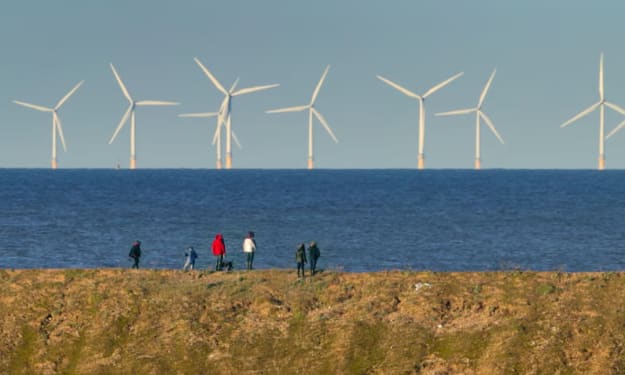
UK Among 10 Countries to Build 100GW Wind Power Grid in North Sea
The United Kingdom has joined forces with nine other European countries to create a massive offshore wind power grid in the North Sea, aiming to generate 100 gigawatts (GW) of renewable electricity. This ambitious initiative, one of the largest international energy projects in recent history, reflects Europe’s growing commitment to sustainable energy and the transition away from fossil fuels.
By Aarif Lashariabout 17 hours ago in Earth
The Blue Ridge Stalker
Tom had left the Ford down the way, its spark plugs finally exhausted and no mechanics for a dozen miles back through the foothills to Strossburg. No matter, he had worn his boots—almost as if he planned for this to happen. The puzzle he sought to solve emanated from the woods clinging to the slopes above; the valley behind held no mysteries.
By Stephen A. Roddewig6 days ago in Fiction


Comments
There are no comments for this story
Be the first to respond and start the conversation.