
100% Chance of an Earthquake
Why the Earth Never Stops Shaking—and What It Means for Us

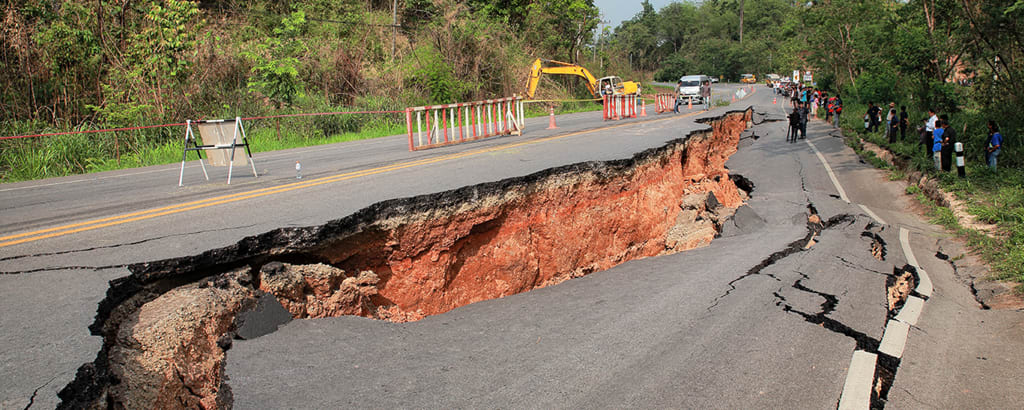
Imagine waking up and hearing a news report that begins with: “There’s a 100% chance of an earthquake today.” It sounds alarming, almost apocalyptic—something that would send people rushing to pack emergency kits, secure their homes, and perhaps even panic about what’s to come. But here’s the truth: that statement is completely accurate, and not because someone has cracked the code of earthquake prediction. Rather, it’s because earthquakes happen every single day on our planet. The only question is where and how strong.
While millions of people may go their entire lives without feeling the earth tremble beneath their feet, earthquakes are happening constantly, all around the globe. Some are so small they can only be detected by sensitive instruments. Others rattle windows, knock objects from shelves, or even topple buildings. And a few, though relatively rare, unleash devastation on entire regions, causing death, injury, and billions in damages.
Every year, seismologists estimate that about 700 earthquakes occur that are strong enough to cause significant damage—if they strike near populated areas. Thankfully, many of these occur in remote regions, beneath the ocean, or in places far removed from human civilization. Still, the fact remains: the Earth is restless, and it never truly stops moving.
Why the Earth Never Rests
To understand why there’s always a 100% chance of an earthquake, we need to look beneath our feet. Earth’s outer shell, the lithosphere, is not a solid, unbroken layer. Instead, it’s divided into massive slabs of rock called tectonic plates. These plates constantly move—sometimes sliding past each other, sometimes colliding, and sometimes pulling apart. The boundaries where they meet are zones of enormous stress, and when that stress builds up and suddenly releases, the result is an earthquake.
This process is so consistent and unavoidable that earthquakes are woven into the very fabric of our planet’s geology. Whether it’s a small tremor lasting a fraction of a second or a massive rupture along a fault line, the Earth is always flexing, grinding, and shifting. In fact, seismologists record millions of earthquakes each year—but most are so small that no one feels them.
The Ring of Fire: Earthquake Central
When it comes to earthquake hotspots, one region stands out above all others: the Ring of Fire. This horseshoe-shaped zone circles the Pacific Ocean, stretching from South America’s western coast up through North America, across to Japan, and down to New Zealand. Here, the edges of tectonic plates are locked in a constant dance of collision and subduction.
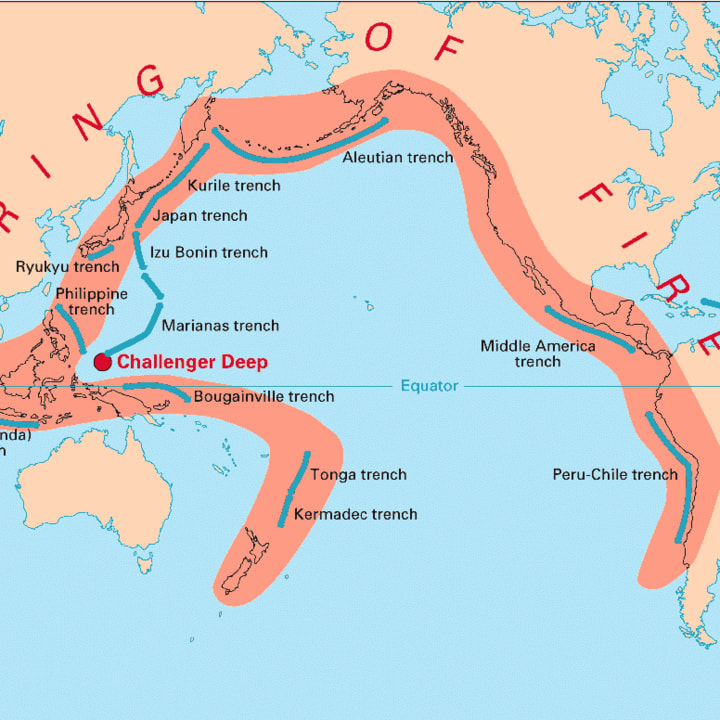
The Ring of Fire isn’t just where most of the world’s earthquakes happen—it’s also home to some of the most active volcanoes on Earth. Seismologists call this area the circum-Pacific belt, and it’s where today’s inevitable earthquake is most likely to occur. But it’s not the only place at risk. The reality is that no region on Earth is entirely earthquake-free. Even areas considered relatively stable, like the central United States, have experienced surprising quakes in the past.
Prediction vs. Probability
When people hear “100% chance of an earthquake today,” they might think scientists have mastered earthquake prediction. Unfortunately, that’s not the case. Despite decades of research, earthquakes cannot be predicted with precision—not in terms of exact time, location, or magnitude.
What scientists can do is talk about probability. For example, they can estimate that a fault line in California has a certain percentage chance of producing a magnitude 7.0 quake within the next 30 years. They can also forecast the likelihood of aftershocks following a major earthquake. But saying, “There will be an earthquake today” isn’t a prediction—it’s simply a reflection of the overwhelming frequency of these events worldwide.
This distinction matters because it underscores both the progress and the limits of modern seismology. The science has advanced enough to map faults, measure strain in the Earth’s crust, and issue early warnings for shaking once an earthquake has already begun. But the dream of predicting the “big one” before it strikes remains just that—a dream.
The Human Impact of Earthquakes
While the Earth is constantly shifting, the human experience of earthquakes is anything but routine. For those who have lived through powerful quakes, the memory is unforgettable: the roar of the ground, the violent shaking, the collapse of buildings, and the chaos that follows.
Some of the most destructive earthquakes in history—such as the 2010 Haiti earthquake, the 2011 Tōhoku earthquake in Japan, or the 2004 Indian Ocean quake that triggered a deadly tsunami—serve as grim reminders of what can happen when seismic forces collide with human society.
Even moderate quakes can be unsettling. A small tremor that rattles windows or knocks a picture frame off the wall can leave people shaken long after the ground stops moving. The unpredictability of earthquakes only adds to the fear—they strike without warning, turning an ordinary day into a disaster in seconds.
The Science of Staying Prepared
Since prediction isn’t possible, preparation becomes the key. Communities in earthquake-prone regions invest heavily in earthquake-resistant infrastructure, strict building codes, and emergency preparedness programs. Countries like Japan have become global leaders in developing technologies that allow skyscrapers to sway without collapsing, while also deploying early warning systems that give people a few critical seconds to take cover.
For individuals, preparedness often comes down to simple but life-saving steps:
Keeping an emergency kit with food, water, and supplies.
Securing heavy furniture and appliances so they don’t topple.
Knowing safe spots in each room, such as under sturdy tables.
Practicing “Drop, Cover, and Hold On” drills.
These measures can’t prevent earthquakes, but they can dramatically reduce their impact on human lives.
Why Earthquake Research Matters
The fact that millions of earthquakes occur annually might make them seem ordinary, but each one offers scientists valuable data. Seismologists study seismic waves to learn not just about earthquakes, but also about the Earth’s inner structure. By analyzing how shockwaves travel through the planet, researchers gain insight into the composition of the mantle and core—regions we could never explore directly.
Furthermore, the ongoing study of earthquakes fuels the hope that one day, accurate prediction may become possible. Whether it’s by monitoring animal behavior, analyzing tiny foreshocks, or studying patterns of stress accumulation, researchers continue searching for clues that might unlock the mystery of earthquake timing. Until then, the best tool humanity has is knowledge—and the will to prepare.
A Planet That Never Stands Still
So yes, there is a 100% chance of an earthquake today. Somewhere on Earth, the ground will shake. It may be a tiny tremor beneath the ocean floor, unnoticed by all but seismologists. Or it may be a destructive shock that forever changes the lives of those in its path.
Earthquakes are a reminder that we live on a planet in motion. The ground beneath us, though it feels solid and permanent, is anything but. We build cities, carve roads, and plant fields on a surface that is constantly shifting, grinding, and reshaping itself. And while this reality can be frightening, it’s also a testament to the dynamic, living nature of our world.
Final Thoughts
The statement that there’s a 100% chance of an earthquake today isn’t meant to spread fear—it’s a reminder of the Earth’s restless nature and the importance of preparation. While scientists may not yet predict earthquakes, they continue to make strides in understanding them. And with each discovery, humanity becomes better equipped to live safely on this ever-shaking planet.
After all, the ground may tremble beneath our feet, but knowledge, preparation, and resilience ensure that we don’t have to be powerless in the face of nature’s certainty.
Sources are given below:
About the Creator
Fazal Ur Rahman
My name is Fazal, I am story and latest news and technology articles writer....
read more and get inspire more............
Keep reading
More stories from Fazal Ur Rahman and writers in Earth and other communities.
Swat and Buner Flood Devastation: A Wake-Up Call for Pakistan
On the night of August 15, 2025, the peaceful valleys of Khyber Pakhtunkhwa were transformed into rivers of destruction. A rare cloudburst unleashed an unprecedented 150mm of rainfall within an hour, tearing through Buner and Swat districts with merciless force. What followed was a catastrophe that has left Pakistan reeling: hundreds dead, thousands displaced, and entire communities reduced to mud and rubble.
By Fazal Ur Rahman7 months ago in Earth
Human Revenge: A Hidden Cause Behind the Decline of Snow Leopards
High in the rugged mountains of Central and South Asia lives one of the world’s most mysterious and beautiful big cats—the snow leopard. Known for its thick grey-white fur, long tail, and incredible ability to blend into rocky landscapes, this elusive predator has fascinated scientists and wildlife lovers for decades. Yet despite its beauty and ecological importance, the snow leopard faces a growing threat: human revenge.
By Irshad Abbasi 4 days ago in Earth
Writing To Succeed
If you want to find something that will help readers find your writing, possibly expand your audience, and maybe even get you noticed for other things, then you’re not alone. But how can you get it done in a world full of want-to-be writers? Look less at what you’re writing now, and more at what other writers have used to boost their views and reads.
By Jason Ray Morton 5 days ago in Writers




Comments
There are no comments for this story
Be the first to respond and start the conversation.