
10 Things You Probably Did Not Know About Leopards
Here are Some Interesting Leopard facts


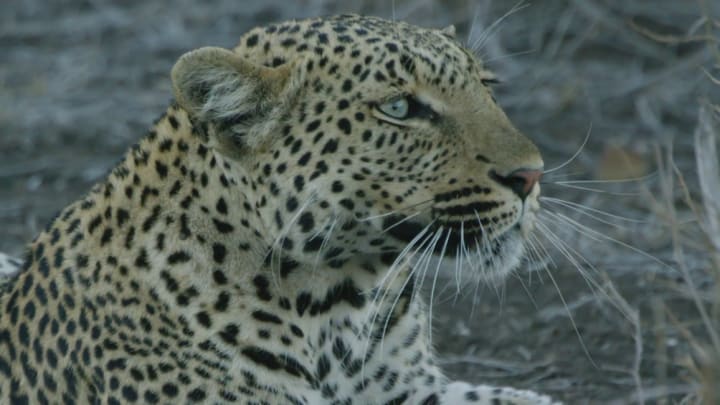
Leopards Can See in Near-Total Darkness
Their night vision is up to seven times better than humans', allowing them to hunt efficiently in pitch-black conditions. Just like most animals, a leopard’s pupils dilate according to the amount of light that enters their eyes. Due to adapted retinas, leopards can see seven times better in the dark than humans, making them extraordinary nocturnal hunters.
They Are the Strongest Climbers of the Big Cats
Leopards can drag prey heavier than themselves up into trees to avoid scavengers like hyenas and lions. Among the big cats, leopards are widely regarded as the best climbers. These elusive felines are known for their arboreal skills, which allow them to hunt, rest, and even stash their kills in the safety of the treetops. Leopards are incredibly versatile climbers, capable of navigating through dense forests, rocky cliffs, and even urban environments with ease.

They Are Master Camouflage Artists
Their rosette-patterned coats help them blend seamlessly into a variety of habitats, from savannas to forests and even urban edges. They mostly inhabit areas with patches of light and shadow. Having a solid colour would make them stand out, but their rosetted coat breaks up their body outline, making them less visible. Their camouflage is used to hide from enemies (such as lions, hyenas, and other leopards), but also to conceal themselves from prey. Being solitary hunters, leopards must approach within about 10m of their prey before they pounce. As highly adaptable cats that live in many different habitats, from city outskirts to forests, leopards can blend into almost any environment.
They Do Not Roar Like Lions
Instead of a roar, leopards make a raspy cough-like call to announce their presence (more like a chainsaw than a lion's thunder). Leopards and jaguars are all incapable of purring, while every other cat can purr but not roar.
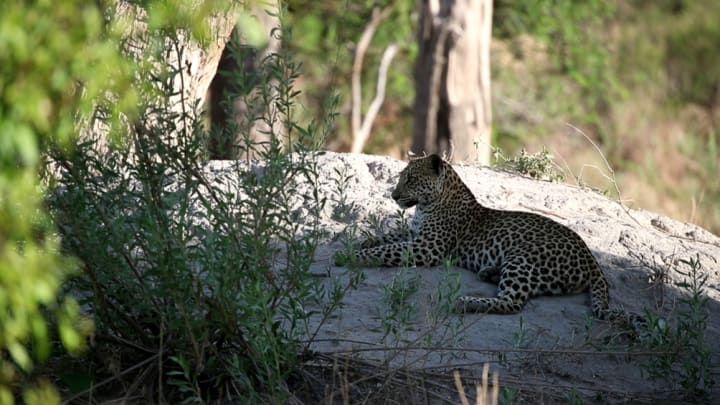
Each Leopard's Spots Are Unique
Every leopard sports a pattern of rosettes and whisker spots as unique to that individual as a set of human fingerprints. These patterns are not randomly arranged, but rather the result of specific genes responsible for pigmentation and pattern formation. This genetic code has been fine-tuned over millions of years to provide the leopard with a survival edge.
They Are Found in More Places Than Any Other Big Cat
Leopards are incredibly adaptable and can be found in parts of Africa, the Middle East, and Asia, even surviving in the snowy Himalayas. Although difficult to spot on safari, leopard numbers are said to be higher than any other big cat species in Africa. Leopards can be found in a variety of habitats ranging from desert to equatorial forests, high mountains to coastal regions, although they prefer woodlands or grasslands. Leopards have also been spotted on the outskirts of large cities like Harare, Johannesburg and Nairobi.
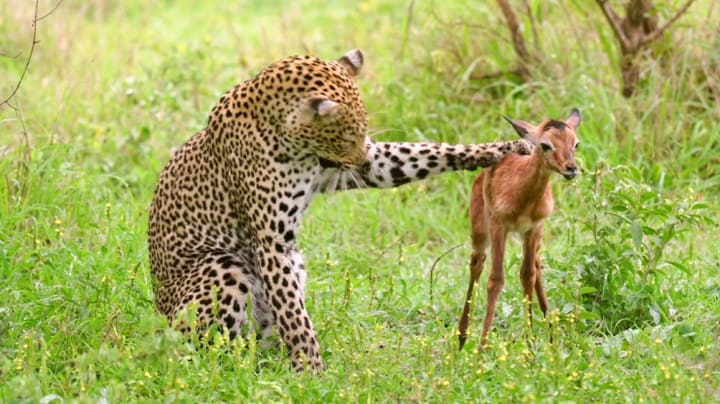
They Are Solitary Most of the Time
Leopards prefer to live alone, meaning that they are solitary animals; however, an exception to this rule is when a mother gives birth to her cub and must bring it up, or when males and females mate, and when males encounter rivals.
They Often Store Food for Later
To avoid losing their kill, leopards hoist carcasses into trees where scavengers can't reach them and return over days to feed.
Cubs Are Born with Blue Eyes
Leopard cubs are born blind and with striking blue eyes, which gradually turn golden as they age.
Black Panthers Are Leopards
‘Black panthers’ in Africa and Asia are melanistic leopards (meaning that they still have spots, but their dark fur hides them under most lighting).
Author: Alyssia Doolabh
About the Creator
Latest Sightings
Latest Sightings, is a real-time wildlife spotting community that connects nature lovers with the most incredible animal encounters, captured and shared by rangers, tourists, and locals across Africa's national parks and reserves.
Keep reading
More stories from Latest Sightings and writers in Earth and other communities.
Earth’s Hidden Fires
The Black Scar of the Sahara and Other Fires That Shouldn’t Exist From high above, the Sahara Desert looks like a golden ocean—endless waves of sand broken only by scattered blue and green oases. But hidden among the dunes is something startling: a massive black region covering nearly 17,000 square miles. It’s so large it’s visible from space, yet it rarely appears in movies or documentaries. At first glance, it almost looks unnatural, as if something catastrophic happened there.
By Lexi Wilburnabout 9 hours ago in Earth
10 Times Rotten Tomatoes and I Disagreed
***Disclaimer*** I will be ranking these movies in the following manner: The greater the divide between Rotten Tomatoes and I, the higher up on the list (and I am referring to the critic's score, not the audience score). I will also show Rotten Tomatoes' score on each one in addition to my score. I am curious to know what everyone thinks, please let me know in the comments below!
By Madison "Maddy" Newton5 days ago in Geeks



Comments
There are no comments for this story
Be the first to respond and start the conversation.