
The WAQF Bill Controversy:
Welfare or Weapon of Control?
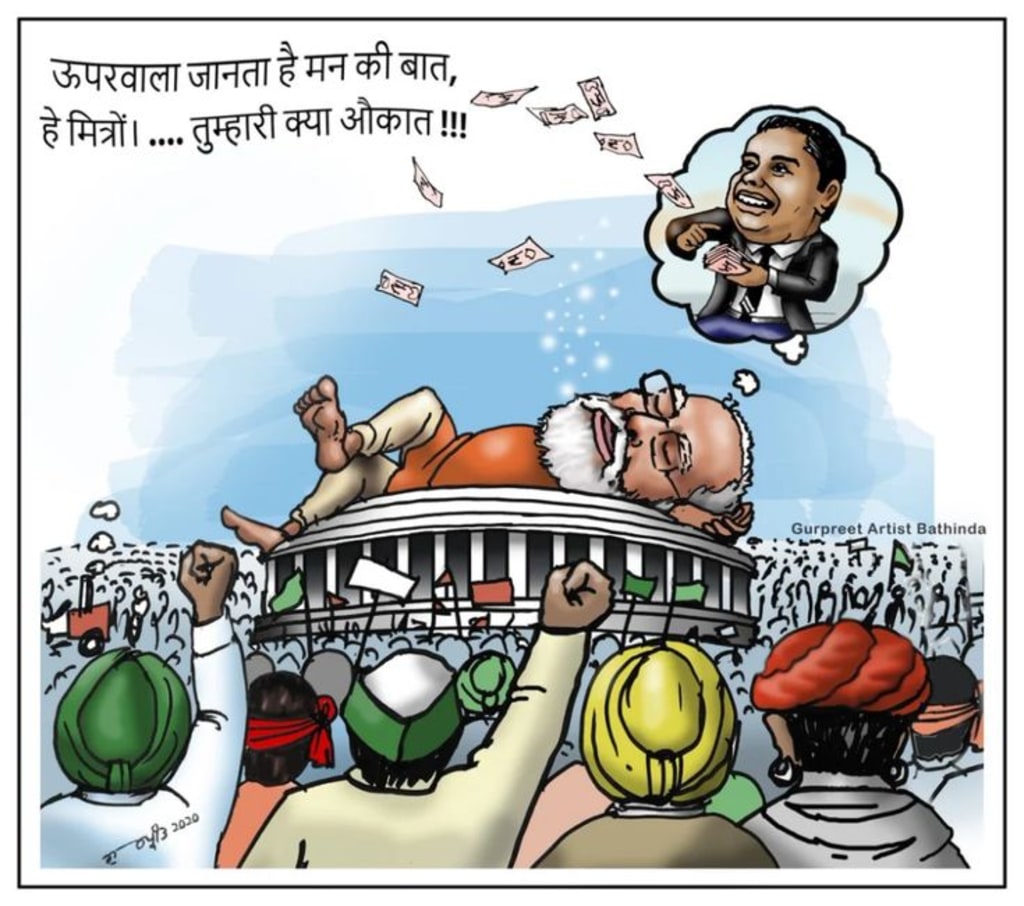
By Mahir Aiman
India is a democracy defined by its pluralism — a country of over 200 million Muslims, the second-largest Muslim population in the world. Yet, for a community that is constitutionally entitled to religious freedom and dignity, the reality in today's India feels increasingly bleak. Now, the recently proposed amendments to the WAQF Act have added fuel to the fire, igniting outrage and raising troubling questions about the state’s intentions.
The government claims the WAQF Bill is a move towards “transparency, regulation, and reform.” But beneath the surface lies a deep fear — that this is less about safeguarding Muslim endowments and more about controlling them. The irony, however, cuts even deeper.
"In this India, Muslims are insulted for offering namaaz, shops are boycotted, denied rental homes, houses demolished and bulldozed — and yet the government wants people of the nation to believe this bill is for the welfare of the Muslim community." as said by a critic.
Understanding the WAQF
WAQF is an Islamic endowment — property or land donated for religious or charitable purposes, meant to benefit the community in perpetuity. These properties, including mosques, graveyards, schools, and orphanages, are managed by State WAQF Boards under the Central WAQF Council, all of which are supposed to function autonomously with oversight, not interference.
But in recent years, allegations have surfaced of increasing encroachment, illegal acquisition, and arbitrary decisions regarding WAQF lands — often made without community consultation. The proposed amendments, rather than empowering Muslim communities to better manage their endowments, risk cementing state control under the guise of reform.
Under the new proposals, the government seeks broader authority over WAQF Boards, faster acquisition rights, and increased power to override decisions of local WAQF authorities. Critics argue this opens the door for further disenfranchisement, especially when WAQF properties lie on prime urban real estate — making them valuable targets for private or political gain.
The Double Standards
The contradiction cannot be ignored: at a time when Muslims are facing mounting hostility across the country — from being harassed for wearing skull caps or hijabs to being violently attacked for religious practices — the state’s sudden concern for the "welfare" of the same community through the WAQF Bill feels less like care and more like calculated control.
Muslim street vendors are boycotted during Hindu festivals. Entire neighbourhoods face collective punishment under demolition drives with no due process. Hate speeches go unpunished. Mosques are targeted, azaan is objected to, and the very sight of public prayer is treated as provocation.
In such a climate, how can a government credibly present a bill like this as a step towards Muslim welfare? How can a state bulldozing homes one day, and managing mosques the next, expect to be trusted?
A Community Pushed Further
The WAQF Bill is not just about administrative reform — it is about the soul of Indian secularism. If passed in its current form, it could set a dangerous precedent: that minority institutions can be brought under state control without proper dialogue, that religious autonomy can be compromised under vague pretences, and that symbolic gestures of inclusion can mask structural exclusion.
The Muslim community in India is not asking for special treatment. It is asking for constitutional equality, dignity, and respect. If WAQF properties are to be better regulated, the process must be inclusive, transparent, and respectful of religious autonomy — not dictated from above.
A Call to Conscience
This moment demands more than resistance. It demands moral clarity from every Indian who believes in the promise of the Constitution. Legislation should not be weapons disguised as welfare schemes. And communities should not have to beg for their basic rights while being told they are being “protected.”
The WAQF Bill, in its current form, is not just a legal concern. It is a political statement — one that speaks volumes about the future India is choosing to create. The question now is: will the nation allow its largest minority to be governed without consent, silenced without cause, and “served” without dignity?
"A government that demolishes homes by day and claims to protect mosques by night cannot be trusted with the keys to our faith, our future, or our freedom."
About the Creator
Mahir Aiman
Proud Bangladeshi living abroad, passionate about voicing issues
Keep reading
More stories from Mahir Aiman and writers in Critique and other communities.
Dhaka’s Sewage Crisis:
Dhaka, Bangladesh – The capital city of Bangladesh, home to over 20 million residents, is facing a severe sewage crisis, with alarming consequences for public health and the environment. The city’s inadequate wastewater management system has left a significant portion of untreated sewage to contaminate its rivers, lakes, and canals, creating an escalating crisis that demands immediate intervention.
By Mahir Aiman10 months ago in Earth
Standing While Falling
Quotation from Friedrich Nietzsche "He who wrestles long with monsters should beware lest he himself become a monster. And if you gaze long into an abyss, the abyss also gazes into you. Man is not destroyed by suffering, but by the meaning he makes of it."
By LUCCIAN LAYTH13 days ago in Critique
Charleston White Responds As Viral Report Suggests A Shooting Has Left Him In Critical Condition
In this age of fake news, poor AI generated content, and outlandish rumors, it’s hard to keep up with the truth. That’s why Charleston White declared his existence on social media.
By Skyler Saunders6 days ago in Critique



Comments
There are no comments for this story
Be the first to respond and start the conversation.