
Dhaka’s Sewage Crisis:
A Looming Environmental and Health Disaster
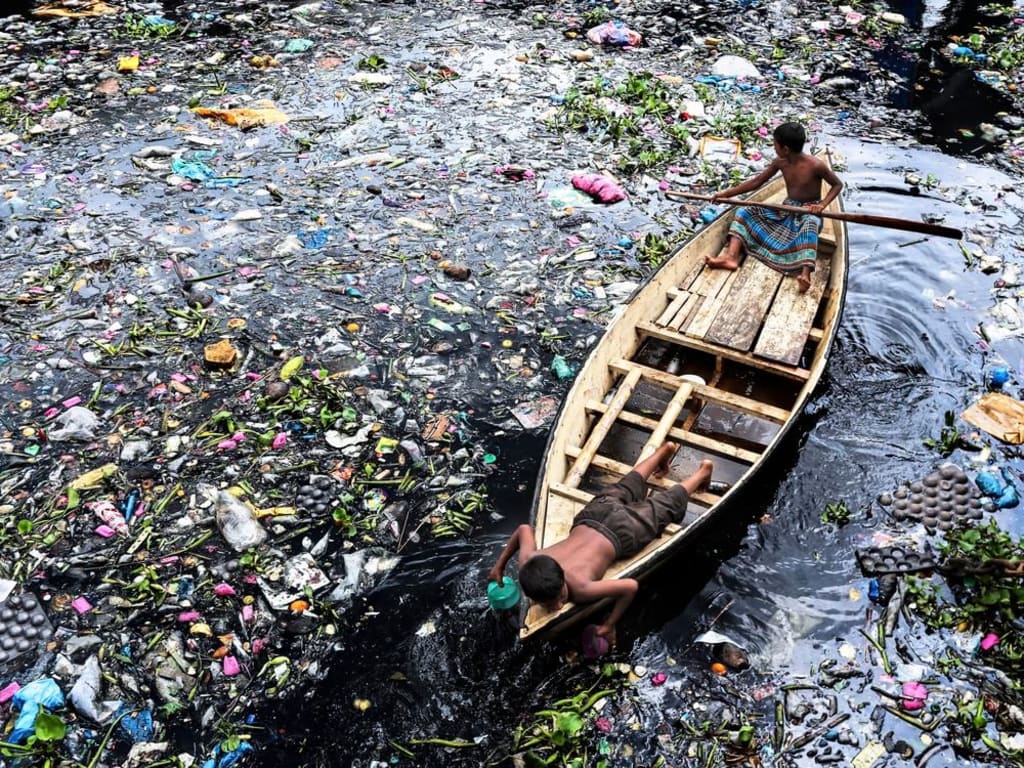
Dhaka, Bangladesh – The capital city of Bangladesh, home to over 20 million residents, is facing a severe sewage crisis, with alarming consequences for public health and the environment. The city’s inadequate wastewater management system has left a significant portion of untreated sewage to contaminate its rivers, lakes, and canals, creating an escalating crisis that demands immediate intervention.
According to the Dhaka Water Supply and Sewerage Authority (DWASA), the city produces approximately 2 billion litres of wastewater daily. However, its infrastructure can only manage to treat 700 million litres, leaving an overwhelming 1.3 billion litres of untreated sewage to flow directly into Dhaka’s already polluted water bodies. This gap between wastewater generation and treatment capacity is exacerbating pollution levels in the Buriganga, Turag, Balu, and Shitalakshya rivers, threatening aquatic life and public health.
The city operates three major sewage treatment plants—Pagla, Dasherkandi, and several smaller facilities—but these are woefully insufficient to handle the massive daily sewage output. As a result, human waste, industrial effluents, and household discharge are indiscriminately dumped into natural water bodies, rendering them highly toxic. A recent study has identified 693 contamination hotspots across Dhaka’s rivers, with the Buriganga River suffering the worst pollution due to discharges from the textile and leather industries.
Efforts have been made in the past to mitigate pollution, such as relocating leather industries from Hazaribagh to Savar. However, this move has merely shifted the problem to the Dhaleshwari River, where untreated industrial waste continues to exacerbate environmental degradation. The authorities have yet to enforce stringent waste management protocols for these relocated industries, leaving water pollution unchecked.
Alarming Consequences for Public Health
The unchecked pollution has had dire implications for public health. The toxic water bodies are breeding grounds for waterborne diseases such as cholera, typhoid, and dysentery, putting millions of residents at risk. Many informal settlements and lower-income communities rely on contaminated water sources, further increasing the likelihood of outbreaks of deadly illnesses.
Even affluent areas like Banani and Gulshan, known for their upscale residences and commercial hubs, have not been spared. The lakes in these neighbourhoods have become dumping grounds for untreated household sewage, leading to foul odours, mosquito infestations, and an overall decline in living conditions. Residents frequently report skin infections and gastrointestinal diseases due to exposure to polluted water.
Government Response and Challenges
Despite growing concerns, government initiatives to address the crisis have been slow and largely ineffective. While authorities have acknowledged the severity of the situation and pledged to improve sewage management, critics argue that these efforts have been more about public relations than tangible progress. Projects to expand treatment facilities and improve waste management systems have faced delays due to bureaucratic inefficiencies, lack of funding, and weak enforcement of environmental regulations.
DWASA has proposed several solutions, including the expansion of existing sewage treatment plants and the introduction of decentralised waste management systems. However, experts believe that without a comprehensive and well-executed strategy, these measures will fall short of addressing the scale of the crisis.
The Need for Immediate Action
Environmentalists and public health experts are calling for urgent interventions to prevent an irreversible catastrophe. Key recommendations include the enforcement of stricter waste disposal regulations, public awareness campaigns to educate residents on proper waste management, and the adoption of advanced water conservation systems. International collaboration and investment in sustainable infrastructure could also play a vital role in mitigating the crisis.
Furthermore, industries must be held accountable for their waste disposal practices. The government must implement stricter penalties for non-compliance and ensure that relocated factories adhere to environmental guidelines. Without decisive action, Dhaka’s sewage crisis could escalate into an unmanageable disaster, severely impacting the quality of life for its residents and threatening the city’s long-term sustainability.
As Dhaka continues to expand, the demand for a robust and efficient sewage management system will only grow. Unless authorities take swift and meaningful action, the capital risks plunging deeper into an environmental and public health catastrophe that could take decades to reverse.
written by - Mahir Aiman
About the Creator
Mahir Aiman
Proud Bangladeshi living abroad, passionate about voicing issues
Keep reading
More stories from Mahir Aiman and writers in Earth and other communities.
The WAQF Bill Controversy:
By Mahir Aiman India is a democracy defined by its pluralism — a country of over 200 million Muslims, the second-largest Muslim population in the world. Yet, for a community that is constitutionally entitled to religious freedom and dignity, the reality in today's India feels increasingly bleak. Now, the recently proposed amendments to the WAQF Act have added fuel to the fire, igniting outrage and raising troubling questions about the state’s intentions.
By Mahir Aiman9 months ago in Critique
65% of Workers Are Interested in ‘Microshifting’ Their Schedules as an Alternative to the Strict 9-to-5
The traditional 9-to-5 workday has long been considered the standard, but recent research suggests that employees are seeking more flexibility than ever before. A striking 65% of workers report interest in ‘microshifting’ their schedules, a concept that allows them to adjust their work hours in smaller increments rather than sticking to a rigid daily routine. For many, this is more than just a scheduling preference — it’s a way to reclaim control over their time, reduce stress, and boost productivity.
By Muhammad Hassanabout 5 hours ago in Earth
How Much Do You Need in an ISA for a Passive Income That Beats the State Pension?
For many people in the UK, the State Pension is expected to form the backbone of retirement income. But with rising living costs and growing uncertainty about the future, more savers are asking a crucial question: Can I build a passive income that beats the State Pension — and how much would I need in an ISA to do it?
By Aarif Lasharia day ago in Earth




Comments
There are no comments for this story
Be the first to respond and start the conversation.