
The Peak Intersection of Politics & Cinema
The Seed of the Sacred Fig written and directed by Mohammad Rasoulof
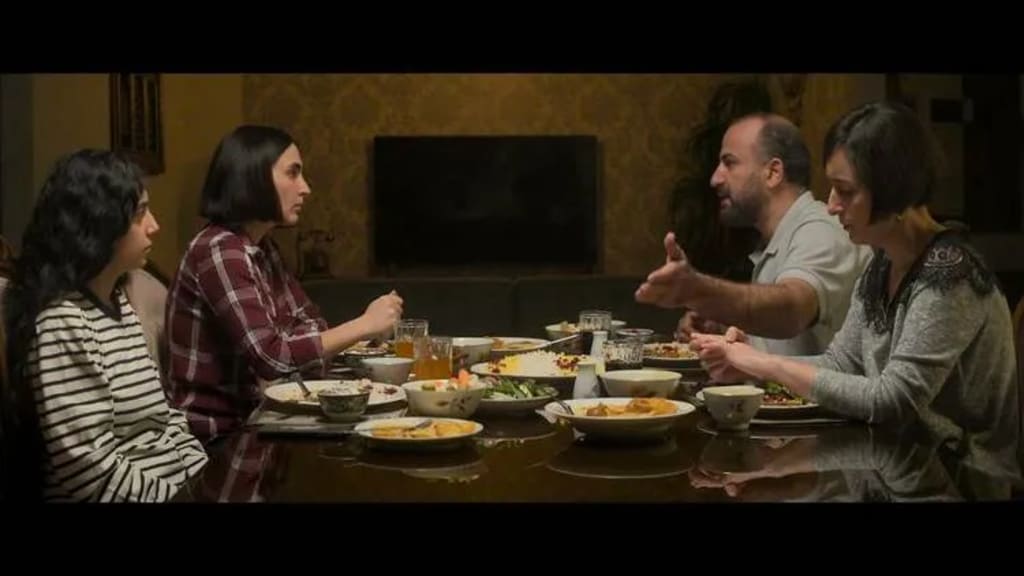
I've always had a disinterest in politically-charged cinema. Perhaps it's circumstantial; there's extreme politics and hyperbolic opinion everywhere we look, long seeped into entertainment both mainstream and lesser-known. Even if it comes from places of sincerity, and avoids overt preaching, political films can be alienating for people who are either not from certain locations or are, at least, uninformed. Through this audiences can feel bored or uninvolved.
However, what the better forms of political cinema are capable of is thoroughly adapted and explored in Mohammad Rasoulof's new feature The Seed of the Sacred Fig. Exiled for his latest feature and currently dodging a prison sentence, its made clear between the frames of this film that Rasoulof was aware of the danger and risk of making such a film. There's a level of audacity integrated when you sacrifice picture quality and consistency in ratios in order to fill a hole in the story (one that could've even been filled with the audience's imagination) and inserted real-life cell-phone footage of riots in Tehran. He could have simply had characters just say these things are happening, just verbally allude to these protests and the violence in the streets; instead Rasoulof makes no mystery as to what he wants people to talk about on their way out of this movie. Some films are about story, character, mood, or history, but The Seed of the Sacred Fig is about Iranian political uproar; and in this many will be drawing uncomfortable parallels whether it be from history books or their daily news, and I'm sure Rasoulof knows that too.
I've always maintained that whether a film is politically important or not is entirely separate from its capacity for critique. Every film is open to criticism no matter how well-intentioned or socially conscious/important it is.
That said, the most uptight and over-critical of film buffs with no political initiation whatsoever will still find a lot to love with The Seed of the Sacred Fig. Under its intrigue and real-life mirrorings, the film is not just a character study, but one of a whole family. Iman (Missagh Zareh) has undertaken a judicial position in this time of unrest, to the disapproval of his family, particularly his daughters, 21-year-old Rezvan (Mahsa Rostami) and teenaged Sana (Setarah Maleki). The position, despite being respected amongst the powerful, has come with the inevitable baggage of paranoia and consistent violations of privacy when out with his family.
Aware of this, those above Iman give him a gun to protect his family, a gesture that inevitably does more harm than good, ultimately unraveling not just political discourse in his household but destroying the family dynamics as they know it. It's made all the worse when the gun turns up missing. Granted, the film could've gotten away with never revealing its location, or making its disappearance due to an organic but mundane reasoning with no real thief. But there is a thief, and we soon learn who it is, and bear witness to the gun and the guilt of its ownership swapping hands multiple times to the film's bitter and climactic end.
On the plainest of surfaces, The Seed of the Sacred Fig is about the way Tehran's current riots and uproars destroy a family. But to many, including some critics halfway across the world, it explores how a traditionalist mindset, unopen to new perspectives can drive some to their madness. Rasoulof is taking a side here; Iman may not be a terrible man, but that doesn't mean he should have a gun.
About the Creator
J.C. Traverse
Nah, I'm good.
Keep reading
More stories from J.C. Traverse and writers in Critique and other communities.
The Burning of Los Angeles
Prior to films like Babylon and other works of fiction that asked the starry-eyed youths to be hesitant on their Hollywood dreams, the American public got their first warning cry in the form of a tightly-wound novel by the satirist Nathanael West. The Day of the Locust, rife with meandering lovelorn suckers, drinking and pretending to paint and act whilst going mad under a Californian sun, presents a Los Angeles that seems to resent and scoff at the novel’s characters; as if they should’ve known, the rallying cry of following your dreams presented in the “pictures” as they were called wasn’t meant for them.
By J.C. Traverse11 months ago in BookClub
Standing While Falling
Quotation from Friedrich Nietzsche "He who wrestles long with monsters should beware lest he himself become a monster. And if you gaze long into an abyss, the abyss also gazes into you. Man is not destroyed by suffering, but by the meaning he makes of it."
By LUCCIAN LAYTH12 days ago in Critique
Charleston White Responds As Viral Report Suggests A Shooting Has Left Him In Critical Condition
In this age of fake news, poor AI generated content, and outlandish rumors, it’s hard to keep up with the truth. That’s why Charleston White declared his existence on social media.
By Skyler Saunders5 days ago in Critique



Comments
There are no comments for this story
Be the first to respond and start the conversation.