
The Dark Renaissance of Cinema
Robert Eggers and the Rebirth of Nosferatu

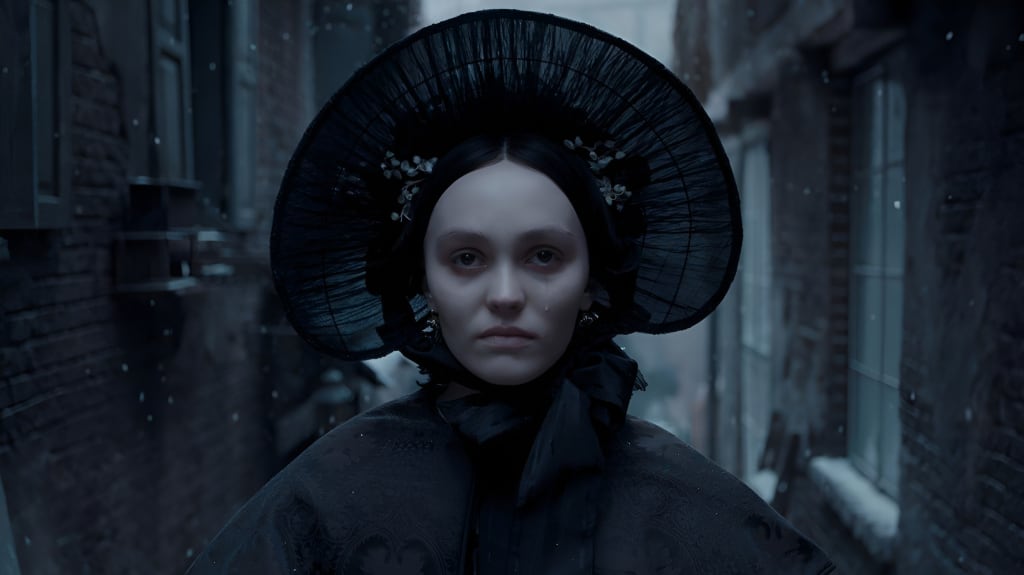
There are filmmakers, and then there are auteurs—those rare artists who infuse every frame, line, and gesture with their unique voice. Robert Eggers stands tall among the latter. His works, including The Witch, The Lighthouse, and The Northman, showcase his mastery of crafting bold, visually stunning, and profoundly dense films that feel like modern fables. These cinematic achievements are steeped in his uncompromising vision, striking a delicate balance between beauty and terror. Now, with Nosferatu, Eggers takes a step that feels not just logical but inevitable—as though his entire career has been a preparation for this moment.
Eggers’ Nosferatu follows Helen, a woman ensnared by the sinister Nosferatu while her husband, Thomas, ventures to finalize critical paperwork with Count Orlock. As Thomas discovers, the Count’s malevolence threatens not just their small German town but also his own sanity, his wife, and everyone they hold dear. This story revives the 1922 silent film classic, one of the pillars of German Expressionism, a movement that forever changed cinema through its surreal, shadow-drenched aesthetics. The original Nosferatu was a silent, haunting adaptation of Bram Stoker’s Dracula, but Robert Eggers doesn’t aim for a faithful recreation. Instead, he reinterprets it as a bold, twisted fable steeped in his signature style.
Eggers masterfully channels his prior works into Nosferatu. The film combines the visceral horror of The Witch, the unsettling theatricality of The Lighthouse, and the mythic grandeur of The Northman. Eggers’ direction transforms the tale into a dark fantasy far removed from realism, plunging us into an atmosphere of dread and decay. His goal isn’t to explain Nosferatu’s existence but to make us accept it—to feel the oppressive weight of his presence.
Time bends and blurs as Eggers plays with unconventional editing, abandoning chronological clarity to immerse viewers in a dream—or rather, a nightmare. Scenes linger on unsettling details and surreal moments, allowing emotions to overshadow logic. This structure mirrors the experience of dreaming: fragmented yet deeply evocative, imprinting feelings of unease and awe long after the credits roll.
Eggers’ Nosferatu doesn’t merely pay homage to its source—it revitalizes its spirit. The theatricality of silent-era cinema is central to his vision. Without the constraints of dialogue, early cinema relied on exaggerated physicality to convey emotion. Eggers embraces this expressive style, encouraging his actors to use their bodies and voices in expansive, unconventional ways.
Take Willem Dafoe, for instance, whose performance bridges pragmatism and madness. As the story progresses, Dafoe’s character evolves into a theatrical force, embodying both the terror and absurdity of the supernatural. Lily-Rose Depp’s portrayal of Helen also stands out; her journey from a vulnerable young woman to a figure consumed by the grotesque horrors of Nosferatu is mesmerizing. In one key scene, her trance-like state captures both her terror and an eerie, sensual surrender to the vampire’s influence.
The theatricality also amplifies the film’s moments of intentional absurdity. Eggers, unafraid to embrace dark humor, weaves moments of grotesque comedy into the narrative. You may find yourself laughing—perhaps nervously—only to recoil moments later in disgust or fear. This delicate balance between humor and horror is a hallmark of Eggers’ work, a testament to his deep understanding of audience psychology.
One of the most striking aspects of Nosferatu is that the vampire himself, Count Orlock, isn’t the scariest part of the film. Instead, the real terror lies in the ripple effects of his presence. Eggers magnifies the grotesque reactions of those who come into contact with the Count: a loyal servant devouring a pigeon’s head or Helen succumbing to a twisted, almost erotic connection with the creature. These moments unsettle far more than Orlock’s visage ever could, emphasizing that horror thrives in the fallout, not just the monster.
In an era dominated by formulaic, commercially safe movies, Nosferatu stands as a rebellion. Eggers doesn’t aim to please everyone; he’s here to provoke, to unsettle, to make us question what cinema can and should be. This unapologetically artistic approach may alienate some viewers, but it ensures that his films resonate deeply with those willing to embrace the discomfort.
Eggers’ work serves as a reminder that cinema doesn’t have to be bound by realism or conventional storytelling. With Nosferatu, he dares us to enter a world where the fantastical reigns, where horror is both repulsive and hypnotic, and where beauty is found in the grotesque.
Over a century after its original release, Nosferatu remains a cornerstone of horror cinema. In Eggers’ hands, it becomes a vivid, unsettling, and necessary revival—a film that not only pays tribute to its predecessor but also challenges us to rethink what we want from the genre. As viewers, we’re left not just entertained but transformed, haunted by the dark beauty of Eggers’ vision.
So, if you’re ready to be shaken to your core, to laugh, cringe, and perhaps even walk out of the theater in discomfort, Nosferatu awaits. It’s not just a film; it’s an experience—one that reminds us why we love cinema in the first place.
About the Creator
A História
"Hi. My name is Wellington and I'm a passion for general history. Here, I publish articles on different periods and themes in history, from prehistory to the present day.
Keep reading
More stories from A História and writers in Critique and other communities.
Anora
In 2024, the Cannes Film Festival awarded the prestigious Palme d'Or to Anora, a film by the immensely talented director, writer, and editor, Shan Bake. This film, with its daring narrative structure and sharp critique of society's obsession with superficial success, solidifies Bake's distinctive voice as a filmmaker who deserves not just our attention but also our deep reflection.
By A Históriaabout a year ago in Critique
Cassie and Johnny
I’m the kind of dame you notice. I’m no femme fatale, but you can’t ignore me, at least not until I warn you about what’s coming, then everybody ignores me. Hell, they usually blame me afterwards and give Johnny all the credit for saving the day, but my Johnny couldn’t save a seat at the movies without my help. Sure, he’s brawny, but brainy? Not so much. Like that time I asked him to spot me five bucks, and he said he didn’t see it anywhere on me, and believe you me, he looked but good.
By Harper Lewis14 days ago in Critique
The reason Hulk refused to fight Thanos
The Real Reason Hulk Refused to Fight Thanos 🚨 Most people think that in Avengers: Infinity War, Hulk refused to fight Thanos because he was scared. After all, this was the first time anyone had seen the Green Goliath genuinely overwhelmed in hand-to-hand combat. But the truth might be much deeper than simple fear.
By Literary fusion3 days ago in Critique
Becca
"Everything is so... flat." Denille said stupidly as she looked around her new neighborhood. She looked around at the muted desert where even the smallest sign of life seemed to have given up. The plant life was shrubs that were half cooked by the heat and where there should have been a lawn, a mess of white rocks laid glistening in the sun. Even the sky looked stretched thin, like the sun had ironed it smooth. She’d moved from Riverside, where at least there were hills, but here in Barstow, everything felt baked and brittle.
By Sara Wilson7 days ago in Fiction


Comments
There are no comments for this story
Be the first to respond and start the conversation.