Revision
The sign of the cross; Part 2 A
The ancient tav was usually an X, not a +! When scholars talk about the ancient Hebrew letter tav, they mean the letter as it appeared in the Paleo‑Hebrew and Proto‑Canaanite alphabets. In those scripts, the tav was most commonly drawn as: an X shape or; a slightly tilted cross‑like shape, but not the Christian cross.
By CA'DE LUCE2 days ago in Critique
The sign of the cross; Part 1 a
If we speak strictly from the New Testament and the first‑century Church, the answer is no. The apostles never taught that the shape of the cross is a spiritual symbol, a protection, or a prayer. They preached Christ crucified, but they did not use the cross as a devotional object or gesture.
By CA'DE LUCE2 days ago in Critique
The sign of the cross; part 3
The Bible warns us about exactly this problem. Your instinct goes straight to the bronze serpent - and that is the perfect example. God Himself commanded the serpent. It was legitimate. It was holy. It healed people. But later generations turned it into an object of power. They burned incense to it. They treated it as sacred in itself. And what did the righteous king do? He smashed it. He called it "a piece of bronze."
By CA'DE LUCE2 days ago in Critique
Speaking to Time Instead of the Room
Much of modern communication is oriented toward immediacy. Writing is framed as something meant to be consumed quickly, reacted to instantly, and replaced just as fast by whatever comes next. Under this model, the value of a piece is measured almost entirely by its initial reception. If it does not land immediately, it is treated as a failure. This assumption narrows the purpose of writing and misunderstands how meaning actually travels through time.
By Peter Thwing - Host of the FST Podcast12 days ago in Critique
Practice vs Performance
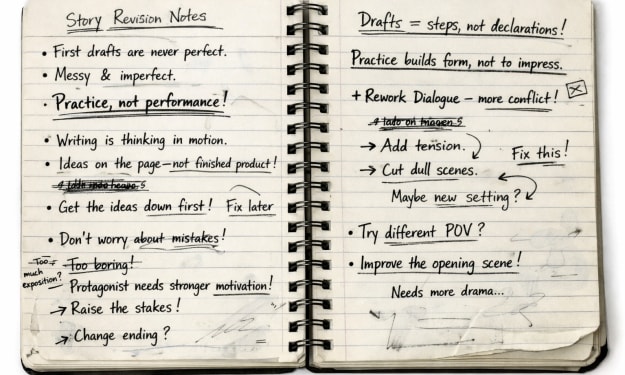
One of the quiet pressures shaping modern communication is the assumption that anything written should be immediately shareable. Drafts blur into declarations, and exploration is mistaken for conclusion. Under this pressure, writing becomes performative by default. The moment words are placed on a page, they are treated as finished statements rather than steps in a process. This expectation distorts both how writing is produced and how it is received, collapsing practice into performance and leaving little room for genuine development.
By Peter Thwing - Host of the FST Podcast13 days ago in Critique
AI as a Reflective Surface
Much of the confusion surrounding artificial intelligence comes from treating it as an agent rather than a surface. When people speak about AI “doing the thinking,” “creating the ideas,” or “speaking for someone,” they are often projecting agency onto a system that does not possess intention, belief, or understanding. This projection obscures what is actually happening in many real-world uses. In those cases, AI is not acting as a source of meaning, but as a surface that reflects, redirects, and reshapes what is already present.
By Peter Thwing - Host of the FST Podcast22 days ago in Critique
Mental Health Tips for Digital Creators (From Someone Who Knows the Burnout)
Mental Health Tips for Digital Creators (From Someone Who Knows the Burnout) It sounds like the ideal job to be a digital creator. You get to work from anywhere, be your own boss, and turn your ideas into content people actually care about.
By Farida Kabir28 days ago in Critique
When Is a Move Final?
The Commitment Problem in Modern Chess Modern chess operates under a fractured commitment model that no longer aligns with how players think, how turns function in most games, or how chess itself is actually played across physical and digital formats. At the heart of the problem is that chess treats physical contact with a piece as binding commitment while simultaneously relying on a separate explicit action to end a player’s turn. This creates a logical contradiction: a move becomes final before the turn is over. In most turn-based games, interaction with game components is provisional until the player explicitly signals the end of their turn. Chess is an anomaly in this respect, and the inconsistency becomes increasingly visible in modern play.
By Peter Thwing - Host of the FST Podcast30 days ago in Critique
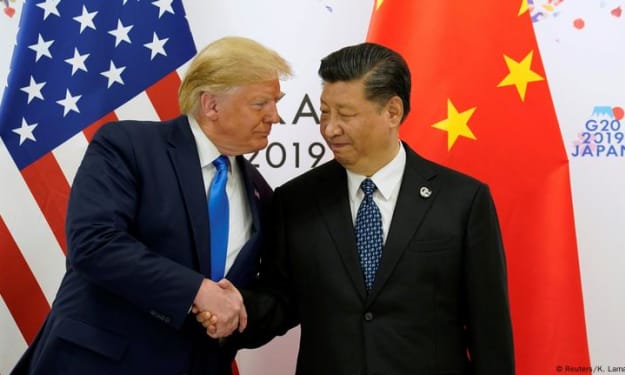
🇨🇳🤝🇺🇸 Trump in China: A New Chapter in U.S.–China Relations?
Donald Trump’s latest visit to China has sparked a wave of global attention. The former U.S. president, known for his bold diplomacy and unconventional style, has arrived in Beijing to meet Chinese President Xi Jinping. Their meetings, reportedly centered on trade, economic cooperation, and regional security, are being viewed as a potential turning point in U.S.–China relations. But beyond the photo opportunities and handshakes, the real question remains—can Trump and Xi truly bridge the growing divide between Washington and Beijing?
By Filmon Ke Raaz | Movie Mysteries Explained4 months ago in Critique
Truth Demands Proof
I saw a post on Facebook where a man shared a letter he had sent to his elected officials calling for the impeachment of the sitting president. He claimed that the offenses were “so obvious” and “so well documented” that he did not even need to include them. That single assumption captured everything wrong with modern political thinking. When someone says “the reasons are obvious,” what they often mean is that they cannot defend them. Emotional conviction replaces evidence. The appearance of certainty replaces truth itself.
By Peter Thwing - Host of the FST Podcast4 months ago in Critique