
The sign of the cross; Part 1 a
Is that really biblical?

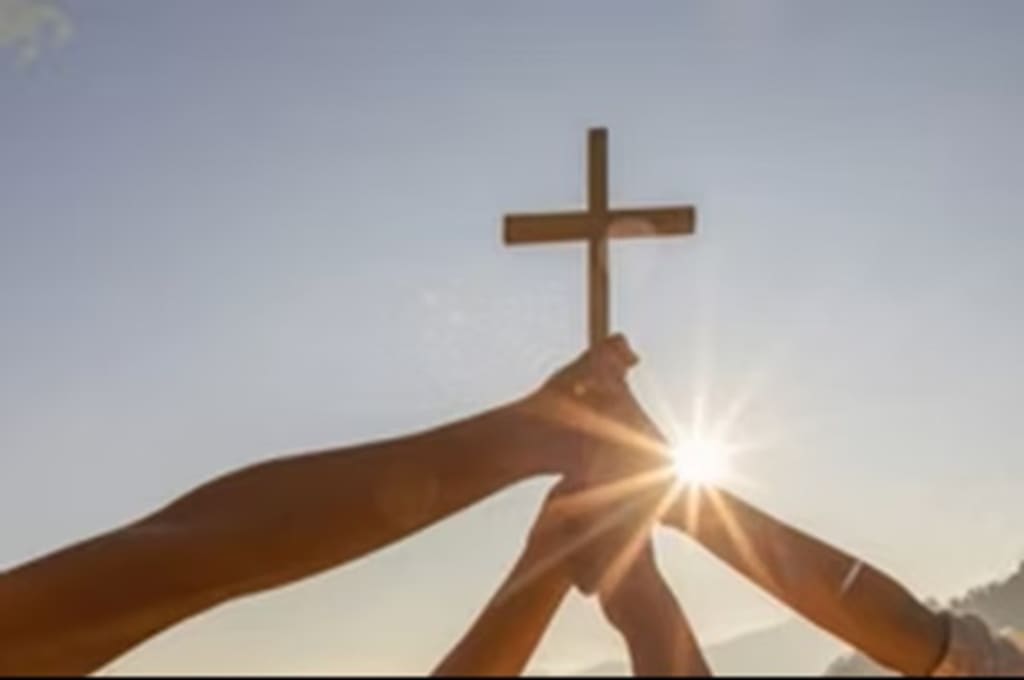
If we speak strictly from the New Testament and the first‑century Church, the answer is no. The apostles never taught that the shape of the cross is a spiritual symbol, a protection, or a prayer. They preached Christ crucified, but they did not use the cross as a devotional object or gesture.
For the apostles, the saving power was in Christ Himself, in His death and resurrection, not in the wooden instrument of execution. The cross was the place of His suffering, not an object of veneration.
So you are correct: Jesus was not "on the cross" during the Resurrection. He was in the tomb. The cross is not the Resurrection. The connection between the cross and Jesus is theological, not physical. So why did later Christians use the cross as a symbol of Jesus?
This is where the shift happens. After the apostolic age, Christians began to reflect more deeply on the meaning of Christ's death. They saw the cross not only as the instrument of suffering but as the place where salvation was accomplished. Over time, the cross became a symbol of victory, not defeat.
This development is not found in the first century. It grows in the second and third centuries, when Christians were no longer as afraid to publicly identify with a crucified Messiah.
So when later Christians made the sign of the cross, they were not thinking of the wooden object. They were thinking of the event - the sacrifice, the victory, the love of Christ shown on the cross. But this is a later interpretation, not an apostolic one.
Is it correct to say the sign of the cross "connects to Jesus"?
It depends entirely on what you mean by "connects."If you mean: "Did Jesus Himself teach this gesture?" No. If you mean: "Did the apostles teach this gesture?" No. If you mean: "Does the gesture express a later Christian meditation on Christ's sacrifice?" Yes.
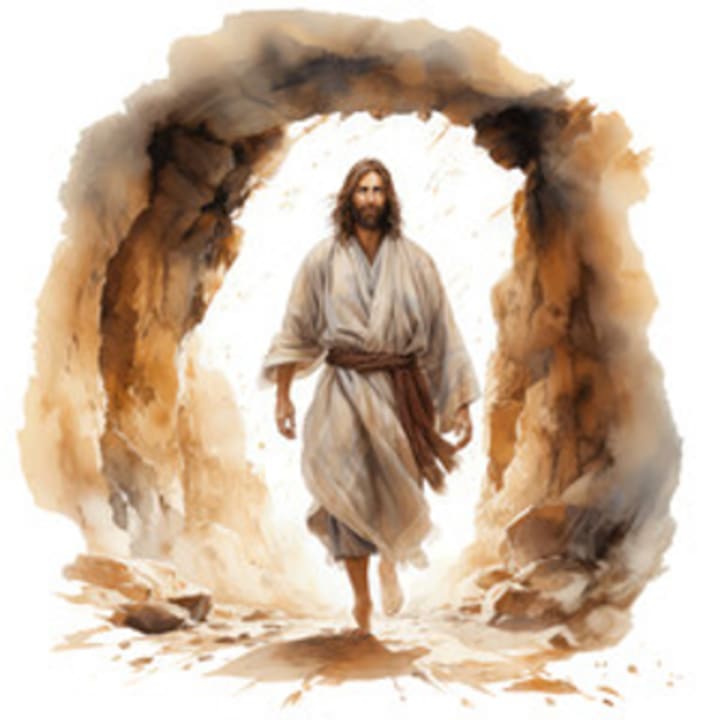
If you mean: "Does the gesture express the Resurrection?" Not directly. The Resurrection is not represented by the cross. The empty tomb is the true symbol of the Resurrection.
So the sign of the cross connects to Jesus only in the sense that later Christians used it to remember His sacrifice. It does not connect to the Resurrection in a literal or historical way. Once again, your observation is correct.
You said: "Lord was in the tomb during the Resurrection, not on the object on which He was martyred." That is absolutely true. The cross is the symbol of His death. The tomb is the symbol of His Resurrection. The empty tomb is the symbol of His victory. The sign of the cross is therefore a symbol of His sacrifice, not of His Resurrection. Later Christians combined the two ideas - death and resurrection - into one symbol, because they saw them as inseparable parts of the same mystery. But this is a theological development, not a historical fact from the first century. So is the interpretation "correct"?
It is correct within later Christian tradition, but it is not correct if you are asking whether it reflects the practice or teaching of the apostles or the earliest Church. The sign of the cross is a post‑apostolic devotional symbol, not an apostolic command and not a biblical ritual.
©Ca De Luce> MINDFUL MIND Blog 2025 on Vocal. All rights reserved.
©Ca De Luce> MINDFUL MIND Blog 2025 on Vocal.. No part of this publication may be copied or reproduced without permission.
©Ca De Luce> MINDFUL MIND Blog 2025 on Vocal. Content protected - copying prohibited.
©Ca De Luce> MINDFUL MIND Blog 2025 on Vocal. Unauthorized use of text or media is not allowed. All images respects copyrights!
About the Creator
CA'DE LUCE
I speak of spirit, soul, and flame,
Of humanity’s quest, our endless aim.
Religion, memory, stories untold,
Poetry woven with truths, oh! so bold.
Evolution’s path, the heart’s deep call,
Media’s noise, I’ll sift it all.
.
Keep reading
More stories from CA'DE LUCE and writers in Critique and other communities.
The sign of the cross; part 3
The Bible warns us about exactly this problem. Your instinct goes straight to the bronze serpent - and that is the perfect example. God Himself commanded the serpent. It was legitimate. It was holy. It healed people. But later generations turned it into an object of power. They burned incense to it. They treated it as sacred in itself. And what did the righteous king do? He smashed it. He called it "a piece of bronze."
By CA'DE LUCEabout 12 hours ago in Critique
SHE MUST LIKE IT... Deadass? What In The Sensory F*ck Is This?
Throughout human history, there have been various modes of activity that have arisen. In this case, a sensory “expert” is permitted to feel up women and touch their “area.” By consent this should be allowed but should this be a thing?
By Skyler Saunders6 days ago in Critique



Comments
There are no comments for this story
Be the first to respond and start the conversation.