
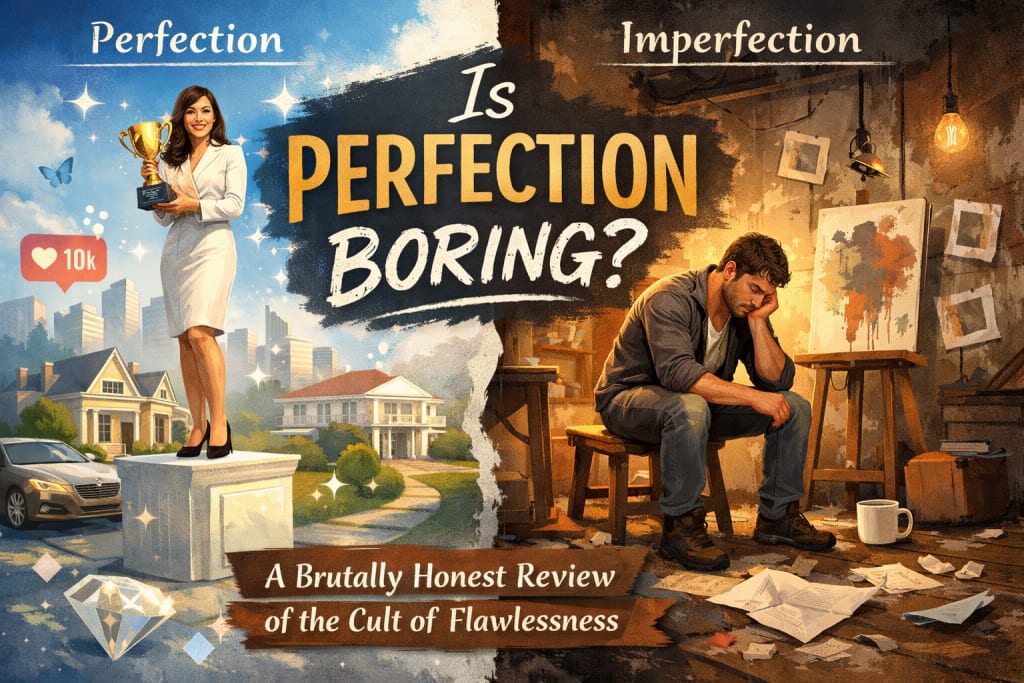
Is Perfection Boring?
A Brutally Honest Review of the Cult of Flawlessness
Introduction
Perfection is often praised as the highest goal. From childhood, many of us are taught to aim for perfect grades, perfect behavior, perfect bodies, and perfect careers. Social media shows carefully edited lives where everything looks flawless—smooth skin, happy families, successful jobs, and beautiful homes. Advertisements promise perfect health, perfect love, and perfect happiness if we buy the right product or follow the right routine.
But a serious question needs to be asked: Is perfection actually inspiring, or is it boring? More importantly, is the constant chase for flawlessness helping us grow, or is it quietly exhausting us?
This article offers a brutally honest critique of the cult of flawlessness. It explores why perfection has become so powerful, how it affects our mental and emotional lives, and why embracing imperfection may be healthier, more creative, and more human. Written in simple words, this piece argues that perfection is not only unrealistic—it may also drain meaning from life.
Understanding the Cult of Flawlessness
The “cult of flawlessness” refers to a mindset where mistakes are seen as failures, imperfections are hidden, and worth is measured by how close someone comes to an ideal standard. This cult is not run by one group; it exists everywhere—schools, workplaces, families, media, and even inside our own minds.
In school, students fear mistakes more than they enjoy learning. At work, employees feel pressure to appear confident and error-free, even when they are confused or overwhelmed. On social media, people post only their best moments, creating the illusion that everyone else is doing better.
This culture teaches us that flaws are shameful. Instead of seeing mistakes as part of growth, we learn to hide them. Over time, this can lead to stress, anxiety, low self-esteem, and burnout.
Why Perfection Looks Attractive
Perfection is attractive for simple reasons. It promises control, safety, and approval.
Control: If we do everything perfectly, we believe we can avoid criticism, failure, or rejection.
Approval: Society rewards high achievers. Perfect results often bring praise, attention, and status.
Security: Perfection feels like protection. It creates the illusion that nothing can go wrong.
In a world full of uncertainty, perfection feels comforting. It gives clear rules: do everything right, and life will reward you. Unfortunately, this promise is false.
The Hidden Cost of Perfection
Behind the shiny image of perfection lies a heavy cost.
Mental Health Struggles
Perfectionism is closely linked to anxiety and depression. When people believe they must always be perfect, they become afraid of failure. Even small mistakes feel unbearable. This constant pressure creates stress that never truly ends.
Fear of Trying
When mistakes are not allowed, people stop taking risks. They avoid new challenges because they might fail. This limits growth, creativity, and learning.
Loss of Joy
Perfectionists often struggle to enjoy achievements. Instead of feeling proud, they focus on what could have been done better. Life becomes a checklist rather than an experience.
Burnout
Trying to maintain flawlessness is exhausting. Over time, many people feel emotionally drained, disconnected, and tired of pretending everything fine.
Is Perfection Actually Boring?
At first glance, perfection may look impressive. But when you look closer, it often lacks depth.
Perfect stories are predictable. Perfect people feel distant. Perfect lives seem unreal.
What makes movies memorable? Not perfect heroes, but flawed ones who struggle, fail, and change. What makes friendships meaningful? Not people who never make mistakes, but those who are honest, vulnerable, and real.
Perfection removes tension, surprise, and growth. Without flaws, there is no story. Without mistakes, there is no learning. Without vulnerability, there is no connection.
In this sense, perfection can be boring because it leaves no room for humanity.
The Power of Imperfection
Imperfection is not weakness. In many ways, it is strength.
Creativity Thrives on Mistakes
Many great discoveries and works of art were born from errors. When people are not afraid to fail, they experiment, explore, and innovate.
Authentic Connections
People connect through shared struggles, not perfect images. Admitting flaws builds trust and understanding.
Growth and Learning
Mistakes are teachers. They show us what doesn’t work and push us to improve. Without mistakes, growth stops.
Self-Acceptance
Accepting imperfection allows people to be kinder to themselves. This reduces stress and builds emotional resilience.
Social Media and the Illusion of Perfection
Social media plays a major role in spreading the cult of flawlessness. Filters, editing tools, and carefully chosen posts create unrealistic standards. People compare their behind-the-scenes lives to others’ highlight reels.
This constant comparison makes many feel inadequate. They believe they are not doing enough, not successful enough, or not attractive enough.
The problem is not social media itself, but how it encourages performance over authenticity. When perfection becomes a performance, people lose touch with their real selves.
Redefining Success
Success does not need to mean perfection. It can mean progress, effort, and honesty.
A successful student is not one who never fails, but one who learns.
A successful professional is not one who knows everything, but one who grows.
A successful life is not flawless, but meaningful.
By redefining success, we free ourselves from impossible standards and focus on what truly matters.
How to Step Away from the Cult of Flawlessness
Leaving perfectionism behind is not easy, but it is possible.
Accept Mistakes: See them as part of learning, not proof of failure.
Practice Self-Compassion: Speak to yourself with kindness, not harsh judgment.
Limit Comparison: Remember that everyone struggles, even if they don’t show it.
Value Effort Over Outcome: Focus on trying your best, not being perfect.
Be Honest: Share struggles with trusted people. Vulnerability builds strength.
These small changes can slowly shift mindset from fear to freedom.
Conclusion
Perfection may look beautiful, but it is often empty. The cult of flawlessness promises happiness, but delivers pressure, anxiety, and disconnection. By chasing perfection, we risk losing creativity, joy, and authenticity.
Imperfection, on the other hand, is real. It is where growth happens. It is where stories begin. It is what makes us human.
So, is perfection boring? In many ways, yes. Because life is not meant to be flawless—it is meant to be lived.
By embracing imperfections, we choose honesty over illusion, growth over fear, and meaning over appearance. And in doing so, we may discover that a beautifully imperfect life is far more interesting than a perfectly empty one.
About the Creator
Idea hive
Article writer and enthusiast sharing insight and knowledge on nature, human behavior, technology, health and wellness, business, culture and society and personal development.




Comments
There are no comments for this story
Be the first to respond and start the conversation.