
Interpretation of "Won’t Get Fooled Again"
The iconic song by The Who

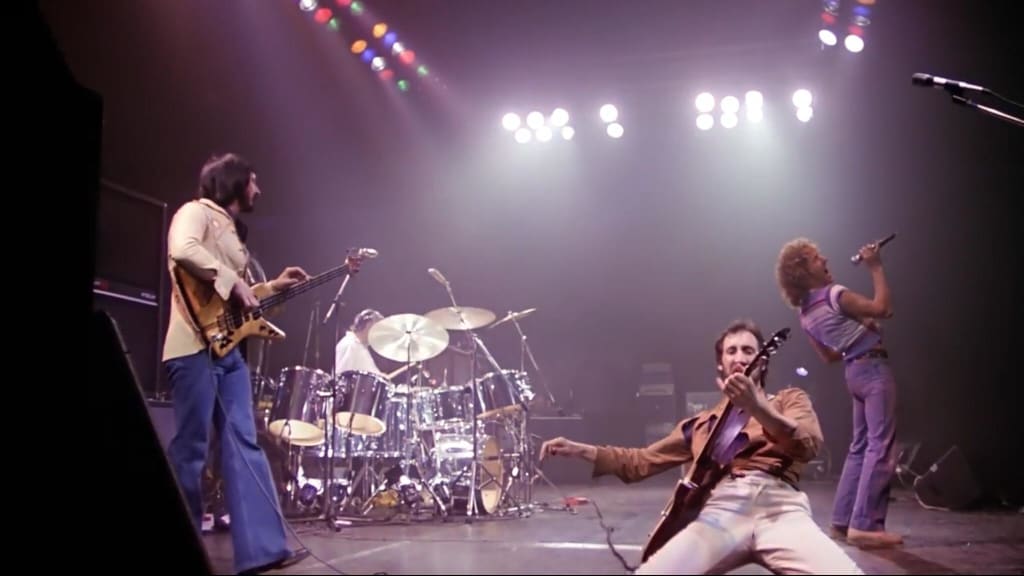
Released in 1971, the now iconic rock anthem performed by the legendary rock group The Who titled Won’t Get Fooled Again is a well-known classic by any fan of the genre and beyond. The video for the song instills a feeling of unity and togetherness but shows little more than the band performing from the view of the audience. The lyrics written by Peter Townshend encompass the rise of rebellion against a tyrannical leadership and unjust system, the overthrowing of those in power and then the rise of new leadership which in turn becomes just as corrupt as those they replaced when given power. The lyrics of the song still carry great weight today as the cycle of rebellion, succession and corruption is still a factor that plays part in politics and leadership in our modern society. Because these factors are still found in our society the lyrics and message stress the importance of civic engagement.
The Official Music Video
The official video found on YouTube simply shows the group performing for an audience over a nine-minute period. The lyrics and music are accompanied by visuals of the band playing, laser light displays and the silhouettes of the crowds’ hands and top of their heads as they enjoy the music. The perspective is simply of watching The Who perform in concert and being part of the crowd for the most part. The message may not be as strong as those made by other groups of the era such as Pink Floyd but the lyrics and the feeling of being part of the crowds’ perspective still manage to give a feeling of togetherness. By making the viewer feel they are apart of the crowd of audience members the director has created a feeling of belonging and participation. By only showing the band performing for the majority of the video the viewers’ attention is directed at the message that is found in the lyrics and not distracted by images and special effects.
The Messages in the Lyrics
As with most songs the lyrics written by Peter Townshend tell a story and carry various messages by painting an image in the mind of the listener. As with most art the story the piece tells is fairly direct and straight forward, however with some analysis and understanding there can be interpretation made into deeper meanings of the messages that story is providing. Fortunately, because of the age of the song and how outspoken artists were during its era it is fairly easy to find the direct interpretation from Townshend about what messages he was attempting to bring attention to through the lyrics he had written.
The first verse of Won’t Get Fooled Again speaks of rebellion and the perspective of those who are being rebelled against. The lyrics are not subtle, the point is made very directly. The song starts “We’ll be fighting in the streets; with our children at our feet…” making a statement of uprising and continues “…and the morals that they worship will be gone” (Genius, n.d.). The song being told in the story is one where the people rise up against the authority and the morality being placed on the people through their leadership. The verse continues “And the men who spurred us on; sit in judgment of all wrong...” (Genius, n.d.). This continues the narrative of how the people are rebelling against the authority that is ruling them while condemning those leaders for the imposed values they are placing on the society they govern. The first verse essentially is a call for civic engagement. One needs to stand up for one’s self and call for action in the pursuit of change.
The second verse talks of the revolution from the first verse being successful. Again, the lyrics are very direct and there is little need for interpretation in what the message is behind what is being stated. The first three lines state that change was inevitable and that the rebellion had been a success (Genius, n.d.). In the same verse a new perspective is brought into play and the actual meaning of the song begins to take shape. Although the rebellion was successful, the only change was a shift in who was in power (Genius, n.d.). The lyrics state that nothing has changed in the world and history has repeated itself (Genius, n.d.). This part of the message is the most interesting section in the song because it is relating to how with change, we still allow history to repeat itself in society. That makes the lyrics relatable through generations as we still have continued to allow ourselves to make these same mistakes in our era. The message behind this verse is that more civic engagement is required, one simply can not rebel and leave things as they are. Members of society need to continually confront, question and engage establishment to ensure that change takes effect and does not revert one a new leader takes power.
The final verses of the song tell the story and give the message that although leadership was forced to change there is no change to society and no benefit from the change. Essentially the lyrics are stating that there has been a change in authority but that authority is just as corrupt as the last regime. The last lyrics of the song state “Meet the new boss; same as the old boss” (Genius, n.d.). The message is quite clear from those nine words that change has brought about no change. This is a perception that some currently have today when observing governments in North America and history certainly does seem to repeat itself. Again, what is being said in these lyrics is that being complacent once change has been initiated is not enough. Society must continue to ensure authority is pushed to follow through on change and the promises they have made in the past.
Although the lyrics may seem like they are not patriotic and in favor of anarchy this is not the case. The rebellion that was sought was one that is patriotic, at least in the views of those who supported it. The chorus makes this clear by stating “I’ll tip my hat to the new Constitution” (Genius, n.d.). By affirming that there is a willingness to follow rule, just to have it altered or change, Townshend is making a clear statement that society only wants change in how things are done and treatment, not to be free of having leaders. While many songs from this era speak of rebellion and being free of rule, Townshend was speaking of legitimate change.
How the Lyrics Encourage Civil Engagement
There is a degree of irony that Won’t Get Fooled Again written by Townshend and performed by The Who was released in 1971 and the message and lyrics can be related to politics today. The main point of the song is that history repeats itself. Nothing changes once leaders take power as they are all the same and not to be fooled by them acting differently before being given power. From the slogans spouted by presidential candidates the last decade to the actions they have taken when put into office it seems society in the United States has ignored these warnings from 1971. When power shifts groups seemingly ignore that the rights and freedoms, they want addressed need to be pursued beyond the election. It is the responsibility of citizens to ensure that the those they have elected perform their duties as promised and to question when they do not.
In the chorus of Won’t Get Fooled Again there is a line that directly coincides with a recent political message. The slogan used by former President Donald Trump, “Make America Great Again” (Cillizza, 2021). This slogan is so well known across the country that if you were to say it in mixed company someone will make a comment about being a supporter or opposer to the campaign. Similarly in the chorus of Won’t Get Fooled Again there is a line “Just like yesterday” (Genius, n.d.). Although in the chorus it is an underlying warning to not have history repeat itself, it points out a fact that we now know about society and the want to return to days before. The idea that things were better before and we need to move backwards is a powerful tool in influencing those who remember what is often referred to as “The good old days”. This seemingly innocent want is actually a pitfall as by moving backwards simply is not possible and if society was to do so there would be many things lost in the process. Although this is a minor similarity it is worth pointing out that there is a portion of society that wants things to be as they were and by living up to these ideals, they are essentially continuing a cycle of repetition.
Working backwards through the song, most of the lyrics are true today depending on perspective. The last lines of the song are “Meet the new boss; same as the old boss” (Genius, n.d.). When we look at politics today and how leaders are perceived there is a lot of truth in these words. Again, using former President Trump as an example and comparing his leadership to current President Biden and his administration, this era continues to have similarities to 1971. Although both men belong to different parties and have very different platforms, when a new President takes office, it is very difficult to make immediate changes to what their predecessor has put into place (Karni, 2021). Although they have similarities as most politicians do, the first factor that should be considered is moving forward is not as easy as changing the person in office (Karni, 2021). Change is a gradual process, old policies need to be ended in an appropriate manner to avoid disaster and unforeseen consequences making it very difficult for one leader to transition from another (Karni, 2021). From that perspective, regardless of what a leader has intended for their actions when they take power, it takes time for them to implement a change (Karni, 2021). This can be perceived by the public as being a continuation from their predecessor and in the can often take more than one term in office. Because of this it is important to continually monitor and ensure that the government is actually pursuing change and not folding on promises. There should always be a degree of understanding in what is happening and that it can take time for change to be administered but through civil engagement answers, timelines and accountability can be made.
A common scenario that is taking place in politics in both the United States and Canada is that the use of abrupt words is not acceptable and the result ends in politicians not having to deal with the public. This action by politicians is not acceptable and should not be allowed by the public under any circumstance. For a politician to say they will not deal with the public because they are offended about a statement is preposterous and not fitting of a leader. There is no evidence that supports being offended is bad for one’s health or has any long-term well-being (Haidt & Lukianoff, 2021). This is an example of what is spoken of in the first verse of Won’t Get Fooled Again (Genius, n.d.). The fourth line speaks of the those who push for rebellion, the fifth speaks about how they sit in judgement (Genius, n.d.). The act of denying civil engagement from citizens due to the fact that one is offended is just that. By judging a person for their statement towards a leader rather than addressing what is said, politicians at the very least are suppressing freedom of speech. Townshend’s lyrics promote the fact that these are specific instances that require the people to stand up and speak out.
There is a broader scope that Townshend’s lyrics cover in promoting civil engagement. The song as a whole speaks of the process of rebellion, change and how after the conflict everything has reverted to as it was. The message behind that is in acting in civil engagement rebellion and repetition could have been avoided. Although rebellion would always be the last resort in invoking change it should not be required if enough of a society stands up and speaks out about what they perceive as injustice as a collective. This speaking out can bring reform without the need for a full revolution and overthrowing those in power. The idea of democracy is not only to give the power to change who is in power but to use the power the people have in creating that change to ensure that leaders follow through with their promises. If they do not, citizens have the ability to speak out before elections and the majority can choose to remove them from office when a new election is held. This means that rebellion can be avoided, the people do not need to settle for the same regime to continue to lead and they can be removed from office.
The idea that without constant checks being made by citizens through civil engagement will result in society to be in a continual loop of replacing leaders with new ones that act the same is possibly the strongest message throughout the song. The lyrics start off hopeful, rebellion has begun and the people want change. They then continue into a point where change has happened, the rebellion was successful but at the same time the way they are ruled has not changed at all. From the lyrics, once the rebellion stopped the people became complacent with having a new ruler and did not consider how they would be ruled. The United States is similar in this way considering the last election. Because there was such a high demand for the previous President to be removed from office, at times it seems many are complacent to leave the one in power unchecked. Regardless of who is in power or what party is ruling, the song lyrics are stating that if change is wanted, civil engagement is required. Questions need to be asked by the people and the government needs to answer them. Rights need to be fought for until they are given and protected, not simply once they are promised. Through his lyrics Townshend is passing a message to future generations that being complacent will only allow for social issues to continue to exist.
Conclusion
The lyrics from the song Won’t Get Fooled Again, performed by The Who and written by Peter Townshend have a positive message regarding the importance of civil engagement. Although the message is not always direct throughout the narrative the song tells the perspective it provides is that government requires a constant check from the people it rules in order to ensure changes are fulfilled and promises are kept. Through civil engagement citizens are able to speak out for what they believe and hold leaders accountable for seeing through promises they have made while campaigning as well as what is right for the people they rule. If this check is not performed regularly by the people, regardless of who takes power, nothing will change. It is the responsibility of citizens to continually pursue the rights and freedoms they expect as well as to ensure that the ones they already have remain protected and honored. By being too complacent with the government there will be a cycle of repetitive leadership regardless of change of party or leader as old policies will remain in place and there will be no need for the current authority to change them. In order to ensure that everyone is given the rights they are entitled to and their freedoms are protected it is a necessity to have civil engagement. To simply engage in the act while one person or party is in office and then retreat from the idea once another takes power is harmful as they will become complacent with their position and fall into the habits of their predecessor when ruling. They will have no need to follow through on policies and promises they have made when campaigning and will have no fear of being removed from office or losing the next election. By telling the story of the full cycle of rule from rebellion to change in power and how things remain the same, Townshend’s lyrics tell us the importance of civil engagement.
Sources
Cillizza, C. (2021, October 5). Donald Trump’s allies are going to make America great again. Again. Seriously. - CNNPolitics. CNN. https://edition.cnn.com/2021/10/05/politics/donald-trump-super-pac/index.html
Genius. (n.d.). The Who – Won’t Get Fooled Again. Retrieved May 25, 2022, from https://genius.com/The-who-wont-get-fooled-again-lyrics
Haidt, J., & Lukianoff, G. (2021, January 27). Controversial Speeches on Campus Are Not Violence. The Atlantic. https://www.theatlantic.com/education/archive/2017/07/why-its-a-bad-idea-to-tell-students-words-are-violence/533970/
Karni, A. (2021, October 2). Biden Campaigned as the Anti-Trump. But a Clean Break Is Never Easy. The New York Times. https://www.nytimes.com/2021/09/30/us/politics/biden-trump-comparisons.html
The Who [TheWho]. (2019, October 11). The Who - Won’t Get Fooled Again (Shepperton Studios / 1978) [Video]. YouTube. https://www.youtube.com/watch?v=UDfAdHBtK_Q
About the Creator
Cassie and Johnny
I’m the kind of dame you notice. I’m no femme fatale, but you can’t ignore me, at least not until I warn you about what’s coming, then everybody ignores me. Hell, they usually blame me afterwards and give Johnny all the credit for saving the day, but my Johnny couldn’t save a seat at the movies without my help. Sure, he’s brawny, but brainy? Not so much. Like that time I asked him to spot me five bucks, and he said he didn’t see it anywhere on me, and believe you me, he looked but good.
By Harper Lewis6 days ago in Critique
Do we really need AI videos?
By now, you’ve likely seen what the latest AI video model, Seedance 2.0, can do. If you haven’t, just look around. The videos flooding your feed—the ones with perfect lighting, cinematic depth, and hyper-realistic motion—they’re not real. They were all generated by AI.
By John Zhangabout 13 hours ago in Critique
I was in a Toxic Relationship, with my Workplace
“You got that?” My ex yelled. His hands were balled into fists at his side. At six foot three, he towered over me. A normal person would have been afraid, but I looked up a video of George Lopez repeatedly saying, “I got this,” and showed it to him. I had grown used to this treatment, so much so that I didn’t blink when he ripped the phone from my hand and threw it across the room.
By Jade M.6 days ago in Confessions



Comments
There are no comments for this story
Be the first to respond and start the conversation.