
I Paid $3,000 for an Autopsy Report on My Own Relationships
I paid a company $3,000 to simulate everything after my death—from clearing my browser history to assessing which friend would genuinely cry at my funeral. The report’s findings made me want to disappear completely while still alive.

This isn't about end-of-life care or philosophical reflection. It's a service, commercially labeled "Life Panoramic Settlement." The process is as rigorous as applying for a loan, with a similar purpose: to assess your impact on the surrounding systems as either an "asset" or a "liability" during liquidation. I placed the order because I wanted to know if the world would even fucking blink if I vanished tomorrow night.
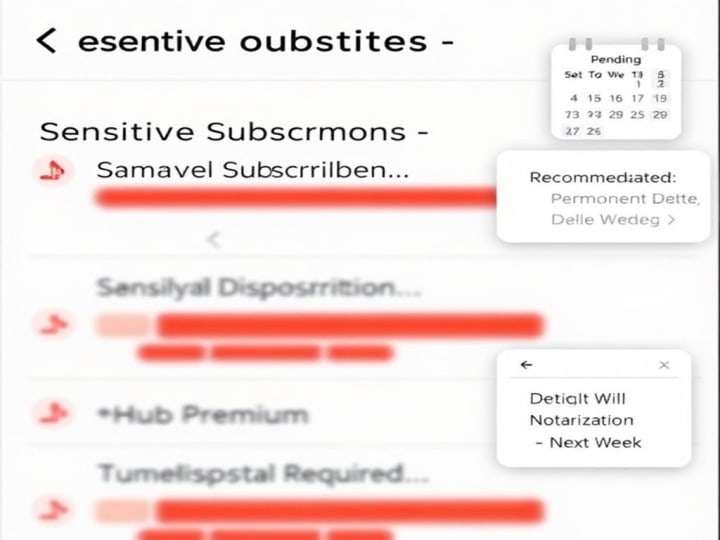
Phase 1: The Autopsy of Digital Legacy—Embarrassment Is the Least of It
The process began with a cold online inventory. It doesn’t judge, it nly categorizes. That somehow makes it worse.
$Account Type: Banks, investments, memberships. This part is simple, like organizing your wallet.
$Content Type: Social media, blogs, cloud storage. This is where you stall. That private blog, never made public, used to vent your darkest thoughts—who should get the password? Or should it be marked for "permanent deletion"?
$Subscriptions & Consumption: This is hell. Netflix, Spotify… and buried deep in the list, those porn site memberships and paywalled borderline content platforms you'd long forgotten but that still silently deduct fees monthly. You have to list them out with your own hands, imagining a stranger (or your designated "digital executor") logging in, confirming, and canceling each one after you die. In that moment, you're not arranging your affairs; you're being forced to tour the most undignified consumerist grave of your own making. The shame doesn't come from the content itself, but from this utterly exposed, dignity-stripped dissection under surgical light.
Phase 2: The Algorithmic Interview of Social Bonds—Quantifying Your Presumed Emotions
Next came a three-hour "In-depth Social Relationship Interview." The agent on the other end had a voice as gentle as a bank teller's, but the questions were scalpel-sharp.
-"Please list the friends and relatives you expect to attend your funeral, ranked by anticipated closeness."
-"Please estimate, for each person on this list, the percentage probability of them providing substantial care (including financial, time, emotional) if you were diagnosed with a major illness."
-"On a scale of 1 to 10, quantify your emotional dependence on your partner. A 10 represents 'life would lose meaning without them.'"
-"Describe the topic, duration, and emotional tone (positive/neutral/negative) of your last three substantive interactions with your sister."
Like a fool, I tried to defend my relationships: "My buddy just isn't good at expressing himself…" "My sister and I may rarely talk, but blood is thicker than water…" The agent just gently repeated: "Please provide objective facts and verifiable data where possible, avoiding subjective speculation. Our model will process it."
Phase 3: The Judgment of the Report—You Are Merely a Variable with Less Than 5% Impact
A week later, I received the 78-page Life Impact Settlement Report. It used charts and probabilities to dismantle my relationships into a pile of unpoetic data.
!!!The most direct blow came from the "Professional Impact Assessment" section:
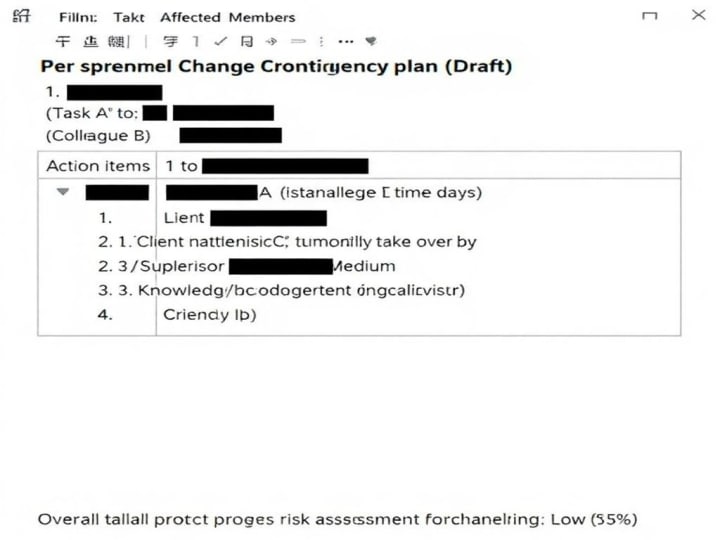
> Summary: Based on the project responsibility distribution, company structure, and recent performance review data you provided, model analysis indicates that your demise would have an estimated impact of less than 5% on the progression of current primary work projects. Your responsibilities could be redistributed and covered within an average of 2.6 weeks. Recommendation: Prioritize creating clear handover documentation to mitigate residual impact and demonstrate professionalism.
They even kindly provided "handover priority suggestions." Staring at that less than 5%, I didn't feel sadness, but something more hollow—so my "diligence," "responsibility," and "indispensability" were, in the system's eyes, merely a friction coefficient so slight it was negligible.
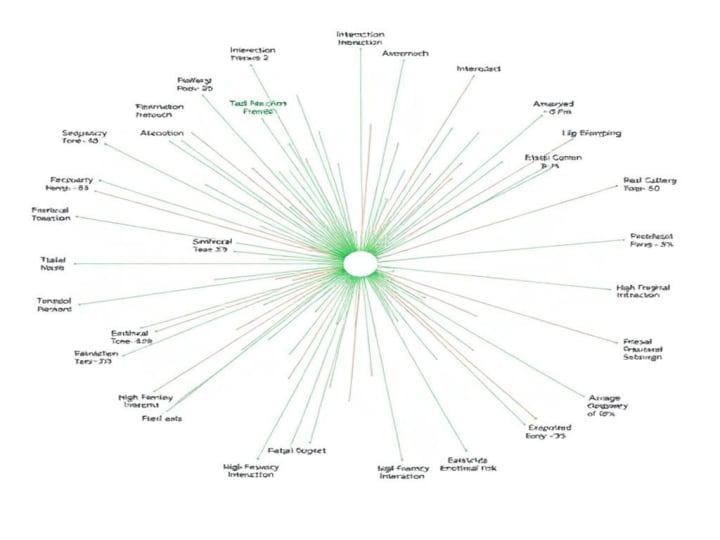
!!!The analysis of the "Emotional Impact Network," however, was a more precise lingchi (death by a thousand cuts):
My best friend, with whom I drink and complain weekly, was tagged as "High probability of perfunctory sorrow (87%), Medium-low probability of substantive support (42%), Short emotional recovery cycle (estimated 1-3 months)." Note: High-frequency communication but topics concentrate on leisure/entertainment and societal complaints, lacking deep value resonance or significant shared interests.
My long-estranged sister, with only holiday greetings in the past three years, was algorithmically assessed as "Potential for long-term psychological shadow (risk assessment: medium). Subsequent mental health monitoring advised." Note: Historical data (childhood to adolescence) indicates a pattern of high-intensity emotional bonding and dependence. Despite sparse recent interaction, no emotional substitute source has been observed. A rupture may activate unprocessed early trauma.
😞😞Using terms like "high-frequency," "interest intersection," and "emotional substitute source," they turned the most important people in my life into calculable nodes. And I, the self-important center, was merely the data generator flowing between these nodes.
The Final Impact: In the "Comprehensive Relationship Health Score" at the end of the report, I scored low. Not because of "few friends," but because the model deemed most of my core relationships remained at the level of "mutually beneficial habit" and "emotional consumption," lacking "risk-resilience." It suggested that if I wanted to improve my "posthumous emotional impact quality," I should begin to "rebuild or deepen 1-2 relationships characterized by deep vulnerability sharing and unconditional support."
Look, they even gave me an improvement plan. Like a fucking life coach.
I ordered my own death and received an audit report on my relationships. It told me my life is built on quicksand; my death, to the world, is merely a minor data interruption with slightly affected efficiency. The most terrifying part might not be that my friends aren't sincere enough, but that the algorithm might be fucking right.
This report didn't help me face death better. It only made me see more clearly how superficially I've been living. Now, whenever I look at the faces assessed by that report, I can no longer simply feel love or warmth. All I see are those percentages, those probabilities, and the abyss between us, fathomless and constructed from habit and inertia.
I paid $3,000 and ultimately purchased this: an experience of social death before my physical one. And my tombstone is this precise, icy, unbearably accurate report.
About the Creator
天立 徐
Haha, I'll regularly update my articles, mainly focusing on technology and AI: ChatGPT applications, AI trends, deepfake technology, and wearable devices.Personal finance, mental health, and life experience.
Health and wellness, etc.
Standing While Falling
Quotation from Friedrich Nietzsche "He who wrestles long with monsters should beware lest he himself become a monster. And if you gaze long into an abyss, the abyss also gazes into you. Man is not destroyed by suffering, but by the meaning he makes of it."
By LUCCIAN LAYTH11 days ago in Critique
Venezuela
By Leavie “Soul on Fire” Scott Her name was Nava, a 23‑year‑old shopkeeper’s daughter from Tehran, though she didn’t feel young anymore. Not after the week she had survived. Not after watching the value of Iran’s currency collapse so fast that shop windows changed prices twice a day. Not after seeing her father stand in his empty store and whisper, “I cannot afford to open tomorrow.”
By Organic Products a day ago in Critique


Comments
There are no comments for this story
Be the first to respond and start the conversation.