
Germany’s New Strategy: Confronting Putin’s Influence in Europe
Germany Takes a Stand: Confronting Putin’s Influence and Reforming the EU

Germany is no longer playing defense. With rising threats from Russia and internal EU divisions caused by pro-Kremlin leaders, the country is preparing to take decisive action. Under the leadership of Friedrich Merz, Germany is moving swiftly to strengthen its own defenses and push for long-overdue reforms within the European Union.
General Carsten Breuer, the highest-ranking officer in Germany’s Bundeswehr, has issued a stark warning: “We are threatened by Russia. We are threatened by Putin. We have to do whatever is necessary to deter that.” NATO, he insists, must be ready for an attack in as little as four years. “It’s not about how much time I need — it’s about how much time Putin gives us to be ready,” he adds.
This urgency is not just about military readiness; it’s about political and economic resilience as well. While Germany and its allies have bolstered their defenses, Putin has been planting political landmines across Europe. These aren’t hypothetical threats—they are sitting heads of government, using their positions to obstruct Europe’s response to Russian aggression.
The Rise of Pro-Kremlin Politicians in the EU
For years, Hungarian Prime Minister Viktor Orbán was considered Putin’s only strong ally within the EU. But that has changed. Slovakia’s Robert Fico has now joined the ranks of those who subtly—or not so subtly—advance Russia’s interests in Europe. If these leaders are allowed to act without consequences, others may follow.
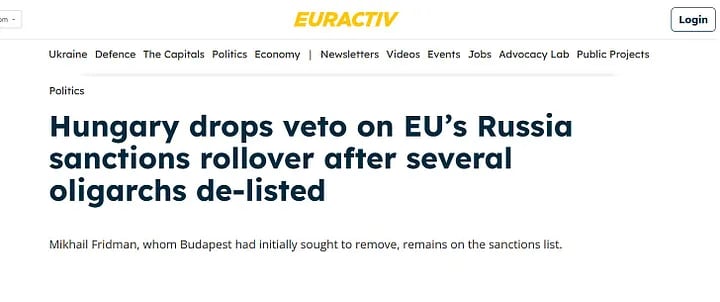
Orbán has long played a disruptive role within the EU. He has used Hungary’s veto power to delay sanctions against Russia, block military aid to Ukraine, and extract concessions unrelated to the war. His government continues to provide Moscow with political cover while benefiting from European economic support.
One of the most blatant examples of his obstruction came in late 2023 when he single-handedly blocked the EU’s €50 billion Ukraine assistance package. The delay weakened European resolve and gave Russia time to regroup. This was not an isolated incident—Orbán has repeatedly leveraged the EU’s consensus rule to weaken its ability to respond quickly and effectively.
At the same time, Hungary remains economically dependent on the EU. Since joining in 2004, the country has received approximately €83 billion in EU funds, averaging about 3.5% of its GDP annually. Meanwhile, under a long-term agreement with Russia, Hungary continues to import 4.5 billion cubic meters of Russian gas per year, effectively sending billions of euros back to Moscow. Orbán’s strategy is clear: take Europe’s money while serving Putin’s interests.
The Need for Systemic Change in the EU
The EU’s reliance on unanimous agreement for major decisions has been its greatest weakness. This system has allowed Orbán and other obstructionists to hold the entire bloc hostage. As long as a single leader can block key foreign policy decisions, the EU will struggle to act decisively.
Germany’s new government is determined to change this. Merz and his likely coalition partners have agreed that the EU must be able to withhold funds and suspend voting rights from member states that violate core democratic principles. Their draft coalition agreement calls for applying existing EU protective mechanisms—such as funding freezes and infringement proceedings—more aggressively.
More importantly, Germany is pushing for a shift to qualified majority voting on key EU decisions. This would eliminate the veto power that leaders like Orbán have exploited. If implemented, this reform would make it much harder for a single country to block sanctions, aid, or foreign policy measures.
A Turning Point for European Leadership
Friedrich Merz has wasted no time making his intentions clear. Even before officially taking office, he has reached out to French President Emmanuel Macron to discuss expanding France’s nuclear umbrella to protect all of Europe—an ambitious, though uncertain, proposal. He has also taken steps to reform Germany’s strict debt rules, opening the door for increased defense spending.
If Merz succeeds in pushing these reforms through, it won’t just make Europe stronger against external threats—it will also prevent authoritarian-leaning leaders from undermining the EU from within. The shift away from unanimity will allow Brussels to act with greater speed and authority, ensuring that future decisions are not stalled by political opportunists.
The End of Putin’s Influence in Europe?
Europe has learned a painful lesson: internal division is just as dangerous as external threats. Putin has exploited these divisions to weaken the continent’s response to his aggression. But with Germany now taking the lead, there is a real chance to close those vulnerabilities.
The road ahead won’t be easy. Orbán and his allies will resist any effort to curb their influence. However, if Germany and other key EU nations remain committed, they can reshape the European Union into a stronger, more unified force—one that is no longer vulnerable to Putin’s political maneuvers.
This is more than just a policy shift. It is a historic moment for European security and democracy. And if Germany succeeds, it may finally mark the beginning of the end for Putin’s ability to manipulate the EU from within.
2/2
About the Creator
sondos azhari
Passionate about health and beauty products, I delve into wellness practices and skincare routines. With a focus on holistic living.My aim is to empower others to prioritize self-care and make informed choices for their well-being.
Keep reading
More stories from sondos azhari and writers in Critique and other communities.
Things You Don’t Know About a Woman’s Body – Even If You’re Married
When it comes to understanding the human body, we often assume we know everything, especially about our partners. However, a woman's body is full of incredible biological mysteries that many people—yes, even married individuals—aren’t aware of. From hidden physiological functions to mind-blowing hormonal influences, the female body continues to surprise scientists and everyday people alike.
By sondos azhari10 months ago in Families
Who Is Clavicular? The Looksmaxxing Streamer Who Ran Over A Stalker In His Cybertruck
What is so damaging to this current culture is the ant-intellectualism which pervades nearly every element of it. Clavicular, real name, Braden Peters equivocates physical form with getting women, making money, and overall being a strong “man.”
By Skyler Saunders20 days ago in Critique
A Jerk and an Idiot Meet in a Bar
A Jerk and an Idiot Meet in a Bar Well not in a bar, per se, social media. After all, it is the bar of our modern times. It’s where we hook up with friends, family, dates, or trysts. Places like Facebook, Instagram, TikTok, and others, all designed for social interaction with anonymity and limited consequences, for bad behavior. Often these entities dole out consequences to parties that are not causing a problem, and give a blind eye to serious problems.
By Alexandra Grant6 days ago in Critique


Comments
There are no comments for this story
Be the first to respond and start the conversation.