
Arcane: How Riot’s Animated Masterpiece Redefined Video Game Adaptations
A Deep Dive into the Visual Brilliance, Narrative Depth, and Lasting Impact of Arcane

Video game adaptations have long struggled to capture the depth and complexity of their source material. Arcane, the critically acclaimed animated series from Riot Games and Fortiche Productions, not only overcame this challenge but redefined what a video game adaptation can achieve.
Spanning two seasons, Arcane delivered a compelling narrative, breathtaking animation, and emotionally resonant characters. Whether you’re a longtime League of Legends fan or completely new to its lore, the series stood on its own as one of the greatest animated shows of all time.
Now that Arcane has reached its conclusion, let’s analyze its storytelling, character arcs, artistic vision, and cultural impact—and whether Season 2 delivered on its immense expectations.
A Tale of Two Cities: Arcane’s Masterful Worldbuilding

From the opening scene, Arcane immerses viewers in the starkly divided world of Piltover and Zaun. Piltover, the so-called "City of Progress," is a hub of innovation and wealth, while Zaun, its underbelly, suffers from poverty, crime, and the dangerous influence of a volatile substance known as Shimmer.
Unlike many adaptations that struggle with worldbuilding, Arcane excels in environmental storytelling. Every neon-lit alley of Zaun and every opulent hall of Piltover feels lived-in, reinforcing the stark class disparity that fuels the series’ conflict.
By grounding its fantasy elements in political and economic struggles, Arcane avoids simplistic good-versus-evil narratives. Instead, it presents a morally complex world where every faction believes they are the hero of their own story.
Character-Driven Storytelling: The Tragedy of Vi and Jinx

At the heart of Arcane is the deeply tragic relationship between Vi and Jinx (formerly Powder)—two sisters torn apart by trauma, war, and conflicting ideologies.
- Jinx’s Transformation: Season 1 charts Powder’s descent into Jinx, a volatile and unpredictable force of chaos. Manipulated by the cunning Silco, she desperately seeks validation and belonging while battling her own fractured mind.
- Vi’s Struggle: Meanwhile, Vi embodies resilience and guilt, caught between her responsibilities in Piltover and her desperate attempts to save her sister.
Their interactions in Season 2 are even more gut-wrenching, as Vi realizes that the sister she once knew may be beyond saving. Arcane refuses to offer easy resolutions, making their sibling rivalry one of the most compelling and tragic dynamics in modern animation.
The Rise and Fall of Piltover’s Elite

Beyond Vi and Jinx, Arcane weaves a complex political drama through characters like Jayce and Viktor.
- Jayce, an ambitious inventor, ascends to political power but struggles under the weight of governance and responsibility.
- Viktor, his former ally, pushes the boundaries of science in a desperate bid to cure his own mortality, leading to irreversible consequences.
Their shifting dynamic in Season 2 encapsulates one of Arcane’s central themes: progress at what cost? Meanwhile, the enigmatic Mel Medarda adds another layer of intrigue, proving that Arcane isn’t just about physical battles—it’s a chess game of power and influence.
A Visual Masterpiece: Fortiche’s Groundbreaking Animation

One of Arcane’s most universally praised aspects is its stunning animation style.
- Hand-painted textures give the series a unique blend of realism and artistry.
- Expressive facial animations elevate emotional moments, making characters feel intensely real.
- Fluid action sequences ensure that every fight, explosion, and chase scene carries weight and energy.
Unlike traditional CGI-heavy shows, Arcane embraces a painterly aesthetic that enhances its visual storytelling. From Jinx’s neon-soaked hallucinations to Zaun’s toxic green underbelly, every frame is a work of art that reinforces the show’s psychological and thematic depth.
Did Season 2 Deliver? Comparing Both Arcs
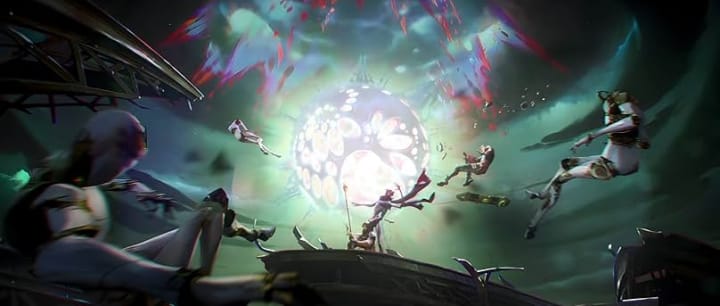
While Arcane’s first season was nearly flawless, the second season had the difficult task of concluding the story in a satisfying way.
- Season 1 focused heavily on character development and worldbuilding, setting the stage for deep emotional stakes.
- Season 2 had to escalate tensions and deliver a high-stakes climax while maintaining the emotional depth that made Season 1 so impactful.
The final episodes brought devastating consequences for multiple characters, ensuring that Arcane remained gripping until the very end. However, some fans felt that the pacing of Season 2 was slightly rushed compared to the slow-burn tension of Season 1.
That said, Arcane avoided common pitfalls of rushed endings, providing a bittersweet but powerful conclusion to its central character arcs.
The Legacy of Arcane: A New Era for Video Game Adaptations
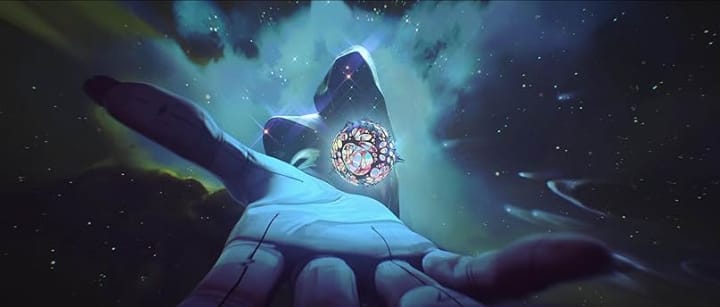
Arcane is more than just an animated series—it’s a cultural milestone.
- It proved that video game adaptations can be just as compelling as original works.
- It redefined visual storytelling in animation.
- It showcased the emotional and thematic depth of League of Legends’ lore, attracting new fans to the universe.
With Riot Games teasing future projects within the Arcane universe, the success of the series has set the stage for more ambitious adaptations. Whether through sequels, spin-offs, or new animated ventures, Arcane has raised the bar for storytelling in gaming and television alike.
Arcane’s Place in Animation History

With its rich storytelling, breathtaking animation, and deeply human characters, Arcane has cemented itself as one of the best-animated series of the decade. It tells a story that resonates beyond gaming, exploring themes of love, loss, ambition, and the cost of power.
If this is the new standard for video game adaptations, we may be entering a golden age of storytelling that blurs the lines between games, television, and cinema.
Here’s something else you might enjoy:
About the Creator
Bounty Hunter
RPG storyteller, worldbuilder and game designer exploring immersive narratives.
Keep reading
More stories from Bounty Hunter and writers in Critique and other communities.
The Legend of Vox Machina: From Critical Role to Animated Glory
The rise of The Legend of Vox Machina from a tabletop RPG campaign to a full-fledged animated series is a testament to the power of dedicated fandom and high-quality storytelling. As an adaptation of Critical Role, the show brings the beloved characters of the original campaign to life with stunning animation, strong performances, and a narrative that blends humor, action, and emotional depth. But how well does it translate the essence of the original game, and what impact has it had on both the animation and RPG landscapes?
By Bounty Hunter about a year ago in Critique
Cassie and Johnny
I’m the kind of dame you notice. I’m no femme fatale, but you can’t ignore me, at least not until I warn you about what’s coming, then everybody ignores me. Hell, they usually blame me afterwards and give Johnny all the credit for saving the day, but my Johnny couldn’t save a seat at the movies without my help. Sure, he’s brawny, but brainy? Not so much. Like that time I asked him to spot me five bucks, and he said he didn’t see it anywhere on me, and believe you me, he looked but good.
By Harper Lewis10 days ago in Critique
Do we really need AI videos?
By now, you’ve likely seen what the latest AI video model, Seedance 2.0, can do. If you haven’t, just look around. The videos flooding your feed—the ones with perfect lighting, cinematic depth, and hyper-realistic motion—they’re not real. They were all generated by AI.
By John Zhang5 days ago in Critique


Comments
There are no comments for this story
Be the first to respond and start the conversation.