
Addressing the Root Causes of Illegal Immigration: A Call for Sustainable Development and Global Responsibility
« We welcome legal immigrants but we don’t welcome people who come to hurt America ». Said George D. Bush in the context of illegal immigration
This assertion, taken from one of former U.S. President George W. Bush's speeches on illegal immigration, is rather superficial. Even if illegal immigration is a complex issue that can have negative consequences for both the countries of origin and the destination countries, it must be said that the American president is wrong to think that illegal immigrants should not be welcome at home. The causes of illegal immigration are often rooted in the very policies and actions of powerful nations, including the United States itself.
Indeed, what the American president is saying is not that the USA doesn't want immigration. He says that people who come to harm America are not welcome, specifically referring to illegal immigrants. But what he fails to address is the root cause of this illegal immigration. If we take a closer look at the issue, we find that the causes of illegal immigration are deeply connected to factors like underdevelopment in the countries of origin, climate change caused by global warming, insecurity due to armed conflicts, and the difficulty in obtaining the necessary documentation for legal immigration. These are systemic issues that cannot be reduced to a simple "good versus evil" dichotomy.
If we examine these causes more closely, we realize that many of the issues driving illegal immigration are, in fact, perpetuated or exacerbated by the actions of powerful foreign nations, including the United States. Through exploitative foreign policies, economic practices, and political interference, many of the wealthiest countries have historically contributed to the instability, poverty, and environmental degradation in poorer nations. On the one hand, they extract resources and wealth from these countries, while on the other, they set up barriers that prevent people from legally migrating in search of better opportunities. This is where the statement by Tiken Jah Fakoly an ivorian reggea artist resonates: "You took our beaches and their golden sand; put the animal in a cage; cut down our forests. What is left for us? When you have empty hands, you prepare for the journey and throw yourself into the void."
The artist’s words reflect the desperate circumstances that many in the Global South face. After centuries of exploitation, many countries in Africa, Latin America, and parts of Asia find themselves with impoverished populations, struggling to survive. The wealth of these nations has been siphoned off for the benefit of the more developed world, leaving behind little opportunity for economic growth or improvement in the quality of life. The result is that these people, having seen how the "developed" world lives and longing for the same comforts and opportunities, seek a way out. But the gates to the "promised land" are tightly shut by the very countries that profited from their struggles. The result is a tragic paradox: they want to live better lives, but they are shut out, and they resort to illegal immigration as their only viable option.
Thus, they have come to plunder our wealth, to change our mentalities; now we want to live like them, but we don't have the means to live like them at home. We want to go to them, but they refuse us visas. The only solution left is to go there illegally. This tragic reality is the engine driving illegal immigration: the desire for a better life, combined with the inability to access it through legal means, pushes millions to risk everything in hopes of a brighter future.
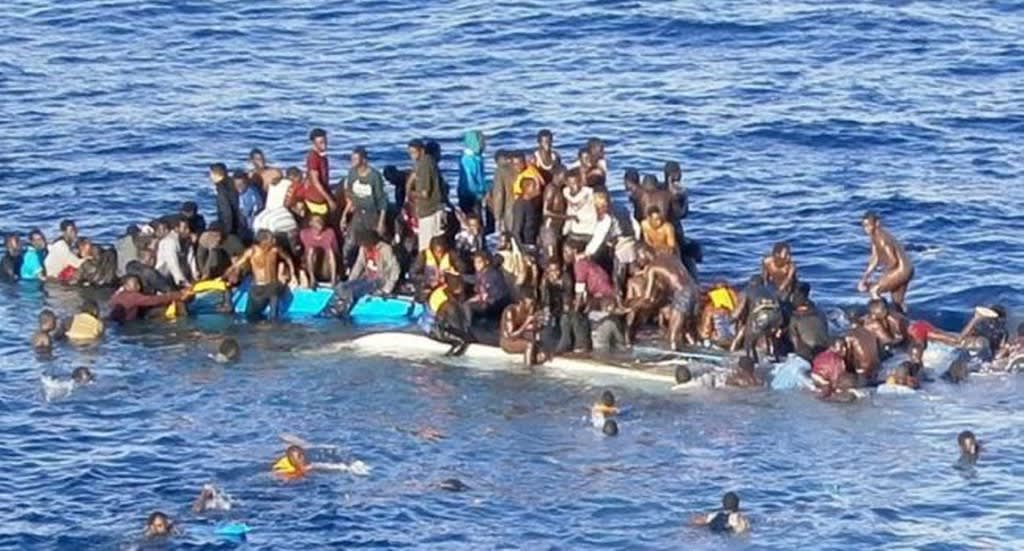
Unfortunately, thousands of Africans and migrants from other regions are dying in their attempt to cross oceans, deserts, and borders, victims of the very system that keeps them trapped in their countries of origin. Every year, we hear of tragic stories of people who perish in the Mediterranean Sea or along the perilous migration routes to the United States. These are lives that are lost because there are no legal avenues for these people to seek refuge or opportunity in the countries that have so much to offer, yet are unwilling to share the wealth or the chance for a new life with the world’s most vulnerable.
While we might disagree with the stance taken by the American president, it is important to recognize that the impact of illegal immigration is not only detrimental to the countries receiving these migrants, but also contributes to the continued underdevelopment of their regions of origin. The migration of people—whether skilled laborers, young people, or intellectuals—drains the very resources that these countries need to build a stronger, more sustainable future. This is not merely a brain drain; it is a loss of the potential needed to build industries, educate the next generation, and create economic opportunities that could have helped lift entire nations out of poverty.
In light of this, the real solution to illegal immigration is not simply to restrict borders or to demonize those who seek a better life. Rather, it lies in addressing the root causes of migration by promoting true and sustainable development in the countries of origin. This means creating real economic opportunities through the development of local industries, the mechanization of agriculture, and the building of infrastructure that allows these countries to grow on their own terms. It also means providing quality education for all, so that the youth of these countries have the skills and opportunities to create a future within their own borders, rather than seeking to escape them.
Such development, however, will not happen without the active support of wealthier nations. These countries must take responsibility for the roles they play in perpetuating underdevelopment and environmental degradation around the world. Instead of focusing solely on building walls and restricting immigration, wealthy countries must invest in global development programs that empower countries to become self-sufficient. These investments should not be seen as charity, but as a long-term strategy to create a world where people are not forced to risk their lives in dangerous migration routes, and where countries no longer rely on external aid, but instead thrive on their own.
This support from wealthy nations should also be designed in a way that helps the countries of the Global South gradually phase out aid dependency. Instead of perpetuating a cycle of charity, this aid should focus on building the capacity of these countries to support themselves through education, infrastructure development, and industry-building. For instance, countries in sub-Saharan Africa, Latin America, and South Asia could benefit from partnerships that foster innovation in agriculture, renewable energy, and technology, creating the foundation for a more self-reliant economy.
In conclusion, addressing the issue of illegal immigration requires a comprehensive approach that goes beyond simply managing the flow of people across borders. It necessitates tackling the root causes of migration—poverty, insecurity, environmental degradation, and lack of opportunity—by fostering sustainable development in the countries from which migrants come. Rather than treating immigration as a problem to be solved with walls and exclusionary policies, we should focus on creating a world where people no longer feel the need to leave their homes in search of a better life. Only through fair and equitable development, combined with the responsible actions of wealthy nations, can we create a future where migration is a choice, not a desperate necessity.
About the Creator
Keep reading
More stories from Paulin GNOUMOU and writers in Critique and other communities.
Redefine love: When friendship becomes our greatest support.
There's a Supreme Court case in the United States that could be mistaken for a sermon. It's the case that recognized that same-sex couples have a constitutional right to marry. Judge Kennedy said, “marriage addresses the universal fear that a lonely person might call and find no one.” he goes on to say that marriage offers care and companionship, and the decision holds that these are basic human needs that everyone should have access to, whether heterosexual or homosexual. But what do these words tell you if you're single? In the United States, around 30% of women over 65 are widows. The reality is that it's unlikely that any of us will have a partner by our side until our last breath. Regardless of whether we're in a relationship now, we need to rely on more than one relationship to support us through our full and unpredictable lives. We need other loved ones. And there's a neglected type of relationship we can turn to: friendship, which can be a more powerful force in our lives. Often, friendship is a happier way of life, a place of refuge when we're overwhelmed by life's many problems. Joe and John have been best friends for decades. When Joe had problems with alcohol and drugs, John helped her into rehab. And then John decided that to support his friend, he too would get sober. Joy cared for her friend Hannah during the latter's six-year battle with ovarian cancer. This included trips to New York, where Hannah received specialized treatment. Joy had trouble sleeping at night in the hospital, because she was too busy keeping watch to make sure her friend's chest was still rising and falling. Some of the friends I spoke to had a friendship that occupied the space usually reserved for a romantic partner. Some had this kind of friendship and a romantic partner. So it's not “either/or” but maybe “both/and”. Talking with these people, I realized that they were at the forefront of friendship, helping us to imagine how much more we could expect from our platonic relationships. Which is true, but another way of looking at it is that they're doing something retro, even ancient. In ancient Rome, friends referred to each other as “half my soul” or “the greatest part of my soul”, language we now use in romantic relationships. From China to Jordan to England, there was a practice called “sworn brotherhood”, where male friends went through a ritual to consider each other brothers. A century or so ago, friends would take portraits like these, their arms around each other, their bodies very close together. What I took from this story is that if we don't limit friendship, it can be central to our lives. But today, not everyone recognizes this. I spoke to a mother who really tried to convince her son to make dating a priority, because she wanted him to find emotional wholeness. And her son replied, “I found it with my platonic life partner.” his best friend, whom he'd known since high school, who'd moved across the country to be near him, to live with him, in fact. The mother said, “I don't understand how you can be partnered with someone you're not romantic with.” an understandable reaction in a culture that sees friendship as the companion to the real hero: romance. We get this message from romantic comedies, from Supreme Court justices, and from public policy. For example, Joy, during the six years she cared for her friend, was not entitled to family medical leave. When Hannah died, Joy was not entitled to bereavement leave, because they were considered unrelated. In our government policies and in the workplace, friendship is invisible. Sometimes this diminishment of friendship comes from without, and sometimes it comes from within. If we can recognize what friendship has the potential to be, and if we can understand that there is more than one kind of loved one, then we can imagine other ways to find love, care and companionship. And we can support those who have these kinds of friendships. So, the mother I was telling you about, she's had a complete change of heart. She now admires the commitment between her son and her son's friend. My wish is that we feel free to share our lives with those we're lucky enough to find, whether that's a spouse, a sibling, or a house full of friends.
By Paulin GNOUMOUabout a year ago in Humans
Standing While Falling
Quotation from Friedrich Nietzsche "He who wrestles long with monsters should beware lest he himself become a monster. And if you gaze long into an abyss, the abyss also gazes into you. Man is not destroyed by suffering, but by the meaning he makes of it."
By LUCCIAN LAYTH11 days ago in Critique
The African Diaspora and History of Rhetoric: Learning to Learn
When studying the history of rhetoric, many groups were excluded from participating in power and were used, abused, and written off as inferior. Even today African nations have not recovered from being exploited by European powers.
By WILD WAYNE : The Dragon King3 days ago in Critique


Comments
There are no comments for this story
Be the first to respond and start the conversation.