
Who Killed The Pride Family?
The mother and her two young daughters were brutally killed inside their home in 1982 and the case has never been solved.

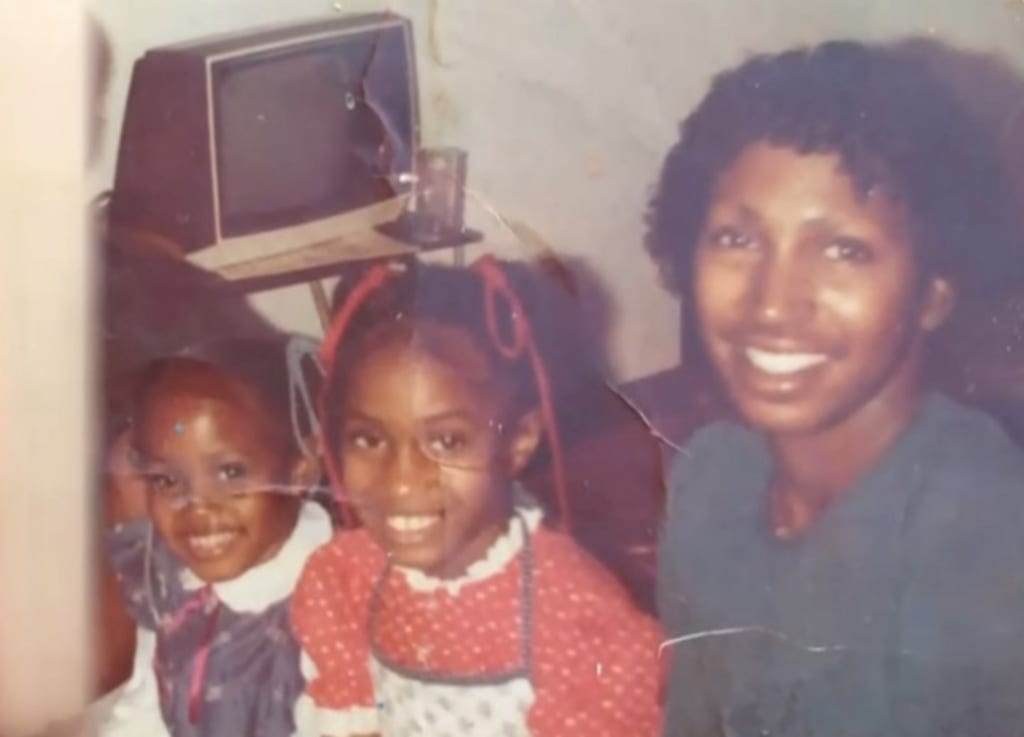
Valerie Pride was at a great point in her life. The 24-year-old was in the final year of her four-year apprentice program with the International Brotherhood of Electrical Workers Local 640 and was one of the first female electricians at the Palo Verde power plant in Maricopa County, Arizona. During the summer of 1982, the single mother purchased a new home in a quiet neighborhood of South Phoenix, Arizona, hoping that it would be a good place to raise her two daughters.
On Monday, September 6, 1982, Valerie and her daughters celebrated their first Labor Day in their new home. Unfortunately, it was not a happy occasion; early that afternoon, Valerie’s boyfriend, Ben Daniels, got a phone call telling him that his 9-year-old daughter from a previous relationship had suffered an epileptic seizure while taking a bath and drowned. He had rushed to the hospital where she was taken only to learn that doctors had been unable to save her life.
Shortly before 9:30 pm that night, Valerie called her brother and was chatting with him when she heard a knock on her front door. Since Ben still hadn’t returned home from the hospital, Valerie told her brother she needed to go so she could see who was at the door. Her brother had no idea that it would be the last time he ever spoke to his sister.
Ben arrived home around 10:00 pm and found the front door to the house open despite the 109-degree temperature. When he went inside, he walked directly into a nightmare. Valerie’s daughters, 8-year-old Shontia and 4-year-old Duana, were huddled together in the living room, covered in blood. They had been stabbed to death.
Valerie was on the floor of the dining room, and also stabbed multiple times. It appeared she had tried to make it to the back door but had been attacked before she could reach it. Ben had trouble processing what he was seeing; all he could do was scream in horror. Neighbors heard his cries and called the police.
When investigators from the Phoenix Police Department arrived at the scene, they were horrified by the brutality of the triple murder. One detective had to step outside to take a moment away from the carnage. He remarked to a reporter, “My God, it’s terrible in there. There’s stabbing all over the place.”
Shontia and Duana were found in their pajamas; it was clear that they were ready for bed when they were attacked. Detectives theorized that Valerie had been attacked almost immediately after she answered the knock at her front door. After the crime, the killer had likely escaped through the back door; a bloody handprint on one of the wooden rails of the fence in the backyard indicated that the murderer had jumped the fence.
Residents were shocked by the crime. The neighborhood was made up of new, Spanish-style homes and was normally very quiet. Valerie and her daughters had just moved into their house a few weeks earlier. Valerie was described as a hardworking single mother who was devoted to her two daughters; no one could imagine why anyone would have wanted her and her children dead.
Police struggled to find a motive for the triple homicide. Although the news media reported that one of Valerie’s daughters had been mutilated, there were no signs of sexual assault on any of the victims. There were no signs of forced entry into the home and nothing appeared to have been stolen. The killer — or killers — had only one thing in mind that night: murder.
Detectives desperately wanted to find the person responsible for the brutal attack, but they soon exhausted all leads. They spoke to all the residents of the south Phoenix neighborhood but were unable to find any who had seen anything unusual on the night of the murder. The intense heat didn’t help; most residents had been inside with their air conditioners on when the attack occurred. Those who lived closest to Valerie reported hearing some kind of commotion around 9:45 pm but it hadn’t been enough to alarm them. No one saw anyone enter or leave Valerie’s home.
Despite their best efforts, the investigation stalled. After six months without progress, homicide detectives intensified their efforts. A handful of investigators were sent back to Valerie’s neighborhood to conduct another canvass of the area; they re-interviewed neighbors and searched for any clues they might have missed during their initial investigation.
Hoping to bring in some new leads, both the Silent Witness program and the International Brotherhood of Electrical Workers Local 640 offered rewards for information leading to the arrest and conviction of the person or persons who killed the Pride family. Tips trickled in, but few solid leads were developed.
As they spoke with neighbors, detectives continuously heard rumors that the murder of Valerie and her daughters had been some sort of revenge killing for the death of Ben’s daughter earlier that same day. It was unclear why anyone would blame Valerie for what had been ruled the accidental drowning death of 9-year-old Zeta Daniels, but the rumors were persistent and investigators had to follow up on them.
Zeta lived with her mother, Gloria Freeman, in Phoenix; their house was located about a mile away from Valerie’s new home. According to Gloria, she had been supervising Zeta while she took a bath but had momentarily walked away. It was believed that Zeta then suffered from an epileptic seizure; when Gloria returned to the bathroom Zeta was underwater. She was rushed to the hospital but there was nothing doctors could do to save her.
After an autopsy was conducted, Zeta’s death was ruled to be a tragic accident. The medical examiner determined that she had drowned and noted that “the condition of her body was consistent with an epileptic seizure.” It seemed unlikely that an accidental death could have precipitated a violent triple homicide, but investigators seemed to believe it was a possibility.
On August 18, 1983, 14-year-old Kevin Atkins was arrested outside Phoenix’s Chris-Town mall; investigators believed he was involved in the murders of Gloria, Shontia, and Duana. He was released the following day, but police stressed that his release didn’t mean he was no longer a suspect. The Maricopa County District Attorney’s office wanted more evidence before they were willing to prosecute Kevin; detectives felt confident they would be able to provide the evidence needed for charges to be filed.
Investigators also announced that they were still seeking at least two other people they believed were connected to the crime. They believed that another juvenile and one or more adults had participated in the murder of Valerie and her children and that the crime had been an act of revenge for the death of Zeta Daniels. Gloria Freeman was the aunt of Kevin Atkins; Zeta had been his cousin.
Although detectives initially seemed confident that they had probable cause to charge Kevin with the crime, it was unclear if they had any physical evidence linking him — or anyone else — to the murders. Charges were never filed against him; although rumors continued to circulate suggesting that Zeta’s family had been involved in the murder, these allegations were never substantiated and the case soon went cold.
Investigators stated that it was possible the murders were somehow related to a burglary that had taken place at the Pride house in August 1982. Valerie returned home one day to find that someone had broken into the house and slashed her waterbed mattress; the intruder then took all of Valerie’s clothes and threw them into the flood of water that gushed out of the deflated mattress. It was unclear if detectives ever had any suspects or persons of interest in the burglary but no charges were ever filed.
Two years after the murder, investigators were called when a knife was found in the backyard of one of Valerie’s neighbors. It was similar in size to the one believed to have been the murder weapon, and detectives were hopeful that it might provide a clue to jumpstart the investigation. It was sent for analysis but technicians were unable to determine if it was the knife used to kill Valerie, Shontia, and Duana.
In 1988, detectives made another push to solve the triple homicide. Sgt. Mike Hobel of the Silent Witness program made a public appeal for anyone with information to come forward and speak with detectives, even if they had been reluctant to do so in the past. His plea brought in a few tips but no new leads.
Over the years, police followed up on hundreds of potential leads and conducted thousands of interviews. Investigators spoke with people from places as far away as Ohio, determined to finally solve the case. Despite their work, they were unable to develop any solid suspects.
In 2005, Phoenix Police Detective Bob Brunansky was assigned to work the case, which had been cold for more than two decades. He was convinced that it could still be solved, noting, “Someone out there knows who committed these crimes and it’s time for that person to come forward so this can be resolved and everybody can have peace.”
Detective Brunansky found it hard to comprehend how someone could have killed three people with seemingly no remorse, especially considering that two of the victims had been little children. “The saddest thing is about the children. You have two young girls who could have had really brilliant futures…we’ll never know.” Unfortunately, his pleas fell on deaf ears and no new leads were developed.
The crime has now been unsolved for four decades. In June 2022, Valerie’s sister, Vicky McDonald, stated that the family has never stopped seeking justice for Valerie, Shontia, and Duana. They were still shocked by the violence of the crime. “They were literally slaughtered…who could have done that to little children?”
Both Vicky and Denice Pride, Valerie’s sister-in-law, stated that Shontia and Duana had been the center of Valerie’s world. She had been doing everything she could to give them the best life possible, and they were all looking forward to a bright future when they moved into their new home in the summer of 1982. All of their hopes and dreams were stolen from them by the killer.
Detective Dominick Roestenberg, an investigator with the Phoenix Police Cold Case Unit, is currently working on the Pride family murder. He noted that it was an exceptionally horrific crime. “It was brutal, it was bloody…they were brutally and repeatedly stabbed.” Like the family, Detective Roestenberg wanted to obtain justice for Valerie and her children.
Investigators think that the killer was someone who knew Valerie; they do not believe that this was a random crime. They are currently submitting evidence from the crime scene to be analyzed using advanced technology that wasn’t available at the time of the murders; blood from the fence and unidentified fingerprints found inside the home had already been analyzed in the past but it was possible that they might be able to find something that was missed during the initial stages of the investigation.
Despite the passage of time, Detective Roestenberg remains hopeful that the case will be solved, although he admits that police will likely need help from the public to do so. “There is someone out there that knows what happened to this family.”
About the Creator
True Crime Black
The True Crime genre doesn’t always include equity in its storytelling. WE need to shine a light on our victims of color.
Keep reading
More stories from True Crime Black and writers in Criminal and other communities.
What Happened to Alexis Patterson?
Alexis Patterson left her house in tears on the morning of May 3, 2002. It was her snack day at Hi-Mount Community School, and the 7-year-old had promised her friends that she would bring cupcakes. Her mother had taken her to a grocery store the night before, and she had bounced with excitement as she left with the cupcakes she had carefully picked out. That morning, though, her mother learned Alexis hadn’t completed her homework like she said she had, and as a punishment, she refused to allow her to take her cupcakes to school. No amount of pleading could get her mom to change her mind, and Alexis was very upset about it when her stepfather escorted her on her one-block walk to school. She was still crying as she joined her fellow students on the playground. Numerous kids would remember seeing her that Friday morning, but she never made it to class. Somewhere between the playground and the door to her school, Alexis disappeared.
By True Crime Black3 years ago in Criminal
Hunting 'Deadshitdaddy': The Instagram Account Selling Bones from the House of Skulls
The Digital Storefront in Ephrata While Jonathan Gerlach was physically robbing graves 70 miles away in Yeadon, he was simultaneously building a thriving brand in the heart of Ephrata Borough. Using the handle "deadshitdaddy" on Instagram and maintaining active profiles in private Facebook groups like "Human Bones and Skull Selling Group," Gerlach allegedly turned his residence at 100 Washington Avenue into an online boutique for the macabre.
By Sunshine Firecrackera day ago in Criminal




Comments
There are no comments for this story
Be the first to respond and start the conversation.