
White job applicants on the NHS's shortlist are subjected to "discrimination."
The NHS still gives EDI projects priority despite this.

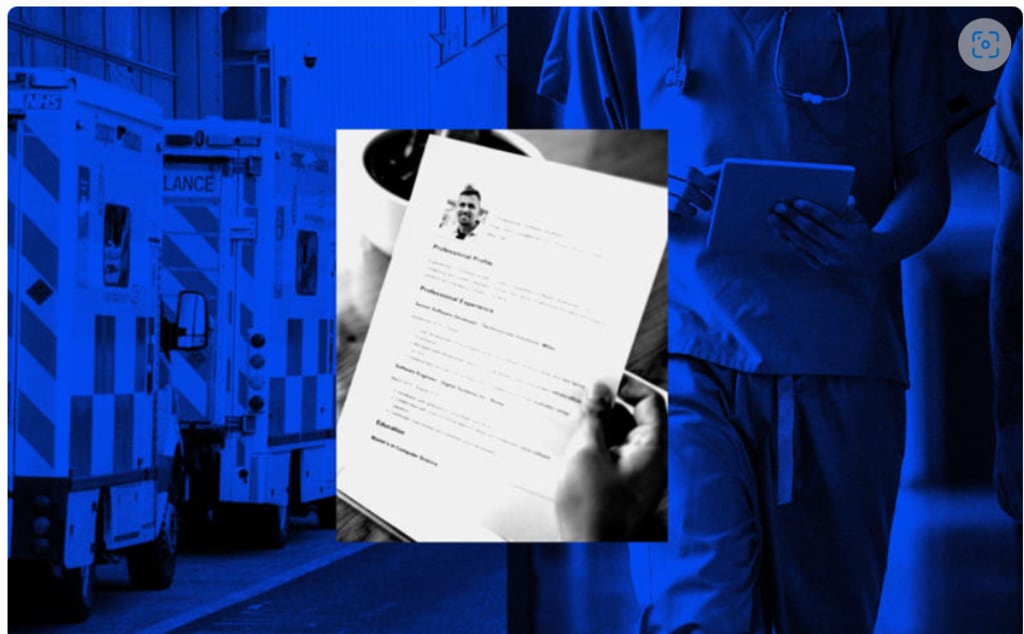
According to The Telegraph, NHS trusts "discriminate" against white job applicants by favouring black and ethnic minority individuals on interview shortlists.
The Rooney Rule, an American football strategy that requires ethnic minorities to be shortlisted for interviews if they apply, is encouraged in NHS England papers.
Other purportedly inclusive hiring techniques include considering race as a "tie-breaker" and forcing managers to defend the hiring of white British nationals.
An NHS hospital in Liverpool acknowledged that it had previously shortlisted candidates from minority backgrounds using "positive discrimination."
Following West Yorkshire Police's decision to temporarily prohibit applications from white Britons, the admission is the most recent in a rising controversy about "racist" employment practices being pursued by public sector institutions.
By concentrating on the shortlisting process, it is likely to draw attention to businesses that make an effort to offer minorities preference throughout the interview process.
The NHS is attempting to "discriminate against applicants based on their race," according to a Tory source. Former Tory Cabinet minister Grant Shapps claimed that the "tick-box" procedure was "entrenching racial quotas."
"This type of tick-box policy is patronising, polarising, and fundamentally incorrect," he stated. "We should be building a colour-blind society, not entrenching racial quotas under the banner of 'diversity.'" Jobs should be granted on the basis of merit, not skin colour.
The 2010 Equality Act, which makes it lawful to take "positive action" to facilitate the recruitment of ethnic minorities, is the source of practices that encourage diverse shortlists.
HR professionals who wish to diversity their workforces have seized upon the act, which was draughted by the then-Labour minister Harriet Harman.
In the UK, it is illegal to expressly favour a minority applicant over a more competent white candidate. This is known as positive discrimination.
Because each member of the shortlist goes through the same interview procedure, proponents of the Rooney Rule and related policies contend that they do not constitute discrimination.
Former health minister and Tory MP Neil O'Brien said that "race-based hiring policies" have contaminated public services. it implies "people are selected according to the colour of their skin."
“Those who implemented these policies lump together all non-white groups as if they are all the same, and they will give preference to someone from a privileged background over someone who has overcome all kinds of obstacles, as long as they have the right skin color,” he stated.
"Misguided" objectives for equality
Health Secretary Wes Streeting criticised "misguided" diversity, equality, and inclusion (DEI) agendas earlier this year, including one that claimed an "anti-whiteness stance." He advised the NHS to "get back to basics" in the face of its 7.4 million backlog and lowest-ever public satisfaction ratings.
The NHS still gives EDI projects priority despite this.
A public guideline titled "improving the selection process" from NHS England's East of England area advises businesses to "consider using a version of the Rooney Rule or increase the numbers of under-represented groups who are shortlisted."
"At least one trust applies a version of the [Rooney] rule," according to a different document titled No More Tick Boxes, which also provides examples of actions NHS Trusts are implementing to enforce diverse interview panels.
A hospital that "only interviews if there is at least one BME [black and minority ethnic] candidate and one woman candidate shortlisted" is given as another example.
"Positive discrimination at the shortlisting stage" was implemented by Liverpool Women's NHS Foundation Trust as part of initiatives to broaden diversity until 2023.
It is believed that this was done to ensure that, if they fit the employment requirements, members of "the global majority," which is a term used to describe the non-white ethnic groups that make up the majority of the world's population, would be interviewed.
The "tie-breaker" of race
Hospitals are encouraged by NHS Employers to use race as a "tie-breaker" when two applicants are equally qualified for a position.
Under-represented ethnicities may be given preference if they are just as qualified as a white person, according to a provision of the Equality Act known as "equal merit."
Public documents show that NHS groups, such as NHS Bristol, North Somerset and South Gloucestershire Integrated Care Board, and East Lancashire Hospitals Trust, have embraced this policy.
According to a Conservative Party source, this constituted racial prejudice.
"No employer, least of all one that receives taxpayer funding, should discriminate against applicants based on their race," they declared. Individuals ought to be assessed based on their character traits rather than their skin tone.
We eliminate divisive DEI hiring practices that don't enhance patient outcomes. This social engineering must end because it is completely incorrect.
"Institutionalising diverse selection criteria"
Health service leaders are urged by NHS England's A Model Employer guidance to always include at least one minority candidate in interviews.
It states that there "would seldom be acceptable exceptions for not having a BME member" and that hiring managers are "accountable for institutionalising diverse shortlisting and interview panels."
Additionally, it states that managers should be forced to explain if they choose to hire white Britons.
According to the guidelines, "a clear explanation of the procedure followed and the reasons for not appointing the BME candidate should be sent to the organization's chair." Some trusts have gone so far as to require managers to provide the chief executive a justification for choosing white candidates.
Among the organisations that have implemented policies requiring interview panels to provide an explanation for the denial of an appointment to an ethnic minority position are the London Ambulance Service and the Royal Free Hospital in north London.
The Telegraph reported earlier this year that 30 NHS trusts in the North West have joined an anti-racism awards program.
By 2028, representative leadership
NHS organisations' progress in enhancing diversity is measured against nine criteria using a national programme called the Workforce Race Equality Standard.
With 76% of trusts more likely to hire a white applicant after interviews than an ethnic minority, the "relative likelihood of white applicants being appointed from shortlisting compared to BME applicants" is one of the major criteria NHS trusts are required to address.
By 2028, the NHS wants to make sure that its leadership reflects the BME workforce as a whole.
The Weston NHS Foundation Trust, which has a "positive action programme to support increasing representation of global majority colleagues at bands," and University Hospitals Bristol are two organisations that are working to achieve that goal.
Additional "positive action" strategies commonly employed by NHS trusts include targeting apprenticeships and job openings in particular communities, promoting candidates from ethnic minority groups in employment advertisements, and more nebulously "embedding anti-racism" and "de-biasing recruitment practices."
How "positive action" in police hiring turned into discrimination against white people Ethnic minorities are now guaranteed interviews in large corporations as well as the public sector.
Because Welsh Water is dedicated to "the improvement of equality and diversity," it interviews all applicants who "identify as part of an under-represented group" and who match the job's requirements.
ITN interviews one ethnic minority candidate for all of its roles, and Reed in Partnership, a recruitment company, offers guaranteed interviews to minority
About the Creator
Keep reading
More stories from Francis Dami and writers in Criminal and other communities.
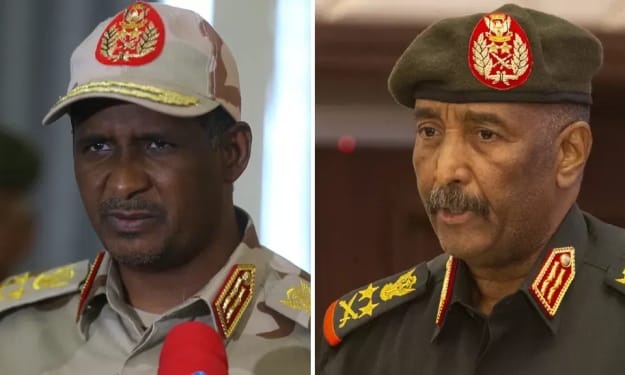
How the two senior military officers in Sudan betrayed each other
The terrible military dictatorship of President Omar Bashir endured for decades until the people rebelled. They desired democracy to exist in their nation. A few months later, these two men offered the demonstrators the future they had desired after aiding in the overthrow of Bashir in a coup.
By Francis Dami2 years ago in Criminal
A Horror Movie Come to Life: Inside the Nightmare at 100 Washington Avenue
The Raid on Washington Avenue On the morning of January 6, 2026, the residents of Washington Avenue woke up to a swarm of law enforcement vehicles. But this wasn't a standard drug bust. The officers entering 100 Washington Avenue were wearing hazmat gear and respirators.
By Sunshine Firecracker4 days ago in Criminal
Crime Chronicles: Darya Nikolaevna Saltykova
A little while ago, we covered the story of Delphine LaLaurie (1787 - 1849), the New Orleans socialite who tortured and murdered her slaves. We also covered Erzsebet Bathory (1560 - 1614), who did the same thing in Hungary around 200 years before that; I didn't think I'd find another one, but I did - in Russia.
By Greg Seebregts4 days ago in Criminal
Silver Screen Magic with Mae West
American actress and singer Mae West became a popular film actress during the Great Depression. She started entertaining in vaudeville, then performed on Broadway, and finally went to Hollywood. She signed up with Paramount Pictures and made her debut in the 1932 film “Night After Night.” She also starred in musicals, comedies, and crime dramas. The American Film Institute named her one of the best classic Hollywood actresses.
By Rasma Raisters5 days ago in Geeks



Comments
There are no comments for this story
Be the first to respond and start the conversation.