
Was His Abduction Caused by His Support for the Palestinian Cause or the Theft of Oil?
Palestinian Cause or the Theft of Oil?

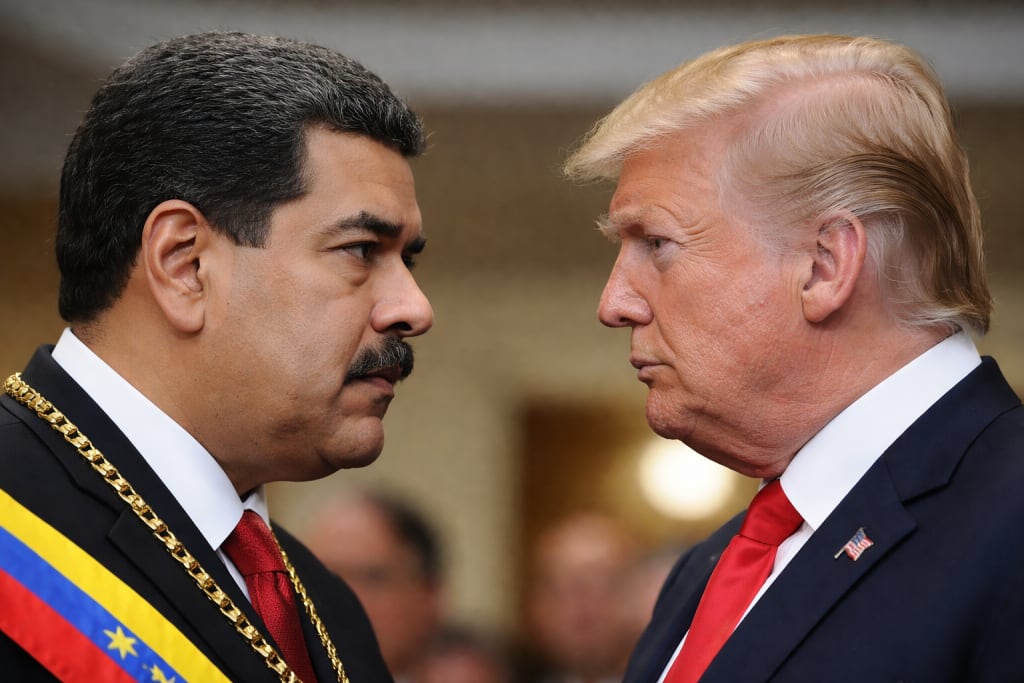
Was His Abduction Caused by His Support for the Palestinian Cause or the Theft of Oil?**
The controversy surrounding the alleged targeting or attempted abduction of Venezuela’s president has sparked intense debate across political and media circles. At the center of this debate lies a critical question: was he targeted because of his outspoken support for the Palestinian cause, or was the real motive an effort to seize control of Venezuela’s vast oil wealth? To understand this issue, it is necessary to examine how ideology and economic interests intersect in modern geopolitics.
Venezuela holds the largest proven oil reserves in the world, making it one of the most strategically important countries in global energy politics. Oil has long been the backbone of the Venezuelan economy and a source of both power and vulnerability. Any government that seeks to fully control its oil resources inevitably challenges foreign corporations and governments that rely on access to cheap and stable energy supplies. When Venezuela limited foreign involvement and asserted national sovereignty over its oil sector, it directly confronted powerful international interests.
At the same time, Venezuela’s leadership adopted a clear and unapologetic stance in support of the Palestinian cause. Unlike many governments that choose neutral language or diplomatic silence, the president publicly condemned Israeli actions against Palestinians, expressed strong support for Gaza, and framed the issue as a matter of human rights and justice. This position placed Venezuela in direct opposition to influential Western powers that strongly support Israel, particularly the United States.
Supporting the Palestinian cause on the international stage is not without consequences. Global politics often punishes leaders who challenge dominant narratives or align themselves with causes considered controversial by powerful states. Venezuela’s stance was not symbolic or occasional; it became a consistent element of its foreign policy. This moral positioning turned the country into an ideological opponent, especially during periods of heightened tension in the Middle East.
However, history suggests that ideology alone rarely triggers extreme political actions such as destabilization or removal attempts. Moral opposition is often tolerated until it interferes with material interests. This is where oil becomes central to the discussion. Venezuela’s control over its oil resources provided it with leverage and independence, reducing its vulnerability to external pressure. For nations seeking greater influence over global energy markets, regaining control or access to Venezuelan oil would be a significant strategic gain.
During times of global energy instability, oil-producing countries become focal points of international competition. Sanctions, political isolation, and support for opposition movements are frequently used as tools to weaken governments that resist external demands. In such contexts, narratives involving coups, forced removals, or abductions often emerge as part of broader pressure campaigns rather than isolated events.
Internally, Venezuela faced serious economic and social challenges. Inflation, shortages, declining oil production, and political polarization weakened public trust and state institutions. These conditions increased instability and made the country more susceptible to both internal unrest and external interference. In fragile political environments, allegations of kidnapping or overthrow can gain traction quickly, regardless of whether they are fully proven.
Media coverage further complicated the situation. International outlets often focused heavily on economic mismanagement and governance issues while paying less attention to Venezuela’s foreign policy positions, including its support for the Palestinian cause. On the other hand, supporters of the government emphasized foreign conspiracies and economic warfare. Both perspectives presented partial truths, obscuring how ideology and economic interests worked together.
Ultimately, framing the issue as a choice between support for Palestine or oil theft oversimplifies a complex reality. The president became a target because he combined moral defiance with control over a strategic resource. His support for the Palestinian cause challenged powerful political narratives, while Venezuela’s oil represented immense economic and strategic value. Together, these factors created a situation in which pressure, destabilization, and targeting became increasingly likely.
In modern geopolitics, leaders are rarely challenged for their beliefs alone. They become targets when their beliefs are backed by resources that grant them independence and influence. Venezuela’s case illustrates how the collision of principle and profit can place a nation’s leadership at the center of global confrontation.
About the Creator
America today
Breaking news, political insights, real-time analysis, U.S. politics, global politics, elections, government policies, international relations, diplomacy, political debates, trending political stories, expert commentary, factual reporting,.
Keep reading
More stories from America today and writers in Criminal and other communities.
Drums Are Beating: Russia and China Align With Venezuela Amid Rising Tensions
**War Drums Are Beating: Russia and China Align With Venezuela Amid Rising Tensions** In recent weeks, global attention has turned sharply toward Venezuela as alarming headlines and rumors have fueled fears of a major international crisis. Claims of an emerging alliance between Russia, China, and Venezuela, combined with reports circulating online about the kidnapping of the Venezuelan president and his wife, have intensified public anxiety. While not all information has been officially confirmed, the situation reflects deep geopolitical tensions and a fragile regional balance that could have serious global consequences.
By America today 2 months ago in Criminal
The Night the Streetlights Went Dark
M Mehran Ravenwood Avenue was the safest street in Millhaven. Tree-lined sidewalks, trimmed hedges, and porch lights that glowed like quiet promises of peace. Children biked until dusk. Neighbors shared coffee every Sunday. Doors stayed unlocked. Until the night the streetlights went dark. At exactly 11:58 PM, the entire block lost power. At 12:07 AM, someone screamed. By morning, one house stood open, silent, and empty — and the illusion of safety in Millhaven was gone forever. A Town Built on Trust Millhaven was the kind of town where crime existed only on television. Police officers spent more time directing parade traffic than responding to emergencies. Residents believed danger lived somewhere else — in distant cities and late-night news reports. That belief made them comfortable. Comfort made them careless. And someone had been watching. The House on Ravenwood Avenue The Whitaker family had lived at 214 Ravenwood for twelve years. Thomas Whitaker was a software engineer who worked remotely. His wife, Elaine, taught piano lessons from home. Their teenage son, Caleb, planned to attend college the following year. They were ordinary in every way — except one. They had money. Not flashy wealth. No luxury cars or lavish parties. Just quiet financial security built through careful investments and Thomas’s success in cybersecurity consulting. The kind of wealth no one notices. Unless they’re looking for it. The First Sign Something Was Wrong At 11:58 PM, the power cut across Ravenwood Avenue. Security systems shut down. Wi-Fi networks died. Streetlights blinked out, plunging the block into darkness. Residents assumed it was a routine outage. No one called the utility company. No one stepped outside. No one saw the figure moving between shadows. A Crime Executed with Precision Investigators later concluded the power outage wasn’t accidental. Someone had accessed the neighborhood’s electrical junction box — a locked unit requiring specialized tools. The outage affected only one block, leaving surrounding streets illuminated. It was deliberate. It was targeted. And it gave the intruder exactly eight minutes of darkness. Inside the Whitaker Home The intruder entered through the rear door — no forced entry. Later, police discovered a copied key had been used. Inside, the alarm panel was disabled in seconds. Whoever entered knew the system. Knew the layout. Knew exactly where to go. Thomas Whitaker’s home office was located on the first floor. Inside a concealed floor safe were encrypted hard drives and hardware wallets containing cryptocurrency worth over $3 million. Nothing else in the house was disturbed. Jewelry remained untouched. Electronics remained in place. Cash sat undisturbed in a kitchen drawer. This was not a burglary. It was a surgical extraction. The Scream at 12:07 AM Elaine Whitaker awoke to a sound downstairs. Footsteps. Soft. Intentional. She moved toward the staircase and saw a silhouette moving toward the back door. Then the figure turned. In the faint glow of emergency backup lighting, she saw a face covered in a matte-black mask — and eyes that showed no panic. Only focus. Elaine screamed. The intruder fled. But the damage was done. A Criminal Who Left No Trace Detective Aaron Reyes quickly realized this was no ordinary theft. No fingerprints. No footprints. No camera footage — all neighborhood cameras had lost power simultaneously. The junction box showed no signs of forced entry. It was as if the criminal understood infrastructure, surveillance systems, and digital security. Someone with technical expertise. Someone patient. Someone who had studied the neighborhood. The Digital Breadcrumb Weeks passed with no leads. Then cybersecurity analysts discovered a dormant wallet suddenly active on the blockchain. Small test transfers were executed before larger movements dispersed funds across multiple wallets. But criminals who rely on technology often leave microscopic traces. One transaction revealed a brief IP exposure routed through a café network 200 miles away. Surveillance footage showed a man sitting alone with a laptop. He wore a baseball cap and ordinary clothes. He looked forgettable. But investigators noticed something distinctive: a small burn scar on his left wrist. That detail changed everything. The Insider The suspect was identified as Eric Halvorsen — a former electrical subcontractor who had worked on Millhaven’s infrastructure upgrades three years earlier. He had helped install the very junction boxes that powered Ravenwood Avenue. He had access. He had knowledge. And after losing his job during corporate downsizing, he had accumulated massive debt. But debt alone doesn’t create a criminal mastermind. Resentment does. The Arrest Eric was arrested in a rented storage facility where investigators discovered electrical schematics, neighborhood layouts, copied house keys, and notes detailing security vulnerabilities across multiple communities. Ravenwood Avenue had been a test run. Authorities believe he planned similar crimes across affluent suburbs. When confronted, Eric confessed without hesitation. “They built systems that trust insiders,” he said. “I just proved how fragile that trust is.” The Psychological Edge of Crime Eric wasn’t driven by impulse. He was driven by control. He studied routines, infrastructure, and behavioral patterns. He exploited predictability — the comfortable rhythms of suburban life. Criminal psychology experts later described him as a “system predator” — someone who attacks not people, but the structures people rely on for safety. That’s what made him dangerous. The Aftermath The Whitakers recovered only a fraction of their stolen assets. Cryptocurrency laundering made full recovery impossible. But the deeper loss wasn’t financial. It was psychological. Neighbors installed new security systems. Motion lights replaced porch bulbs. Doors locked earlier. Conversations became cautious. Ravenwood Avenue was safe again. But it was never the same. When Safety Becomes an Illusion Crimes like the Ravenwood heist remind us that safety is often a perception, not a guarantee. The absence of crime can create complacency — and complacency creates opportunity. Modern criminals no longer rely on force. They rely on knowledge. Infrastructure. Data. Patterns. The most effective crimes today are not loud. They are silent, calculated, and precise. Why Stories Like This Grip Readers True crime narratives fascinate us because they reveal vulnerabilities in everyday life. They challenge our assumptions about safety and force us to confront an uncomfortable truth: Danger rarely announces itself. It studies. It waits. And when the streetlights go dark — even for eight minutes — everything can change.
By Muhammad Mehran4 days ago in Criminal
Anton Zelinskyi on OASK “Ghost-Court” Salaries, Judicial Corruption, and Wartime Reform in Ukraine
Anton Zelinskyi is a Ukrainian legal-reform advocate and Advocacy Manager at the DEJURE Foundation, working on judicial transparency, integrity vetting, and anti-corruption accountability. He is a member of the Public Integrity Council, which assesses judicial candidates and judges undergoing qualification review. In January 2026 he co-authored a Ukrainska Pravda investigation showing that, despite the 2022 liquidation of Kyiv’s District Administrative Court (OASK), the state spent about UAH 157 million over three years on judges’ remuneration while key cases stalled. He tracks how procedural sabotage, disciplinary bottlenecks, and Supreme Court rulings can revive discredited judges—especially during wartime—so reform can endure long-term.
By Scott Douglas Jacobsenabout 11 hours ago in Criminal



Comments
There are no comments for this story
Be the first to respond and start the conversation.