
Vijay Mallya,The Rise and Fall of India's Fugitive Billionaire
From Kingfisher Airlines to ₹9,000 Crore Loan Defaults — How Vijay Mallya Went from Business Tycoon to Wanted Economic Offender

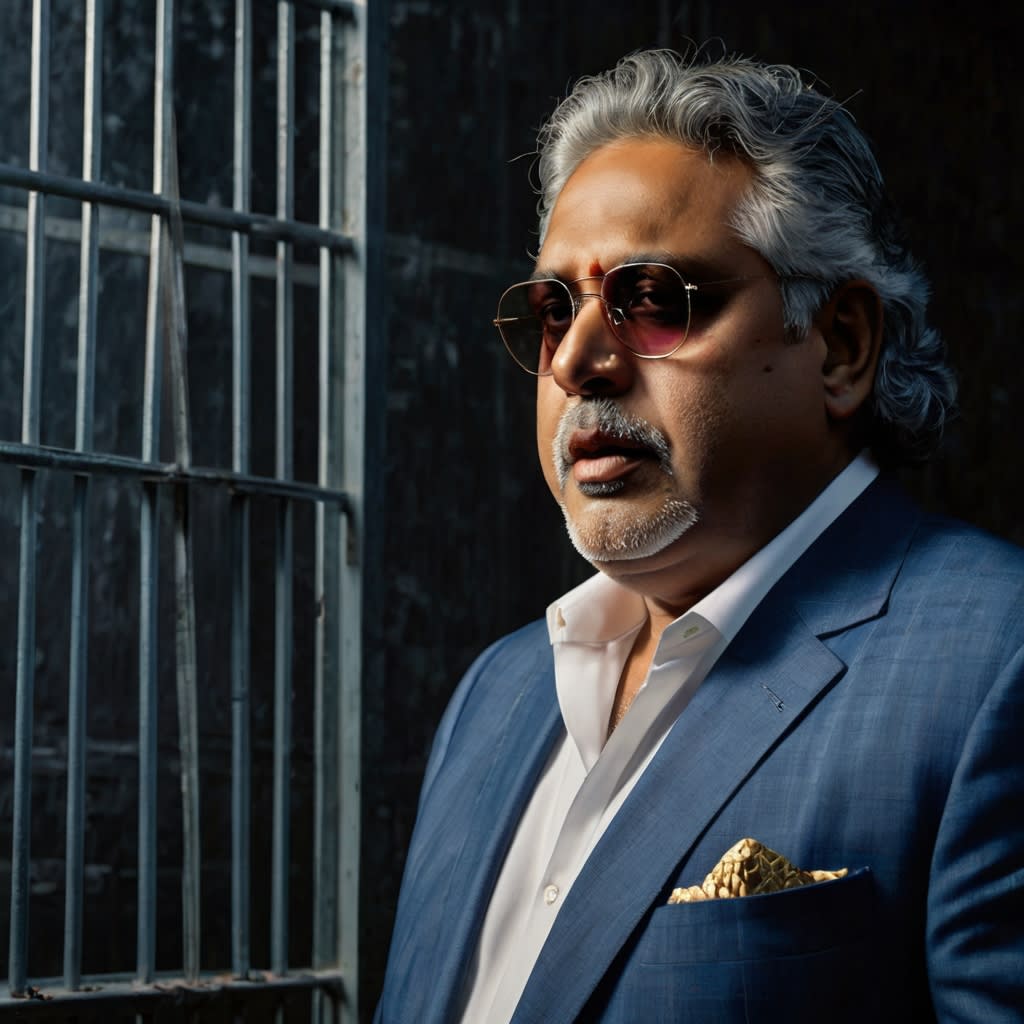
Vijay Mallya was once known as the flamboyant “King of Good Times,” a title inspired by his luxurious lifestyle, love for parties, flashy attitude, and high-profile business ventures. As the chairman of United Breweries Group and founder of Kingfisher Airlines, Mallya was one of India’s most well-known and controversial business figures. But the same man who once graced Page 3 headlines for his lavish lifestyle eventually became a fugitive economic offender, wanted for financial fraud and defaulting on loans worth over ₹9,000 crore.
Early Life and Inherited Legacy
Vijay Mallya was born on December 18, 1955, in Kolkata, India. His father, Vittal Mallya, was a successful industrialist who built the United Breweries Group into a thriving conglomerate. At the age of 27, after his father’s sudden death in 1983, Vijay Mallya took over as the chairman of UB Group.
Under his leadership, the group diversified into various sectors including alcohol, aviation, fertilizers, real estate, and even cricket and Formula 1. Mallya wasn’t just a businessman; he was also a brand in himself, known for his charisma, flashy image, and extravagant taste.
The Rise: Kingfisher and the Good Times
The biggest crown jewel in Mallya’s empire was Kingfisher Beer, which he turned into a youth-centric, stylish brand. It became one of India’s best-selling beers and earned global recognition. Capitalizing on this success, he decided to take a bold leap into the aviation industry.
In 2005, he launched Kingfisher Airlines, promising to revolutionize Indian air travel with unmatched luxury. The airline offered:
Plush leather seats
Personal entertainment systems
High-quality in-flight meals
Glamorous air hostesses styled like models
The airline was aimed at delivering a premium experience in a market that was price-sensitive and cost-conscious.
The Fall: Turbulence in the Skies
Although Kingfisher Airlines became popular quickly, it soon began hemorrhaging money. The high operating costs of offering luxury services clashed with the low fare expectations of Indian customers.
To sustain the losses, Mallya began taking huge loans from various public and private banks, often without proper collateral. The company’s finances deteriorated, leading to delayed salaries, unpaid taxes, and grounded aircrafts.
In 2008, Kingfisher bought the low-cost airline Air Deccan, hoping to access new routes and reduce losses, but the strategy backfired. The merged entity continued to bleed money, and by 2012, Kingfisher Airlines was shut down after its flying license was revoked.
Mounting Debt and Legal Troubles
At the height of its operations, Kingfisher Airlines had accumulated loans from over 17 Indian banks, including major ones like:
State Bank of India
Punjab National Bank
IDBI Bank
The total outstanding debt crossed ₹9,000 crore. Mallya was accused of:
Loan default
Money laundering
Using company funds for personal luxuries
Investigations revealed that Mallya had diverted funds abroad and misused bank loans. His personal assets included private jets, luxury yachts, villas in the UK and France, and even a Formula 1 racing team (Force India), all of which raised suspicion.
The Escape: Flight to the UK
In March 2016, just days before an Indian court was to act against him, Mallya quietly left the country for the United Kingdom, using his diplomatic passport as a Rajya Sabha MP.
His departure caused a public and political outcry. He was soon labeled as a "willful defaulter" and accused of fleeing to avoid arrest. Despite numerous summons, he refused to return, claiming that he was being “politically victimized.”
Legal Battle for Extradition
The Indian government made formal requests to the UK for his extradition. In April 2017, Mallya was arrested in London but was released on bail.
After a lengthy trial, in December 2018, a UK court ruled in favor of his extradition. However, due to his appeal and some confidential legal issues in the UK, his extradition has been delayed indefinitely.
As of 2025, he remains in London, legally contesting his deportation, while Indian authorities continue efforts to bring him back.
Assets Seized, But Recovery Still Incomplete
Back in India, enforcement agencies like the ED (Enforcement Directorate) and CBI (Central Bureau of Investigation) began seizing Mallya’s assets under the Fugitive Economic Offenders Act. These included:
His luxurious Kingfisher Villa in Goa
His Mumbai and Bengaluru properties
Shares in multiple companies
Personal luxury items
Banks have managed to recover a portion of the loan amounts by auctioning these assets, but a significant chunk of the debt still remains unpaid.
Legacy: A Lesson for India Inc.
Vijay Mallya’s story serves as a stark warning about unchecked ambition, lavish mismanagement, and loopholes in India’s banking system. His case triggered:
Stricter lending rules for banks
Closer scrutiny of corporate loans
The introduction of laws like the Insolvency and Bankruptcy Code (IBC) and Fugitive Economic Offenders Act (2018)
While Mallya maintains that he is innocent and that his businesses failed due to market conditions, most believe that he exploited the system, lived extravagantly on borrowed money, and abandoned responsibility.
Conclusion
From being a business icon to becoming a symbol of corporate fraud, Vijay Mallya’s journey is nothing short of a dramatic fall from grace. Once celebrated for his success and glamour, today his name is mentioned alongside India’s most wanted economic offenders.
His story is a cautionary tale — about the perils of hubris, the danger of over-leveraging, and the need for ethical accountability in business. Whether or not he is ever brought back to India to face justice, his legacy has already left a lasting impact on the country's corporate and legal landscape.
About the Creator
Muhammad waqas
Turning Dreams into Reality – One Story at a Time
I'm passionate about telling real success stories that inspire and empower. From ordinary beginnings to extraordinary achievements, I share journeys of resilience, hope, and transformation.
Keep reading
More stories from Muhammad waqas and writers in Criminal and other communities.
Karachi’s Lyari Gang War
Introduction Lyari, one of Karachi’s oldest and most culturally rich neighborhoods, became synonymous with fear, violence, and gang warfare during the late 1990s and 2000s. The Lyari Gang War remains one of the darkest chapters in Pakistan’s criminal history. Among its most horrifying incidents was the brutal killing of Arshad Pappu, a notorious gangster, whose death shocked not only Pakistan but also audiences worldwide.
By Muhammad waqas22 days ago in Criminal
Two Teens, One Bus, and a Nation Watching
Hello, and welcome to “The True Crime Reader,” where we dig beneath the headlines to unravel the stories that shape our understanding of crime, justice, and society. Today’s episode takes us to Oakland, California, for the story behind Dashka Slater’s powerful nonfiction book, “The 57 Bus”—a case that stunned the Bay Area and reverberated across the country.
By Kristen Barenthaler4 days ago in Criminal
Robert William Fisher: The Unresolved Mystery Behind One of America’s Most Notorious Fugitives
Few criminal cases in the United States have remained as haunting and unresolved as that of Robert William Fisher. More than two decades after his disappearance, Fisher’s name continues to appear on the FBI’s Most Wanted list, symbolizing both a tragic family crime and one of the longest-running manhunts in modern American history. His case blends elements of domestic violence, psychological profiling, forensic investigation, and unanswered questions that still trouble law enforcement and the public alike.
By Salaar Jamaliabout 16 hours ago in Criminal



Comments (2)
good story
Mallya's story is wild. His rise with Kingfisher was flashy, but the fall due to high costs shows business risks. He diversified like crazy, yet couldn't keep Kingfisher afloat. His journey from 'King of Good Times' to fugitive is nuts.