
Top 10 Most Dangerous Prisons In The United Kingdom
From Durham Prison to HMP Belmarsh, today we dive inside the top 10 most dangerous prisons in the United Kingdom.

10 - Durham Prison
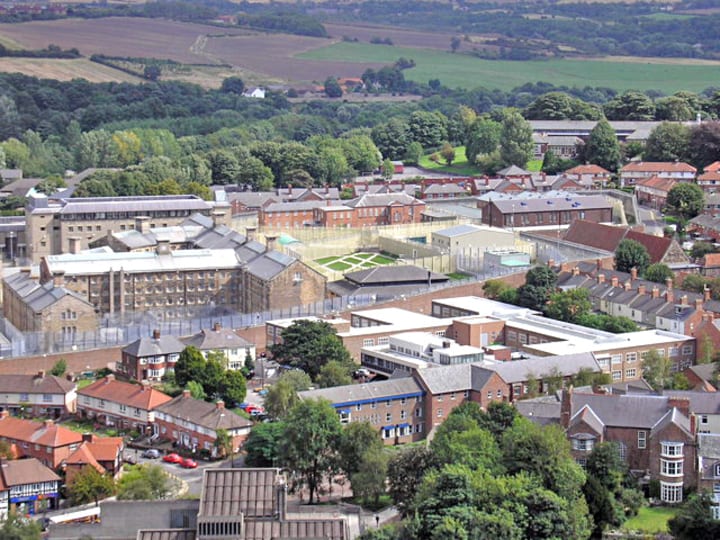
A formidable institution steeped in history, Durham Prison sits directly in the city center near the historic Durham Cathedral and originally opened in 1819, featuring a Georgian-era structure that has served its various roles over two centuries.
Today, HMP Durham operates as a Category B male local prison and reception centre, primarily serving the courts of the North East of England for un-sentenced, remanded, and newly convicted adult and young male offenders.
As a Category B prison, Durham is designed to hold prisoners who do not require the highest levels of security but for whom escape still needs to be made very difficult.
The security measures at a Category B facility are robust, featuring high walls, secure perimeters, and controlled internal movement with a "reception" facility, meaning it takes in inmates directly from the courts before they are assessed.
Durham Prison has had several notable incidents in the last decade and this includes the 1990 murder of 19-year-old-prisoner Darren Brook and the 2005 closure of the female part of the prison known as "She Wing".
Divided into seven wingspan secure units, a segregation section and a healthcare section, the prison has housed many high-profile inmates during its history such as serial killers Myra Hindley and John Straffen.
Several notable inmates have been executed at the prison prior to its abolition in November 1965, including murderer John Vickers and one of Britain's most prolific suspected serial killers, Mary Ann Cotton.
Today the prison is known as one of the most dangerous due to its high levels of contraband, violence and overcrowding.
9 - HMP Swansea
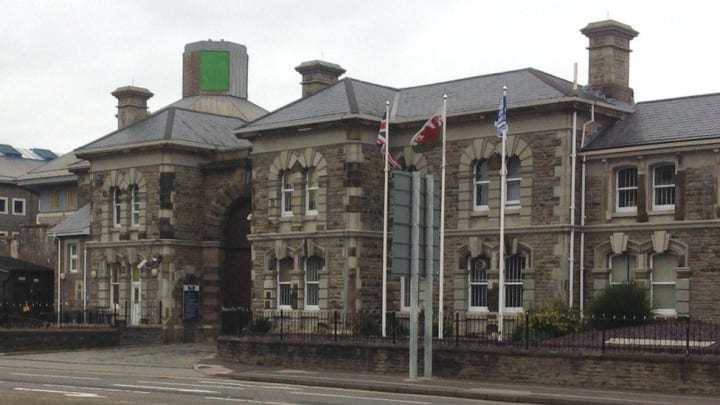
Built between 1845 and 1861, this Victorian-era structure has a central location in the city of Swansea and sits close to the sea front on Oystermouth Road in the Sandfields area.
Operating primarily as a Category B/C prison that serves the courts of South Wales, its dual classification means it holds both un-sentenced, remanded, and newly convicted prisoners and those serving short sentences or undergoing training.
The prison is one of the most consistently overcrowded in England and Wales, often housing significantly more inmates than its Certified Normal Accommodation.
The security framework is designed to prevent escape while managing a high volume of inmates with an imposing 12-foot high imposing stone wall, sporadic induction processes for new prisoners and a limited weekend regime with little time out of cells.
HMP Swansea has a long and somewhat grim history, serving as a site for judicial executions between 1858 and 1958, during which time a total of 15 hangings took place within its walls, the last being that of murderer Vivian Teed in 1958.
Cleanliness and sanitation were described as poor in a 2002 report, with a lack of showers in all areas and contraband, like all prisons on the list, has been a problem.
Several high profile inmates have met their end at the prison, including murderer Thomas Harries and murderer Albert Jenkins.
8 - Wormwood Scrubs Prison
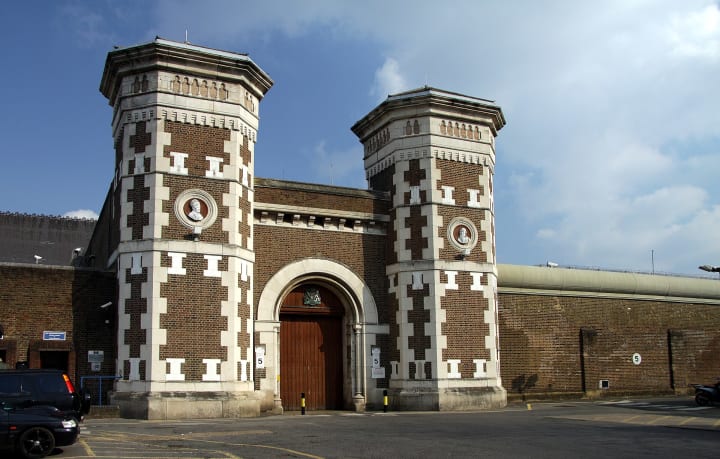
One of the most notorious prisons in London, this prison is often simply referred to as "The Scrubs," and is an imposing Victorian prison located on Du Cane Road in the London Borough of Hammersmith and Fulham.
Built largely by convict labour between 1875 and 1891, the Grade II listed building is one of the most famous correctional facilities in the UK.
Today, it operates as a Category B adult male local prison and reception centre, primarily holding inmates who are remanded, newly convicted, or serving short sentences from the local courts.
As a Category B prison, the security measures are designed to make escape very difficult, employing high walls, secure gates, and controlled internal movement, however, the age of the building presents significant infrastructure challenges.
The prison struggles with the ingress of banned items, with drug use and associated violence being a consistent problem and the cells are not much better, with dilapidated conditions including leaky roofs and malfunctioning call bells.
Staff walked-out of the prison in 2016 due to safety concerns and the prison has a long history of controversy and high-profile incidents with one of its most notable being the escape of KGB double agent George Blake in 1966.
Several IRA prisoners staged a rooftop protest over visiting rights in 1979, when over sixty inmates and several prison officers were injured, with the riot being blamed on poor prison management.
Heightened prison gang activity has been detected, and drones are often used in an attempt to deliver contraband into the prison and in 2018, a prisoner was stabbed to death and three other prisoners were charged with his murder.
Several notable prisoners include the leader of The Great Train Robbery, Bruce Reynolds, Scottish serial killer Dennis Nilsen and infamous moors murderer Ian Brady.
7 - HMP Addiewell
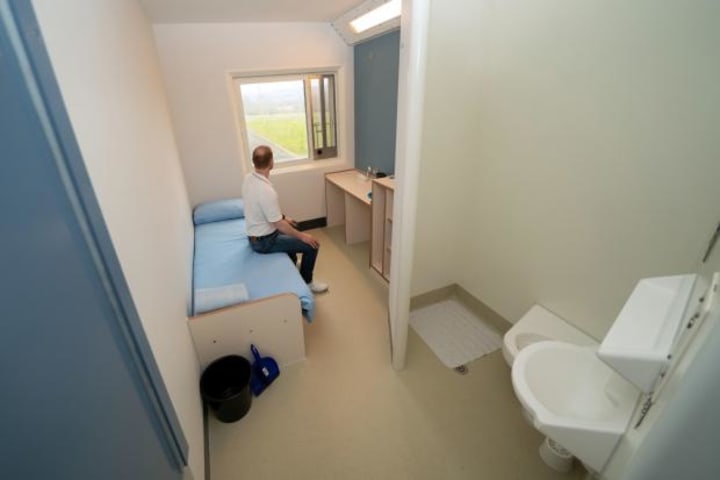
Situated in the central belt, between Glasgow and Edinburgh, HMP Addiewell opened in December 2008 and is notable for being privately operated under a long-term contract with the Scottish Prison Service.
Primarily serving courts in West Lothian and Lanarkshire, this prison holds adult male offenders of all security classifications who are both convicted and remanded.
As a modern facility, its security infrastructure is robust, featuring high-specification electronic surveillance and biometric controls, with a large perimeter stone built wall and several layers of security fences.
The prison faces considerable security challenges including a high prevalence of illicit substances and a corresponding rise in internal violence with one particular incident involving nine staff members who had to be hospitalised after inhaling fumes from the drug Spice.
During a riot in 2010, several officers were injured and one investigation found that assaults were rising more steeply there than in any other Scottish prison with more "serious assaults" than any other facility in 2022.
The prison has also faced a high number of deaths in custody, leading to concerns over safety and healthcare provision, including a fatal incident in January 2024 that resulted in a murder inquiry.
Addiewell has held a number of high-profile and convicted dangerous individuals with one of the most notable inmates being Nat Fraser, convicted of the 1998 murder of his wife, Arlene Fraser.
Another famous face to have graced this prisons walls, professional footballer Anthony Stokes has served time at Addiewell following his conviction for stalking.
6 - HMP Pentonville
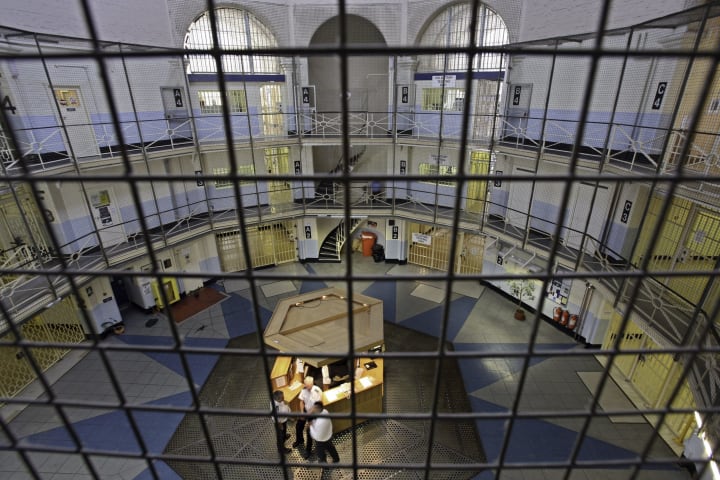
Informally known as "The Ville," HMP Pentonville is one of the most famous and challenging Victorian jails in the United Kingdom and was opened in 1842.
Designed as the model for the infamous "separate system," influencing prison construction across Britain and its empire, today, it serves as a Category B/C men's local prison and young offender institution.
Predominantly holding un-sentenced, remanded, and newly convicted prisoners from the local courts, Pentonville's security aims to prevent escape, using its high Victorian walls and central design.
The age of the structure has been cited as its greatest weakness with chronic overcrowding, often housing over 1,200 men in cells originally built for 900 people in single occupancy.
This overcrowding, coupled with severe dilapidation, including reports of vermin, broken windows, and failing plumbing, has led the Chief Inspector of Prisons to describe conditions as "unacceptable" and "incompatible with humanity and dignity."
Security is compromised by the prison’s physical state, making it "porous" to the ingress of contraband and internal violence fuels debt and fear among the inmate population.
Two inmates staged an audacious escape in 2016 by using diamond-tipped cutting equipment to break out of a cell window and the prison has faced high-profile inquests into self-inflicted deaths.
The prison was even placed in special measures after it was found to have illegally detained a large number of prisoners beyond their release dates due to backlogs in calculating sentences.
Historically, the prison was a site of judicial executions, with 120 hangings taking place between 1868 and 1961 and notorious inmates included a doctor, Hawley Harvey Crippen who murdered his wife and poisoner Frederick Seddon, both were executed.
5 - HMP Wandsworth
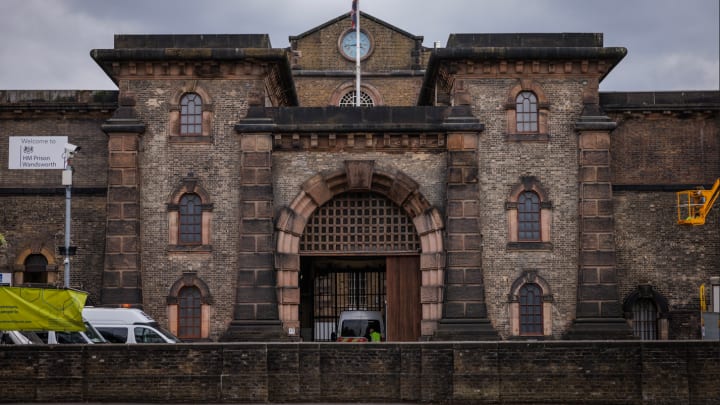
Opened in 1851, Wandsworth is one of the largest prisons in the UK and Western Europe, with a capacity to hold nearly 1,877 inmates and it currently operates as a Category B/C local men's prison.
As a Category B facility, Wandsworth's primary security mandate is to make escape extremely difficult, yet, this has proven somewhat of a challenge thanks to its chronic overcrowding and poor admin.
Wandsworth's history is peppered with high-profile security breaches. Most recently, the prison gained international attention in September 2023 when Daniel Khalife, a former soldier awaiting trial on terror charges, escaped by clinging to the underside of a food delivery truck.
The prison has also been plagued by administrative errors, including the mistaken release of two foreign national prisoners in the final months of 2025 alone. Gross misconduct charges were brought against managers of the Prison in 2009 after they tried to manipulate population figures.
Historically, Wandsworth was the location of the famous 1965 escape of Ronnie Biggs, a member of the Great Train Robbery gang, and saw 135 judicial executions between 1878 and 1961.
Wandsworth's former residents include many famous faces and the notorious criminal Charles Bronson, former footballer Boris Becker, and now deceased celebrity publicist Max Clifford.
It has held more dangerous inmates including murderer Derek Bentley, arms dealer Christopher Tappin and convicted sex offender Tom O'Carroll.
4 - HMP Manchester
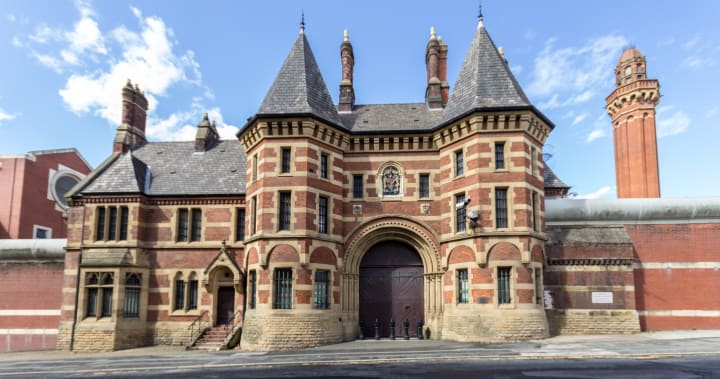
Universally known by its original name Strangeways, this behemoth of a Victorian prison located on Southall Street in the Strangeways area of Manchester and operates as a Category A/B prison.
It holds the highest security designation for inmates who pose the greatest threat to the public, police, or national security and lower-risk Category B prisoners, along with a large local remanded population.
The prison’s original security features include high walls and a landmark 234-foot tall ventilation tower and a security review painted a bleak picture of operational security with an urgent notification placed on the prison in 2024.
Major security failures cited include a failing CCTV system, slow replacement of damaged anti-drone netting, broken windows and a chronic rat infestation with a "catastrophic" level of illicit drugs and serious assaults being some of the highest in the country.
HMP Manchester's most defining event was the Strangeways Prison Riot, the longest prison riot in British history. Beginning on 1st April 1990, the disturbance lasted for 25 days, resulting in one prisoner death, one prison officer death due to a heart attack, and numerous injuries.
The riot was sparked by severe overcrowding with the prison holding nearly 70% more inmates than its capacity, squalid conditions including "slopping out" open buckets for sanitation, and a perception of staff brutality.
Strangeways has housed many dangerous and infamous individuals, was the site of 100 judicial executions, the last being in 1964 and former inmates include serial killer Dr. Harold Shipman and one-eyed spree killer Dale Cregan.
3 - HMP Belmarsh
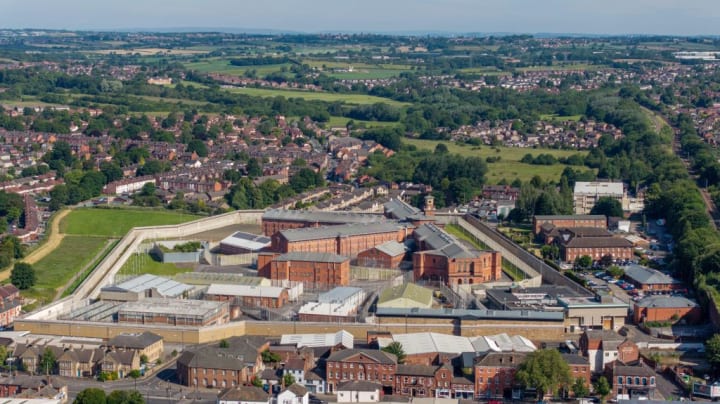
One of the United Kingdom's most important and highest-security correctional facilities, Belmarsh is situated adjacent to both Woolwich Crown Court and several other prisons.
Opening in 1991, Belmarsh is a modern prison that primarily operates as a Category A men's prison, the highest security classification with maximum-security features including state-of-the-art electronic surveillance, advanced access controls, high walls, and secure perimeters.
It is the only core local prison within the High Security Estate, meaning it is often used as a holding facility for high-profile and high-risk defendants during their trials in London courts.
A key feature of Belmarsh is its dedicated High Security Unit, sometimes nicknamed the "prison within a prison." The HSU is a specialised unit for those presenting the absolute highest risk of escape, making it arguably the most secure wing in the UK.
Belmarsh has been at the centre of several high-profile political and legal controversies. Between 2001 and 2002, the prison was used to indefinitely detain a number of individuals without charge or trial under anti-terrorism legislation.
The prison has also housed high-profile figures involved in extradition battles, most notably Julian Assange, founder of WikiLeaks, who was held there pending hearings on his extradition to the United States.
Reports have also highlighted a persistent challenge with gang violence within the prison, particularly over the lucrative internal drug trade, which contributes to a high number of assaults.
HMP Belmarsh is synonymous with housing some of the UK's most dangerous terrorists including the Manchester Arena bomber Hashem Abedi and radical cleric Abu Hamza al-Masri before his extradition to the US.
2 - HMP Frankland
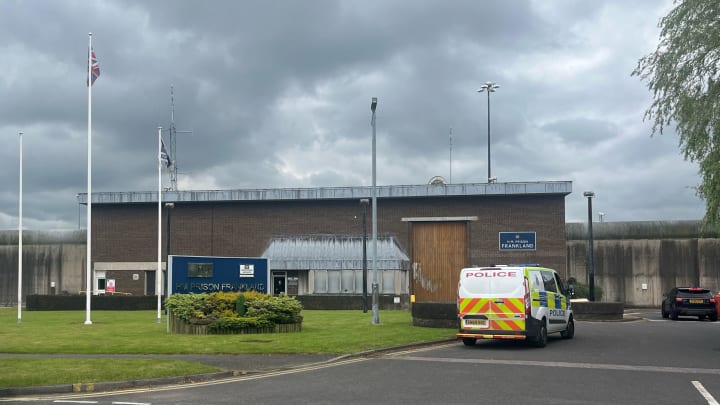
Often dramatically dubbed the "Monster Mansion of The North," Frankland is a Category A high-security men's prison located in Brasside, County Durham, England and opened in 1983.
It is part of the UK's High Security Estate, accommodating approximately 840 adult men, primarily those serving long sentences for the most serious offences, including murder, high-risk sex offences, and terrorism-related crimes.
Frankland is built to the highest security standards involving strict perimeter controls and advanced electronic surveillance. All cells are single occupancy and have integral sanitation.
Frankland features a crucial specialist facility named the Westgate Unit, which includes a dedicated Dangerous and Severe Personality Disorder unit that provides a highly controlled environment for complex psychological needs and high-risk behaviour.
Frankland has been the site of extremely serious incidents of violence despite its high-security status, including the horrific murder of a fellow prisoner, Mitchell Harrison by inmates Nathan Mann and Michael Parr.
More recently, the prison has been grappling with threats related to radicalisation and extremism with the presence of Islamic gangs and the risk of radicalised inmates attempting to influence others.
In a serious security breach, an inmate, the brother of the Manchester Arena bomber, attacked three prison officers with hot cooking oil and a homemade weapon, resulting in life-threatening injuries to the staff.
Frankland is infamous for housing some of the UK's most notorious and dangerous offenders, validating its "Monster Mansion" moniker with murderer Ian Huntley, nail-bomber David Copeland and double murderer David Fuller among its residents.
Several whole-life inmates are also serving time here including former police constable Wayne Couzens and serial killer Levi Bellfield. These inmates have been sentenced to die in prison.
1 - HMP Wakefield
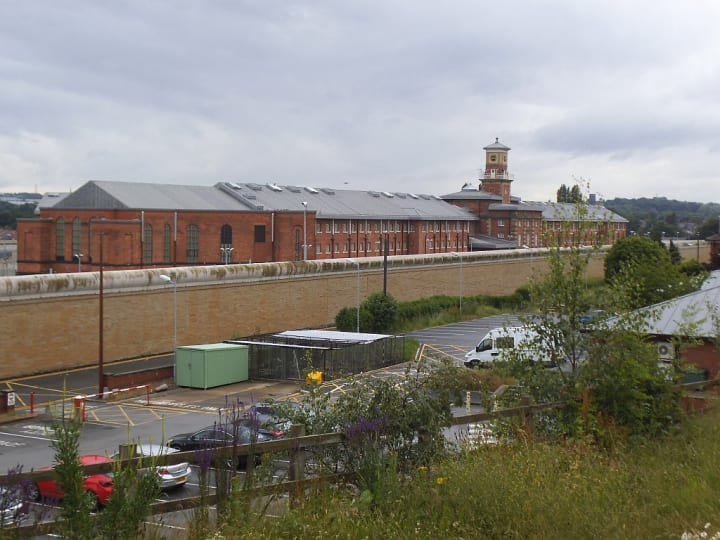
The most notorious prison within the UK's high security estate, Wakefield was originally established in 1594 and was the first to be named "Monster Mansion," before Frankland, due to its notorious residents.
Wakefield employs the most stringent security measures to ensure that escape is virtually impossible and the facility has a Victorian radial floor plan and features single-occupancy cells with integral sanitation.
A new ultra-secure unit was built at Wakefield Prison in 2001 and was designed to house the most dangerous inmates within the British prison system.
Recent inspections have highlighted significant infrastructural weaknesses, including broken lifts, leaking roofs, and outdated physical security systems, further challenged by a lack of mental health resources.
Wakefield has a long, dark history including incidents of murder as recently as 2025, with the stabbing death of former Lostprophets singer and convicted sex offender, Ian Watkins, at the prison.
During the First World War, it was used to intern conscientious objectors, leading to the "Wakefield Manifesto" demanding better treatment. Another notable incident involved serial killer Robert Maudsley in 1978, who murdered two fellow inmates at Wakefield in one day.
This event, and his subsequent behaviour, led to him being housed in a custom-built two-cell unit in the prison's basement, earning him the moniker "Hannibal the Cannibal."
HMP Wakefield's enduring reputation as the "Monster Mansion" is due to the roll call of dangerous criminals it has housed including murderer Jeremy Bamber, spree killer Mark Hobson and hitman and prison murderer Mark Fellows.
The prison also holds welsh serial killer John Cooper, who was convicted of the "Pembrokeshire Murders" or the "Coastal Murders," where four people, a brother and sister and a married couple died during his attacks. He is serving a whole-life order at the prison and will never be released.
Thanks for watching, we have more great true crime videos including a bingable playlist for all you true crime super-fans, were also publishing twice a week in 2026 so make sure your subscribed with notifications turned on!
About the Creator
Vidello Productions
My name is William Jackson, a YouTube content creator and crypto enthusiast with over 161,000 subscribers and I make videos that are focused on the billionaire lifestyle and crime.
Content consists of top list videos.
Keep reading
More stories from Vidello Productions and writers in Criminal and other communities.
Toronto Consulate Shooting, Synagogue Attacks, and Antisemitic Violence in Canada
Irina Tsukerman is a human rights and national security attorney based in New York and Connecticut. She earned her Bachelor of Arts in National and Intercultural Studies and Middle East Studies from Fordham University in 2006, followed by a Juris Doctor from Fordham University School of Law in 2009. She operates a boutique national security law practice. She serves as President of Scarab Rising, Inc., a media and security strategic advisory firm. Additionally, she is the Editor-in-Chief of The Washington Outsider, which focuses on foreign policy, geopolitics, security, and human rights. She is actively involved in several professional organizations, including the American Bar Association’s Energy, Environment, and Science and Technology Sections, where she serves as Program Vice Chair in the Oil and Gas Committee. She is also a member of the New York City Bar Association. She serves on the Middle East and North Africa Affairs Committee and affiliates with the Foreign and Comparative Law Committee.
By Scott Douglas Jacobsen2 days ago in Criminal
A System That Isn’t Working Challenge Winners
Systems promise order. They organize behavior, distribute opportunity, and suggest that if everyone follows the rules, things will work. The entries in A System That Isn’t Working look closely at what happens when that promise begins to slip.
By Vocal Curation Team4 days ago in Resources



Comments
There are no comments for this story
Be the first to respond and start the conversation.