
10 Most Dangerous Prisoners Inside Florida's Union Correctional Institution
Formerly referred to as Florida State Prison, Union Correctional Institution currently holds some of the most dangerous inmates in the Florida prison system.

10 - Markeith Loyd

A shopper at a Walmart in Orlando recognized Loyd, who was wearing a bulletproof vest, alerted Lieutenant Clayton, who was at the store.
When Lieutenant Clayton confronted Loyd in the parking lot, he opened fire, shooting her four times. The fatal shot was fired as he stood over her. Loyd then fled the scene, firing shots at a deputy in an unmarked car and committing a carjacking at gunpoint.
Dixon's brother, Ronald Steward, attempted to intervene and was also shot by Loyd, sustaining a critical injury but surviving.
A massive nine-day manhunt ensued. During the search for Loyd, Orange County Deputy First Class Norman Lewis was fatally struck by a vehicle in a related traffic crash.
Loyd was captured on January 17th, 2017, in an abandoned house. He was found wearing body armor and armed. Loyd was arrested using the handcuffs of the slain Lt. Debra Clayton, a tradition to honor fallen officers.
During the arrest, Loyd sustained injuries, including the loss of an eye, after resisting officers' commands. The officers were investigated for the use of force but were ultimately cleared of criminal wrongdoing and excessive force claims.
Loyd was ultimately charged and tried in two separate cases, the first-degree murder of Sade Dixon, the first-degree murder of an unborn child, and attempted first-degree murder of Ronald Steward. Loyd claimed he was acting in self-defense.
In the second case he faced convictions of the first-degree murder of Lt. Debra Clayton, attempted first-degree murder of another law enforcement officer, aggravated assault, carjacking with a firearm, and possession of a firearm by a convicted felon.
Loyd was convicted and sentenced to life in prison after the jury in that case voted against the death penalty, however in the second trial a verdict of death was passed and in March 2022, a judge sentenced Loyd to death for this crime.
Still imprisoned at UCI, his death sentence is subject to the appeals process, and he has filed an appeal with the U.S. Supreme Court challenging the conviction and sentence in the murder of Lt. Clayton.
9 - Kevin D. Foster

The ringleader of a self-proclaimed militia group in Lee County, Florida, known as the "Lords of Chaos." the group's stated purpose was to create total disorder through criminal acts.
On April 12th, 1996, in Fort Myers, Florida, Foster, along with other members of the group, went on a vandalism and arson spree.
The most severe crime was the first-degree murder of Mark Schwebes, a Riverdale High School band director. Schwebes was murdered in 1996 and the crime was committed for the purpose of avoiding a lawful arrest.
Foster was later identified as the leader and driving force behind the criminal acts of the "Lords of Chaos," and other members, through a plea deal, agreed to testify against Foster at his trial.
Foster was convicted of first-degree murder and other related charges in 1998 with the jury recommending the death penalty by a nine-to-three vote. Foster was then sentenced to death.
Foster has filed numerous appeals to overturn his conviction and death sentence, all of which have been denied by courts, including the Florida Supreme Court and the U.S. District Court, Middle District of Florida.
8 - Wade Wilson

On October 7th, 2019, Wilson met Kristine Melton at a bar. He later went to her Cape Coral home, where he attacked her while she was sleeping and strangled her to death. He then stole her car.
After the first murder, Wilson drove Melton's stolen car to his girlfriend's business in Fort Myers. He attempted to pull her into the car, but she fought back and escaped, immediately contacting law enforcement.
Shortly after the assault, Wilson encountered Diane Ruiz, a mother of two and a bartender, walking along a street in Cape Coral. He lured her into the car, then beat and strangled her. He subsequently pushed her out of the car and repeatedly ran her over with the vehicle.
Wilson also had a prior criminal history including convictions for burglary, grand theft, and firearm theft. While in jail awaiting trial, he was also later involved in an attempt to smuggle drugs into prison and an alleged escape attempt.
He has been referred to in the media as the "Deadpool Killer" due to his shared name with the Marvel character. In June 2024, Wilson was found guilty on all charges, including two counts of First-Degree Murder.
The jury recommended the death penalty for both murders and two death sentences were imposed in August 2024, also picking up a concurrent sentence of 12 years for the drug smuggling and conspiracy charges.
7 - Daniel Conahan
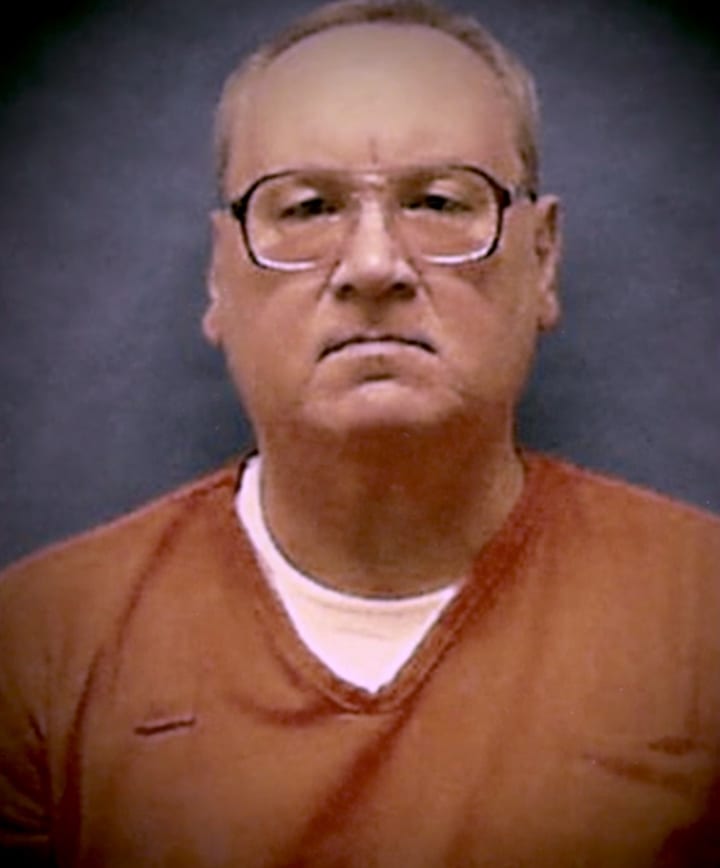
Known as the "Hog Trail Killer" for the series of murders he is believed to have committed in the woods and remote areas of Charlotte County, Florida, Conahan is suspected of eight murders between 1993 and 1996.
He would often lure his victims, many of whom were hitchhikers or homeless, with the promise of money in exchange for posing nude for photographs that he would take.
Conahan, a licensed practical nurse and Navy veteran, was arrested in July 1996 after being linked to the crimes through an individual who escaped him and a prior police report from the Stanley Burden incident.
Conahan was tried and convicted for the 1996 kidnapping and first-degree murder of Richard Alan Montgomery whos body was discovered in a remote trash dump.
A crucial piece of evidence in his trial came from a survivor, Stanley Burden, who testified that Conahan had similarly lured him in 1994, tied him to a tree, assaulted him, and attempted to strangle him for an extended period before eventually giving up and leaving.
For the murder of Richard Montgomery, Conahan waived his right to a jury trial for the guilt phase, electing a bench trial. The trial court ultimately found him guilty of first-degree premeditated murder and kidnapping.
The sentencing phase, conducted before a jury recommended the death penalty in a unanimous vote with the judge formally sentencing Daniel Conahan to death on December 10th, 1999.
6 - Leon Davis Jr

Davis committed a series of violent crimes, including two double homicides, over a one-week period in December 2007, motivated by financial distress.
The first attack, at a BP gas station and convenience store in Lake Alfred, Florida saw Dashrath and Pravinkumar Patel, two store clerks killed.
Davis drove to the store with the intent to rob it. During the attempted armed robbery, he fatally shot both clerks. He was also charged with attempted first-degree murder of another individual at the scene.
The second attack, at Headley Insurance Agency in Lake Wales, Florida saw victims Juanita Luciano and Yvonne Bustamante along with Luciano's unborn child killed.
Davis was convicted of a total of five murders of the four women and one unborn child, along with multiple counts of attempted murder, armed robbery, attempted armed robbery, arson, and grand theft.
He was handed two death penalty convictions, something which he has challenged in various court appearances along with a writ of habeas corpus, arguing issues such as ineffective assistance of counsel and violations of discovery rules.
5 - Craig C. Price

One of the most notorious and legally consequential juvenile crime cases in Rhode Island history, Price's actions as a teenager led to fundamental changes in the state's juvenile justice laws.
An American serial killer who committed his crimes in Warwick, Rhode Island, between the ages of 13 and 15, this made him one of the youngest serial killers in U.S. history. His four victims were neighbors and all of the attacks were marked by extreme brutality.
At age 13, Price broke into the home of 27-year old Rebecca Spencer who lived only two houses away from his own and stabbed her 58 times with a kitchen knife.
Two years later he invaded the home of the Heaton Family, attacking all of them with extreme force and killing Joan Heaton and her two young daughters, Jennifer and Melissa. Price was apprehended on September 5, 1989, and calmly confessed to all four murders.
Price was charged as a juvenile in Family Court and under the existing state law, the maximum sentence a juvenile offender could receive was detention in the Rhode Island Training School until his 21st birthday.
Price began bragging that he would "make history" upon his impending release and a swift change to the law was made, often referred to as the "Craig Price Legislation."
The new law amended the juvenile sentencing scheme to allow juvenile offenders of any age to be waived into adult court and subjected to adult penalties, including life without parole, for serious crimes. However, this change could not be applied retroactively to Price.
He has remained in custody for decades due to a series of new criminal offenses committed while incarcerated and his initial release date of October 11th, 1994 has long since passed thanks to a new 25-year sentence handed down in 2019.
4 - George Trepal
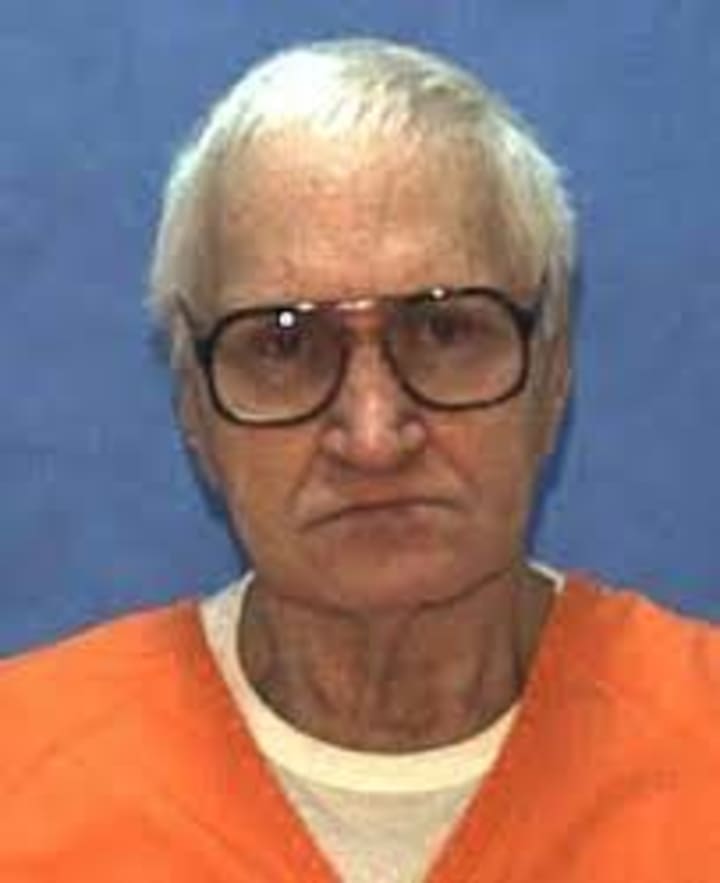
A former chemist and computer programmer with a high IQ who was a member of Mensa, Trepal was convicted in 1991 for the poisoning of his neighbors, the Carr family, in Alturas, Florida.
The main victim was his neighbor, Peggy Carr, who died on March 3rd, 1989, from thallium poisoning. Trepal poisoned multiple bottles of Coca-Cola by carefully removing the caps, dissolving the poison, adding the solution, and then resealing the bottles.
Several other members of the Carr family, including Peggy Carr's son and stepson, were also poisoned with thallium but survived.
The generally accepted motive was disputes with his neighbors which saw a threatening note delivered to the Carrs had received earlier, which demanded they move out of Florida or "else you will all die."
A key part of the investigation involved Detective Susan Goreck going undercover to befriend Trepal and his wife. Goreck posed as a friend and even arranged to rent the Trepals' former home after they moved, which allowed a search of the property.
The search led to the discovery of crucial evidence, including A bottle of the toxic poison thallium, a heavy metallic element that is odorless and tasteless when dissolved, in Trepal's garage.
A hand-assembled journal containing information on poisons, including thallium, and details on autopsy detection was also found to be in the possession of George Trepal.
Such was it thought by Trepal that he had got away with murder, he and his wife hosted a "Murder Mystery Weekend" soon after the poisoning, which included a storyline discussing poisoning and threatening notes from a neighbor, a scenario that eerily mirrored the real-life events.
However he was thankfully, mistaken and Trepal was convicted in February 1991. The jury recommended the death penalty by a 9-3 vote, and the circuit judge imposed the death sentence in March 1991.
3 - William Thomas Zeigler

A key figure in a highly controversial and decades-long Florida murder case, William Thomas "Tommy" Zeigler Jr. was convicted for the 1975 murders of four people and has been incarcerated on death row since 1976.
The quadruple murder occurred on Christmas Eve, December 24th, 1975, at the W.T. Zeigler Furniture Store in Winter Garden, Florida, which William Thomas Zeigler Jr. owned.
Zeigler's wife, Eunice Zeigler; her parents, Perry and Virginia Edwards; and a customer, Charlie Mays were all brutally mudered and Zeigler was also found at the scene with a gunshot wound to his abdomen.
The State argued that Zeigler planned and committed the murders, staging the scene to look like a robbery gone wrong involving Charlie Mays and two other men and prosecutors alleged the motive was to collect on two life insurance policies linked to his wife at over $500,000.
Zeigler has always maintained his innocence, claiming he was the victim of a robbery and that he was shot after walking in on a burglary. The trial became so newsworthy, it was moved to Jacksonville, Florida.
In July 1976, a jury convicted Zeigler of two counts of first-degree murder and two counts of second-degree murder.
Although the jury recommended a sentence of life imprisonment, the trial judge, Maurice M. Paul, overrode the jury's recommendation and sentenced Zeigler to death for the first-degree murders and life imprisonment for the second-degree murders.
Zeigler's death sentence was overturned in 1988 due to an error regarding mitigating circumstances. However, he was re-sentenced to death by a judge in 1989, again overriding a jury recommendation of life.
Zeigler has had his execution scheduled and subsequently stayed on multiple occasions in both 1982 and 1986 and the timely filing of federal habeas corpus claims has been repeatedly held up.
In January 2025, his attorneys filed a motion for a new trial, claiming the fresh DNA analysis supports Zeigler's version of events and points to another man as the killer, but, for now he remains on death row.
The case has been widely criticized over the years, with claims of an inadequate investigation, improper evidence handling, suspect witness testimony, and a conflict of interest involving the original trial judge.
2 - Gary Hilton
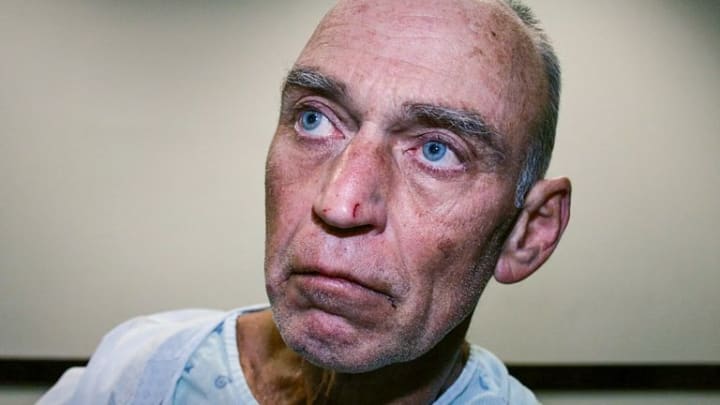
Known as "The National Forest Serial Killer," Hilton was responsible for at least four homicides between 2007 and 2008 in national forests across three states.
His victims were typically hikers or outdoors enthusiasts in remote areas. His modus operandi often involved kidnapping and robbing his victims using their ATM cards before killing them.
Victims included John and Irene Bryant from North Carolina, Cheryl Dunlap from Florida and Meredith Emerson from Georgia with Hilton arrested shortly after her murder after she left a digital trail for police by repeatedly giving Hilton the wrong PIN.
Hilton faced convictions and sentencing in three different states and at the federal level and he is a suspect in many other similar-style killings over the same time period.
Hilton pleaded guilty to the murder of Meredith Emerson and was sentenced to life imprisonment, he was further was convicted of the murder of Cheryl Dunlap in April 2011 and received a death sentence.
Hilton pleaded guilty to the murders of John and Irene Bryant, as well as related federal charges, including kidnapping, robbery and the use of a firearm during a crime of violence for which he received four more life terms without parole.
1 - Zephen Allen Xaver

On January 23rd, 2019, at approximately 12:30 p.m., Zephen Allen Xaver, then aged 21years old, entered the SunTrust Bank in Sebring, Florida wearing a ballistic vest underneath his sweatshirt and pulled out a Springfield Armory XD 9mm handgun.
He forced a bank teller and others in the lobby to gather at a wall with their hands up and ordered the teller to lock both doors, then ordered five women to lie down on the floor face down with their heads toward the wall.
At 12:36 p.m., Xaver called the police and stated that he had shot five people and then, during the call, he fired two more shots at the bodies. The only survivor was a bank employee who had been in the break room and escaped out the back door when the shooting began.
Xaver's stated motive was "homicidal and suicidal urges." Minutes before entering the bank, he texted his girlfriend that he was going to die that day and kill people "just to know how it would feel."
While negotiating with police, he also told a crisis negotiator that he was "hearing voices telling him to kill" and that pointing the gun to his head "weakened the voices."
Xaver surrendered to police after a standoff that involved a SWAT team ramming an armored vehicle through the bank's glass front doors. He was charged with five counts of capital murder and initially entered a plea of not guilty on February 22nd, 2019.
On March 14th, 2023, Xaver changed his plea to guilty in the shooting with prosecutors seeking the death penalty and Xaver formally sentenced to death for five counts of first-degree murder on December 16th, 2024.
Thanks for watching, we have hundreds more true crime videos and you can check out two of them in the boxes above, remember to subscribe with notifications as we have videos publishing every Saturday!
About the Creator
Vidello Productions
My name is William Jackson, a YouTube content creator and crypto enthusiast with over 161,000 subscribers and I make videos that are focused on the billionaire lifestyle and crime.
Content consists of top list videos.
Keep reading
More stories from Vidello Productions and writers in Criminal and other communities.
Inside the Mind of a White-Collar Criminal: How I Embezzled Three Million Dollars Without Anyone Noticing
The first time I stole from the company I worked for, I took exactly four hundred and seventy-three dollars, a sum so small and insignificant in the context of a corporation generating hundreds of millions in annual revenue that it barely registered as a rounding error in the quarterly financial reports, and I did it not because I needed the money desperately or had fallen into dire financial circumstances, but because I wanted to see if I could, because I had spent five years working as a senior accountant at Morrison Financial Services watching inefficiencies and oversights in our internal controls, and I had gradually realized that our system had vulnerabilities that someone with my knowledge and access could exploit almost effortlessly. That first theft was a test, an experiment to determine whether the safeguards I was supposed to help maintain were actually functional or merely performative, and when weeks passed with no detection, no audit flags, no concerned emails from supervisors, I understood that I had stumbled upon an opportunity that most people in my position would never recognize, much less have the audacity to pursue.
By The Curious Writera day ago in Criminal
A Transparent Look at Vocal Challenges and Top Stories
Almost three years ago, we shared a resource article that served as a place for people to suggest new challenge prompts. We thought it would be a good idea to refresh that thread, and take the opportunity to answer a few common questions about top stories, how challenges are judged and how submissions are reviewed.
By Vocal Curation Team3 days ago in Resources


Comments
There are no comments for this story
Be the first to respond and start the conversation.