
“The Woman Who Killed Time”
A time-travel thriller about a scientist who tries to erase her biggest regret — but ends up erasing herself from reality.


The Woman Who Killed Time
By [Ali Rehman]
Dr. Elena Voss stood alone in the dim glow of the laboratory, her eyes fixed on the humming Chronos device before her. Years of obsession had culminated in this moment — a chance to rewrite the past. A chance to undo the mistake that haunted every heartbeat: the day she lost her daughter.
Time was a fragile thread, one Elena had tried to unravel and stitch anew. The Chronos Project was her life’s work — a machine that could slip through moments like a needle threading through fabric. Yet, she’d always warned herself about the dangers of tampering with time. The butterfly effect. The unpredictable ripples. The fragile balance of cause and consequence.
But grief was a cruel teacher, and desperation a loud siren drowning out caution.
Her daughter, Maya, had been just seven when she died. A careless accident, a split-second decision, a life snuffed out too soon. Elena had buried herself in work, her mind a prison of “what ifs.” Until tonight, when she decided to risk everything for one impossible hope: to save Maya.
The machine’s lights pulsed rhythmically as Elena initiated the sequence. The air thickened, colors warped, and the world tilted beneath her feet. Moments later, she found herself standing on the same quiet street corner where Maya had waited for the bus all those years ago.
The scent of autumn leaves filled the air. Children’s laughter echoed faintly in the distance. And there — a little girl with curly hair, bright eyes, and a backpack almost too big for her small frame — was Maya.
Elena’s heart thundered. She approached, voice trembling, “Maya, it’s time to go home.”
Maya looked up, confused but trusting. Elena took her hand, pulling her away from the street just as a speeding car thundered past where they had stood moments before.
Back in the present, Elena awoke in the lab. Silence greeted her, but something felt... wrong.
The world she returned to was not the one she’d left.
Her hands trembled as she reached for a photograph on her desk — a family picture. But Maya was missing. Instead, the image showed Elena alone, her husband beside her, but no daughter smiling back.
Frantically, Elena checked files, journals, even news clippings. The headlines were different. People she knew had changed roles or never existed. Most terrifyingly, her own identity felt fractured. Colleagues who once praised her work now looked at her with confusion, as if she were a stranger.
It was clear: by saving Maya, Elena had rewritten history so drastically she had erased herself from existence.
The realization crashed over her like a tidal wave. Her memories of Maya, her love, and loss — all vivid and unyielding — made her an anomaly in this altered reality.
She became a ghost haunting the edges of a life she no longer owned.
Days blurred as Elena struggled to anchor herself. The lab’s staff were polite but distant, her research credited to another scientist — a younger woman named Dr. Meredith Crane, whose name was unfamiliar but now synonymous with the Chronos Project.
Elena’s attempts to prove her identity fell flat. She was a woman out of time, living a life that wasn’t hers.
Yet, the strongest force within her was the desire to fix what she had broken.
Returning to the Chronos device, she prepared to reverse the journey. To accept the pain she had tried to erase and restore the timeline — and herself.
Activating the machine once more, she closed her eyes and let the disorienting pull of time consume her.
She arrived again at that fateful street corner. This time, she let Maya walk toward the bus stop, watching from the shadows. The car screeched around the corner, the tragic moment replaying in slow motion.
But Elena stepped forward as the car hurtled toward Maya, grabbing her hand just in time to shield her from the impact. Though the crash injured Elena severely, Maya was safe.
Back in the present, Elena awoke in a hospital bed, surrounded by faces she knew — faces that welcomed her as if no time had passed. Maya sat beside her, holding her hand tightly.
The world was whole again.
Elena’s experience taught her the brutal truth: time cannot be undone without consequence. To erase pain is to erase the very threads that weave our identity.
She realized that grief, though unbearable, was part of her story — a necessary wound that shaped her strength, compassion, and humanity.
The Chronos Project was shelved, its power too dangerous for any one person.
Elena chose to live in the imperfect present, cherishing every moment with Maya and embracing the scars of time’s passage.
Years later, as Elena watched Maya play in the garden, she smiled through tears — not because time was perfect, but because she had finally learned to live with its unchangeable flow.
About the Creator
Ali Rehman
please read my articles and share.
Thank you
Keep reading
More stories from Ali Rehman and writers in Criminal and other communities.
The Middle East at a Crossroads
The Middle East at a Crossroads The Middle East has once again become the center of global attention as tensions rise between several powerful countries and regional actors. Conflicts, political rivalries, and military movements have created an atmosphere of uncertainty that many analysts believe could reshape global politics in the coming years. Although wars and crises have occurred in this region for decades, the current situation feels more fragile and dangerous because multiple global powers are indirectly involved.
By Wings of Time 7 days ago in Criminal
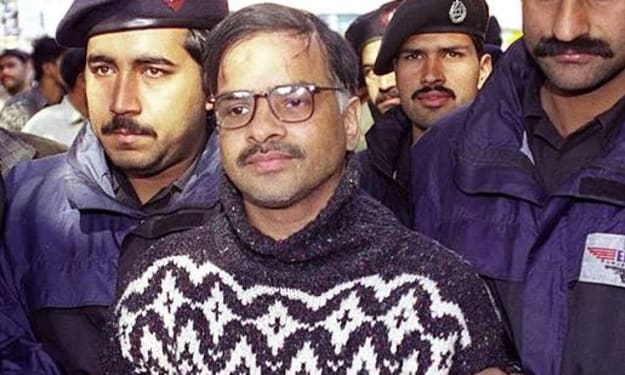
Javed Iqbal: The Monster Who Murdered 100 Boys in Six Months
Javed Iqbal Mughal stands as one of the most horrifying and prolific serial killers in modern history earning the grim distinction of being Pakistan's worst serial killer. Born around 1961 in Pakistan Iqbal came from a relatively affluent background. His family provided him with significant privileges early in life by his late teens his father had purchased a villa for him and gifted him a powerful 200cc motorbike. These luxuries would later become tools in his predatory schemes.In the early 1990s Iqbal's dark tendencies first came to light when he was arrested following allegations from one of his victims. He faced accusations of sexually abusing young boys luring them to his residence with promises of food money or shelter. However, the case did not result in lasting consequences—no formal charges stuck, and he was released. This brush with the law left a deep scar on Iqbal. He later claimed that the stress and humiliation his mother endured during his arrest and the surrounding scandal contributed to her suffering a fatal heart attack. Consumed by grief and rage Iqbal vowed revenge—not directly against the authorities, but against society itself. He declared his intention to inflict the same level of anguish on 100 other mothers by taking their sons' lives.
By Kure Garbaa day ago in Criminal


Comments
There are no comments for this story
Be the first to respond and start the conversation.