
The West Memphıs Three
1993: A Deep Dive Into a Tragic Case

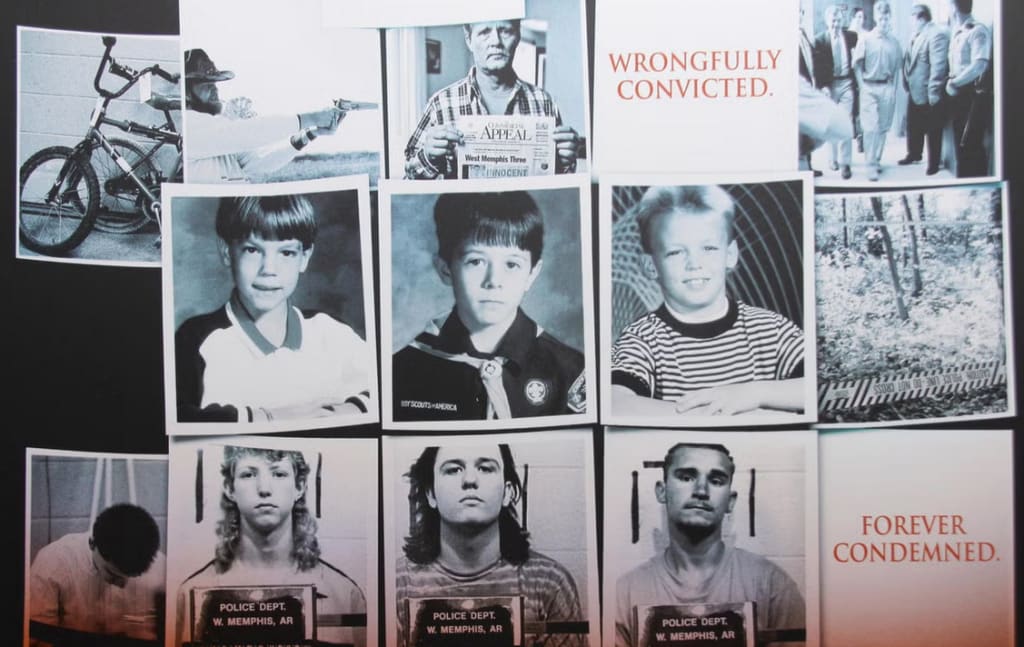
The West Memphis Three case is one of the most notorious and controversial criminal cases in American history. It involves the wrongful conviction of three teenagers—Damien Echols, Jason Baldwin, and Jessie Misskelley—who were sentenced to death for the brutal murders of three young boys in West Memphis, Arkansas, in 1993. The case has captivated the public for decades, not just because of the horrific nature of the crime, but because of the questions surrounding the fairness of the convictions, the involvement of law enforcement, and the eventual exoneration of the accused. The story of the West Memphis Three is a heartbreaking tale of justice gone wrong, a community's fear and prejudice, and the tireless fight for justice.
The Crime
On May 5, 1993, three eight-year-old boys—Steve Branch, Christopher Byers, and Michael Moore—went missing in the small town of West Memphis, Arkansas. The boys were last seen playing near a creek in a wooded area called Robin Hood Hills. Their bodies were found the next day, May 6, in a drainage ditch. The discovery was chilling. The boys had been stripped of their clothes, bound with their own shoelaces, and brutally murdered. The injuries were horrific: they had been beaten, stabbed, and in some cases, mutilated. There were signs of sexual assault and possible ritualistic overtones, though this was not immediately confirmed.
The case shook the community of West Memphis, and the investigation into the murders became a high-profile one. Law enforcement officials initially had very few leads and no obvious suspects. The brutality of the crime and the nature of the injuries led some to suspect that the crime might have been the work of a Satanic cult. In the early 1990s, the U.S. was gripped by what some described as a moral panic over Satanic ritual abuse, a phenomenon that was largely fueled by sensational media reports. This climate of fear and superstition played a critical role in shaping the investigation.
The Arrests
In the absence of solid evidence, police began to focus on three teenagers from West Memphis: Damien Echols, Jason Baldwin, and Jessie Misskelley. The trio became suspects largely due to their appearance and lifestyles. Damien Echols, in particular, stood out because of his goth-like appearance and interest in occult topics. He had a reputation for being different, which made him an easy target in a conservative, religious community. Baldwin and Misskelley, while not as outwardly eccentric as Echols, were also considered part of a social circle that did not conform to the norms of West Memphis.
Jessie Misskelley, a teenager with a low IQ and limited understanding of the events surrounding the murders, was the first to be arrested. Police interrogated him for several hours without a lawyer or guardian present. Under intense pressure and after hours of questioning, Misskelley gave a confession that was riddled with inconsistencies and contradictions. He initially claimed that he had seen the murders take place, but later recanted, saying that he had been coerced into making the statement. Despite the lack of physical evidence linking Misskelley to the crime, his confession, along with his prior criminal history, led to his arrest.
Misskelley's confession was central to the case against the three teens, and he implicated both Damien Echols and Jason Baldwin in the murders. The police, eager to solve the case, quickly arrested Echols and Baldwin. They were charged with the murders of the three boys, despite the fact that there was no physical evidence linking them to the crime scene.
The Trial and Convictions
The trial of the West Memphis Three began in 1994, and the prosecution's case was largely based on the coerced confession of Jessie Misskelley and the perceived "goth" or "Satanic" lifestyle of the accused. The prosecution argued that the killings were part of a Satanic ritual, although there was no evidence to support this claim. The defense, on the other hand, argued that the confessions made by Misskelley were unreliable and that the police had failed to investigate other possible suspects.
During the trial, there was also a focus on Damien Echols' interest in the occult and his unconventional appearance. This was used by the prosecution to paint him as a dangerous "Satanic" figure who had murdered the boys as part of a ritualistic killing. The prosecution's case, however, was built more on stereotypes and prejudice than on hard evidence. Despite the lack of physical evidence linking the three teens to the murders, Damien Echols, Jason Baldwin, and Jessie Misskelley were convicted of the crimes.
Echols was sentenced to death, Baldwin received a life sentence, and Misskelley was sentenced to life in prison plus two 20-year sentences. The case seemed like a tragic miscarriage of justice, but at the time, the convictions were widely accepted by the public and the legal system.
The Fight for Justice
The convictions of the West Memphis Three sparked outrage in many quarters. Over the years, new evidence came to light that suggested that the three teens had been wrongfully convicted. The lack of physical evidence linking the accused to the crime scene was a major point of contention. Furthermore, the prosecution's theory of a Satanic ritual killing was increasingly seen as far-fetched and unsupported by the facts.
One of the most significant developments in the case came in 2007, when DNA evidence was re-examined. The original trial had failed to properly analyze the physical evidence from the crime scene, including hair and fibers found at the scene. New DNA tests showed that none of the physical evidence collected from the crime scene matched the DNA of Echols, Baldwin, or Misskelley. Instead, the DNA found at the scene was linked to other individuals who were not part of the original investigation. This new evidence cast serious doubt on the original convictions and led to a renewed push for the release of the West Memphis Three.
The case gained national attention thanks to documentaries, books, and the efforts of activists and celebrities who championed the cause of the West Memphis Three. The 1996 documentary Paradise Lost: The Child Murders at Robin Hood Hills, directed by Joe Berlinger and Bruce Sinofsky, was particularly influential in raising awareness about the case. The film highlighted the flaws in the investigation, the coerced confession of Jessie Misskelley, and the prejudice faced by the accused.
The case continued to gain momentum in the public eye, and in 2011, after nearly two decades of legal battles, the West Memphis Three were released from prison. In a dramatic turn of events, they entered an Alford plea, which allowed them to maintain their innocence while acknowledging that there was enough evidence to convict them. This plea agreement resulted in their release from prison, but the case remains controversial. The legal system had effectively recognized the possibility that the West Memphis Three had been wrongfully convicted, but it stopped short of fully exonerating them.
Aftermath and Legacy
The case of the West Memphis Three left a lasting impact on the American criminal justice system. It raised important questions about the role of race, class, and prejudice in criminal trials, as well as the reliability of coerced confessions. The case also highlighted the dangers of media sensationalism and moral panic, particularly when it comes to issues like Satanic ritual abuse.
The release of the West Memphis Three was celebrated by many, but the case continues to stir debate. While the three men were freed from prison, the true identity of the murderer(s) remains unknown. The legacy of the case is one of both justice and tragedy, as the lives of the three men were forever altered by a wrongful conviction.
Damien Echols, Jason Baldwin, and Jessie Misskelley have all moved on with their lives, but the scars of their wrongful convictions remain. Echols, in particular, has become an outspoken advocate for prison reform and the abolition of the death penalty. He has written books about his experiences, including Life After Death and Yours for Eternity, which chronicle his journey through the criminal justice system and his eventual exoneration.
The case of the West Memphis Three serves as a cautionary tale about the dangers of rushing to judgment, the importance of fair trials, and the need for the justice system to recognize and correct its mistakes. It is a tragic chapter in American history, but it is also a story of hope, redemption, and the enduring power of truth.
Conclusion
The case of the West Memphis Three is a powerful reminder of the flaws in the criminal justice system and the impact of fear, prejudice, and media influence on legal proceedings. The wrongful conviction of Damien Echols, Jason Baldwin, and Jessie Misskelley was a gross miscarriage of justice, but their eventual release and the ongoing efforts to uncover the truth behind the murders have helped to bring about some measure of justice. The case remains a symbol of the fight for justice and the need to question the integrity of legal proceedings when lives are at stake.
About the Creator
Aslihan
Aspiring writer with a passion for researching diverse topics. I love sharing insights and connecting with others. Let’s embark on a journey of exploration and discover intriguing stories together
The $1 Deed: Did Jonathan Gerlach Transfer His Ephrata Property to Hide Assets?
The Paper Trail While the investigation into the Mount Moriah Cemetery grave robberies was quietly building, Jonathan Gerlach was already making moves to separate himself from his most valuable asset.
By Sunshine Firecrackerabout 19 hours ago in Criminal
A Horror Movie Come to Life: Inside the Nightmare at 100 Washington Avenue
The Raid on Washington Avenue On the morning of January 6, 2026, the residents of Washington Avenue woke up to a swarm of law enforcement vehicles. But this wasn't a standard drug bust. The officers entering 100 Washington Avenue were wearing hazmat gear and respirators.
By Sunshine Firecrackera day ago in Criminal


Comments
There are no comments for this story
Be the first to respond and start the conversation.