
The Wang Yaqiao Assassination Cases (1930s)
The "King of Assassins" in Republican China and the Axe Gang's Revenge Legend—From the Hongkou Park Bombing to the Bloody Trail of Anti-Japanese Executions
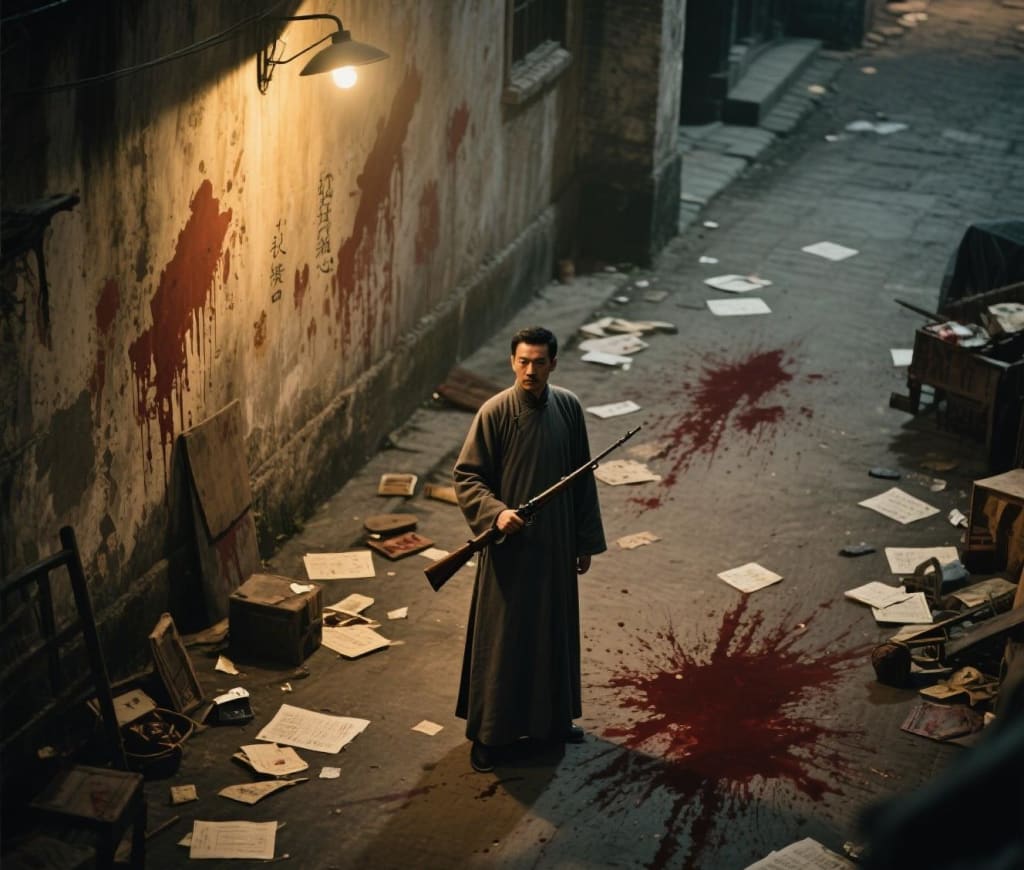
**Wang Yaqiao: The Legendary Assassin of Republican China**
In the turbulent years of early 20th century China, one name struck fear into the hearts of corrupt officials and foreign invaders alike - Wang Yaqiao (1889-1936), the mastermind behind the infamous "Axe Gang" and arguably the most formidable assassin in modern Chinese history. His dramatic life story reads like an Eastern thriller, blending revolutionary ideals, calculated violence, and unyielding resistance against oppression.
Born into poverty in Hefei, Anhui province, Wang's early participation in the 1911 Revolution that overthrew China's last imperial dynasty shaped his worldview. Disillusioned by the ensuing warlord conflicts and widespread corruption, he founded the secretive Axe Gang in Shanghai - not a criminal organization as commonly portrayed in films, but rather a network of patriotic militants targeting those they deemed enemies of the people.
Wang's most audacious operation came in 1932 during the Japanese occupation of Shanghai. Collaborating with Korean independence activist Yoon Bong-Gil, Wang orchestrated the spectacular Hongkew Park bombing on April 29 - the Japanese Emperor's birthday. The disguised explosive killed Admiral Yoshinori Shirakawa, commander of Japanese forces in Shanghai, and severely injured several other high-ranking officers. This brazen attack, conducted in broad daylight during a celebratory gathering, became an international sensation and boosted Chinese morale against imperialist aggression.
The assassin's crusade against corruption saw him target T.V. Soong, China's powerful finance minister and Chiang Kai-shek's brother-in-law, in 1931. Though the Shanghai railway station attack mistakenly killed Soong's secretary instead, it exposed the vulnerability of the political elite and forced Chiang's regime to significantly enhance security measures.
Wang's final major operation in 1935 directly challenged the growing pro-Japanese faction within the Kuomintang. His agent Sun Fengming, disguised as a journalist, shot prominent politician Wang Jingwei three times during a national conference in Nanjing. While not fatal, the assassination attempt laid bare the deep divisions within China's ruling party regarding resistance to Japanese expansion.
Wang's remarkable career ended in 1936 when Kuomintang intelligence chief Dai Li's operatives finally tracked him to Guangxi province. In a fittingly dramatic conclusion, agents exploited Wang's loyalty to former comrades to lure him into a deadly trap. His death at 47 marked the end of an era, but his legend only grew in popular imagination.
Historians remain divided on Wang's legacy. Was he a freedom fighter resisting foreign domination and corruption, or a dangerous vigilante undermining social order? This very ambiguity makes his story compelling. Unlike conventional revolutionaries, Wang operated in the shadows, using targeted violence as his weapon of choice. His complex character - simultaneously ruthless and principled - defies easy categorization.
Western audiences might find parallels between Wang and figures like Robin Hood or Vidocq, though his story is distinctly Chinese in its historical context. Living during China's "Century of Humiliation," when foreign powers carved up the country, Wang represented one extreme response to national crisis. His life illuminates the moral compromises and desperate choices that emerge when formal institutions fail to deliver justice.
Today, Wang's legacy endures in Chinese popular culture, most notably as inspiration for the Axe Gang in Stephen Chow's martial arts comedy "Kung Fu Hustle." This cinematic portrayal, while exaggerated, captures the mystique surrounding historical Shanghai's underworld. More serious treatments continue to examine the blurred lines between terrorism and resistance in anti-colonial struggles.
What makes Wang Yaqiao particularly fascinating for international audiences is how his story encapsulates universal themes: the individual versus the system, the ethics of violence for political ends, and the question of whether ends can ever truly justify means. His life forces us to confront difficult questions about justice, resistance, and the price of principle in an imperfect world - questions that remain as relevant today as they were in 1930s China.
About the Creator
Keep reading
More stories from Ibrahim Ghani and writers in Criminal and other communities.
The Jia Wenge Serial Murder Case (1990-1991): A Chilling Chapter in Chinese Criminal History
From March 1990 to May 1991, the quiet farming communities of Nenjiang County in China's northern Heilongjiang province became the hunting ground for one of the nation's most methodical serial killers. Jia Wenge, a 32-year-old former factory worker and farmer, murdered at least 42 victims in a calculated spree that combined rural isolation with psychological manipulation, creating unprecedented challenges for Chinese law enforcement.
By Ibrahim Ghani6 months ago in Criminal
A $600 Car That Became a Trap
A $600 used Chevrolet Monte Carlo sat in a parking lot at Chicago O’Hare International Airport long enough to turn into a six figure problem. By the time the situation became public, the car had been cited a record 678 times and the balance attached to it was reported at more than $106,000. The person whose life was upended was not the person accused of abandoning the vehicle, but the woman whose name was on the registration: Jennifer Fitzgerald.
By Rare Stories6 days ago in Criminal
Why Khloé Kardashian’s Ex Lamar Odom Was Arrested in Vegas
Lamar Odom, former NBA player and ex-husband of Khloé Kardashian, was arrested on Saturday morning in Las Vegas, Nevada. Lamar, who won the 2009 and 2010 championships with the Los Angeles Lakers, was previously arrested in 2013.
By Dena Falken Esq44 minutes ago in Criminal


Comments
There are no comments for this story
Be the first to respond and start the conversation.