
The Unsolved Murder Of A Beloved McDonald’s Manager
A dedication for his job and work colleagues until the end...


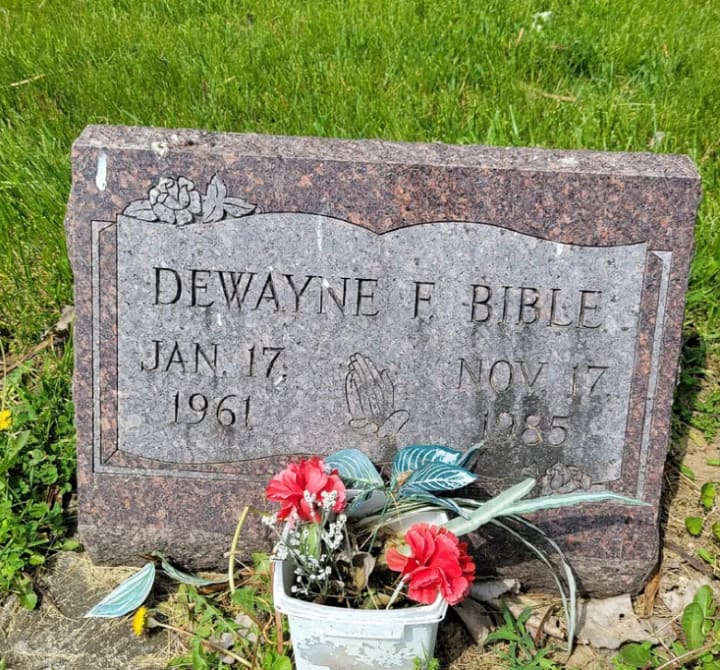
In 1985, Dewayne Bible was 24 years old and managing an Indianapolis McDonald’s restaurant. Having begun his career with the company during his high school years, his passion, dedication, and work ethic quickly set him apart, propelling him into a leadership role at a young age.
Deeply committed to his job, Dewayne’s dedication extended well beyond his scheduled shifts. Even on his days off, he would call the restaurant to check on his co-workers and ensure operations were running smoothly.
On Sunday 17th November 1985, Dewayne was working his usual early-morning shift at the restaurant. The day was just beginning, with the steady hum of breakfast service filling the dining area, when two men walked through the doors.
By 7:00am, the pair had been seated for nearly an hour, quietly drinking coffee. One of the men eventually stood up, appearing to prepare to leave. Instead, the routine calm of the morning was about to shatter, taking a tragic and entirely unexpected turn.

The man had not been leaving at all. Instead, he circled around to the back of the building and slipped in through the staff entrance. At the same moment, the other man—who had remained seated—suddenly sprang up and vaulted over the counter.
Both men produced guns, catching the staff completely off guard. They quickly took control, forcing the employees together at gunpoint. There were six people in total: Dewayne and five employees, all of them women.
The gunmen ordered the terrified group into the walk-in freezer, telling them they intended to take one employee hostage. As they reached for one of the women, Dewayne stepped forward, insisting instead—

The men agreed and seized Dewayne, locking the women inside the freezer before leading him to the restaurant safe and forcing him to open it. Throughout the ordeal, Dewayne repeatedly pleaded with the gunmen to at least turn the freezer off, desperate to prevent his co-workers from freezing to death.
His frantic appeals were ignored. From inside the freezer, the employees later recalled hearing Dewayne beg for several minutes. Then, without warning, two loud gunshots rang out—followed by devastating silence.

After nearly half an hour trapped inside the freezer, the women could hear nothing from beyond the door. The restaurant was eerily silent. It seemed the two men had fled—and, more devastatingly, they feared Dewayne had been gravely harmed.
Using a piece of cardboard, they managed to dislodge the freezer lock and escape. But as they rushed back into the restaurant, they were confronted with a harrowing sight. Dewayne lay motionless on the floor in a pool of blood. He had been shot twice in the head at close range.
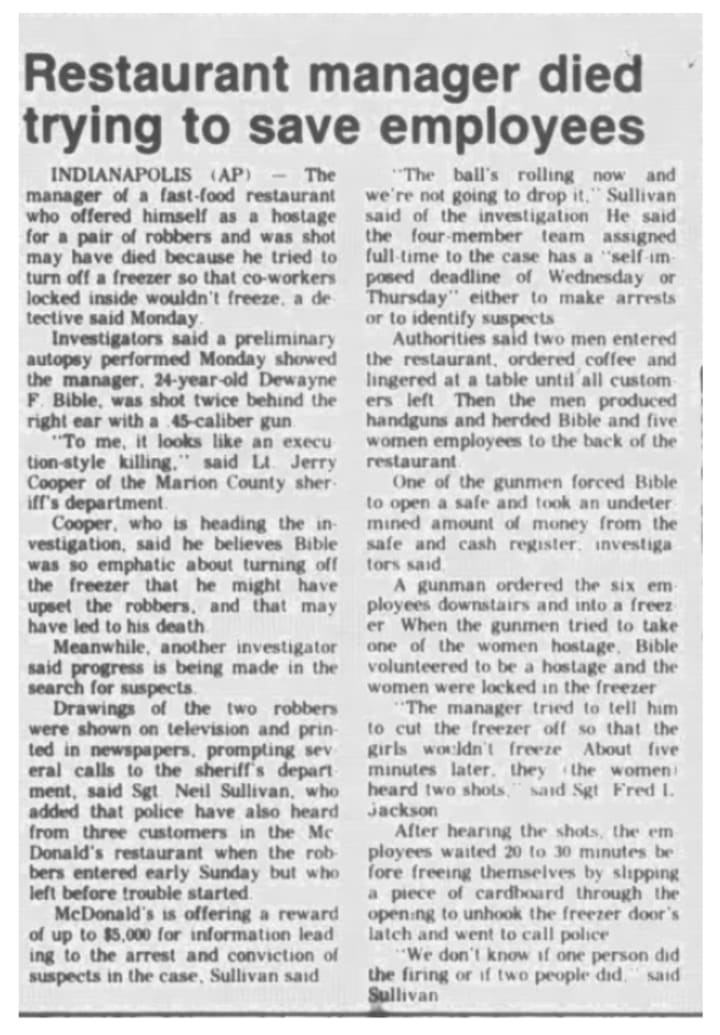
Police were swiftly dispatched to the scene and determined that the assailants had fled with an undisclosed amount of cash taken from the registers and the restaurant safe.
Investigators noted that the methods used during the robbery closely resembled several recent crimes in the area. Police theorised that Dewayne may have angered the gunmen by attempting to have the freezer turned off, prompting them to retaliate by taking his life.
As news of Dewayne’s selfless actions spread throughout the community, many were deeply moved by his bravery and courage in the face of unimaginable danger. His mother, Pearlie, later said she was not surprised by her son’s sacrifice, explaining simply that he was “that kind of person.” Dewayne was posthumously inducted into the Red Cross Hall of Fame in recognition of his heroism.
Locals were left stunned by the brutal killing of a man widely known for his kindness, and many prayed that those responsible would soon be brought to justice.
The surviving employees provided police with descriptions of the two suspects. One was described as a Black man with a light complexion, in his late twenties or early thirties, with sandy-coloured hair and standing approximately 6 feet 3 inches tall. The second suspect was described as a Black man with a darker complexion, around 5 feet 10 inches tall, with a slender build, uncombed afro-style hair, a thin beard, and noticeable acne scarring on his face.
Weeks passed as police pursued multiple leads, eventually focusing on a 35 year old man named Lawrence Gregory Bey, whom investigators believed matched the description of the darker-skinned suspect.
Detectives asked all five surviving employees to come to the police station to view a photographic line-up that included Lawrence. The images were presented in black and white, and none of the women were able to make a positive identification. Despite this, investigators remained convinced of Lawrence’s involvement. In a final effort, the photographs were later colorised.
Approximately two months after the murder, Lawrence’s photograph was placed into another line-up and shown to the employees once more. This time, all five women immediately identified Lawrence Gregory Bey as the man they had seen at the McDonald’s that morning.
On 2nd March 1986, Lawrence was arrested and charged with the murder of Dewayne Bible. His trial began that November. No physical evidence linked Lawrence to the crime, and the prosecution’s case rested entirely on eyewitness testimony.
The trial lasted just three days, followed by four and a half hours of jury deliberation. Lawrence Gregory Bey was found guilty and sentenced to a total of 281 years in prison.
In August 1987, police arrested a second man they believed may have been involved in the crime. However, none of the surviving employees were able to identify him in a police line-up. Investigators suggested this may have been due to the suspect having lost more than 50 pounds since the murder. Ultimately, the charges were dropped before the case went to trial because of insufficient evidence.
Meanwhile, Lawrence’s attorneys appealed his conviction, arguing that the eyewitness identifications were unreliable. They contended that the women had selected Lawrence not because they recognized him from the crime, but because his face had become familiar after repeated exposure during earlier photo line-ups. The judge, however, was unconvinced by this argument and denied the appeal.
In 2007—twenty years after Lawrence’s conviction—his legal team requested DNA testing of evidence recovered from the crime scene, including a coffee cup lid and a cigarette found on the table where the gunmen had been seated. The results revealed DNA from two individuals, neither of whom was Lawrence. Despite this, the defence's request for a new trial was denied.
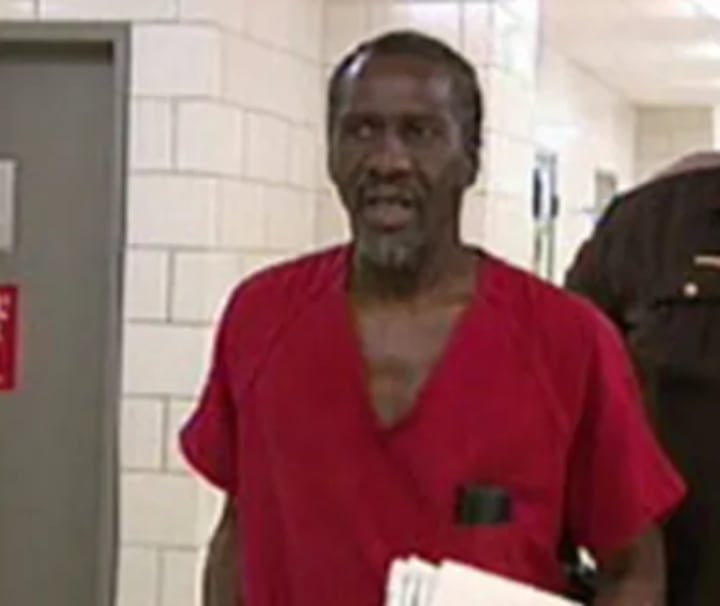
In October 2009, Lawrence Gregory Bey died in prison at the age of 58. In the years since his death, many have come to believe that he was wrongfully convicted, pointing to the absence of physical evidence and the unreliability of eyewitness testimony under extreme stress.
As of 2026, there has been no renewed effort to retest the DNA using modern forensic technology, nor any apparent movement toward identifying or prosecuting the remaining suspect or suspects.
Tragically, one fact remains certain: at least one person responsible for Dewayne Bible’s murder was never brought to justice. To this day, their identity—and whether they went on to commit other crimes—remains unknown.
About the Creator
Matesanz
I write about history, true crime and strange phenomenon from around the world, subscribe for updates! I post daily.
Speed, Greed, and the Dangerous Game of Revenge
There are some things in the world that are not just symbols of wealth, but become identities of power, arrogance, and obsession. The rare 1937 Bugatti is one of those things. The film begins with a grand and luxurious auction, where this legendary car stands on stage as the center of everyone’s attention. The auctioneer announces that it is one of the rarest cars in the world, with only two models existing globally. This announcement ignites greed in the hearts of every wealthy person present in the crowd. The bidding starts at thirty million dollars and keeps increasing moment by moment. Someone bids thirty-two, someone thirty-four, and finally the bid reaches forty-one million dollars. This final bid is placed by a man named Jack, who is in contact with his boss. On the surface, he appears to be a rich buyer, but in reality, he is working for a powerful and dangerous criminal. The Bugatti is not going to belong to him, but to his boss. At the same time, the film introduces us to two brothers—Andrew and Garrett. Both are world-famous and highly skilled car thieves. Luxury and supercars are their obsession, and they have stolen some of the best cars in the world. The reason both brothers are connected to the Bugatti’s path is because they want to steal this rare car. The Bugatti theft on the highway is one of the most thrilling scenes of the film. High-speed vehicles, jumping onto a truck using ropes, a shower of bullets, and the shadow of death—Andrew and Garrett risk their lives to steal the Bugatti. This is not just a theft, but a practical demonstration of skill, nerves, and madness. After the theft, both brothers celebrate, but this happiness does not last long. When they go to a man named Jimmy to sell the Bugatti, he refuses to buy it. Jimmy knows that this car does not belong to an ordinary person, but to a very powerful and dangerous businessman named Morrier. Morrier is not only a wealthy man, but also runs an entire criminal empire. Soon, Andrew and Garrett are captured and presented before Morrier. Morrier tells them his story—a journey that started from poverty, an empire built through crime, and an obsession with rare cars. For him, these cars are not just a hobby, but symbols of his power and ego. The theft of the Bugatti becomes a personal insult to him. Morrier gives both of them one chance to stay alive, but his condition is extremely dangerous. They must steal a 1962 Ferrari belonging to a man named Max—a car that is one of a kind in the world and worth more than millions of dollars. Max is a young but exceptionally intelligent business tycoon, and also Morrier’s old enemy. From here, the story moves beyond a simple theft and turns into a battle of minds. Andrew and Garrett form an entire team, including Stephanie, Devon, bomb expert Lane, and skilled race drivers. Every person has a specific role, and every mistake can lead to death. The character of Max adds more depth to the story. He appears to be a polite and successful businessman, but behind him is an extremely sharp mind. He is both impressed by Andrew and Garrett’s abilities and cautious of them. His Ferrari is not just a car, but his identity. The story takes a new turn when it is revealed that the real plan was never to steal the Ferrari. The Bugatti was merely a move, a trap—used to ensnare Morrier along with his arrogance. Andrew, Garrett, and Max were actually playing the same game from the very beginning, where the real target was Morrier’s treasure of rare and valuable cars. In the climax, speed, explosions, and intelligence collide together. A collapsing bridge, long car chases, betrayal, sacrifices, and finally Morrier’s fate—all symbolize that the game of power and greed ultimately ends in destruction. In the end, Andrew proposes marriage to Stephanie, Garrett finds love, and the team completes an impossible mission. But the biggest lesson remains that in this world, the most dangerous weapon is not a gun or speed, but the mind, patience, and the final move played at the right time. Final Question Is power really found only in money and weapons, or is true power hidden in the mind that silently turns the entire game around?
By Filmon Ke Raaz | Movie Mysteries Explainedabout 23 hours ago in Criminal



Comments
There are no comments for this story
Be the first to respond and start the conversation.