
The Unabomber: America's Longest Domestic Terrorist Campaign
The Impact of Theodore Kaczynski's Anti-Technology Beliefs and the Importance of Collaboration in Bringing Him to Justice

Introduction
Theodore Kaczynski, better known as the Unabomber, terrorized the United States with a 17-year bombing spree that targeted universities, airlines, and computer stores. His bombs killed three people and injured 23 others. It was only through the publication of his manifesto, and the subsequent identification and arrest of its author, that the Unabomber's reign of terror was brought to an end.
Background on the Unabomber
Theodore Kaczynski was born in 1942 in Chicago, Illinois. He showed exceptional academic ability from a young age and was accepted into Harvard University at the age of 16. However, Kaczynski struggled to fit in at Harvard and eventually dropped out of the university. He later attended the University of Michigan, where he received a Ph.D. in mathematics.
In the early 1970s, Kaczynski moved to a remote cabin in Montana, where he lived without electricity or running water. It was during this time that he began to develop his anti-technology and anti-industrialization beliefs, which would eventually lead him to carry out his bombing spree.
The Unabomber's bombing spree
The Unabomber began his bombing spree in 1978, when he targeted a Northwestern University professor with a bomb that injured the professor's assistant. Over the next 17 years, he would go on to target universities, airlines, and computer stores, among other targets.
The Unabomber's bombs were often placed in packages and mailed to his targets. The packages were designed to look harmless, and often included fake return addresses and personal messages to the recipients. However, once opened, the bombs would detonate, causing devastating injuries and sometimes death.
The Unabomber's bombings caused widespread fear and panic in the United States. Law enforcement officials struggled to identify a suspect or motive for the attacks. The Unabomber's choice of targets seemed random, and his bombs were designed to leave little physical evidence behind.
Publication of the Unabomber's manifesto
In 1995, the Unabomber sent a 35,000-word manifesto titled "Industrial Society and Its Future" to several major newspapers and television stations. The manifesto outlined the Unabomber's anti-technology beliefs and called for a revolution against modern industrial society.
The publication of the manifesto marked a turning point in the Unabomber case. The FBI believed that the manifesto could provide valuable clues to the Unabomber's identity, and they launched a major media campaign to try and identify the author of the manifesto.
Identification and arrest of the Unabomber
It was David Kaczynski, the Unabomber's brother, who first suspected that his brother might be the Unabomber. David had read the manifesto and recognized his brother's writing style and beliefs. He contacted the FBI and provided them with information about his brother's past and present activities.
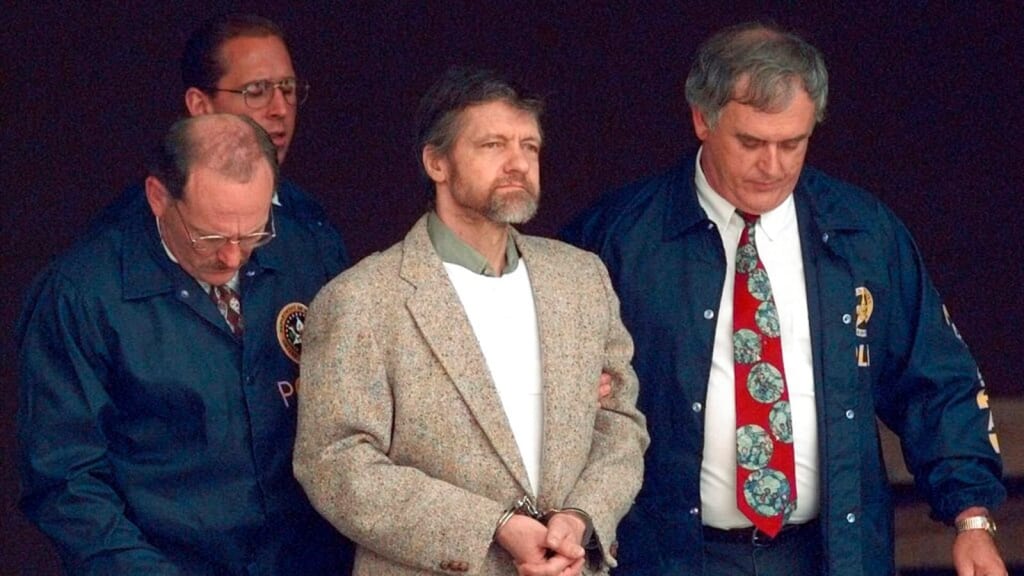
The FBI launched an investigation into Theodore Kaczynski, and they eventually obtained a search warrant for his cabin in Montana. In 1996, the FBI raided the cabin and found evidence that linked Kaczynski to the Unabomber's bombings. They also found a bomb that was ready to be mailed, which Kaczynski had planned to send to a computer store.
Kaczynski was arrested and charged with multiple counts of murder and terrorism. He initially pleaded not guilty, but later changed his plea to guilty in exchange for a sentence of life imprisonment without the possibility of parole.
The Unabomber's legacy
The Unabomber's bombings caused widespread fear and panic in the United States, and they served as a reminder of the danger of domestic terrorism. The Unabomber's anti-technology and anti-industrialization beliefs were seen as extreme and out of touch with modern society.
The publication of the Unabomber's manifesto raised important questions about the role of technology in society and the potential risks associated with its advancement. It sparked a debate about the impact of technology on our lives, and whether we should be more cautious in our approach to its development.
The Unabomber's case also highlighted the importance of collaboration between law enforcement agencies and the public. David Kaczynski's decision to come forward and provide information about his brother was critical in identifying the Unabomber and bringing him to justice.
In the aftermath of the Unabomber case, there was a renewed focus on domestic terrorism and the need for better strategies to prevent and respond to such attacks. The Unabomber's bombings served as a wake-up call to law enforcement agencies and the public, reminding us of the importance of staying vigilant and working together to keep our communities safe.
Conclusion
The Unabomber's 17-year bombing spree was one of the longest and most destructive domestic terrorism campaigns in United States history. His bombings killed three people and injured 23 others, and his anti-technology and anti-industrialization beliefs were seen as extreme and out of touch with modern society.
It was only through the publication of his manifesto and the subsequent identification and arrest of its author that the Unabomber's reign of terror was brought to an end. The case highlighted the importance of collaboration between law enforcement agencies and the public, and sparked a debate about the impact of technology on our lives.
The Unabomber's legacy serves as a reminder of the importance of staying vigilant and working together to prevent and respond to domestic terrorism. His case will continue to be studied by law enforcement agencies and scholars alike, as we seek to better understand the motivations and methods of domestic terrorists, and develop more effective strategies to combat their actions.
About the Creator
Keerthana Thirumalairaj
An Independent Solitude girl, who recently found the interests in writings and converts Facts and imaginations into writings.
Keep reading
More stories from Keerthana Thirumalairaj and writers in Criminal and other communities.
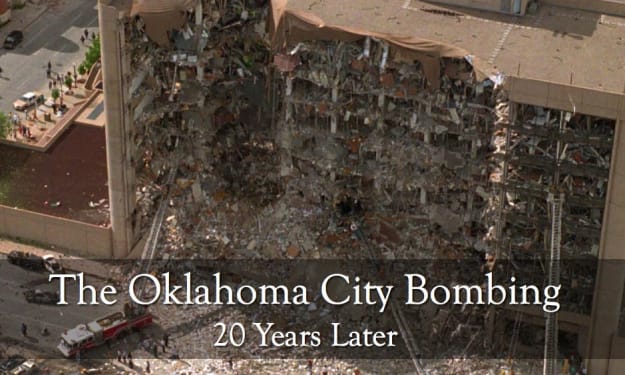
The Oklahoma City Bombing: A Tragic Act of Domestic Terrorism
Introduction The Oklahoma City bombing was a domestic terrorist attack that occurred on April 19, 1995, at the Alfred P. Murrah Federal Building in Oklahoma City, Oklahoma. The bombing resulted in the deaths of 168 people, including 19 children under the age of 6, and injured over 680 others. The investigation into the bombing was one of the largest and most complex in U.S. history, involving multiple agencies and forensic techniques. Through careful forensic investigation and surveillance footage, the perpetrators were identified and captured, resulting in one of the most significant cases of domestic terrorism in American history.
By Keerthana Thirumalairaj3 years ago in Criminal
The Facebook Marketplace of Horrors: Inside the groups where bones are traded like baseball cards.
It Wasn't the Dark Web When we hear about the illegal sale of human body parts, we imagine the "Dark Web"—encrypted Tor browsers, Bitcoin wallets, and shadowy Russian servers. The terrifying reality of the Jonathan Gerlach case is that he wasn't hiding in the digital shadows. He was hiding in plain sight.
By Sunshine Firecracker2 days ago in Criminal
What DHS Secretary Kristi Noem said vs. what the videos show
NBC News and PBS recapped the competinBelow is a structured, evidence-backed analysis of the Minneapolis ICE shooting and the claims made by DHS Secretary Kristi Noem—including the applicable federal laws/policies and how intent vs. recklessness factor into a potential case. I’ll keep this clear, precise, and grounded in the video evidence and governing law.
By Organic Products 5 days ago in Criminal
How to Succeed at the Benson Directory®
Congratulations and welcome to the Benson Directory® employee #22391! As our newest call handler, you will have the privilege of speaking with dozens of unique and interesting people on a daily basis as well as the opportunity to earn bonuses for high performance. Contained within this handbook you will find a set of ease to follow instructions designed to help you settle in to your new role and begin paving the way to success.
By S. A. Crawfordabout 19 hours ago in Fiction



Comments
There are no comments for this story
Be the first to respond and start the conversation.