
The Oklahoma City Bombing: A Tragic Act of Domestic Terrorism
The Investigation, Identification, and Capture of Perpetrators, and Lessons Learned for Law Enforcement and Prevention

Introduction
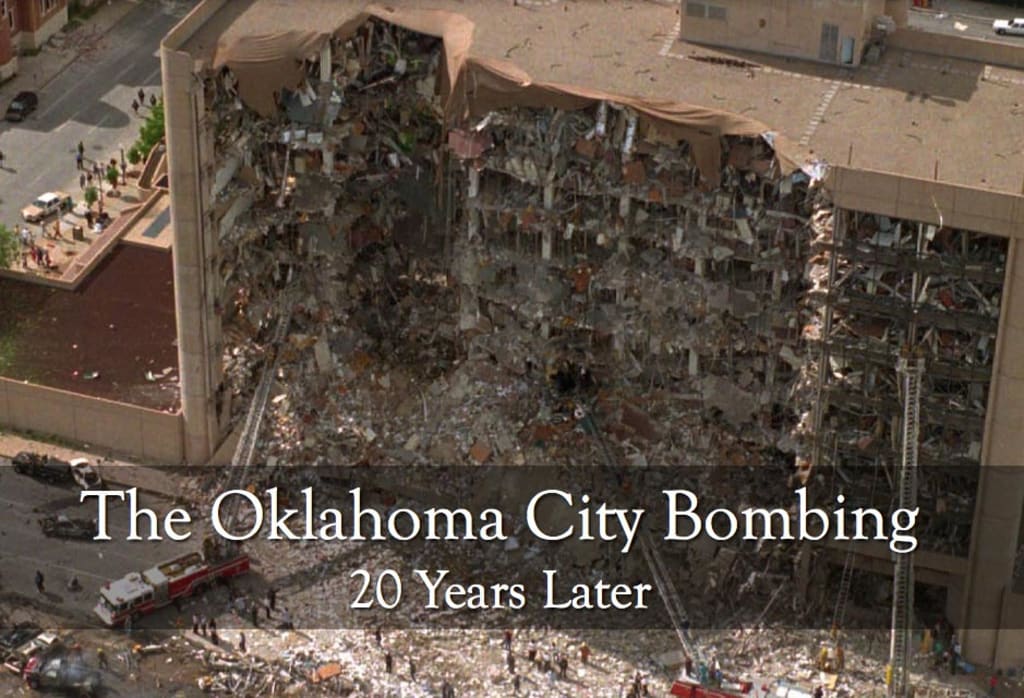
The Oklahoma City bombing was a domestic terrorist attack that occurred on April 19, 1995, at the Alfred P. Murrah Federal Building in Oklahoma City, Oklahoma. The bombing resulted in the deaths of 168 people, including 19 children under the age of 6, and injured over 680 others. The investigation into the bombing was one of the largest and most complex in U.S. history, involving multiple agencies and forensic techniques. Through careful forensic investigation and surveillance footage, the perpetrators were identified and captured, resulting in one of the most significant cases of domestic terrorism in American history.
Background of the Oklahoma City Bombing:
The bombing was carried out by Timothy McVeigh and Terry Nichols, two American citizens who held extreme anti-government views. McVeigh was a Gulf War veteran who had become disillusioned with the government and had been radicalized by right-wing extremist groups. Nichols was a former Army explosives expert who had also been radicalized by right-wing ideologies. The two had met at a gun show in the early 1990s and bonded over their shared beliefs.
McVeigh and Nichols began planning the bombing in 1994, motivated by their anger over the government's handling of events like the Waco siege and the Ruby Ridge incident. They rented a storage unit in Kansas and began stockpiling materials for the bomb, including fertilizer and diesel fuel. They also constructed the bomb in the unit, using a rented truck to transport the materials to Oklahoma City.
The Bombing:
On the morning of April 19, 1995, McVeigh drove the truck containing the bomb to the Alfred P. Murrah Federal Building in downtown Oklahoma City. He parked the truck in front of the building and detonated the bomb, causing a massive explosion that destroyed a large portion of the building and killed 168 people. McVeigh and Nichols had hoped to spark a revolution against the government with the bombing, but instead, it resulted in one of the deadliest acts of domestic terrorism in U.S. history.
The Investigation:
The investigation into the Oklahoma City bombing was one of the largest and most complex in U.S. history. Multiple agencies, including the FBI, ATF, and local law enforcement, were involved in the investigation. The investigation began immediately after the bombing, with law enforcement officers searching for clues and gathering evidence from the scene of the crime.
One of the critical pieces of evidence in the investigation was the surveillance footage that captured the moments before and after the bombing. The footage was captured by several cameras located on buildings near the Murrah building. The cameras provided a clear view of the truck containing the bomb and the individuals who had rented the truck. The footage was critical in identifying the individuals responsible for the bombing.
Another critical piece of evidence in the investigation was the forensic analysis of the bomb components. The bomb had been constructed using a mixture of ammonium nitrate fertilizer and diesel fuel, which created a distinctive signature. Forensic investigators were able to trace the components of the bomb to a specific location in Kansas, where McVeigh and Nichols had rented a storage unit. Investigators were also able to determine that the bomb had been constructed using materials that were only available in certain areas of the country, which helped to narrow down the search for the perpetrators.
The identification and capture of the perpetrators:
Through careful forensic investigation and surveillance footage, law enforcement officers were able to identify the individuals responsible for the bombing. McVeigh and Nichols had left a trail of evidence, including receipts for bomb-making materials and motel rooms, which helped investigators to piece together their movements leading up to the bombing.
McVeigh was arrested shortly after the bombing, as he was driving a car with no license plates. Nichols was arrested several days later in Kansas. Both men were charged with multiple counts of murder and other crimes related to the bombing.
During their trials, both McVeigh and Nichols were found guilty of the charges against them. McVeigh was sentenced to death, and Nichols was sentenced to life in prison without parole. McVeigh was executed in 2001, while Nichols remains in prison.
Lessons learned:
The Oklahoma City bombing was a tragic event that resulted in the loss of many innocent lives. However, it also provided valuable lessons for law enforcement agencies and the public in how to prevent and respond to acts of domestic terrorism.
One of the lessons learned from the bombing was the importance of surveillance and the use of technology in investigations. The surveillance footage captured by cameras near the Murrah building played a crucial role in identifying the perpetrators of the bombing. Since then, the use of surveillance cameras in public areas has become more common, allowing law enforcement agencies to quickly identify suspects in criminal investigations.
Another lesson learned was the importance of sharing information between agencies and jurisdictions. The investigation into the Oklahoma City bombing involved multiple agencies, including federal, state, and local law enforcement. The sharing of information and resources between these agencies was critical in the identification and capture of the perpetrators.
The Oklahoma City bombing also highlighted the threat of domestic terrorism and the need for increased awareness and prevention efforts. Since then, law enforcement agencies have focused more on monitoring and investigating extremist groups and individuals who hold extreme views.
Conclusion:
The Oklahoma City bombing was a tragic event in American history that resulted in the loss of many innocent lives. However, through careful forensic investigation and the use of surveillance footage, law enforcement agencies were able to identify and capture the perpetrators of the bombing. The investigation provided valuable lessons for law enforcement agencies and the public in preventing and responding to acts of domestic terrorism. The lessons learned from the bombing have led to increased surveillance, information sharing, and prevention efforts aimed at stopping future acts of domestic terrorism.
About the Creator
Keerthana Thirumalairaj
An Independent Solitude girl, who recently found the interests in writings and converts Facts and imaginations into writings.
Keep reading
More stories from Keerthana Thirumalairaj and writers in Criminal and other communities.
The Atlanta Child Murders
Introduction The Atlanta Child Murders, also known as the Atlanta Murders of 1979-1981, refers to a series of killings that occurred in Atlanta, Georgia, between July 1979 and May 1981. During this time, at least 28 children, adolescents, and young adults were murdered, and many others were reported missing. The investigation into these crimes became one of the largest and most complex in U.S. history, involving thousands of law enforcement officials and experts.
By Keerthana Thirumalairaj3 years ago in Criminal
Former Miss Universe Canada Delegate Files $500 Million Defamation Lawsuit Against Grant Cardone and Cardone Capital in Miami
MIAMI, FL — Chealse Sophia Howell, an internationally recognized model, entrepreneur, and former Miss Universe Canada titleholder, has filed a civil lawsuit against Grant Cardone and Cardone Capital, LLC in the Eleventh Judicial Circuit Court, Miami-Dade County (Case No. 25-024299-CA-01). The complaint, officially filed on December 11, 2025, alleges defamation and tortious interference, claiming that the defendants engaged in a coordinated campaign of false statements across multiple digital platforms.
By Dena Falken Esq2 days ago in Criminal
Center Stage with Paul Stewart
*** I'm keen to republish the interviews I did for my series with Vocal creators. It's been a few years and I thought it might be nice to revisit these wonderful conversations. I'll be releasing them one at a time for a few weeks/months.
By Heather Hubler4 days ago in Interview



Comments
There are no comments for this story
Be the first to respond and start the conversation.