
The Tragic Symphony of Bergen
How Turkey’s "Woman of Sorrows" turned her scars into songs and became an immortal symbol of defiance against domestic violence


The story of Bergen stands as one of the most tragic tales in the history of modern art. It is far more than a mere biography of a singer who achieved immense fame; it is a searing indictment of violence against women, and a cry of pain embodied in a golden voice.
Bergen: The "Woman of Sorrows" Who Sang Her Wounds Until the Last Bullet
In the history of Turkish music, there are voices that entertain you, and then there are voices that tear your heart out. Bergen, born Belgin Sarılmışer, belonged to the latter. She didn’t just sing to please the crowds; she bled melodies onto the stage. Known by the moniker "Acıların Kadını" (The Woman of Sorrows), the title was less a marketing gimmick and more a hauntingly accurate description of a life defined by betrayal, disfigurement, and a bloody end.
The Beginnings: A Musical Dream Stifled by Necessity
Bergen was born on July 15, 1959, in the coastal city of Mersin. From childhood, music was the only language she used to navigate her inner world. She displayed a prodigious talent for classical instruments, specifically the piano and cello, eventually enrolling in a conservatory to sharpen her skills academically.

However, the winds did not blow in her favor. Dire financial circumstances forced her to abandon her studies to help support her family. In 1977, while out with friends, she was urged to step onto a stage for a single song. That moment—a stroke of "fatal luck"—changed her life forever. The nightclub owner was so mesmerized by the power of her voice that he offered her a job on the spot. Thus began her professional journey, one that would lead her to the pinnacle of fame and the depths of hell.
Halis Serbes: When Love Becomes a Prison
Halis Serbes entered Bergen’s life when she was most vulnerable, seeking stability and safety. He presented himself as a devoted lover, showering her with an intensity that eventually led to marriage. But the mask soon slipped. Bergen discovered that the marriage was built on a web of lies—the contract was forged, and the man she had entrusted with her life was already married with three children.
Bergen tried to escape, but obsession rarely lets go easily. On a dark night in 1982, while her career was skyrocketing, Serbes hired a man to throw nitric acid in her face. The result was catastrophic: Bergen lost her right eye permanently, and her face and body suffered horrific disfigurement.
"He stole my face, but he could not steal my throat." — This was how Bergen summarized her legendary resilience following the attack.
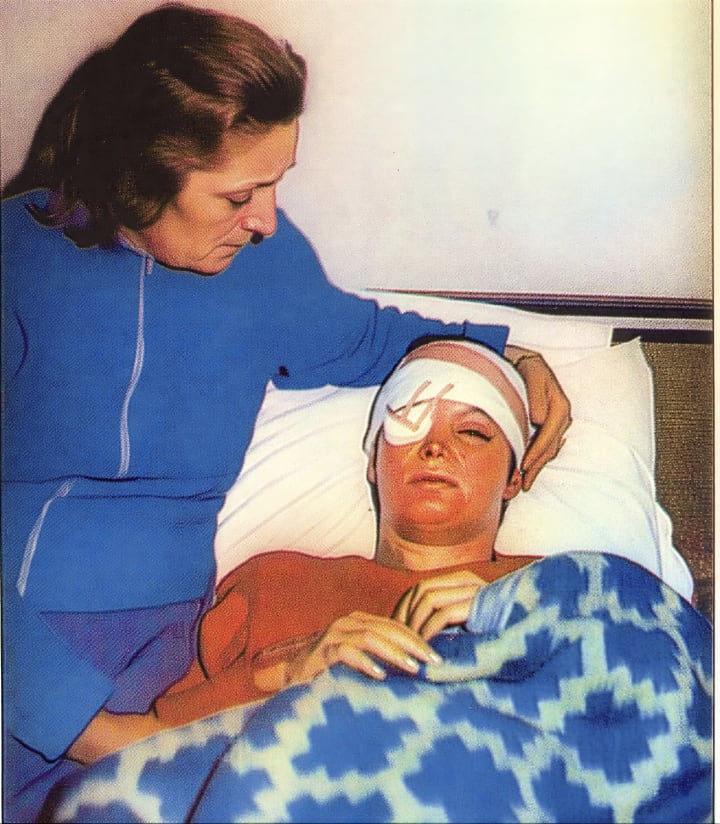
Bergen returned to the stage with an iconic look: she covered her blinded eye with her long blonde hair and often wore dark sunglasses. This image became a symbol of defiance against injustice. She released her most famous album, Woman of Sorrows, which achieved record-breaking sales. Her timeless song, "Sen Affetsen Ben Affetmem" (If You Forgive Them, I Won't), served as a direct message to the man who tried to destroy her.
The Night of the Bullet: The Final Curtain
Halis Serbes served only a few years in prison before returning to stalk Bergen. Through a mix of fear and intimidation, Bergen briefly returned to him in a moment of human weakness, only to realize that the monster within him had not changed. With her mother’s help, she fled once more, embarking on a concert tour to secure their survival.
On August 14, 1989, in the city of Adana, death was waiting. Serbes tracked her down and shot her in cold blood while she was performing. She was only 30 years old. Bergen passed away at the height of her fame, leaving behind a mournful musical legacy and a public that still weeps for her today.
Absent Justice and the Film That Reopened the Wound
The bitterness of the story was exacerbated by the lenient sentence her killer received. Serbes served very little time behind bars, a fact that sparked nationwide outrage in Turkey and continues to be a focal point for human rights organizations.
In 2022, a major motion picture titled "Bergen" was produced, with actress Farah Zeynep Abdullah delivering a stunning performance as the late singer. The film was more than just a piece of art; it was a social movement against domestic violence. Despite threats from the killer (who remains alive) and bans in certain conservative districts, the film shattered records with over 9 million viewers, becoming the highest-grossing film in Turkish history.
Conclusion: Why Does Bergen’s Story Live On?
Bergen’s story is not just a memory of a fallen "Arabesque" singer; she is a symbol for every woman facing oppression. Her raspy, sorrowful voice still echoes through the streets of Istanbul and the alleys of Mersin, reminding the world that silence in the face of violence is a secondary crime.
Bergen was buried in a grave surrounded by a literal iron cage—a final request born from her mother’s fear that her killer would desecrate her body. Yet, while her body is confined, her spirit and songs remain free, inspiring millions and proving that the "Woman of Sorrows" was never truly defeated. She was immortalized by her pain, becoming a legend that will never be forgotten.
About the Creator
Keep reading
More stories from Mayar Younes and writers in Criminal and other communities.
The Girl Who Refused to Die
In the grim annals of true crime, there are stories that chill the bone, and then there are stories that redefine the very essence of human resilience. The story of Mary Vincent is both. It is a harrowing descent into the darkest depths of human cruelty, followed by an ascent fueled by a will to live that defied every law of medicine, logic, and fate.
By Mayar Younes4 days ago in Criminal
Unsolved case! Japanese female teacher mysteriously died in a cesspool
The case we are discussing today is one of the most bizarre and spine tingling unsolved cases in post-war Japan - the Fukushima female teacher's tragic death. It does not have the lonely souls and wild ghosts in supernatural legends, but it is more suffocating than any ghost story; It has a clear victim and a specific location of the crime. The police investigated for half a year, but in the end, it was hastily closed as an "accidental death". However, everyone who has seen the scene and heard the details believes that this is definitely not an accident. This incident has been circulating in Japan for decades, and there are still people investigating the truth. Whenever someone mentions that cold public restroom or that strange death posture, it still makes people's hearts tighten and a layer of cold sweat breaks out on their backs.
By Aiden Wang6 days ago in Criminal
Nancy Guthrie Update: Day 9 Search Continues Amid Ransom Concerns and Expert Skepticism
The search for Nancy Guthrie, the 84-year-old mother of NBC Today co-anchor Savannah Guthrie, has entered its ninth day with no confirmed sightings or proof of life. Nancy was last seen on January 31, 2026, in the Catalina Foothills neighborhood near Tucson, Arizona, when a family member dropped her off at home after dinner. The following day, family members reported her missing after she failed to attend church, a part of her regular routine, and could not be reached by phone.
By Story Prisma day ago in Criminal




Comments
There are no comments for this story
Be the first to respond and start the conversation.