
The Tragic Death of Holly Barlow-Austin in a Texas Jail Operated by LaSalle Corrections
**Holly Barlow-Austin** died after **LaSalle Corrections** denied medical care in **Texas** jail; family won record $7 million settlement in 2019.
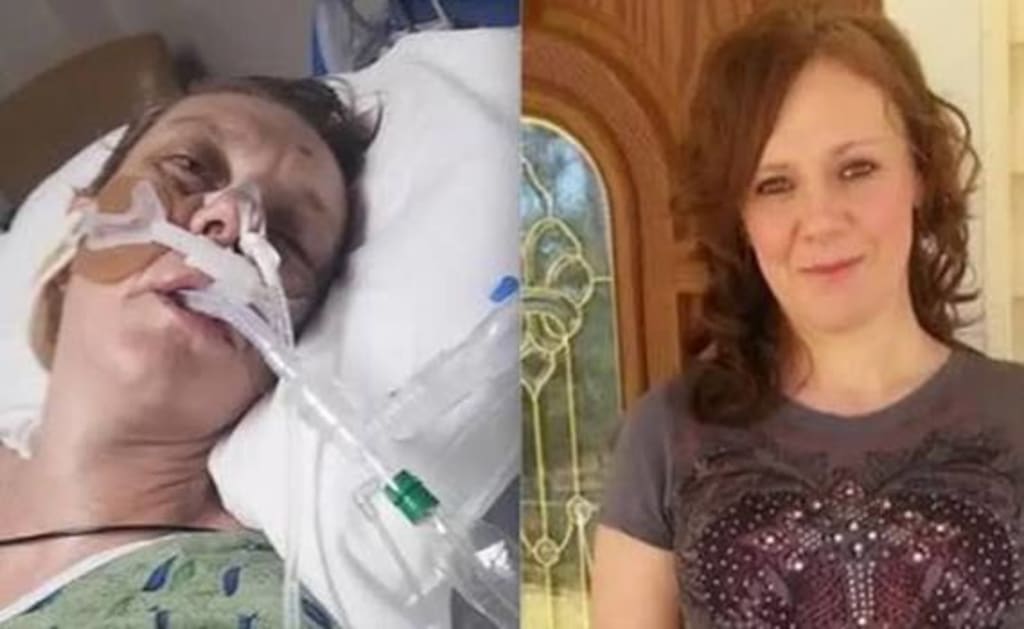
In April 2019 Holly Barlow-Austin a 47-year-old woman living in Texas was arrested for violating the terms of her probation related to a misdemeanor offense. What began as a routine and relatively minor criminal justice matter would soon become a devastating example of how neglect inside privately operated jails can lead to irreversible harm and, ultimately, loss of life.Following her arrest, Holly was placed in a jail facility operated by LaSalle Corrections a private company responsible for managing correctional facilities in the state. According to court filings and accounts from her family, Holly entered the jail in stable condition. She was capable of walking on her own, communicating clearly, and managing her health with prescribed medication. There were no signs that her life was in immediate danger at the time she was booked into custody.
However, during the weeks that followed, Holly’s health steadily deteriorated while she remained behind bars. Between April and June, she repeatedly sought medical attention from jail staff. She asked for help, requested evaluations, and tried to obtain refills for the prescription medication she depended on. Instead of receiving appropriate medical care, she was consistently turned away. Jail personnel reportedly dismissed her complaints and told her she was exaggerating or faking her illness.
Holly’s family later alleged that cost-cutting measures played a significant role in the refusal to provide her with proper treatment. Because the jail was operated by a private contractor, healthcare decisions were influenced not only by medical need but also by financial considerations. In practice, this meant that basic requests for care were delayed or denied altogether. Even when her condition became more visibly serious, staff allegedly failed to escalate her case or arrange for a proper medical assessment.
Over time, Holly’s physical condition worsened dramatically. She became increasingly weak and struggled to move. She also experienced severe neurological symptoms that went unaddressed. Despite these alarming changes, she remained confined in her cell without meaningful intervention.
By June 11, nearly two months after her arrest, the severity of Holly’s condition could no longer be ignored. Jail staff finally recognized that she was in medical crisis and decided to send her to a hospital. By that point, however, the damage to her body was already extensive. The woman who had walked into jail in relatively good health was now blind and paralyzed.
The decision to transfer her to a hospital came only when her condition had become so critical that there was concern she might die while still in custody. According to her family, the transfer appeared to be motivated not by a sudden recognition of her medical needs, but by the fear of liability if she passed away inside the jail.
Doctors at the hospital immediately attempted to stabilize her and reverse the effects of the prolonged lack of treatment. Despite their efforts, Holly’s condition did not improve. The injuries caused by the delay in care were severe and irreversible. Her family remained by her side as medical staff worked to save her life.
Six days later, on June 17, 2019, Holly Barlow-Austin died in the hospital. She had spent weeks asking for help while incarcerated, only to be taken seriously after her condition had progressed beyond recovery. Her death left her family devastated and searching for accountability.
In the aftermath, Holly’s family filed a lawsuit against LaSalle Corrections, alleging that the company and its employees failed to provide constitutionally required medical care and ignored obvious signs that she was seriously ill. The lawsuit argued that her suffering and death were not the result of an unavoidable medical emergency, but rather of systemic neglect and deliberate indifference to her health.
The case drew attention to broader concerns about private prison and jail operators, particularly regarding how healthcare is delivered in facilities run for profit. Advocates pointed to Holly’s experience as an example of what can happen when cost control is prioritized over basic human needs. The family maintained that if Holly had received timely medical attention and access to her prescribed medication, her condition could have been treated before it became fatal.
The lawsuit ultimately ended in a $7 million settlement paid to Holly’s family. The settlement was described as the largest death-related settlement involving a jail case in Texas at the time. While the financial compensation provided some measure of accountability, it could not undo the suffering Holly endured or the loss experienced by those who loved her.Holly Barlow-Austin’s story has since become a powerful reminder of the risks faced by people in custody, particularly when healthcare is outsourced to private companies. Her case highlights the consequences of ignoring medical complaints, delaying treatment, and failing to treat incarcerated individuals with the same level of care and dignity expected outside jail walls.
About the Creator
Keep reading
More stories from Kure Garba and writers in Criminal and other communities.
When a Video Game Argument Becomes a Life-Ending Tragedy
On the evening of February 2 2018, a family dispute inside a home in Bibb County Georgia ended in a tragic and irreversible loss. What began as a disagreement over internet access and a video game escalated into violence that ultimately took the life of a young woman and led to a life sentence for her teenage brother.Sixteen-year-old Kevon Watkins wanted to spend the evening playing an online video game. However, the internet connection in the house was running too slowly for him to play properly. Frustrated, he decided to take matters into his own hands. Rather than waiting for the connection to improve or asking for help, he changed the password on the home router so that no one else in the household would be able to access the internet.
By Kure Garba2 days ago in Criminal
The Long Search: What the Evidence, the Video, and the Neighborhood Really Tell Us
If you’ve been following the Nancy Guthrie case, it can start to feel like law enforcement is circling the same ground again and again. Search teams in the same desert. Agents back in the same neighborhood. That same Ring camera footage replayed from every possible angle. From the outside, it can look repetitive, even aimless.
By Lawrence Lease4 days ago in Criminal



Comments
There are no comments for this story
Be the first to respond and start the conversation.