
The Long Search: What the Evidence, the Video, and the Neighborhood Really Tell Us
How tips, technology, and a strange doorbell video are shaping the Nancy Guthrie investigation


If you’ve been following the Nancy Guthrie case, it can start to feel like law enforcement is circling the same ground again and again. Search teams in the same desert. Agents back in the same neighborhood. That same Ring camera footage replayed from every possible angle. From the outside, it can look repetitive, even aimless.
But the truth is that this kind of investigation doesn’t move in straight lines. It expands, contracts, doubles back on itself, and often grows more complicated over time rather than simpler.
Right now, the search is being driven by two massive, overlapping tracks: an ever-growing flood of tips from the public and an increasingly technical forensic investigation unfolding behind the scenes.
Why the search isn’t “finished”
A lot of people assume that by now, every physical clue that exists must have already been found. That’s not how this works.
The moment a $50,000 reward was announced, the tip line effectively blew open. Dozens, then hundreds, of people started calling in with things they remembered from that night or the days after.
Some tips are vague. Some are wildly off base. But many are small, specific details that investigators still have to take seriously. Someone remembers seeing a car pulled over near Mile Marker 32 late that night. Someone else recalls a vehicle idling in a place that felt “off.” Another person suddenly realizes they might have driven past something unusual and only now understands why it mattered.
Each one of those calls becomes a thread that has to be tugged at.
At the same time, there’s a massive digital investigation happening that most people never see. Investigators are using geofencing and phone data to reconstruct movement patterns in the area around Nancy’s disappearance. If two devices stopped together on a remote stretch of highway at an odd hour, that’s a potential lead. If a phone went dark for an unexplained window of time, that raises questions.
None of this is flashy. It doesn’t make for dramatic headlines. But it’s painstaking, methodical, and incredibly time-consuming.
Why agents keep returning to the same neighborhood
One of the most sensitive aspects of the case has been law enforcement repeatedly canvasing the neighborhood of Annie and Tomas, the friends Nancy had dinner with the night she disappeared.
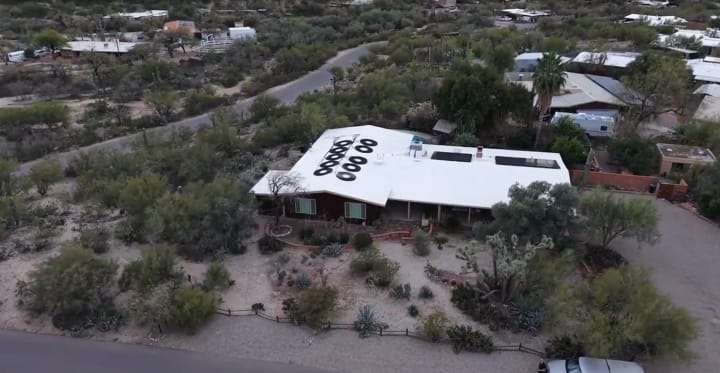
Nancy ate with them, played games, and was later driven home — a short, roughly ten-minute trip.
The fact that agents keep revisiting that area has made some people uneasy, but from an investigative standpoint, it’s actually standard practice. In any disappearance, the last people to see the victim alive become the starting point of the timeline. Their neighborhood, their street, and even their backyards all remain relevant as investigators try to reconstruct every minute of that evening.
This doesn’t mean they’re being treated as suspects. It means their home is a critical piece of the puzzle that has to be examined from every angle.
There’s also a grim reality shaping how search efforts are unfolding. Southern Arizona is vast and sparsely populated. If a kidnapping turned violent — and there are clear signs of a struggle at Nancy’s house — there are countless remote locations where evidence or a body could have been left. That’s why searches keep widening instead of narrowing.
The lingering mystery of the white van
A detail that keeps hovering in the background is the mention of a white van seen in the area around the time of the disappearance.
It hasn’t been officially labeled as central to the case, but it remains a significant lead. In a region where work vans and utility vehicles are common, a white van could easily blend in — which makes tracking it down both crucial and difficult.
Investigators are likely cross-referencing sightings with license plate readers, traffic cameras, and phone records, but that kind of analysis takes time.
The distinctive gear: gloves, backpack, gun, and a mouth flashlight
The most haunting piece of this case remains the Ring camera footage of the masked intruder approaching Nancy’s front door.
Law enforcement has reportedly focused on three key items: the gloves, the backpack, and the gun.
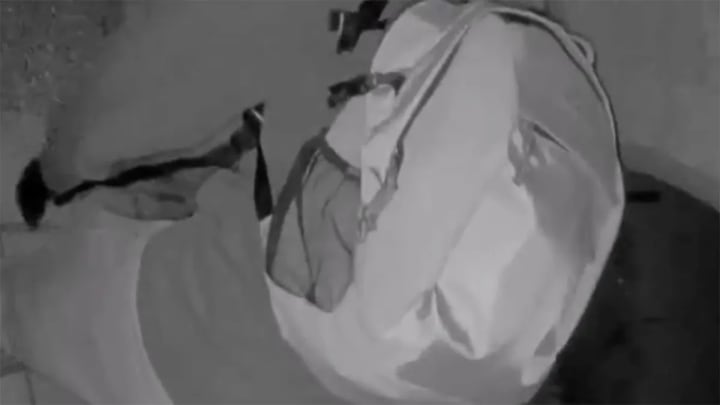
Individually, none of these are unusual in the Southwest. Together, they become distinctive.
The backpack stands out the most. It appears to have reflective elements or lights on the straps, making it far easier to recognize if someone remembers seeing it in a store or online. Investigators are contacting manufacturers and retailers in an effort to trace possible purchases — similar to how online purchase trails have cracked other high-profile cases.
Then there’s the mouth flashlight.
This is a specialized tool commonly used by mechanics and electricians who need both hands free while working in tight spaces. You turn it on by biting down. That detail is more important than it might seem.
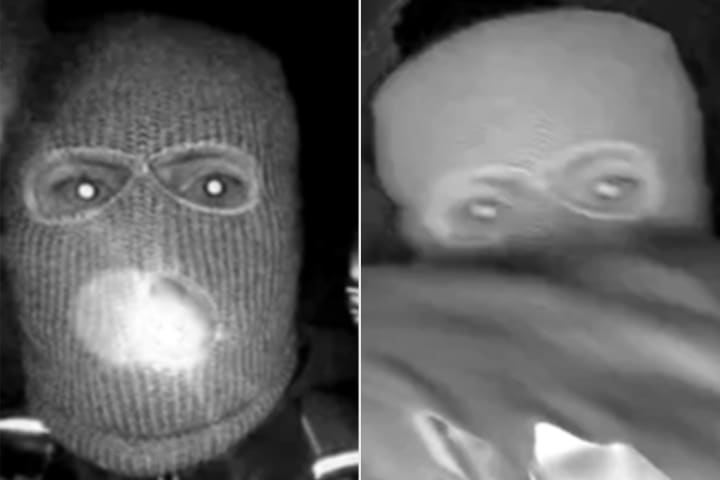
Many people assume gloves block DNA transfer, but that’s not true. Every time someone touches their face, adjusts a mask, or bites down on a flashlight, they’re transferring saliva and skin cells to their gloves. If those gloves later touched surfaces inside Nancy’s home, that creates potential forensic evidence.
Even small details — like a wiped patch of dust inside Nancy’s car — could point investigators toward specific areas where physical evidence was disturbed.
Professional… or sloppy?
One of the biggest unanswered questions is whether this intruder acted like a trained operative or an inexperienced criminal.
There are clear signs of planning. The person wore multiple layers to conceal their identity, used gloves, and appeared to intentionally alter their gait as they approached the house, as if trying to avoid being recognized by how they walked.
At the same time, parts of the approach look careless. The intruder fumbled with the Ring camera, tried awkwardly to block it with vegetation, and chose a mouth flashlight instead of a more practical headlamp while openly carrying a gun.
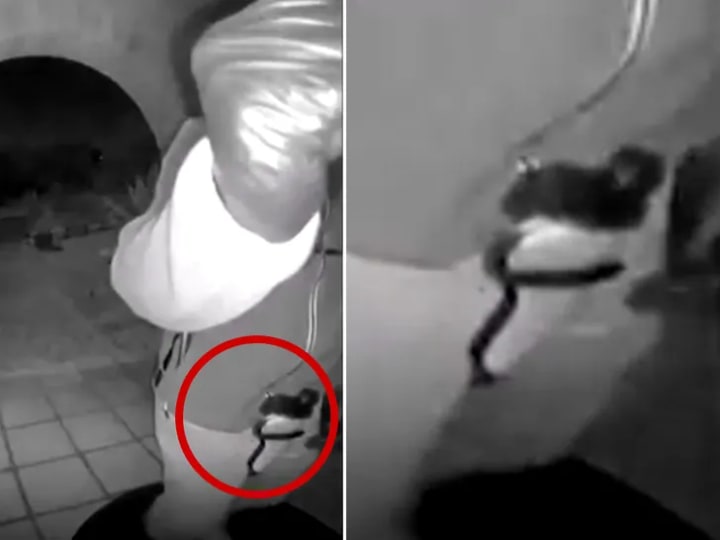
That mix of calculated behavior and apparent clumsiness makes profiling difficult. It doesn’t neatly point to former law enforcement or military, but it also doesn’t look like a completely amateur operation.
One intruder… or two?
Another layer of uncertainty comes from a second image released by authorities that appears to show the same person — or someone very similar — earlier that night without the backpack.
In that frame, the face is fully obscured, and there’s no visible gun or reflective straps. Some observers have even suggested the shoes look different, which is significant because people rarely change footwear during a crime.
This has led to two possible interpretations. Either the intruder initially approached the house to “test the scene” before returning with the backpack, or there were two people involved working together.
So far, investigators haven’t confirmed either theory.
Where things stand now
Right now, this case is still very active.
Agents are chasing tips, analyzing phone data, tracing purchases, revisiting key locations, and likely preparing for searches in areas that haven’t been publicly discussed yet — including possible dive operations in nearby reservoirs or retention ponds.
There is still no proof of life, which makes everything more complicated and urgent.
What’s becoming clear, though, is that this isn’t a stalled or disorganized investigation. It’s a slow, layered, technically driven search — one that hinges on small details, digital footprints, and the hope that a single overlooked clue will finally bring clarity to what happened to Nancy Guthrie.
About the Creator
Lawrence Lease
Alaska born and bred, Washington DC is my home. I'm also a freelance writer. Love politics and history.
Reader insights
Outstanding
Excellent work. Looking forward to reading more!
Top insights
Compelling and original writing
Creative use of language & vocab
Easy to read and follow
Well-structured & engaging content
Excellent storytelling
Original narrative & well developed characters
Expert insights and opinions
Arguments were carefully researched and presented
Eye opening
Niche topic & fresh perspectives
Heartfelt and relatable
The story invoked strong personal emotions
Masterful proofreading
Zero grammar & spelling mistakes
On-point and relevant
Writing reflected the title & theme
Keep reading
More stories from Lawrence Lease and writers in Criminal and other communities.
Everything You Need To Know About the Nancy Guthrie Disappearance
It began the way most evenings do — dinner with family, a ride home, a garage door rolling up, then down. Nothing dramatic. Nothing ominous. Just the quiet rhythm of an 84-year-old woman ending her night.
By Lawrence Leasea day ago in Criminal
The Epstein Files: Power, Secrets, and the Questions That Remain
The Epstein Files: Power, Secrets, and the Questions That Remain The name Jeffrey Epstein has become one of the most disturbing symbols of power, secrecy, and unanswered questions in modern history. What began as a criminal case involving sexual abuse and trafficking soon turned into a global scandal that touched politics, finance, intelligence agencies, and elite social circles. Even years after Epstein’s death, the so-called “Epstein files” continue to raise serious concerns about justice, accountability, and how powerful people are protected.
By Wings of Time 8 days ago in Criminal
The Salt in her Voice
The myth says mermaids sing to lure sailors to their death. But why? The ocean is huge. Only 5 percent has been discovered by man. Why would a creature of the sea with that much space to roam ever care about the fate of men on ships? The answer, as it turns out, is not a simple one at all. The truth about the myth is older than the tides. Long ago before the first ship ever cut across the surface, the sea made a pact with the sky. The sky would take the souls of the drowned. Anyone who died in storms or any quiet accidents of the deep would have their soul lifted upward to the Heavens while the bodies would remain below, feeding the oceans endless hunger. The greedy sea however wanted more souls than the sky would claim. So it created mermaids. It gave them beautiful voices woven from currents and moonlight. It commanded them to sing. "Bring forth the ones who float where they should sink." it instructed them. So they did. They never killed out of malice but out of obligation. They sung to summon, not to seduce. A mermaid's voice could loosen the tether between the body and soul, making any man step willingly into the water. The sea would take the body and the sky would take the soul. Balance maintained.
By Sara Wilson2 days ago in Fiction



Comments (2)
You wrote this with excellent details in a timetable manner. You are good at writing this type of articles. Unfortunately, most storylines are sad, especially this one.
This has to be the most corruption I ever remember in my 76 years on the Earth. I gave you a 12, 2 points above a ten.