
The Sacrificial Lamb
The Perfect Lie is a Work of Art
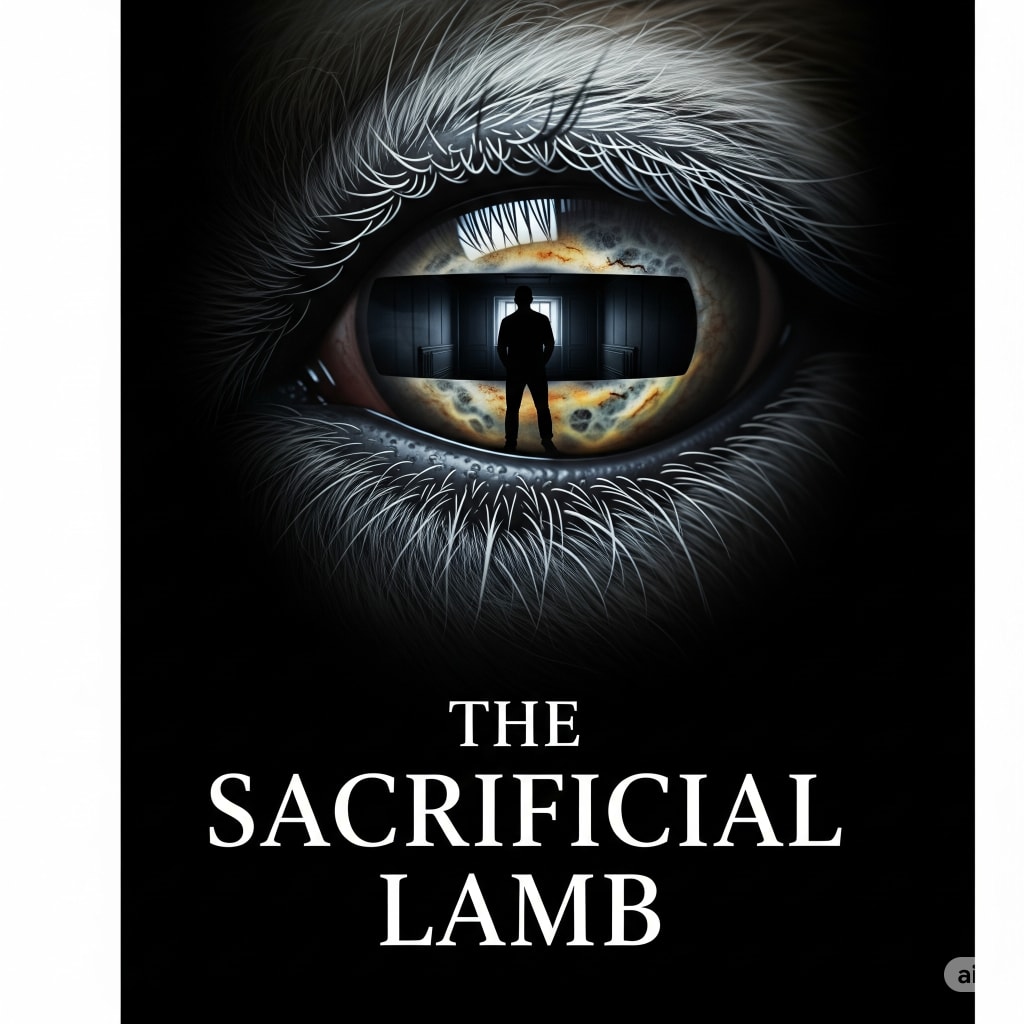
My name is Henry Crane. I’m forty-two. I write books that are supposed to keep people up at night. Funny how that turned out. Ever since I was a kid, I was hooked on true crime, on the dark puzzles people leave behind. It was no surprise I ended up writing about them.
My wife, Janie, and I had a good life. Or so I thought. She was always my first reader, my biggest fan.
Aside from writing, I have another hobby. Some guys have golf. I have reptiles.
In the sprawling, damp basement of our old Victorian house in rural Maine, I built a world. A massive, glass-walled terrarium, ten feet long and six feet high. A perfect, self-sustaining slice of the Amazon, right here in the land of Stephen King. I’m a writer, sure, but my degree is in forensic biology. I know how to make an ecosystem tick. The heat lamps hummed day and night, a constant, low prayer to a sun a thousand miles away.
Janie hated it at first. The lizards with their unblinking eyes, the fat, silent frogs. But she was a good soul. She came around. She even grew to love them, their strange, clumsy grace. We never had kids. The reptiles were our children, I suppose. When I was on a deadline, lost to the world, it was Janie who went down to the cellar to mist the ferns and feed the geckos.
That night, the night it all went to hell, I’d finished a chapter around midnight. I found Janie in the basement, her face illuminated by the eerie purple glow of the heat lamps. She was watching one of the frogs, a fat little bastard named Bud.
“You know,” she said, her voice a soft murmur against the hum, “I used to be so scared of cold-blooded things.” She turned to me, a faint smile on her lips. “Henry, is there any animal you’re afraid of?”
A strange, dark little seed of an idea took root in my mind.
“Yeah,” I said, my voice dropping. “Sheep.”
She frowned. “Sheep? But they’re so gentle.”
“It’s their eyes,” I said, letting the silence hang in the humid air. The slit-pupil gaze of a dozen lizards watched us from behind the glass. “You’re not tired, are you? Let me tell you a story.”
Janie laughed, a sound that feels like a memory from another man’s life now. “You’re being so creepy. Fine. Tell me.”
“The guy in this story,” I began, “his name is Henry.”
“That’s your name.”
“It’s for immersion,” I said.
STORY #1: THE OFFICIAL VERSION
1.
My name is Henry Crane. When I was a kid, I wanted to be a cop. A state detective.
I thought that’s who I was going to be.
But everything changed in the summer of 1997.
I was seventeen. The day of my SATs. Before I went into the high school gym, my dad put his hand on my shoulder. He had this look on his face, a deep, wounded look. He opened his mouth like he was going to say something important, but all that came out was, “You’ll do great, Hank. You’ll ace it. Get that scholarship.”
At the time, I just thought he was proud. I nodded and walked inside.
I did well. I knew it. When the proctor called time, I practically flew out of the gym doors, ready to tell my dad I’d nailed it.
But he was gone.
2.
My dad always waited.
He’d be there, leaning against his beat-to-hell Ford pickup, smoking a Camel, scanning the crowd of kids pouring out of the school.
I’d spot him and yell, and he’d grin and flick his cigarette into the parking lot. “Attaboy, Hank! Hop in!”
Those rides home were part of the rhythm of my life. My dad’s broad shoulders, the smell of cheap coffee and motor oil in the cab, the familiar rumble of the engine. He was my rock, my silent, steady anchor. Because of him, I felt like I could do anything.
You take things like that for granted. You think they’ll last forever.
When that certainty vanished, the world tilted on its axis. I ran around the parking lot, describing my dad — a plain, middle-aged man in a flannel shirt — to anyone who would listen. But because he was so ordinary, he was invisible. Nobody remembered seeing him.
He probably just went home early.
I told myself that all the way back.
But the house was empty. The truck was gone.
My father had disappeared.
3.
My mom said they’d argued the night before. He’d been agitated, restless. Maybe he’d just taken off for a while to cool his head. It felt thin, but it was all we had. We searched quietly. A man vanishing isn’t the kind of thing you advertise in a small town. But days turned into a week, then two.
That SAT test had been a turning point, all right. After it was over, my father was wiped from the face of the earth. I couldn’t understand it. He was a good man. A quiet man, but a good one. The kind of New England father who shows his love by making sure your tires have enough air and your roof doesn’t leak.
Then my mom asked, her voice barely a whisper, “You don’t think… he went to find your brother, do you?”
I had an older brother, Michael. Five years older. Born with… something wrong with his eyes. Washy, pale-blue eyes that never seemed to focus right. He’d drifted away young, got mixed up in drugs, and vanished years ago.
A month after Dad disappeared, the Sheriff showed up. One of our neighbors had finally called them. When the state detectives arrived, their faces were grim. They didn’t talk about search parties. They started dusting for fingerprints.
The next day, they dropped the bomb.
In 1985, twelve years earlier, there had been a massacre. A family of five — slaughtered in their beds in an unincorporated township up north. The Allagash Massacre, the papers had called it. The scene was remote, the family reclusive. No witnesses. The killer’s fingerprints were all over the murder weapon, a wood axe from the family’s own shed. But with no matches in any system, the case went ice-cold.
But in Maine, murder cases never close. A young detective, a rookie back then, had never let it go. His name was Mallory. By pure chance, he’d been transferred to our county. When my father’s missing person report crossed his desk, some old instinct flared.
They ran my father’s prints from the pickup against the prints from the axe.
They matched.
My world didn’t just fracture. It exploded.
The man who taught me how to bait a hook, who held my hand while I got stitches, whose strong back I’d thought was invincible… was a monster. His hands, which I’d always known to be warm and calloused from work, were stained with blood.
My father was a mass murderer.
4.
The fallout was immediate. With a direct relative wanted for a capital crime, my dream of being a cop was over before it began. I never even applied. I went to a state college, got that degree in forensic biology, and melted into an unremarkable life.
After Dad vanished in ’97, he never surfaced. The cops never found him. Our family was a ruin. My mom got sick and died a few years later. My brother stayed gone. I sold the old house and moved away.
For years, I worked in a lab. It was quiet. I started writing my novels. I built my terrarium. Then, in 2009, I met Janie. We got married. Life was calm.
Until 2011, when some hikers found a skeleton in a ravine near my old hometown.
5.
Based on the decomposition, the victim had died ten to fifteen years prior. Right in the window of Dad’s disappearance. Bone analysis put the age at death between thirty and forty. My father was forty when he vanished.
Fingerprints were long gone. But by 2011, they had DNA.
Back in ’97, they didn’t have my father’s DNA. But they did have mine, taken and stored in the state database when they opened the investigation.
In 2011, the state crime lab ran the tests. They confirmed the bones were a paternal match to me.
After all those years, the science was undeniable.
The skeleton was my father.
Detective Mallory called me himself. I remember standing over the bones, wrapped in the tattered remains of a flannel shirt, its pattern still faintly visible. The same shirt he’d worn the day he dropped me off for my SATs.
With the fugitive confirmed dead, the Allagash Massacre case was officially closed. The shadow was finally lifted.
But since it was all over, I saw no reason to burden Janie with it.
6.
I stopped. I looked at Janie. Her face was a mask of shock.
“So,” I asked, “what do you think?”
“Is… is that true?” she stammered.
“Don’t worry about that. It’s a story.”
“No,” she said, shaking her head. “I know you grew up with just your mom. I know your dad disappeared and she died later. I never asked because I thought it was painful. But now you tell me this story. The protagonist is named Henry. His dad vanished. He studied forensics. He married a woman named Janie in 2009… This is your story, isn’t it?”
“It’s for immersion,” I said. “Tell me what you think of the plot.”
She took a shaky breath, her eyes darting toward the glass walls of the terrarium. “You said you were afraid of sheep, but they weren’t in the story.” She crossed her arms. “And waiting a month to call the police? That’s not just strange, it’s impossible. It’s like you weren’t worried at all. It’s like you already knew where he was.”
Her gaze sharpened. “The story itself is… fine. But it feels flat. Your father was a killer, he disappeared, his body turned up. Case closed.”
“You’re right,” I said, leaning forward. “It’s flat. Because what I just told you was the surface. Now comes the truth that was buried underneath.”
I lowered my voice.
“My father never died.”
The Hidden Truth
1.
I loved true crime, you see. I knew the stakes. In 1997, the day I took my SATs, I knew that with a father guilty of a major felony, my dream was dead.
So my father told me, his voice cracking, “Son, I have to die.”
2.
I found him the day after the test.
I knew the woods around our house better than anyone. We had a secret spot, a dangerous cliff overlooking a gorge. On a hunch, I went there. And I found him, sitting on the edge, a ghost already. He’d been there for a day and a night, wanting to jump but too afraid to do it.
He wept and he told me the secret he’d carried for twelve years.
3.
He’d been coming home from a job up north. His truck broke down. He was walking along a back road at night when he saw a farmhouse and asked for shelter. He had his pay on him, a roll of cash. He woke up to the homeowner standing over him with a knife.
He said it was a struggle. A panic. He got the knife away from the man and… he lost control. He said he blacked out. When he came to, the entire family was dead. He ran. He ran all the way home and never left again.
4.
I don’t know if his version was true. Maybe he was just a monster. But when he told me, he was just my father, weeping on the edge of a cliff. My trust in him was shattered, but he was still my dad.
He stood up, ready to jump.
The ground crumbled. He slipped.
I lunged and grabbed his arm, pulling him back from the void.
He wanted to die, but when death looked him in the eye, he froze.
I led him down into the river valley below. The sun was setting, painting everything blood-red. And then I felt it. That cold, vacant stare.
A single sheep stood in the tall grass, watching us.
5.
I’ve always been terrified of sheep. It’s their eyes. Those horizontal, rectangular pupils. They’re not animal eyes. They’re like keyholes cut into nothing. They just stare, and it feels like they’re pulling something out of you.
This one didn’t move as I walked toward it. It just watched me pick up a rock from the riverbed.
I brought it down on its head.
Again. And again.
My father helped me drag the carcass into the bushes.
“They sacrifice lambs,” I told him, my voice sounding distant and strange, “to atone for sins.”
“This one dies for you,” I said. “Now you’re dead, too. We can go home.”
It was a lie. But it worked.
6.
My mother learned the truth before I did. She loved him too much to refuse.
For days, she let me search, heartbroken but silent. That night, when we brought him home, she collapsed in tears. Her face was a ruin, a map of sorrow and terrifying knowledge.
From then on, my father lived as a ghost. Not just to the world, but to himself. He never saw the light of day. He ate meals in the dim, damp corners of the cellar, his eyes perpetually shadowed, haunted by the memory of what he’d done and what he’d become. He was a secret, a heavy, breathing presence beneath our feet.
We spent a month erasing him. It felt like we were scrubbing him from existence. We donated his clothes to Goodwill in the next county over, spreading quiet rumors at the general store that he’d just… gone off. To find work, maybe. Or maybe he’d just snapped. People in these parts didn’t ask too many questions when folks just evaporated.
I knew about fingerprints. I scrubbed every surface clean — the kitchen counters, the bathroom sink, every door knob in the house. I used an industrial cleaner until my hands were raw and the house smelled like antiseptic and lies.
But the state police were thorough. Too thorough. They found one print, small and smudged, on the doorframe of his beat-up Ford pickup. That was enough.
A match. To the print on the axe from the Allagash Massacre.
They took my blood, a standard procedure for close family. And they started staking out our home. That quiet, unsettling presence of unmarked cruisers, usually parked just out of sight, sometimes just a glimpse of a shadowed face behind tinted glass.
One officer — Detective Mallory, the bloodhound — never gave up. He’d worked the original massacre, a rookie back then, and it had festered in his gut for twelve years. Now, he watched us. He watched our grief. He watched our quiet routines. He watched, I often thought, for the ground to betray the dead.
We played our parts. The shocked family. The heartbroken, betrayed son. Every day was a performance on a stage only we could see. It was exhausting.
Gradually, the visits dwindled. The cars became less frequent. The pressure eased, like a slowly deflating tire.
No one guessed he’d been home all along. No one guessed he was right there, a breathing, weeping secret under their noses.
7.
In 2001, I graduated from college. My mother, worn down by grief and years of living with a ghost, finally succumbed to cancer. She faded like a photograph left too long in the sun. I returned to our old house in Haven’s Reach to arrange her funeral. The place felt empty, a husk of what it once was, heavy with unspoken things.
With Mom gone, Dad couldn’t hide in the old family home anymore. Four long years of living in shadows had taken their toll. He looked like a man carved from dust. He’d had enough. He deserved more.
After the funeral, after everyone had left and the last of the casserole dishes had been returned, I secretly brought my father to Boston. At a back-alley clinic, the kind with flickering fluorescent lights and a faint smell of antiseptic and desperation, he underwent plastic surgery. His new face wasn’t completely unrecognizable — the eyes, those haunted, familiar eyes, still gave him away to me — but it was different enough. Different enough to walk in daylight without drawing a second glance.
Outside the clinic, at dawn, a cold, steel-gray canvas, I handed my father a slip of paper with my new phone number. “For safety’s sake,” I told him, my voice barely a whisper in the cold morning mist that hung heavy between us, “we can’t live together. Not yet.” We parted there, our breaths visible, two solitary figures swallowed by the sprawling, indifferent city.
The year 2001. A new century. My father and I began separate lives in the same city. Two ghosts orbiting each other in plain sight.
With my forensic biology degree, I landed a job at a research institute, spending my days hunched over microscopes, peering at microorganisms, lost in the intricate dance of life and death on a cellular level. It felt safe. Detached. My father assumed the identity of a deceased coworker I’d found through public records and took a grueling job at a metal refinery. There, under the guise of working with industrial chemicals, he used strong acids to systematically erode his fingerprints, burning away the last, tangible link to his past. The pain, he said, was a penance.
We communicated like spies in a cheap thriller. Letters, signed with false names, burned immediately after reading. When Mallory’s sporadic surveillance became more frequent — a subtle change in the rotation of unmarked cars outside my apartment, a familiar shadow on my tail — we developed a more discreet system. Messages hidden beneath a specific, wobbly table at a greasy noodle shop downtown. Father would eat there in the mornings and leave notes tucked beneath the sticky placemat; I’d collect them in the afternoons, my stomach churning with a mixture of fear and twisted filial love.
Occasionally, we’d meet in the sprawling public parks or on mountain trails. We’d hike as strangers, keeping careful distance, never acknowledging our true relationship. Gone were the days when I could grasp my father’s hand like a child, secure in his warmth.
This uneasy, subterranean existence continued for years. A constant hum of dread beneath the surface of our lives.
8.
Then in 2007, during a hike, I felt it again — that familiar, chilling gaze. Sheep’s eyes.
I suppressed my fear and glanced back. Through the crowd of hikers, I spotted not a sheep, but Officer Mallory in plainclothes, tailing me.
Without breaking stride, I altered my route, putting more distance between myself and Father. Mallory noticed nothing amiss — crisis averted.
But we couldn’t live like this forever. As Father had said years ago, this wasn’t sustainable. The surgery had changed his face, but not enough. The acid treatments damaged his fingerprints, but they’d regrow. And DNA — that eternal marker — remained unchanged.
My DNA had been in police records since 1997. I knew the past would never release its grip unless the case was closed.
In 2009, I married Janie. Soon after, I took her hiking — so Father could see her from afar, though she never knew.
In our next exchange, Father wrote that Janie seemed as kind as my mother had been. He was pleased with his new daughter-in-law, so happy he cracked open an extra beer with his dinner to celebrate that day.
I laughed through tears as I burned that letter.
“Just wait a little longer, Dad,” I whispered to the ashes. “It’s almost over.”
By 2011, the old case had finally faded. Officer Mallory stopped watching me.
Those who love mysteries don’t face only two paths — toward justice or crime. There’s a middle road. I became a mystery novelist.
On our next hike, I spotted Father across a crowded trail and walked straight to him. He pretended not to know me, glancing nervously as I closed the distance between us. When I got too close to him, he panicked, trying to retreat.
I caught his arm. “Dad, the case is too old. The police told me they’re dropping it.”
“What?”
“It’s over. We can be together again.”
Ten years had passed since we’d parted outside that clinic. A decade compressed into this single moment of reunion.
At 54, Father’s hair was half-white, his wrinkles deep. Years of acid treatments had left his hands rough and scarred, making him appear even older. The robust middle-aged man of my memory had aged decades in what felt like an instant.
I hugged him, my voice breaking. “It’s really over. No more hiding.”
That day, we climbed the mountain arm in arm — just like old times.
We maintained the fiction of being hiking acquaintances in public, never acknowledging our true relationship. After so many years apart, we’d built separate lives.
Father took a job at a bookstore and met Auntie Wang, an avid reader. They became companions without marrying. Her 25-year-old daughter treated Father with filial kindness.
Ten more peaceful years passed.
Then in spring 2021, at age 64, Father died of a sudden heart attack. Auntie Wang’s daughter arranged the funeral. I attended as his “hiking friend.” Per his wishes, we scattered his ashes on the mountain peak.
Sometimes I think — after surviving so much, he deserved more good years. But that last day on the summit, Father had said: “I’ve been living on borrowed time since that summer in 1997.”
He believed me when I said the police had given up.
He never knew the truth — that once a warrant is issued, the police never stop looking.
They stopped because the case was closed.
Here, I trailed off, staring blankly at a corner of the reptile room.
Janie watched me silently.
“What do you think?” I asked.
Her eyes glistened. “I think… it’s true.”
“Don’t focus on whether it’s real.”
“I don’t know… I never knew any of this.” She took a shuddering breath. “You say it’s fiction, but you did take me hiking after we married. That day… I met your father without knowing. And those noodle shop visits, your solo hiking trips… all the details match. I believe this really happened.”
She covered her face, shoulders trembling.
“It’s a novel,” I said soothingly, pulling her close. “I just filled in the blanks of my life with dramatic fiction — for immersion. Since it upsets you, let’s stop — “
“No.” She pushed me away, eyes hard. “The surface story leaves gaps. Why did the case close? What about the bones they found? That ‘sacrificial lamb’ nonsense — police can’t mistake sheep remains for humans! Tell me the truth!”
I hesitated, watching her pale face. “Are you sure? It might be too much.”
“Tell me.”
The Truth
1.
“In the story I just told, there were certain details I glossed over. Now, he becomes the main character.”
I had an older brother — five years my senior, born in 1975.
I feared sheep because of their eyes — horizontal pupils that seemed unnatural and unsettling. But my real childhood terror came from my brother’s eyes.
He was born with a congenital eye defect that gave him pupils like a sheep’s — long, horizontal slits that revealed nothing.
2.
While I was healthy and bright, my brother was slow-witted and strange. Over time, even our mother grew afraid of him.
The villagers avoided him. An old Christian neighbor claimed sheep were symbols of the devil in Western culture, and that my brother’s eyes marked him as an evil incarnate — a demon sent to tempt people toward sin.
My father latched onto this superstition. He later confessed to me that he’d secretly used it to justify his crimes — as if my brother’s unnatural eyes had somehow compelled him to kill.
After years of mistreatment, my brother dropped out of school and left home to find work. Soon, the village forgot about him — or more accurately, chose to forget.
He never contacted us. Even the police who came investigating didn’t know of his existence.
Until 2001, when he returned for our mother’s funeral.
3.
During the funeral, our house was full of mourners — including Officer Mallory. So my father hid in the cellar while I secretly brought him food.
After the funeral, to be safe, my father remained hidden.
That day, when I went down to the cellar with his meal, I suddenly felt that familiar, chilling gaze.
I turned to find my brother standing behind me, watching silently.
We hadn’t expected his return after all these years.
That night, the three of us sat together awkwardly.
“It’s been so long. I wanted to see you all,” my brother said, wearing amber glasses to hide his eyes. “I didn’t expect to miss Mother’s funeral.”
Then he removed his glasses, fixing me with those unsettling horizontal pupils: “But what’s going on with Father?”
I avoided his gaze. “It’s… complicated. We’re protecting him.”
My brother’s face remained placid, but his words chilled me: “Shouldn’t murderers pay with their lives?”
4.
In 2007, my brother visited again, staying two weeks.
He kept asking about our father’s whereabouts. I lied, saying I hadn’t seen him in years.
I had to read my father’s letters in public restrooms and couldn’t let my brother accompany me on hikes. I subtly pressured him to leave.
I didn’t trust him — not just because he might tell the police, but because of those eyes that seemed to look right through me.
Then one day while hiking, I felt that gaze again.
I turned to see Officer Mallory following me.
And behind him — my brother, watching with those dead, flat eyes.
5.
He fixed me with those chilling, horizontally-slitted eyes — the unblinking gaze of a sheep observing its flock.
Officer Mallory, trailing behind us on the mountain path, remained oblivious to my father’s presence. But my brother saw everything. The two of them followed in tandem — the detective unaware of being shadowed by this silent witness who knew all our secrets.
My brother could have exposed us to Mallory at any moment. Yet he didn’t. His inaction felt more threatening than any accusation, like a blade hovering at the nape of my neck that refused to fall.
That evening, as I fed the reptiles in their humid terrarium, he slipped into the room unnoticed. The frogs ceased their croaking. Even the lizards stilled their tongues.
“Shouldn’t murderers pay with their lives?” he repeated, his voice as flat as his pupils. The words hung in the moist air between us, condensing like dew on the glass walls where geckos pressed their bellies in silent witness.
6.
At that moment, a chilling realization dawned on me — what was the true purpose of my brother’s existence?
Why did he have those sheep-like eyes? Why had he reappeared after all these years away? Why did he keep insisting “Shouldn’t murderers pay with their lives?”
Some inescapable fate seemed to be at work here.
Father had changed his face through surgery, but traces of his old features remained. He’d corroded his fingerprints, but they would regrow. Even if fingerprints could be erased permanently, DNA was an eternal marker.
And since 1997, when Father disappeared, my DNA had been in police records.
Without closing the case, the past would never truly be past.
Suddenly, everything became clear. I understood my brother’s purpose — and saw the perfect solution.
Yes, murder demanded payment. But the life of one sheep wasn’t enough.
With those unfathomable horizontal pupils, my brother watched me silently, his gaze exerting an almost hypnotic pull. That stare seemed to compel me — to pick up a rope, to approach him, to loop it around his neck.
My brother wasn’t some demonic entity. He was the second sacrificial lamb.
7.
At that moment, a chilling realization dawned on me — a cold, crystalline understanding that clicked into place with the terrifying precision of a well-oiled machine. What was the true, horrifying purpose of my brother’s existence?
Why did he have those unsettling, sheep-like eyes? Why had he reappeared now, after all these years of silence, a loose thread in a carefully woven tapestry of lies? Why did he keep repeating, like some broken, righteous parrot, “Shouldn’t murderers pay with their lives?” It wasn’t a question. It was a judgment.
Some inescapable, malevolent fate seemed to be at work here, guiding events with an invisible hand.
Father had changed his face through surgery, but traces of his old features, subtle shifts in bone structure, remained. He’d systematically corroded his fingerprints, but I knew from my studies that friction ridges could, sometimes, inexplicably regrow. Even if fingerprints could be erased permanently, DNA was an eternal marker. A blueprint. An inescapable truth.
And since 1997, the year Father disappeared, my DNA had been in police records, collected as part of the initial investigation. A living, breathing link to his past.
Without truly closing the case, without providing a body that would satisfy their relentless hunger for resolution, the past would never truly be past. Mallory would never stop. The sword would forever hang over our heads.
Suddenly, everything became clear. The perfect solution. I understood my brother’s purpose. He was not a demonic entity, as that old neighbor had claimed. He was simply… the offering.
Yes, murder demanded payment. But the life of one sheep in a forgotten riverbed wasn’t enough for the world. It needed a life that mattered. A human life. My brother’s life.
He watched me then, those unfathomable horizontal pupils fixed on my face, his gaze exerting an almost hypnotic pull. That dead, flat stare seemed to compel me — to pick up a length of rope I kept coiled neatly on a shelf for tying down terrarium plants, to approach him, to loop it around his neck.
My brother wasn’t some evil spirit. He was the second sacrificial lamb.
8.
My university major was forensic biology — a field many of the most cold-blooded, brilliant experts came from. I knew bones. I knew decay. I knew how to make things disappear.
In 2007, that night, I strangled my own brother. His eyes remained open, staring at nothing as the life drained out of them. I left him there, still on the floor of the reptile room, his body a dead weight. Then, with a chilling calmness that still surprises me when I look back, I dressed his corpse in Father’s old flannel shirt — the one they’d used as evidence.
I would spend the next four years carefully fabricating a plausible substitute for Father’s remains. This wasn’t some spur-of-the-moment act. This was a complex, meticulously planned piece of performance art.
Three key factors made this impossible endeavor utterly achievable:
First: age estimation. With skeletal remains, forensic anthropologists determine age primarily through bone development. For juveniles, this is precise; for adults, there’s a margin of error of about ±10 years. Father was 40 when he disappeared in 1997. My brother, born in 1975, was 32 when he died in 2007 — close enough to fall within that 30–40 year age range when a body might finally be discovered years later. Later police analysis of the humerus bone placed the deceased’s age between 30–40 at death — matching Father’s disappearance age perfectly.
Second: decomposition rate. The reptile room’s massive bioactive terrarium, originally built for my pets, became my bespoke decomposition chamber. I buried my brother’s body in its specially prepared soil, a rich, microbe-dense substrate perfect for accelerated decay. I carefully controlled the ventilation, the temperature (kept at a steady 90 degrees Fahrenheit, mimicking the steamy tropics), and the humidity (a constant, dripping 80%). Our Maine location has a temperate climate where decomposition proceeds slowly. But the terrarium simulated tropical rainforest conditions where decay accelerates dramatically. By precisely regulating these environmental factors and meticulously measuring microbial activity, I achieved complete skeletonization within two months, with all odor systematically eliminated. It was a morbid, fascinating science experiment. To calibrate the artificial decay, I needed a real-world reference point — the first “sacrificial lamb” I’d killed in 1997. Every three months, under the pretext of cleaning the old house, I returned to our hometown, secretly collecting samples of the sheep’s remains to guide my adjustments, ensuring the bones would appear naturally aged. By 2011, the second “sacrificial lamb” — Michael’s remains — had decomposed to perfectly match ten years of natural decay in temperate conditions. I even replaced the surrounding soil in the pit with samples from beneath our hometown mountain to ensure identical microbial signatures. Having worked at a microbiology institute, I conducted countless tests, using lab equipment scrounged from surplus sales, ensuring every variable was accounted for. Once everything was set, the macabre masterpiece complete, I resigned from the institute in 2011 to become a full-time writer. I needed freedom. That year, I carefully planted my brother’s remains in a remote mountain location, a secluded ravine I knew from my childhood hikes. Then, I anonymously reported their discovery weeks later.
Third — and most crucial — DNA evidence. Father had never provided a DNA sample to the police, but I had. Modern forensic testing uses Y-STR analysis — examining the Y chromosome passed unchanged from father to son. My brother and I shared the same Y chromosome as our father. When tested, the skeletal remains showed a perfect Y-STR match with my records. No mutations. A paternal relationship confirmed. It was airtight.
“I can’t… I can’t listen to this anymore…” Janie’s voice broke, a raw, ragged sound, her face contorted in pure, unadulterated horror. She was trembling, shaking from head to foot. “Your father was a killer, but you — you’re worse. You’re a monster. To think you murdered your own brother in this house, in this very room…”
Her eyes, wide and glazed, darted toward the humid glass of the terrarium, then back to me, seeing me for the first time. “Henry, you killed him in 2007! I married you in 2009! All this time, I trusted you completely while living with a corpse just feet away…” Her voice rose to a hysterical shriek. “Every time I helped care for your reptiles, that body was right there in the terrarium…”
“Calm down,” I said, my voice weary, as if she were the irrational one. “This is fiction. Just a story with realistic details to make it immersive. I shouldn’t have continued — .”
But Janie wasn’t listening. She kept muttering hysterically, tears streaming down her face: “Two years… that body was here two years before I even moved in… God, how could I not have known…” She was swaying on her feet, the faint hum of the terrarium’s heat lamps the only other sound in the room.
“Please, Janie, you have to believe me! I’m just a mystery writer!”
“No… no… it’s not about believing anymore…” Her glazed eyes darted toward the phone on the table beside the terrarium.
“Don’t!” I lunged for it, but she was faster, spurred by a terror that was stronger than any bond between us. She scrambled up the basement stairs, a blur of motion, her sobs echoing.
She barricaded herself in the bathroom, the old wooden door groaning under her weight, the lock clicking with a terrible finality. I pounded on the door, my voice rising in a raw, animal panic. “Listen to me! Even if it were true, it’s 2024 now! The case was closed for ten years! All witnesses are gone! There’s no way to prove anything!”
The moment the words left my mouth, a silence, colder and deeper than any ocean trench, fell on the other side of that door. Then, a single, broken scream.
“You admitted it!” she shrieked through the wood. “You just admitted it! I have to call the police!”
There was nothing left to say.
9.
The police arrived. Two patrolmen from the county Sheriff’s office. Janie, huddled on the sofa, wrapped in a blanket, looking like a frail, ancient woman, recounted the entire story to them. Her voice was raspy, broken, but the details — oh, the details — were chillingly precise.
The two officers listened patiently, their faces carefully neutral. Then one of them, a big man with a weary face and a neatly trimmed mustache, chuckled softly. “Ma’am, please don’t cry,” he said, his voice gentle, almost condescending. “This is clearly just a story. A very twisted one, to be sure, but fiction. Your husband shouldn’t have scared you like this.”
“I deeply regret it too,” I said, my remorse genuine. I was an idiot. A novelist with too much faith in his own immersion. Then, my curiosity, that old serpent that never truly slept, coiled in my gut. “But how could you tell it was fiction just from hearing it?”
The officer, looking vaguely pleased to show off his expertise, explained. “DNA testing isn’t that simplistic, sir. As someone who studied forensic biology, you should know this. All male relatives in a family share the same Y chromosome, unless there’s a genetic mutation — not just father and sons, but grandfathers, uncles, cousins, too. Determining a father-son relationship based solely on Y chromosome markers would be incredibly sloppy police work.”
He puffed out his chest slightly. “In modern DNA analysis, besides Y-STR testing, there’s autosomal STR testing. That’s the real gold standard. Combining both methods makes it virtually impossible to mistake brothers for father and son. There’s too much unique genetic material.”
He smiled reassuringly at Janie, who was still trembling. “So you see, ma’am. It’s just a story. No one could ever fake a DNA match like that. It’s impossible.”
“But it was a father-son match,” I said quietly.
All three of them — the two officers and my shattered wife — turned to stare at me. The silence in the living room was suddenly profound, broken only by the distant hum of the terrarium downstairs.
“Actually… the story isn’t over yet.”
The Decade-Old Setup
From childhood, I’d been fascinated with forensics, listening to legal radio programs and devouring true crime books. I understood fingerprint and DNA technology. Not as a hobbyist, but as someone who’d studied the very fabric of it.
The day after my SAT, that terrible morning when I found my father on the cliff’s edge and killed that first sacrificial sheep, a cold, calculating part of my mind had begun to work. I knew, with the chilling certainty of a future serial killer, that we had to erase all traces of him.
I’d scrubbed our home meticulously, using solvents and powders, but the state police, even with their limited resources, were thorough. They still found one fingerprint — on the doorframe of his pickup truck, just as I’d told Janie. And that print, to my horror, matched the one on file for the Allagash Massacre.
Fortunately, in 1997, DNA technology in our rural region was still primitive. Police could only collect blood samples for basic blood typing, not full DNA sequencing. They never obtained my father’s DNA — only stored mine as a reference.
When Detective Mallory came to take my blood the next day, I was prepared. I knew this was coming. During the chaotic process of him filling out paperwork, my mother, bless her unwavering loyalty, created a diversion. She ‘accidentally’ knocked her antique sewing basket off the table. Spools of thread, thimbles, and sharp needles went everywhere, scattering across the worn linoleum floor. Mallory, ever the gentleman, bent down to help her, muttering apologies. That was all I needed.
I had a small vial of my father’s blood, drawn carefully from his arm with a diabetic lancet that morning, hidden in my palm. The swap was seamless. Three seconds, maybe four. No one saw a thing. The sample labeled “Henry Crane” in the state police database was never mine. It was always my father’s.
So from that day on, his DNA was on file, waiting. A phantom limb in the system.
In 2011, when the skeletal remains of my brother were finally discovered and tested:
The bones’ DNA matched the sample labeled “me” in the police database (which was actually my father’s DNA).
And “my” DNA (actually my father’s) perfectly matched the skeleton (which was actually my brother’s).
A perfect father-son match — just with the generations reversed. The case closed smoothly. Neatly. A perfectly engineered deception, a silent triumph for a son who loved his father too much.
Why had I swapped the samples all those years ago? Not because I had planned the elaborate ruse then. I wasn’t a monster yet. Not fully. It was for a simpler, almost noble reason.
I knew my father couldn’t hide forever. If he reoffended in the future, even with gloves, DNA evidence might betray him. With advanced testing, any biological trace — a stray hair, a fleck of skin, a drop of spit — could lead back to me. To his perfect genetic stand-in.
I no longer trusted my father, not after his confession, but I still loved him. My dream of becoming a police officer was dead, a shriveled thing in my heart, but in its place, something new grew. I became his human shield. Ready to be his second sacrificial lamb if needed.
Epilogue
My father never committed another crime. He lived out his days as a quiet, unassuming man. By 2011, with the Allagash Massacre case dismissed and no trial, he left no criminal record in his new identity. I faced no consequences. It was as if none of it had ever happened. A shadow play, perfectly executed.
That, you see, is the whole story. The one I told Janie. The one that got me here. And now you have it too.
About the Creator
Keep reading
More stories from writers in Criminal and other communities.
Army Sergeant Shot While Dropping Food Off to His Family
Around 11 p.m. on New Year’s Eve 2018, 23-year-old active-duty soldier Kemia Hassel called St. Joseph Township, MI, 9-1-1. “I need help! My husband’s been shot,” she explained to the operator. “I NEED HELP!!”
By Criminal Matters2 days ago in Criminal
Self Help: Grifters' Gospel
On Self-Help, Snake Oil, and the Illusion of Change Psychology professionals and students can be imagined on two opposite sides of a line called self-help books: likely a larger group opposes pop-science and step-by-step manuals filled with talk of success, journaling, and not giving a f**k; others love them, but they aren’t many.
By Avocado Nunzella BSc (Psych) -- M.A.P 5 days ago in BookClub


Comments
There are no comments for this story
Be the first to respond and start the conversation.