
The Rise of the Ghost: From Dublin’s Streets to the Cartel’s Throne
Before Marbella, before the cocaine highways — there was just a clever Irish kid who learned how to disappear.
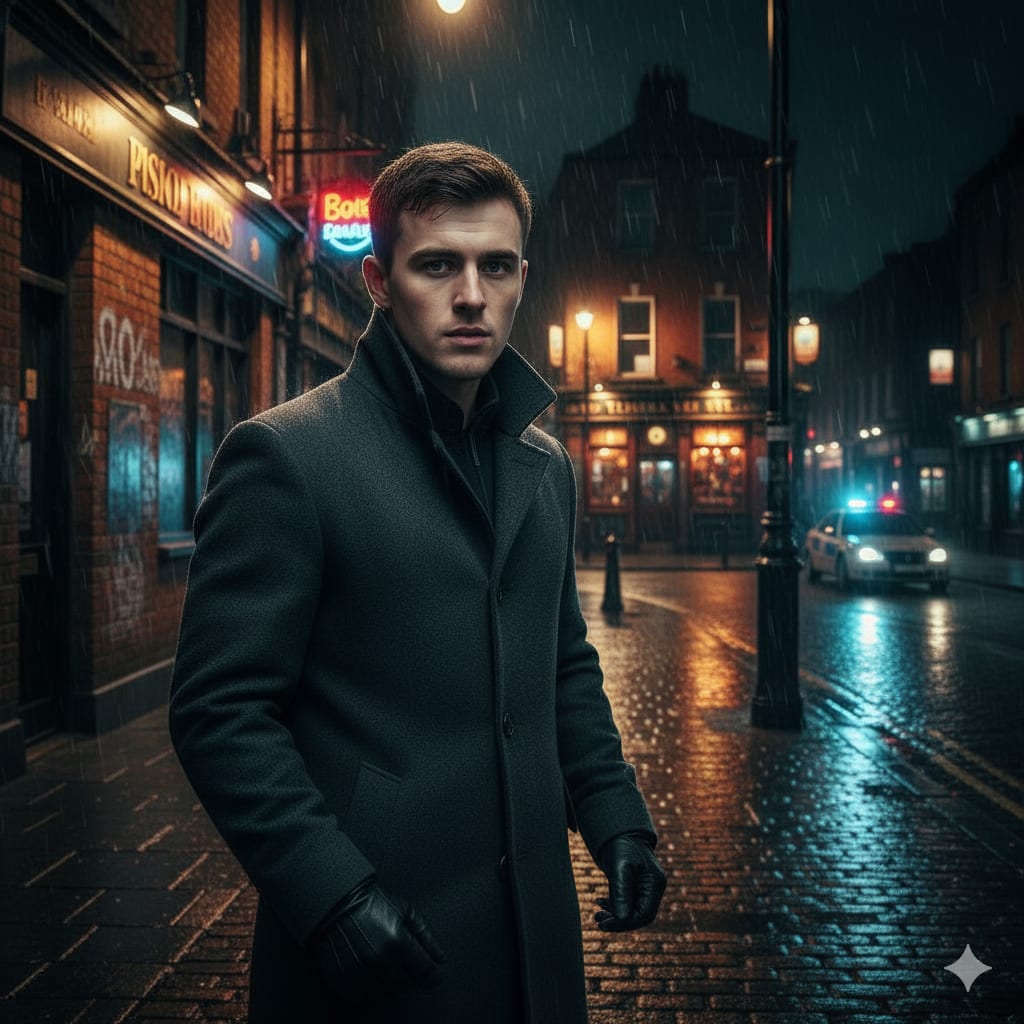
Long before he became The Ghost, Patrick Doran was just another street kid from the gray edges of Dublin’s north side — the kind of place where hope came cheap and loyalty was the only currency that mattered.
He grew up watching his father drink his paycheck and his mother clean other people’s houses. The neighborhood smelled of diesel, smoke, and desperation. By sixteen, Doran had already figured out one thing: if you wanted power, you had to earn it in silence.
The Beginning
In the late 1990s, Dublin was drowning in heroin. Local gangs fought over scraps, stabbing each other for tiny corners of a dying trade. Doran was different. He had no taste for chaos — only control.
He started as a “runner” for a mid-level dealer named Mick “The Mule” Hanlon. His job was simple — deliver envelopes, count pills, keep his mouth shut.
But Doran noticed everything: who trusted who, who feared who, and how greed made men sloppy.
Within two years, he was running Hanlon’s books, quietly fixing mistakes, keeping deals clean. While others flashed cash in pubs, Doran saved. While they bragged, he listened.
“You don’t need to be loud to be dangerous,” he once told a friend. “You just need to know what silence is worth.”
When Hanlon was arrested in 2003, the operation should’ve died. Instead, Doran took it over — quietly, efficiently, without firing a shot. He paid Hanlon’s debts, kept the suppliers happy, and began building something bigger.
The First Deal
Doran’s breakthrough came in 2006. Through a contact in Liverpool, he met a South American broker named Carlos Medina, who was moving cocaine through Irish fishing boats.
The deal was risky — one shipment, 100 kilos, hidden inside frozen fish crates.
Everyone told Doran it was suicide. But he wasn’t looking for fame; he was building infrastructure.
He bribed customs, paid dockworkers double, and made sure every person in the chain thought someone else was in charge. When the shipment arrived safely, he didn’t celebrate — he reinvested.
That one delivery made him over €4 million.
But more importantly, it gave him connections — real ones.
He started learning Spanish, studying import laws, and registering shell companies in Gibraltar and the Isle of Man. His cover story was simple but perfect: a seafood exporter.
Within three years, he had turned a street gang into a supply network — silent, loyal, invisible.
The Code
By 2010, Doran was untouchable in Ireland. The media called him “The Gentleman Dealer.”
He dressed in gray suits, drove modest cars, and never carried a weapon.
His code was simple:
No drugs in your own city.
No violence in public.
No names — ever.
He punished betrayal not with bullets, but with disappearance. People who crossed him didn’t end up in morgues — they ended up erased.
He ran his crew like a business, hiring ex-bankers and ex-police officers to manage logistics and money laundering.
Every move looked legitimate — even his taxes were clean.
Interpol once described his operation as “a ghost economy — money that exists, but no one can trace.”
The Turning Point
In 2012, Doran realized Ireland was too small for the empire he envisioned.
A meeting in Amsterdam changed everything.
There, in a quiet café near the canals, he met two men from the Kinahan cartel. They were expanding into Spain and needed someone smart, reliable, and invisible.
Doran listened, nodded, and accepted — not as a partner, but as an observer. He studied their operations, learned their weak points, and discovered the one rule of the European underworld:
“You don’t need to be feared — you just need to be needed.”
By the time the Kinahans drew police attention in 2016, Doran had already slipped away to southern Spain. He used his seafood company as a front to move hundreds of kilos monthly through ports like Algeciras and Valencia.
He kept no photos, no fingerprints, no records.
Only coded ledgers and loyal men.
Becoming The Ghost
His transformation was complete by 2018.
The Irish kid from the slums was now a multimillionaire in Marbella, surrounded by lawyers, yachts, and politicians.
But he never chased fame like others did.
He built an empire that could run without him — a machine of bribes, codes, and trust.
His voice was soft, his orders rare. He spoke only when necessary.
When asked by one of his men why he stayed so quiet, he replied:
“Because ghosts don’t talk — they haunt.”
That line became legend among his crew.
By the time authorities started piecing together his empire, Doran had already erased his tracks and reinvented himself as a “real estate investor.”
The Irish cops called him The Ghost.
And he smiled — because that’s exactly what he wanted to be.
He wasn’t born into power.
He built it, one silent deal at a time —
until the streets of Dublin could no longer hold his shadow.
About the Creator
shakir hamid
A passionate writer sharing well-researched true stories, real-life events, and thought-provoking content. My work focuses on clarity, depth, and storytelling that keeps readers informed and engaged.
Keep reading
More stories from shakir hamid and writers in Criminal and other communities.
The Ghost Returns: Blood on the Costa del Crime
The Mediterranean sun rose over Marbella like a blade of gold, cutting through the mist that hung over the harbor. It had been almost three years since Patrick “Patsy” Doran, the man the underworld called The Ghost, vanished into legend.
By shakir hamid3 months ago in Criminal
Why Khloé Kardashian’s Ex Lamar Odom Was Arrested in Vegas
Lamar Odom, former NBA player and ex-husband of Khloé Kardashian, was arrested on Saturday morning in Las Vegas, Nevada. Lamar, who won the 2009 and 2010 championships with the Los Angeles Lakers, was previously arrested in 2013.
By Dena Falken Esqabout an hour ago in Criminal
So You Decided To Become a Nurse Practitioner:
So you decided to become an "Advanced Practice" nurse. Congratulations!... is what I would say if this was a good idea. Grad school? In this economy? What were you thinking? Likely it was something along the lines of either 1) “I've seen these other chucklefucks do it— Why can't I?” or even 2) “I've got a nice career, I should shake it up. I miss feeling like I have no clue what I'm doing.”
By Sandor Szabo3 days ago in Fiction


Comments
There are no comments for this story
Be the first to respond and start the conversation.