
The Notorious "Two Wangs" Shooting Spree (1983): China's Most Wanted Fugitives
Summer of 30,000 Officers: China's First Televised Manhunt
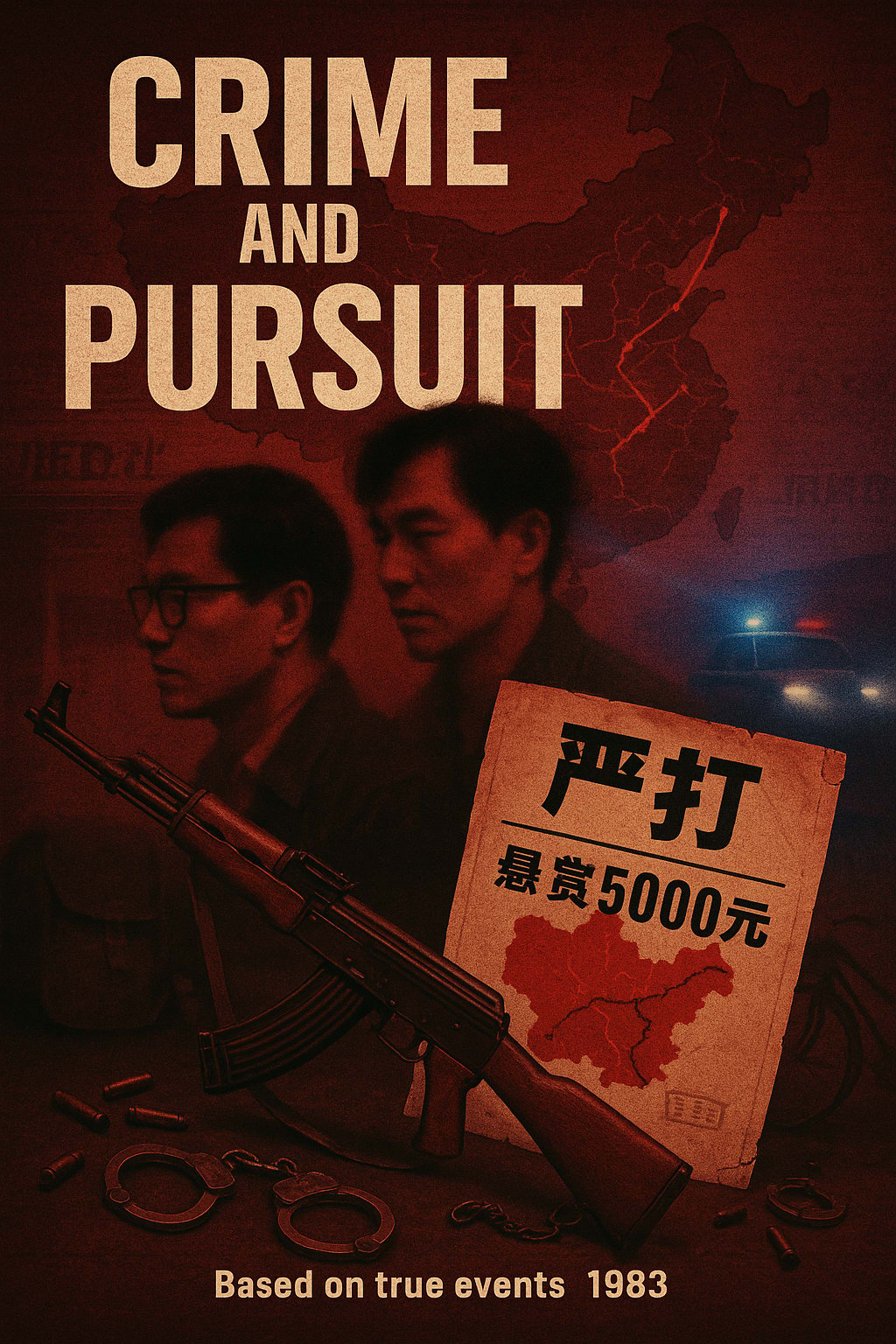
The case of the "Two Wangs" brothers represents one of the most significant criminal investigations in modern Chinese history, marking a turning point in the nation's approach to law enforcement and public security. Beginning in February 1983 in Shenyang, Liaoning province, Wang Zongfang and Wang Zongwei initiated a violent crime spree that would span seven months, cross six provinces, and ultimately claim at least nine lives while injuring numerous others. Their criminal activities exposed critical vulnerabilities in China's inter-provincial policing system and prompted sweeping reforms in national security policies.
What began as a simple burglary at a military facility quickly escalated into a deadly confrontation when the brothers were discovered by guards. Armed with stolen weapons including a submachine gun, they demonstrated ruthless efficiency by executing four guards on the spot. This initial act of violence revealed their military training and tactical capabilities, particularly Wang Zongwei's experience as a former People's Liberation Army soldier. Their transition from petty thieves to dangerous fugitives occurred with shocking suddenness, catching local authorities completely unprepared.
The subsequent months saw the Wang brothers develop and execute a sophisticated strategy of evasion and survival. Utilizing their knowledge of rural terrain and military tactics, they moved systematically through mountainous border regions between provinces, deliberately avoiding urban centers where police presence was stronger. Their modus operandi involved targeting isolated police stations and military posts to replenish their arsenal, demonstrating both audacity and strategic planning. During one particularly brazen attack in Jiangxi province, they engaged in an extended firefight with police that lasted nearly an hour and resulted in three officer fatalities.
Law enforcement's response to the crisis was unprecedented in scale and coordination. The nationwide manhunt mobilized over 30,000 police officers and military personnel, representing a significant portion of China's security forces at the time. The case also marked a milestone in public communication, as it became the first criminal investigation to receive regular television updates, creating a nationwide sense of urgency and concern. Millions of wanted posters featuring the brothers' distinctive physical characteristics were distributed across multiple provinces, with Wang Zongfang's prominent facial mole and Wang Zongwei's thick glasses becoming instantly recognizable to the Chinese public.
The psychological impact of the manhunt extended far beyond the immediate law enforcement community. Rural communities lived in fear of encountering the dangerous fugitives, while urban populations grew increasingly concerned about the apparent inability of authorities to apprehend them. The brothers' ability to sustain themselves by raiding remote farmhouses and holding families hostage for days at a time demonstrated both their survival skills and the vulnerabilities of China's rural security infrastructure.
The final confrontation on September 18, 1983, in Guangchang County, Jiangxi province, brought the dramatic manhunt to its conclusion. Acting on a credible tip, authorities established a comprehensive cordon around a mountainous area where the brothers were believed to be hiding. The ensuing gun battle revealed the desperate state of the fugitives - severely malnourished and exhausted from months on the run. Forensic evidence from the scene, including Wang Zongwei's body found clutching an empty pistol with one remaining round in the chamber, provided haunting evidence of their determination to resist capture until the very end.
The lasting legacy of the Two Wangs case extends far beyond its immediate body count or geographic scope. It served as the catalyst for China's first nationwide "Strike Hard" anti-crime campaign, which implemented harsher penalties for violent offenses and established new protocols for inter-provincial police cooperation. The case also prompted significant investments in rural security infrastructure and communications technology, addressing many of the systemic weaknesses that the brothers had exploited during their spree.
From a criminological perspective, the Two Wangs case remains particularly noteworthy for its demonstration of how military-trained individuals can exploit gaps in civilian law enforcement systems. The brothers' tactical decisions, from their weapon selection to their movement patterns, reflected professional training rather than typical criminal behavior. This aspect of the case continues to inform police training programs and threat assessment protocols throughout China.
The psychological profile of the Wang brothers has been extensively studied by criminal psychologists, particularly their ability to maintain operational effectiveness under extreme pressure and their apparent lack of remorse. Their case established important precedents in Chinese criminal justice regarding the handling of armed and dangerous fugitives, the management of cross-jurisdictional investigations, and the balance between public communication and operational security during major manhunts.
Today, more than three decades later, the lessons learned from the Two Wangs case continue to influence Chinese law enforcement practices. The improvements in inter-agency coordination, rural policing strategies, and emergency response protocols that emerged from this crisis have become institutionalized within China's public security apparatus. While subsequent criminals may have committed more numerous or more brutal offenses, none have matched the systemic impact of the Two Wangs' seven-month rampage, which fundamentally reshaped China's approach to violent crime and fugitive apprehension.
About the Creator
Keep reading
More stories from Ibrahim Ghani and writers in Criminal and other communities.
The Bai Baoshan Case (1996-1997): China's Most Prolific Serial Killer and Armed Robber
Between 1996 and 1997, China witnessed one of the most chilling crime sprees in its modern history, perpetrated by Bai Baoshan, a former convict who transformed into one of the nation's most ruthless serial killers. Operating across Beijing, Hebei, and Xinjiang, Bai's calculated violence left 17 people dead and 15 injured, marking him as perhaps the most dangerous criminal of 1990s China. His case not only shocked the nation but also exposed critical vulnerabilities in China's law enforcement and prisoner rehabilitation systems.
By Ibrahim Ghani7 months ago in Criminal
The $23,000-a-Day Question: Ephrata spends $8.5 million a year for police. What are we actually buying?
The Invoice Arrives Every year, Ephrata property owners receive a tax bill. A massive chunk of that bill goes to one place: The Police Department. We are told this is the price of safety. We are told that we have a "Gold Standard" department that warrants premium funding.
By Sunshine Firecracker3 days ago in Criminal
Man Escaped Death Row, But He Could Not Escape Death: The Story of Troy Leon Gregg
The story of Troy Leon Gregg is one of the most haunting and ironic episodes in the history of the American criminal justice system. It is a narrative that seems almost fictional in its cruel symmetry: a man sentenced to die by the state escapes death row mere hours before his scheduled execution only to lose his life later that same night in a violent confrontation. Gregg’s story continues to resonate not only because of its dramatic events, but also because of the deeper questions it raises about fate, justice, violence, and the limits of human escape.Troy Leon Gregg was a death row inmate in the state of Georgia, convicted of serious crimes that ultimately led to a capital sentence. After years of legal proceedings and appeals, his execution date was set. For the prison system it was meant to be the final chapter in a long process. For Gregg, however the night before his execution would take an unexpected and shocking turn.
By Kure Garbaabout 13 hours ago in Criminal
Wild Card Weekend Recap: What Happens Now?
I think I figured out why I love Wild Card Weekend so much. It's because it's the first playoff anything of the calendar year. The NFL season starts in the fall, and once upon a time, the champion was crowned either on or slightly before New Year's. The evolution of the NFL schedule has resulted in the playoffs starting just into the New Year, and currently, the final week of the season falls on the first weekend of the New Year, with Wild Card Weekend coming a week after that. So yes, chronologically, the NFL's Wild Card Weekend serves as the first playoff anything of the calendar year.
By Clyde E. Dawkins7 days ago in Unbalanced




Comments
There are no comments for this story
Be the first to respond and start the conversation.