
Man Escaped Death Row, But He Could Not Escape Death: The Story of Troy Leon Gregg
Man escaped from death rów, but he could not escape death Troy Leon Gregg, a death row inmate in Georgia, escaped prison the night before he was due to be executed, only to be k*illed in a bar fight that very same night.
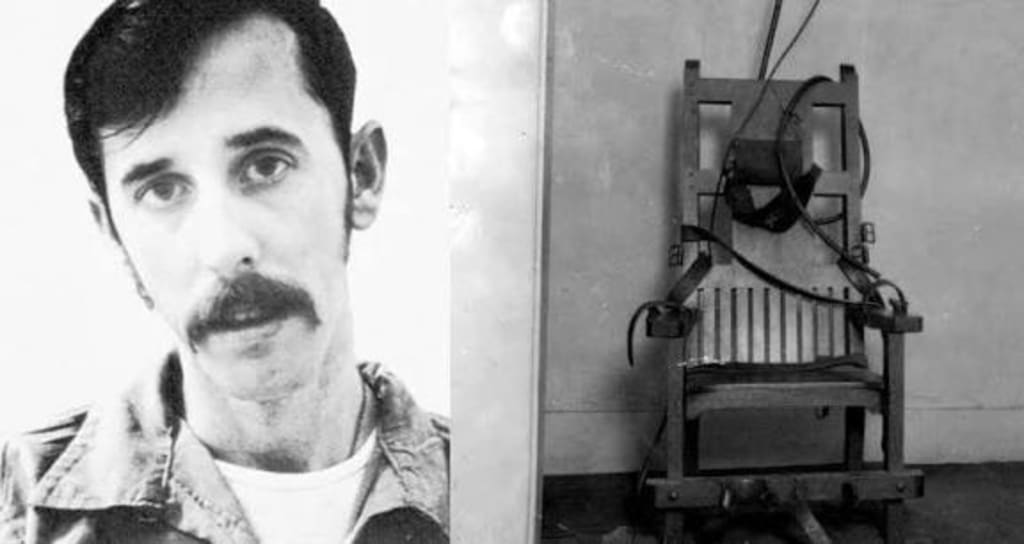
The story of Troy Leon Gregg is one of the most haunting and ironic episodes in the history of the American criminal justice system. It is a narrative that seems almost fictional in its cruel symmetry: a man sentenced to die by the state escapes death row mere hours before his scheduled execution only to lose his life later that same night in a violent confrontation. Gregg’s story continues to resonate not only because of its dramatic events, but also because of the deeper questions it raises about fate, justice, violence, and the limits of human escape.Troy Leon Gregg was a death row inmate in the state of Georgia, convicted of serious crimes that ultimately led to a capital sentence. After years of legal proceedings and appeals, his execution date was set. For the prison system it was meant to be the final chapter in a long process. For Gregg, however the night before his execution would take an unexpected and shocking turn.
Against overwhelming odds, Gregg managed to escape from prison just hours before he was due to be put to death. Death row facilities are designed to be among the most secure environments in the penal system, making escape extraordinarily rare. Gregg’s breakout immediately drew national attention, sparking manhunts and media coverage. To many, it appeared that he had achieved the impossible: he had evaded the state at the very moment it sought to end his life.
For a brief period, Gregg was a free man. The looming execution that had defined his existence was suddenly no longer imminent. Yet freedom, in this case, did not offer safety or redemption. Instead, it placed Gregg back into a world shaped by the same violence and instability that had contributed to his incarceration in the first place.
That same night, while still on the run, Gregg became involved in a bar altercation. The details of the incident vary depending on the account, but the outcome is tragically clear. During the confrontation, Gregg was killed. He did not live long enough to experience life beyond prison walls, nor did he face the execution that had been scheduled for him. In a matter of hours, his escape from state-imposed death ended in a sudden and violent death of another kind.
The irony of Gregg’s fate is difficult to ignore. He escaped an execution planned and regulated by the justice system, only to die in an unplanned, chaotic act of violence. For some observers, the story feels almost symbolic, as if it underscores the idea that certain paths, once taken, are nearly impossible to leave behind. Others see it as a tragic reminder of how deeply violence can shape a person’s life, persisting even when circumstances dramatically change.
Gregg’s death also reignited debates surrounding capital punishment. To critics of the death penalty, the case highlighted the moral and practical complexities of state-sanctioned executions. The fact that a man could escape death row at all raised questions about prison security and the fallibility of the system. His subsequent death, however, complicated any simple narrative of triumph or failure. Gregg did not go on to rebuild his life or prove the system wrong; instead, his story ended almost immediately, leaving little room for reflection or change.
Supporters of capital punishment, on the other hand, viewed the case as confirmation of Gregg’s dangerousness. To them, his involvement in a fatal altercation so soon after escaping reinforced the belief that he remained a threat to society. From this perspective, the outcome appeared to validate the original sentence, even though the execution itself never took place.
Beyond politics and policy, the story of Troy Leon Gregg is ultimately a human tragedy. It is the story of a man whose life was defined by violence, confinement, and despair, and whose final moments were shaped by those same forces. His escape offered a fleeting glimpse of possibility, but it was not enough to overcome the patterns that had long governed his existence.
Decades later Gregg’s story endures as a grim cautionary tale. It reminds us that escaping physical confinement does not necessarily mean escaping one’s past, choices, or consequences. It also challenges us to reflect on how society responds to crime and punishment, and whether justice achieved through death—by the state or otherwise—ever truly provides closure.In the end, Troy Leon Gregg escaped death row, but he could not escape death itself. His story stands as a stark and unsettling reminder of how thin the line can be between survival and loss, freedom and fate.
About the Creator
Keep reading
More stories from Kure Garba and writers in Criminal and other communities.
Inside the 2001 Scottsdale Family Murders
On April 10 2001 a quiet neighborhood in Scottsdale, Arizona, became the scene of one of the most disturbing family murder cases in modern American history. What initially appeared to be a tragic house fire quickly unraveled into a calculated act of violence that left three people dead and one man missing—a mystery that remains unresolved more than two decades later.In the early hours of the morning, Scottsdale firefighters and police were dispatched to the home of Robert and Mary Fisher after reports of a massive fire and explosion. The blast was later determined to have been caused by natural gas that had accumulated inside the house before ignition. Flames engulfed the structure, suggesting at first glance a devastating accident. However, once firefighters extinguished the blaze and investigators entered the home, the reality proved far more sinister.
By Kure Garba2 days ago in Criminal
Inside The Br@ tal Methods Of N@ zi Secret Police GESTAPO
They worked deep undercover with a name feared as words moved across Nazi occupied Europe. Gestapo: short form of Geheime Staatspolizel, or Secret State Police: the steel fist of Hitler and his machine of terror, entrusted with the job of tracking down foes of the Reich. However their actions behind the scenes were more terrible than many would ever imagine. In contrast to ordinary police, Gestapo never faced any supervision, did not present any warrant, and acted freely. Their methods was cruel: they could arrest a person because somebody whispered something, because a neighbour pointed an accusing finger, even because he shared a joke. Upon arrest individuals just vanished off the face of the earth with some never being heard of once again... (more)
By Live World Storiesa day ago in Criminal
Inside the House of Skulls: The Full Timeline of the Jonathan Gerlach Investigation
INVESTIGATION TARGET: JONATHAN C. GERLACH INCIDENT LOCATION: 100 WASHINGTON AVENUE, EPHRATA PA CHARGES: ABUSE OF CORPSE (x100), THEFT, DESECRATION STATUS: INCARCERATED ($1M BAIL) KEYWORDS: #HouseOfSkulls #JonathanGerlach #EphrataCrime #MountMoriah
By Sunshine Firecracker5 days ago in Criminal




Comments
There are no comments for this story
Be the first to respond and start the conversation.