
The Bai Baoshan Case (1996-1997): China's Most Prolific Serial Killer and Armed Robber
When a Veteran Turned Demon: How Bai Baoshan Exposed Legal Loopholes

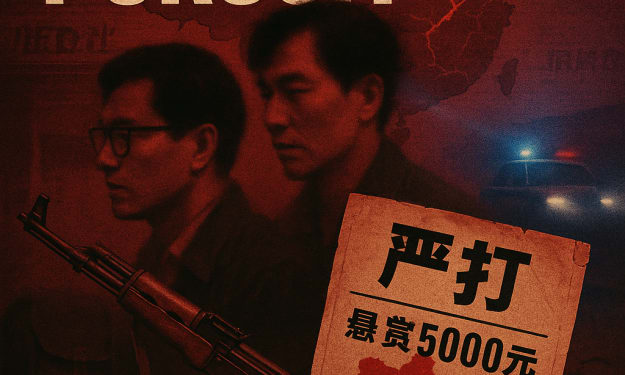
Between 1996 and 1997, China witnessed one of the most chilling crime sprees in its modern history, perpetrated by Bai Baoshan, a former convict who transformed into one of the nation's most ruthless serial killers. Operating across Beijing, Hebei, and Xinjiang, Bai's calculated violence left 17 people dead and 15 injured, marking him as perhaps the most dangerous criminal of 1990s China. His case not only shocked the nation but also exposed critical vulnerabilities in China's law enforcement and prisoner rehabilitation systems.
Bai's descent into violent crime began after his release from prison in 1996, where he had served time for theft. Unlike ordinary criminals, Bai approached his crimes with military precision and cold calculation. His first major attack targeted a police patrol in Beijing, where he executed two officers with single headshots from a modified Type 56 assault rifle - a weapon he had personally altered for maximum lethality. This attack established his signature method: careful surveillance of targets, use of disguises (including police uniforms), and military-style execution of his victims.
What set Bai apart from other criminals was his exceptional tactical skills and psychological detachment. He conducted meticulous reconnaissance before each crime, studying police routines and security measures. His attacks showed remarkable planning - he would case locations for weeks, note escape routes, and even time response patterns. The Xinjiang armored truck robbery, his most brazen crime, demonstrated this perfectly: Bai ambushed the vehicle, killed seven security guards with precise headshots, and escaped with the money before reinforcements could arrive.
The nationwide manhunt for Bai became China's largest since the famous "Two Wangs" case of 1983. Authorities mobilized over 20,000 officers across multiple provinces, with Beijing police forming a special task force dedicated solely to his capture. The breakthrough came through ballistic analysis - forensic experts matched shell casings from different crime scenes to Bai's modified rifle, creating the crucial evidentiary link that ultimately led to his arrest in 1997.
Bai's interrogation and trial revealed a deeply disturbing psyche. He recounted his crimes with chilling calmness, showing no remorse for his victims. His clinical descriptions of each murder, complete with operational details, painted a picture of a man who saw human lives as mere obstacles. His final statement before execution - "I just wanted to make society pay" - encapsulated his warped worldview and complete detachment from humanity.
The Bai Baoshan case had profound and lasting impacts on Chinese law enforcement. It directly led to three major reforms: the establishment of a nationwide ballistics database in 1998, improved monitoring systems for released prisoners, and enhanced interregional police coordination protocols. Forensic specialists still study the case for its demonstration of how ballistic evidence can solve complex crimes, while criminal psychologists analyze it for insights into the mind of a calculated killer.
Today, the case remains mandatory study material in Chinese police academies, serving as the definitive example of organized violent crime. The lessons learned from Bai's year-long evasion of capture continue to influence how Chinese authorities assess potential high-risk offenders and respond to armed criminal threats. His crimes stand as a dark reminder of what can happen when sophisticated criminal methodology combines with complete moral detachment.
About the Creator
Keep reading
More stories from Ibrahim Ghani and writers in Criminal and other communities.
The Notorious "Two Wangs" Shooting Spree (1983): China's Most Wanted Fugitives
The case of the "Two Wangs" brothers represents one of the most significant criminal investigations in modern Chinese history, marking a turning point in the nation's approach to law enforcement and public security. Beginning in February 1983 in Shenyang, Liaoning province, Wang Zongfang and Wang Zongwei initiated a violent crime spree that would span seven months, cross six provinces, and ultimately claim at least nine lives while injuring numerous others. Their criminal activities exposed critical vulnerabilities in China's inter-provincial policing system and prompted sweeping reforms in national security policies.
By Ibrahim Ghani7 months ago in Criminal
Inside The Br@ tal Methods Of N@ zi Secret Police GESTAPO
They worked deep undercover with a name feared as words moved across Nazi occupied Europe. Gestapo: short form of Geheime Staatspolizel, or Secret State Police: the steel fist of Hitler and his machine of terror, entrusted with the job of tracking down foes of the Reich. However their actions behind the scenes were more terrible than many would ever imagine. In contrast to ordinary police, Gestapo never faced any supervision, did not present any warrant, and acted freely. Their methods was cruel: they could arrest a person because somebody whispered something, because a neighbour pointed an accusing finger, even because he shared a joke. Upon arrest individuals just vanished off the face of the earth with some never being heard of once again... (more)
By Live World Storiesa day ago in Criminal
Inside the House of Skulls: The Full Timeline of the Jonathan Gerlach Investigation
INVESTIGATION TARGET: JONATHAN C. GERLACH INCIDENT LOCATION: 100 WASHINGTON AVENUE, EPHRATA PA CHARGES: ABUSE OF CORPSE (x100), THEFT, DESECRATION STATUS: INCARCERATED ($1M BAIL) KEYWORDS: #HouseOfSkulls #JonathanGerlach #EphrataCrime #MountMoriah
By Sunshine Firecracker5 days ago in Criminal



Comments
There are no comments for this story
Be the first to respond and start the conversation.