
The Mysterious Disappearances of Famous People Who Have Never Been Found
The mystery of five famous people who went missing, mysterious disappearances that were never solved
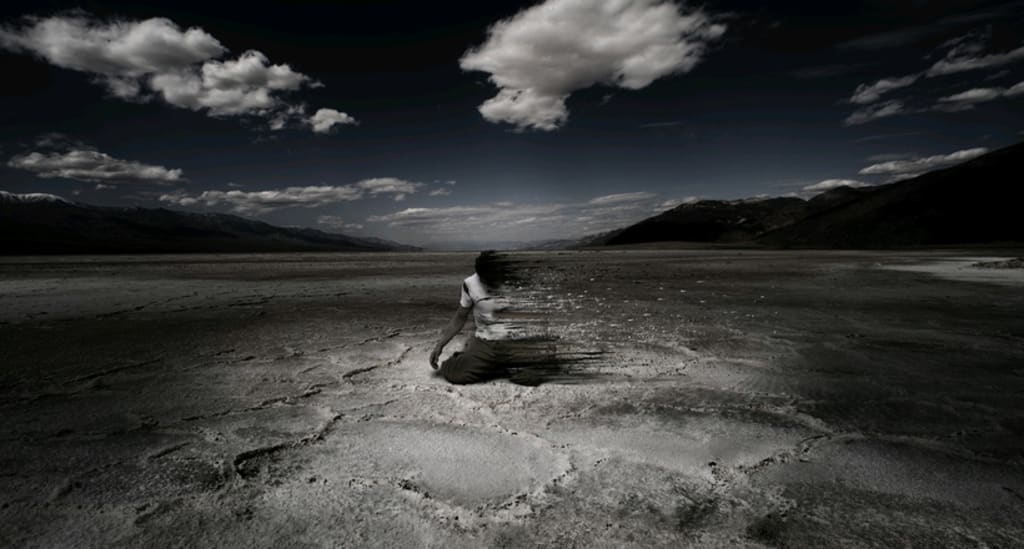
Every year, thousands of people disappear without a trace worldwide. Sometimes, among the missing are famous, outstanding individuals who vanish under the most mysterious circumstances.
In the mid-1880s, dozens of engineers were working on the invention of cinema, from representatives of large companies to self-taught inventors. The frontrunner in this race was the inventor Thomas Edison, thanks to the generous funding of his experiments. However, strangely enough, Edison was surpassed by his French competitor, Louis Le Prince, who created the world's first movie camera. A demonstration of his test film took place in early October 1888, seven years before the official birth of cinema. This was the so-called "Roundhay Garden Scene," lasting about 2 seconds. The Frenchman only had to patent his invention and secure funding for further development. For this, he immediately went to America, where, according to unverified reports, he even met with Edison. Upon returning from his trip, Le Prince visited his relatives in the city of Dijon, then boarded a train to Paris, where he planned to transfer to a train to London to patent his invention. However, in Paris, his compartment was found empty. The train had not stopped en route, and porters who were specially assigned to meet him at the station found neither his luggage nor the passenger. It was impossible for Le Prince to leave the compartment during the journey, as the doors of each compartment opened outward onto the platform and were blocked upon departure. Interestingly, not only Le Prince disappeared, but also his miraculous equipment, which had been the subject of French newspaper articles. Station staff in Dijon swore they saw the passenger board the train, and in Paris, a similarly numerous group attested that the compartment was empty. Soon, the whole story of moving pictures was called a hoax, and the inventor was labeled a fraud who disappeared to avoid disgrace. Many theories about his disappearance emerged, with many suggesting that it was the work of Edison, whose own experiments were failing, and competition from Le Prince could have led to a loss of funding. The search continued until 1902, when Le Prince's eldest son, Alphonse, traveled to New York to meet Edison and find out if he had seen Louis Le Prince in the fall of 1890. However, the day after his arrival, Alphonse Le Prince was found shot dead in his hotel room, with no weapon found nearby, and the door locked from the inside. The police could not solve the mystery, and the death of Le Prince's son remained unexplained.
Vladimir Alexandrov, a Soviet scientist working at the Academy of Sciences of the Soviet Union, led efforts to model the global climatic consequences of nuclear war. Known for his extraordinary charisma and openness, Alexandrov was a very active and sociable person, often the life of the party. In 1983, as a theorist of the so-called nuclear winter, he and a group of scientists presented a report convincingly demonstrating that even the use of 30% of existing nuclear arsenals at the time would threaten life on Earth. Alexandrov's predictions were significantly more pessimistic than those of his colleagues. In 1985, Alexandrov attended a conference in Spain to present a paper on nuclear winter. Before returning to Moscow, he decided to take a walk, left his hotel, and disappeared. Some theories suggest he was kidnapped by intelligence agencies. Following his disappearance, the Academy of Sciences of the USSR issued a special statement in December 1985. The Ministry of Foreign Affairs and the Soviet Embassy in Spain repeatedly contacted the Spanish authorities, but their efforts yielded no results. The mystery of Vladimir Alexandrov's disappearance remains unsolved.
Rudolf Diesel, a German engineer and creator of the internal combustion engine named after him, saw the first diesel engine built in 1897 at a factory in Augsburg. The efficiency of this engine was about 26%, significantly higher than steam engines. The engine gained popular recognition, and when it was presented at the 1898 Munich Steam Engine Exhibition, licenses for its production were quickly sold out. However, issues with manufacturing parts and the use of new heat-resistant materials, which many existing companies could not afford, caused early diesel engines to frequently fail. The Augsburg factory went bankrupt, and Diesel stopped receiving patent royalties. As a result, he sought help from other countries. The financial crisis of 1913 finally ruined him, but Diesel still had hopes for a favorable outcome. On September 29, 1913, he boarded the SS Dresden bound for London to open a new factory. At 11:00 PM, after dining in the ship's restaurant, Diesel wished his companions good night and went to his cabin. In the morning, it was found empty. Despite extensive searches, Diesel was not found. One theory suggests he fell overboard during a heart attack. A body resembling Diesel's was found by fishermen, who buried it at sea, following maritime traditions. Another, more sinister theory posits that Diesel's family resolved their financial issues by selling his patents after his disappearance. Three witnesses, two of Diesel's friends and a steward, testified that Diesel had locked himself in his cabin the night before his disappearance. Additionally, Diesel's name was not on the ship's passenger list, and no items found on the ship could be definitively linked to him, suggesting he may never have boarded the ship. All witnesses to Diesel's disappearance might have had reasons to conceal the truth.
In 1961, the richest heir in the USA embarked on a dangerous and exciting journey to New Guinea. Michael Rockefeller and his companion, Dutch ethnographer René Wassing, hired local guides and traveled to native villages, exchanging steel hooks and axes for everyday items and art from the Papuans. The young scholars amassed a good collection but were not satisfied with their achievements. They decided to visit the remote Asmat village to find unique artifacts. Traveling by river on a catamaran, they initially made good progress, but the boat was soon overwhelmed by a strong current that filled it with water, stalling the engine. This area was home to many crocodiles, making it too dangerous to leave the boat. With the shore about 3 km away, Rockefeller sent the guides swimming for help. They reached the shore but got lost in the jungle and were found several days later. Michael and René waited in vain for help. Suddenly, a huge wave capsized the catamaran. Wassing clung to the wreckage while Michael shouted that he would swim to shore. Wassing refused to follow and watched his friend disappear into the distance. Hours later, Wassing was found by a seaplane. All efforts to find Michael were in vain. The jungle was scoured, the riverbed examined, and locals questioned, but no trace of Michael Rockefeller was found. Many believed that he might have successfully swum to shore, as the guides had avoided crocodiles and survived. Wassing, too, was not attacked by predators despite spending hours in the water. Rockefeller was an excellent swimmer and could not have drowned. The most popular theory was that he was eaten by cannibals. It is believed he reached the shore only to fall into the hands of a savage tribe. This theory is based on the accounts of Christian missionary Jan Smith, whose mission was near the Asmat village. Smith claimed he saw the Asmat carrying Rockefeller's clothes and showed him bones purportedly belonging to the missing young man. Another missionary claimed that the Asmat told him about a young man who was killed and eaten by a tribe. The most intriguing detail was the mention of "iron eyes," supposedly referring to the metal glasses Rockefeller always wore. However, no one has found this skull with iron eyes, and the mystery of Michael Rockefeller's death remains unsolved.
The disappearance of Australia's Prime Minister Harold Holt is one of the most sensational mysteries of the 20th century, captivating the world as much as the assassination of John F. Kennedy. Though Holt served as prime minister for only 22 months, at the time of his disappearance, he was one of the most prominent political figures in Australia and the Western world. Holt vanished on December 17, 1967. Accompanied by friends and bodyguards, he went to Portsea for a swim at Cheviot Beach. Despite the strong current, Holt, known as an excellent swimmer, ignored warnings and resolutely headed into the sea. Soon, he disappeared from sight. Alarmed, his bodyguards rushed in after him but could not find him. The police and professional military divers were immediately called in. Divers meticulously searched the seabed, and dozens of helicopters scanned from above. This large-scale search operation was the most extensive in Australia's history but yielded no results. Initially, police theorized that political opponents might have tracked, captured, and drowned the prime minister, but the absence of a body weakened this theory. The case remains one of the primary mysteries in Australian criminology to this day.
About the Creator
Keep reading
More stories from Vitalii Petrov and writers in Criminal and other communities.
Creepy Stories of Maniac Parents Who Kept Their Children Incarcerated
The heroines of the following terrifying stories spent many years in captivity, held by their own parents. Although all the victims survived and were eventually freed, the decades they spent in confinement forever changed their lives.
By Vitalii Petrov2 years ago in Criminal
Story of Larry Hoover
Larry Hoover Legacy in Reform and Pop Culture For more than half a century, the name Larry Hoover has carried a weight that echoes through Chicago’s history and American urban culture. Often discussed in connection with crime, controversy, or organized street life, Hoover’s identity became a symbol far larger than the man himself. But beyond the headlines, beyond the mythology, and beyond the notoriety, there exists a lesser‑known story: the story of a human being who evolved, reflected, transformed, and worked to redirect others from the path he once walked. It is this story — the one buried beneath decades of public narrative — that reveals the depth of Larry Hoover’s transformation.
By Organic Products 6 days ago in Criminal
The Man Who Never Stole Twice
They said the city raised criminals the way oceans raised storms—slowly, inevitably, without apology. Every alley had a memory, every cracked sidewalk knew a name that never made it into daylight. In this city, crime wasn’t rebellion. It was inheritance.
By Jhon smith6 days ago in Criminal
Smart phones, Humans and Aliens.
WARNING. I will be tapping into one of your favorite creative tensions: The absurdity of humans worshipping their glowing rectangles as if they were tiny oracles. There’s something deliciously poetic about that contradiction, and it lends itself beautifully to an instructive proviso.
By Novel Allen6 days ago in Poets


Comments
There are no comments for this story
Be the first to respond and start the conversation.