
The Monster Who Spoke Softly: Inside the Chilling Confessions of Edmund Kemper
a polite silent killer

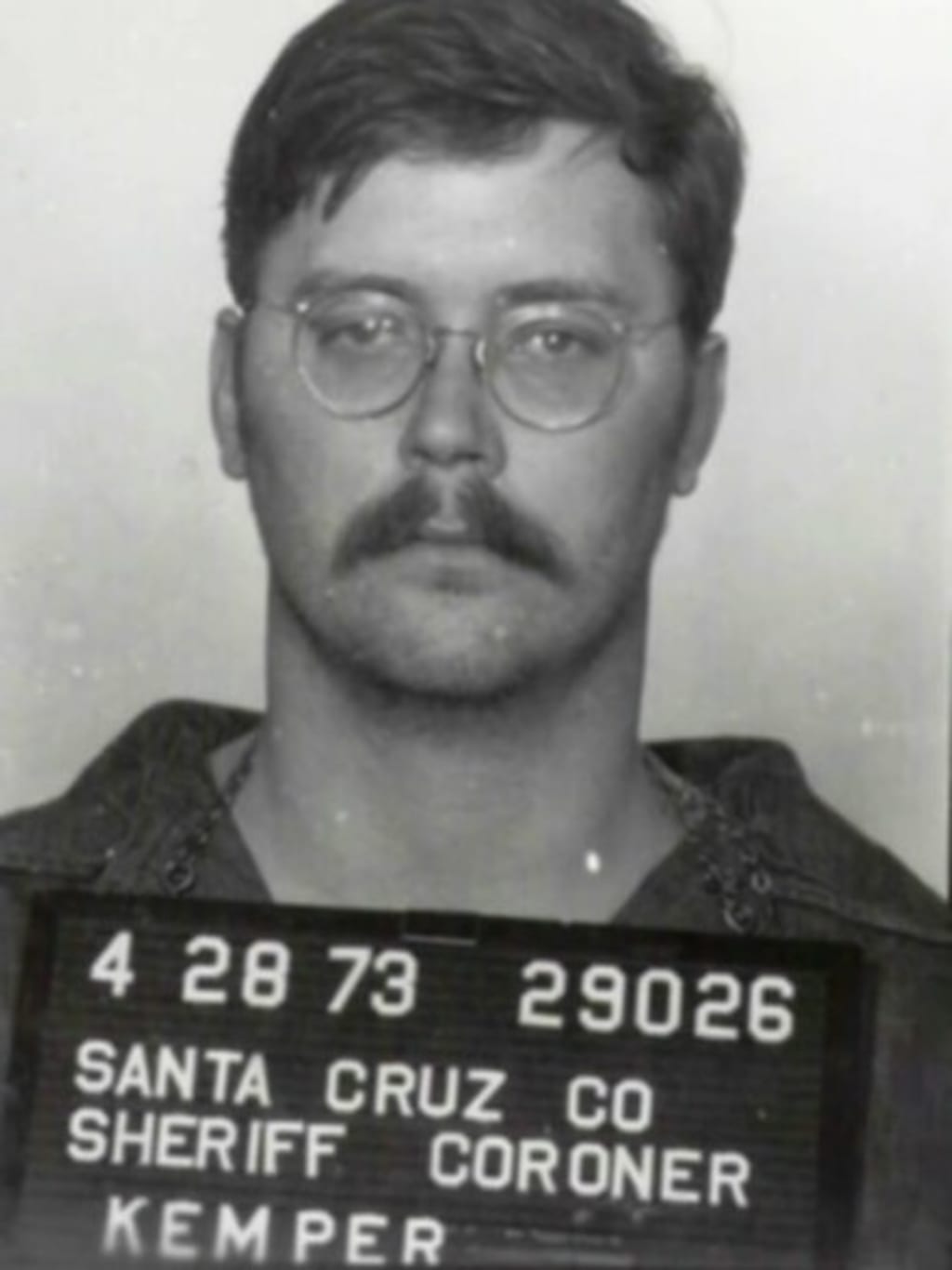
In the annals of American crime, few names echo with the quiet dread of Edmund Emil Kemper. Standing at 6 feet 9 inches tall and known for his polite demeanor, he seemed, at first glance, more like a gentle giant than a monster. But beneath that calm exterior lay a mind capable of horrors so calculated and grotesque they continue to haunt the criminal psychology world. Kemper didn’t just kill—he analyzed, narrated, and deconstructed his actions with the eerie precision of a man who seemed almost proud of his ability to articulate evil.
Kemper’s crimes were more than murder; they were ritualized expressions of hate, power, and control, especially over women and, most chillingly, his own mother. When he spoke of his killings, it wasn’t in fevered confession or manic breakdown. It was in calm, academic tones—clinical, exact, and deeply unsettling. This is the story of a man who murdered ten people, including his grandparents and mother, and then sat down to explain how—and why—he did it.
The Early Echoes of Violence
Born in 1948 in Burbank, California, Kemper’s childhood was marked by neglect, isolation, and cruelty. His mother, Clarnell Strandberg, berated and emasculated him. She forced him to sleep in a locked basement out of fear he would harm his sisters. By the age of ten, Kemper was already fantasizing about death. He decapitated his sister’s dolls and played games he called “gas chamber” and “electric chair.”
At 15, he committed his first murders—shooting his grandparents with a rifle. When asked why, he replied simply: “I just wanted to see what it felt like.” Diagnosed with paranoid schizophrenia, he was committed to Atascadero State Hospital. But Kemper was a model patient, gaining access to the inner workings of psychiatric evaluation and manipulation. By 21, he convinced doctors he was reformed. They released him—back into his mother’s care.
A Calculated Killing Spree
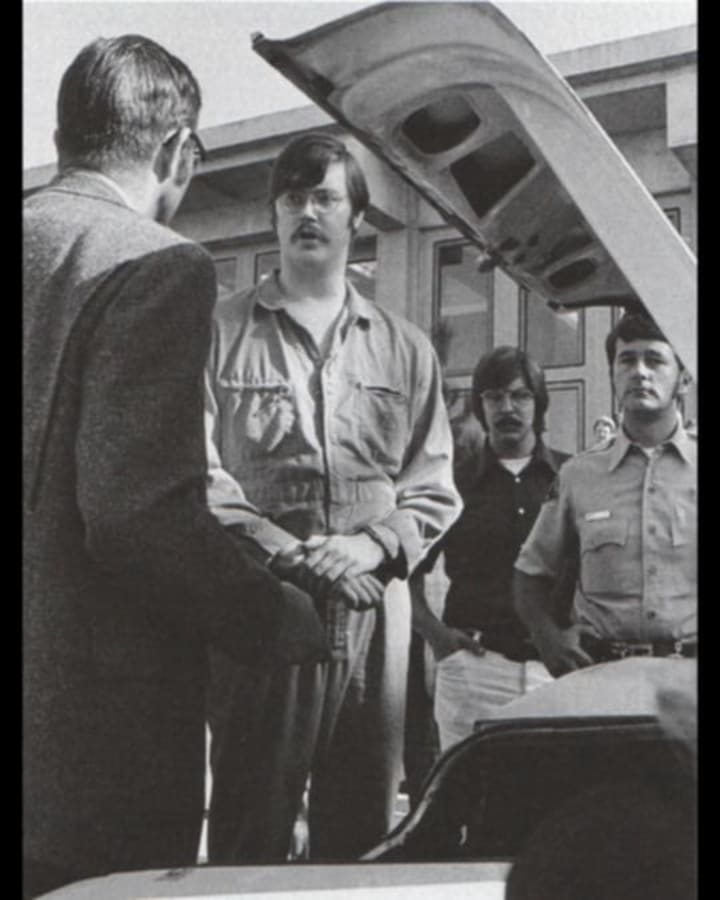
Between 1972 and 1973, Kemper embarked on a killing spree in Santa Cruz, California. He targeted young female college students, offering them rides while posing as a trustworthy, if awkward, man. Once they were inside his car, he transformed.
Kemper described in his confessions how he would drive to remote areas, pull a gun, and calmly explain to his victims that he had no choice. Then he would kill them—usually by strangulation or shooting. But death was only the beginning. He later admitted to decapitating their corpses, engaging in necrophilia, and dismembering their bodies in his bedroom.
He kept parts of the bodies for days, treating them as lifeless companions. He buried heads in his backyard, some facing upward toward his mother’s window, so “she would always have someone looking up to her.”
The Mother of All Murders
Kemper's hatred for his mother fueled his every crime. He once said, “She had to die, or there’d be no way I could ever be free.” In April 1973, after years of mental buildup, Kemper bludgeoned Clarnell to death while she slept. Then he cut off her head and used it as a dartboard. He screamed into her severed head and performed acts too disturbing to describe fully. I shouldn't be sharing the details.
When asked why he mutilated her so brutally, he replied, "I just said, 'She’s got to die,' and that’s all there is to it."
He then invited his mother’s best friend over and killed her too—almost as an afterthought—before fleeing the state.
The Soft-Spoken Confessor
Days later, Kemper called the police from a payphone in Pueblo, Colorado. He confessed everything. At first, they didn’t believe him. “Ed, you're joking,” one officer reportedly said. “You’ve got to be kidding.”
But Kemper wasn’t kidding. He led them to the evidence, walked them through his crimes, and then sat down for one of the most chilling series of interviews in criminal history.
What set Kemper apart wasn’t just the violence—it was his mind. He spoke with clarity, even humor, about dismemberment and decapitation. He described the sensation of killing with a mix of detachment and dark self-awareness. His confessions read like a textbook of twisted logic, filled with self-analysis that made experts uncomfortable.
In one interview, he said: “I remember there was actually a sexual thrill… It was an explosion with the head… It was like a bomb going off.”
He wasn’t seeking absolution. He wasn’t begging for forgiveness. He was explaining himself—as if discussing a science experiment gone terribly right.
Psychologists' Worst Nightmare
Edmund Kemper baffled psychiatrists. He was intelligent (with an IQ of 145), articulate, and chillingly self-aware. He seemed to understand his mind better than the professionals trying to diagnose it. One forensic psychologist called him “the perfect storm of narcissism, intellect, and monstrosity.”
He didn’t fit the typical serial killer mold. He wasn’t disorganized or impulsive. He planned meticulously. He even recorded audiobooks for the blind while in prison, adding another layer of dissonance to his persona.
A Legacy of Unease
Kemper is now serving eight life sentences in California Medical Facility. He is one of the few living serial killers to have spoken so openly about his crimes—and continues to draw fascination from criminologists, authors, and audiences. Netflix’s Mindhunter featured him prominently, with chilling accuracy, prompting a new generation to stare into the abyss of his mind.
But what’s most disturbing about Kemper isn’t the gore or the body count. It’s the calm. The way he describes murder like a mundane event. The casual tone, the thoughtful pauses, the sense that he isn’t haunted by his actions.
He once said: “I had these fantasies, and I acted on them. That’s the difference between me and the average person.”
And perhaps that’s what makes Kemper so terrifying: not that he’s inhuman, but that he was too human—the monster hiding in plain sight, speaking softly, and making perfect sense while describing hell.
About the Creator
E. hasan
An aspiring engineer who once wanted to be a writer .
Story of Larry Hoover
Larry Hoover Legacy in Reform and Pop Culture For more than half a century, the name Larry Hoover has carried a weight that echoes through Chicago’s history and American urban culture. Often discussed in connection with crime, controversy, or organized street life, Hoover’s identity became a symbol far larger than the man himself. But beyond the headlines, beyond the mythology, and beyond the notoriety, there exists a lesser‑known story: the story of a human being who evolved, reflected, transformed, and worked to redirect others from the path he once walked. It is this story — the one buried beneath decades of public narrative — that reveals the depth of Larry Hoover’s transformation.
By Organic Products 2 days ago in Criminal



Comments (1)
Kemper's story is truly chilling. It's crazy how his childhood shaped him into this monster. The way he was treated by his mom and his early violent acts are eye-opening. And then his calculated killing spree... it makes you wonder what goes on in these people's heads. How could someone seem so normal on the outside but be capable of such extreme evil? It really makes you think about nature vs. nurture in cases like this.