
The Last Walk of Sheetal: A Tragedy in Balochistan
"Honor Took Her Life—Her Silence Shook the World"

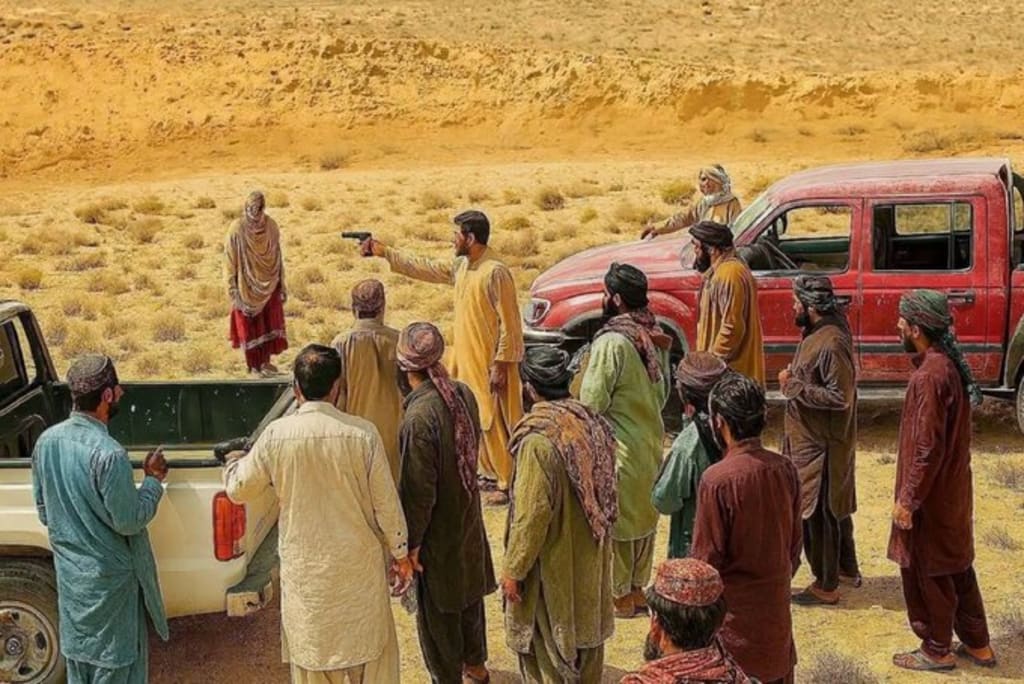
In the heart of the rugged and hauntingly beautiful mountains of Balochistan, where tradition looms heavier than law, a story unfolded that would stain the soul of humanity forever.
Sheetal was only twenty-four—a bright, strong-willed girl with fire in her spirit and dreams in her eyes. She didn’t ask for much—just the simple right to love, to choose her partner, to live life on her own terms. But in her village, buried deep in a tribal belt where the word of the Jirga holds more power than any constitution, this act was more than rebellion—it was considered blasphemy against “honor.”
Zarak, a kind-hearted man of thirty-two, loved her with a sincerity rare in those barren lands where emotions were buried long before the dead. They married in secret, then tried to seek forgiveness. But love has no place in the books of vengeance disguised as culture.
Months passed. The couple lived in hiding, moving from one place to another, always looking over their shoulders. They knew they had angered powerful people—men whose pride was wrapped in their turbans, not in the humanity they’d long forgotten.
Then one day, word came. The tribe had “forgiven” them. A gathering was called—a so-called peaceful Jirga. The elders wanted to talk. Sheetal was skeptical, but Zarak hoped for reconciliation. After all, they were blood. Family. Surely, forgiveness was not impossible?
But it was never an invitation. It was a trap.
On a scorching afternoon, under the unforgiving sun of Balochistan, the couple arrived at the agreed meeting point—a dry, deserted patch of land where the only audience was the dust and the wind. Sheetal, wrapped in her mother’s shawl, clutched the Qur’an tightly in her hands—a symbol of her faith, her peace, and perhaps, her final plea for mercy.
Nineteen men stood in silence. Among them were faces they knew. Cousins. Uncles. Neighbors. Five were armed, holding rifles as if they held the keys to justice.
No one spoke.
Zarak looked around, confused. “Where is the Jirga?” he asked, his voice trembling.
An elder stepped forward. “It’s already decided.”
Sheetal took a step forward. No tears. No screams. She raised the holy book in her hands and, in a voice steady like steel, said, “You are only permitted to shoot.”
She wasn’t pleading. She was granting them what they had already taken from her: her right to live.
She walked toward her death with the kind of grace that only the truly fearless possess. Her eyes met those of the men who once watched her grow up, who once gave her sweets during Eid, who once promised her father they’d protect her.
And then—nine bullets tore through her body.
Nine.
Not one, not two.
As if one wasn’t enough to silence her.
As she fell, the Qur’an slipped from her hands, landing softly on the earth, now soaked in the blood of purity.
Then came Zarak’s turn.
They shot him more. Because a man choosing love was an even greater threat to their ego than a woman defying them.
When it was over, there was no mourning. The men didn’t cry. They turned away, mounted their vehicles, and drove off—another day’s “honor” restored.
And another daughter buried—not just in soil, but in silence.
The video surfaced online weeks later. A shaky recording, shot by one of the men—perhaps as proof, perhaps as a warning. It spread like wildfire across social media, igniting rage, sorrow, and disbelief.
But in the lands it mattered most, no arrests were made. No court summoned those responsible. No police came knocking. Because in places like this, silence is stronger than screams, and “reconciliation” is more binding than justice.
Some said, “It’s their culture.”
Some said, “She should have known better.”
Some said, “It’s sad, but we can’t change them.”
But what kind of culture allows a daughter to be led to her death by her own people?
What kind of society praises a father for surrendering his child to be executed for love?
This isn’t culture—it’s cruelty. It’s cowardice wrapped in the name of honor. It’s misogyny masquerading as tradition.
The shame isn’t just on the trigger-pullers.
The shame is on us—for watching and saying nothing.
The shame is on every silent witness who scrolled past the video and moved on.
The shame is on every leader who didn’t speak, every cleric who didn’t condemn, every relative who didn’t intervene.
Because this wasn’t just a murder. It was a ritual.
A ritual of silencing women.
Of burying their choices.
Of crucifying love.
And yet, in Sheetal’s final walk, there was a kind of defiance no bullet could erase. Her silence was not submission. Her steps were not surrender. Her eyes, staring into the barrels of those guns, held more dignity than all the false honor those men claimed to defend.
She died, yes. But she also became a symbol.
A symbol of what still needs to change.
A symbol of the countless other Sheetals still hiding, still running, still begging to live their lives freely.
The field where she fell has grown weeds now. Nature tries to forget, but we must not.
We must remember Sheetal.
Not just as a victim, but as a voice—
A voice that asked for nothing more than the right to love,
And gave everything in return.
"Another daughter lost. The turbans won.
But the world watched, and one day, the silence will break."
About the Creator
Ainullah sazo
Ainullah, an MSC graduate in Geography and Regional Planning, researches Earth’s systems, land behavior, and environmental risks. Passionate about science, he creates clear, informative content to raise awareness about geological changes.,,
Keep reading
More stories from Ainullah sazo and writers in Criminal and other communities.
A Painful Story:
She stood in the middle of the bustling street, her small frame trembling, eyes swollen and red from countless tears. Dust clung stubbornly to her clothes, mingling with the invisible weight of shame she carried. People walked past—some glanced at her with confusion, others with silent pity—but none had the courage to stop and ask what had happened. And she, lost in her own storm of heartbreak, didn’t even notice them.
By Ainullah sazo4 months ago in Criminal
She Killed Her Sister When She Gave The Teen's Virginity to Her Boyfriend
Any person who can rape and kill an innocent member of their family is truly depraved. One who later admits they enjoyed it is truly demonic. Yet, a woman who took her criminal behavior to the depths of depravity is not even behind bars.
By Criminal Matters8 days ago in Criminal



Comments
There are no comments for this story
Be the first to respond and start the conversation.