
The Last Don: The Life and Death of Giovanni Brusca
From Ruthless Sicilian Killer to Informant, How a Mafia Boss Shattered Cosa Nostra’s Code of Silence
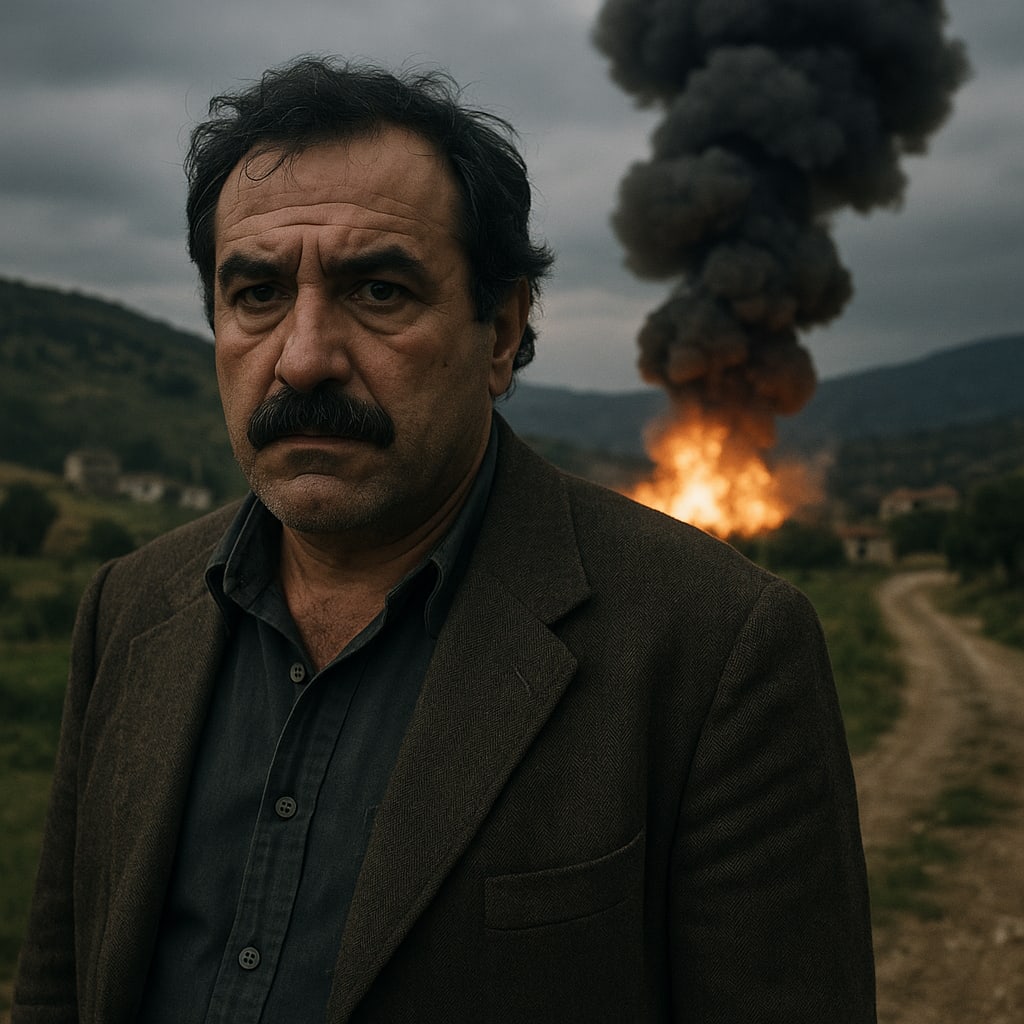
Few Mafia figures in modern history inspire as much fear and controversy as Giovanni Brusca, a Sicilian boss whose violent legacy earned him the nickname “The Pig” for his brutality. For years, he was one of the most feared men in the Cosa Nostra, responsible for hundreds of murders—including some of Italy’s most shocking assassinations. But in the end, Brusca betrayed the very code of honor that bound the Mafia, turning informant and exposing the inner workings of the organization.
Born in San Giuseppe Jato, near Palermo, in 1957, Brusca grew up in a Mafia family. His father was a powerful boss, and Giovanni inherited both the connections and the ruthlessness needed to rise quickly in the Cosa Nostra ranks. By the 1980s, he was already a trusted enforcer for Salvatore “Toto” Riina, head of the Corleonesi faction that dominated the Mafia.
Brusca’s reputation was built on violence. He was known for carrying out murders without hesitation, often with shocking cruelty. His loyalty to Riina made him one of the most powerful hitmen in Sicily. In the bloody years of the Mafia wars, Brusca is believed to have personally killed more than 100 people and ordered the deaths of many more.
The act that cemented his infamy came in 1992. On May 23 of that year, anti-Mafia judge Giovanni Falcone was traveling with his wife and bodyguards along a highway outside Palermo. Brusca triggered a half-ton of explosives hidden beneath the road, killing Falcone, his wife, and three police officers. Two months later, his associates murdered Falcone’s friend and colleague, Judge Paolo Borsellino, in another bombing. These killings shocked Italy and drew worldwide attention, sparking an unprecedented government crackdown on the Mafia.
But Brusca’s cruelty did not stop there. In 1993, after Riina’s arrest, the Mafia launched a campaign of terror against the Italian state. Bombings struck Rome, Florence, and Milan, killing innocent civilians. That same year, Brusca kidnapped 12-year-old Giuseppe Di Matteo, the son of a Mafia turncoat, in an attempt to silence his father. The boy was held captive for over two years, tortured, and eventually strangled to death. His body was dissolved in acid. This act horrified even other mobsters, who considered it beyond the limits of Mafia tradition.
Despite his power, Brusca could not outrun justice. In May 1996, he was captured by Italian police while hiding in the Sicilian countryside. His arrest was celebrated across Italy; many saw it as a turning point in the war against organized crime. Facing multiple life sentences, Brusca made a stunning decision: he broke the Mafia’s sacred oath of silence and became a pentito—a state witness.
As an informant, Brusca revealed the inner workings of Cosa Nostra, its financial networks, its political ties, and its secret operations. His testimony led to dozens of arrests and convictions, weakening the Mafia more than any police raid could. Yet his cooperation was deeply controversial. Many Italians believed a man responsible for so many atrocities did not deserve leniency. Families of victims protested his reduced sentence, arguing that some crimes were too monstrous to forgive.
In prison, Brusca expressed remorse, claiming he had been blinded by Mafia culture and manipulation. He admitted his role in over 150 murders. After serving 25 years, Brusca was released from prison in 2021, sparking outrage among Italians who still viewed him as a monster. He now lives under police protection, hidden from the public eye.
The story of Giovanni Brusca is a chilling reminder of the Mafia’s darkest years. He embodied the ruthless violence of the Corleonesi era, willing to kill judges, children, and innocents alike. Yet his betrayal of Cosa Nostra’s code also marked a turning point, showing that even the most feared bosses could fall.
His legacy is one of horror, betrayal, and uneasy justice—a symbol of both the Mafia’s cruelty and its fragility. In the end, the man once called “The Pig” destroyed the very organization he once killed to protect.
About the Creator
shakir hamid
A passionate writer sharing well-researched true stories, real-life events, and thought-provoking content. My work focuses on clarity, depth, and storytelling that keeps readers informed and engaged.
Keep reading
More stories from shakir hamid and writers in Criminal and other communities.
The American Boss of Bosses: The Rise and Fall of Salvatore Maranzano
The history of organized crime in America is filled with betrayals, bloody wars, and shifting power. Among its earliest architects was Salvatore Maranzano, the man who briefly became the “Boss of Bosses” of New York’s Mafia in the 1930s. Though his reign was short-lived, his influence changed the structure of American organized crime forever.
By shakir hamid4 months ago in Criminal
Who Was The Lady in Room 2805?
Jennifer Fairgate, a friendly woman who spoke with a German accent, checked into Room 2805 at the Oslo Plaza Hotel in Norway on May 31, 1995. She arrived alone and paid for the room in cash. Hotel staff did not request identification.
By Criminal Matters2 days ago in Criminal
The Murder Sheet Podcast links TX killing To KY Cold Case
At a time when violent crimes are at historical lows (despite what the current administration claims), there are more true-crime podcasts, books, TV shows, and general interest in the genre. True-crime podcasts are extremely expensive to make because of research costs, public records requests, potential investigator fees, out-of-studio recording costs, and production expenses.
By Frank Racioppi4 days ago in Criminal



Comments
There are no comments for this story
Be the first to respond and start the conversation.