
The Hinterkaifeck Murders:Germany`s Chilling Unsolved Crime
Germany`s Darkest Mystery

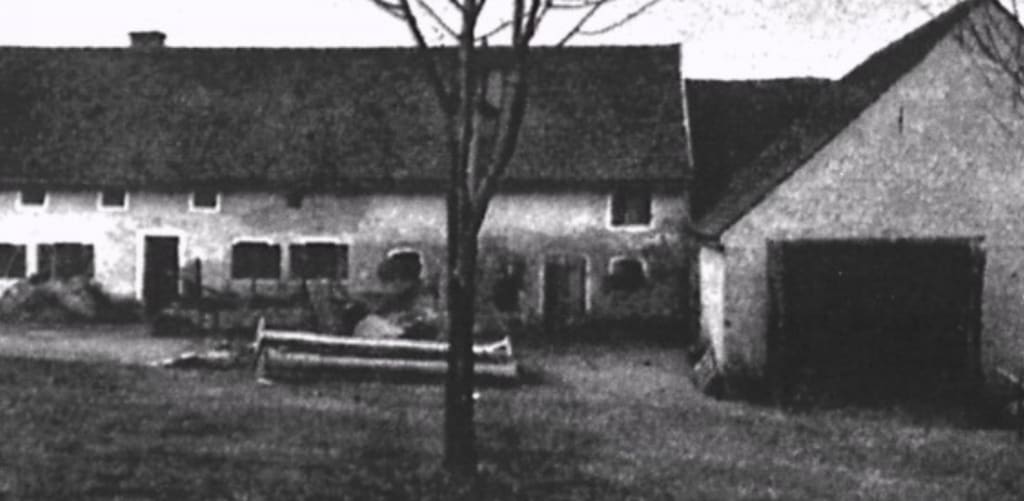
The Hinterkaifeck murders, one of Germany’s most infamous and unsettling cold cases, occurred in 1922 on an isolated Bavarian farmstead. The gruesome murder of six family members and their maid left investigators baffled, and the case remains unsolved to this day. The chilling details of the crime, combined with eerie clues discovered before and after the murders, have fascinated and disturbed both investigators and true crime enthusiasts for over a century.
The Gruesome Discovery
On the night of March 31, 1922, six people were brutally murdered on the Hinterkaifeck farmstead, located in a remote area between the towns of Ingolstadt and Schrobenhausen, about 70 kilometers north of Munich. The victims included Andreas Gruber (63), his wife Cäzilia (72), their widowed daughter Viktoria Gabriel (35), Viktoria’s children, 7-year-old Cäzilia and 2-year-old Josef, and the family’s new maid, Maria Baumgartner (44), who had arrived at the farm on the day of the murders.
The bodies of the Gruber family were discovered four days later by concerned neighbors who noticed the family had been absent from church services and other community activities. When the neighbors entered the farm, they found a scene of unimaginable horror. The bodies of Andreas, his wife, Viktoria, and young Cäzilia were discovered in the barn, their heads smashed in with a mattock, a type of pickaxe. The bodies were covered with hay, suggesting that the killer had tried to conceal them. Inside the house, the body of Maria Baumgartner was found in her bedroom, and 2-year-old Josef was discovered in his crib, both also killed with blunt force trauma to the head.
What made the crime even more disturbing was the fact that the killer had apparently stayed at the farm for several days after the murders, eating the family’s food, lighting fires in the hearth, and even tending to the livestock. This chilling detail suggested that the murderer was either deeply disturbed or incredibly brazen, knowing that the isolated location of the farm would delay the discovery of the crime.
Strange Events Leading Up to the Murders
In the days and weeks leading up to the murders, several strange occurrences had unsettled the Gruber family. Andreas Gruber reportedly told neighbors and friends about mysterious footprints leading from the nearby woods to the farm, but no footprints leading away. The family also heard strange noises coming from the attic and found items around the farm out of place or missing. Their previous maid had even quit the job, citing that she believed the house was haunted due to the unnerving sounds and feelings of being watched.
Despite these warning signs, Andreas Gruber did not report these incidents to the police, and life on the farm continued as usual. The arrival of the new maid, Maria Baumgartner, was supposed to bring some normalcy back to the household, but she tragically became one of the six victims on her first day of work.
The Investigation
When police arrived at Hinterkaifeck, they were met with a complex and horrifying crime scene. Despite a thorough investigation, no clear motive or suspect emerged. The brutality of the murders and the fact that nothing of significant value was stolen led investigators to believe that the crime was personal, not a simple robbery.
One of the most perplexing aspects of the case was the timeline of the murders. Neighbors reported seeing smoke coming from the farmhouse chimney for several days after the murders, indicating that the killer had stayed on the property. The family’s livestock had been fed, and someone had eaten food from the pantry. This strange behavior suggested that the killer was either intimately familiar with the family or had no fear of being discovered. Furthermore, the Grubers had few enemies, and none of the known suspects had a clear motive to kill the entire family.
Suspects and Theories
Over the years, numerous suspects and theories have emerged, but none have led to a definitive conclusion.
Lorenz Schlittenbauer
One of the prime suspects was Lorenz Schlittenbauer, a neighbor and former lover of Viktoria Gabriel. Schlittenbauer had fathered a child with Viktoria, who had died in infancy, and there were rumors that 2-year-old Josef was also his son. Schlittenbauer was among the neighbors who discovered the bodies and behaved strangely at the crime scene, touching the bodies and moving objects. Some believed that his knowledge of the farm and the family, combined with a potential dispute over Josef’s paternity, may have provided a motive. However, no concrete evidence was ever found to link him to the murders.
The Mysterious Stranger
Another theory was that the murders were committed by a vagrant or a stranger who had been living in the attic. The Gruber family had reported hearing noises in the attic, and the mysterious footprints leading to the farm supported the idea that someone had been watching the family for some time. However, no evidence was found to support this theory either, and it seemed unlikely that a transient would have such an intimate knowledge of the family’s routines.
Family Feud
Some speculated that the murders were the result of a family feud, possibly connected to Viktoria’s relationships or the inheritance of the farm. Viktoria had reportedly been in a relationship with Lorenz Schlittenbauer, but there were also rumors that her father, Andreas, had an incestuous relationship with her. This disturbing possibility led some to believe that the murders were a violent resolution to a dark family secret. However, no clear motive or suspect emerged from this theory.
The Maid’s Role
The previous maid’s claims that the house was haunted have also been examined in a different light. Some theorists speculate that she may have known more than she let on, or that she had inadvertently witnessed something related to the murders. However, her departure from the household occurred long before the murders, and she was never seriously considered a suspect.
The Aftermath and Legacy
Despite the extensive investigation, the Hinterkaifeck murders were never solved. The case was officially closed in 1955, although many continue to speculate about what happened on that fateful night in 1922. The farmhouse was demolished a year after the murders, but the memory of the crime lingers on in the surrounding community and beyond.
In the years since the murders, Hinterkaifeck has become the subject of numerous books, documentaries, and even films. The case’s blend of real-life horror, unsolved mystery, and eerie paranormal overtones has made it a staple in true crime lore. While some believe the truth about the murders may never be uncovered, others continue to search for new evidence and theories, hoping to finally solve the case that has haunted Germany for over a century.
Conclusion
The Hinterkaifeck murders remain one of the most baffling and chilling unsolved cases in history. The brutal nature of the crime, combined with the strange events leading up to and following the murders, has kept the public’s fascination alive for decades. Whether it was a crime of passion, a family dispute, or the work of a deranged stranger, the truth behind what happened at Hinterkaifeck on that cold March night in 1922 may never be known. The case stands as a grim reminder of the darkness that can exist in the most seemingly ordinary places and the fact that some mysteries may never be solved.
About the Creator
Aslihan
Aspiring writer with a passion for researching diverse topics. I love sharing insights and connecting with others. Let’s embark on a journey of exploration and discover intriguing stories together
The Silence Behind Room 307
M Mehran The rain fell heavily over the quiet town of Ravenshade, turning the narrow streets into rivers of shimmering reflections. Most people had already gone home, locking their doors against the stormy night. But inside the old Hawthorne Hotel, the lights of Room 307 still glowed faintly. That room would soon become the center of one of the most chilling criminal mysteries the town had ever known. A Crime That Shocked the Town At 11:42 PM, the hotel receptionist heard a loud crash echo from the third floor. At first, she assumed a guest had dropped something. But minutes later, a terrified scream shattered the silence. When the police arrived, they found the door to Room 307 half open. Inside, the scene was disturbing. A wealthy businessman named Daniel Mercer lay lifeless on the floor beside a broken glass table. The room looked untouched—no signs of forced entry, no robbery, no struggle. Yet Mercer was clearly murdered. Detective Aaron Cole, a veteran investigator known for solving impossible cases, stepped into the room carefully. Years of experience had taught him that the smallest detail could expose the biggest lie. But this case felt different from the beginning. The Impossible Mystery The first strange detail was the door. It had been locked from the inside. The second strange detail was the window. Closed. Sealed. Impossible for anyone to escape through. This meant one thing: whoever killed Mercer had either vanished into thin air… or was still in the hotel. Cole began questioning the staff and guests. Mercer had checked in earlier that evening, arriving alone and carrying only a black leather briefcase. According to hotel records, he had ordered dinner to his room and made two phone calls. After that, nothing. But one witness changed everything. A young waitress named Clara said she saw someone leaving the hallway near Room 307 shortly before the scream. “A man in a gray coat,” she told police. “Tall. Wearing a hat. I didn’t see his face.” The problem? No guest registered at the hotel matched that description. A Secret Hidden in Plain Sight Detective Cole examined Mercer’s belongings carefully. Inside the briefcase were documents related to a major financial investigation. Mercer had been working with authorities to expose a massive corporate fraud operation involving millions of dollars. Someone powerful clearly had a reason to silence him. But how did the killer enter and leave the locked room? That question haunted Cole. Until he noticed something unusual. The bathroom mirror. It wasn’t aligned with the wall like normal hotel mirrors. When Cole touched its edge, it shifted slightly. Behind it was a hidden service panel used by hotel maintenance workers decades ago. A narrow passage ran between the walls of the building. Suddenly, the “impossible crime” wasn’t impossible anymore. The Killer Revealed The passage led to a storage room on the same floor. Inside, detectives discovered a gray coat hanging on a hook. And inside the pocket was a hotel keycard. The card belonged to Victor Hale—the hotel’s night manager. When police confronted him, Hale tried to stay calm. But the evidence was overwhelming. Hale had once worked for the same corporation Mercer was investigating. If Mercer exposed the fraud scheme, several powerful executives—and their accomplices—would face prison. Hale was paid to ensure that never happened. Using the old maintenance passage, he entered Mercer’s room through the hidden panel, confronted him, and killed him before escaping back through the wall. He then locked the door from the inside using a simple wire trick through the gap under the door. A perfect crime. Or so he thought. Justice in the Darkness When Hale finally confessed, he revealed something chilling. Mercer had refused to stay silent even when threatened. “He said the truth was worth dying for,” Hale admitted quietly. The investigation that followed exposed the entire fraud network Mercer had been trying to reveal. Several high-ranking executives were arrested, and millions of dollars in stolen funds were recovered. But for Detective Cole, the victory felt incomplete. Mercer had paid the ultimate price. The Lesson Behind the Crime Criminal cases like the Room 307 murder remind us that crime is rarely random. Behind every shocking act lies a chain of decisions, secrets, and motives. Sometimes the truth hides in shadows. Sometimes it hides behind a mirror. But as Detective Cole often said: “Every crime leaves a whisper of the truth. You just have to listen carefully.” And in the silent hallway of the Hawthorne Hotel, the whisper of justice had finally been heard.
By Muhammad Mehran3 days ago in Criminal
The Middle East at a Crossroads
The Middle East at a Crossroads The Middle East has once again become the center of global attention as tensions rise between several powerful countries and regional actors. Conflicts, political rivalries, and military movements have created an atmosphere of uncertainty that many analysts believe could reshape global politics in the coming years. Although wars and crises have occurred in this region for decades, the current situation feels more fragile and dangerous because multiple global powers are indirectly involved.
By Wings of Time 7 days ago in Criminal




Comments
There are no comments for this story
Be the first to respond and start the conversation.