
The Hinterkaifeck Murders: A CHILLING Mystery
The Unsolved German Massacre

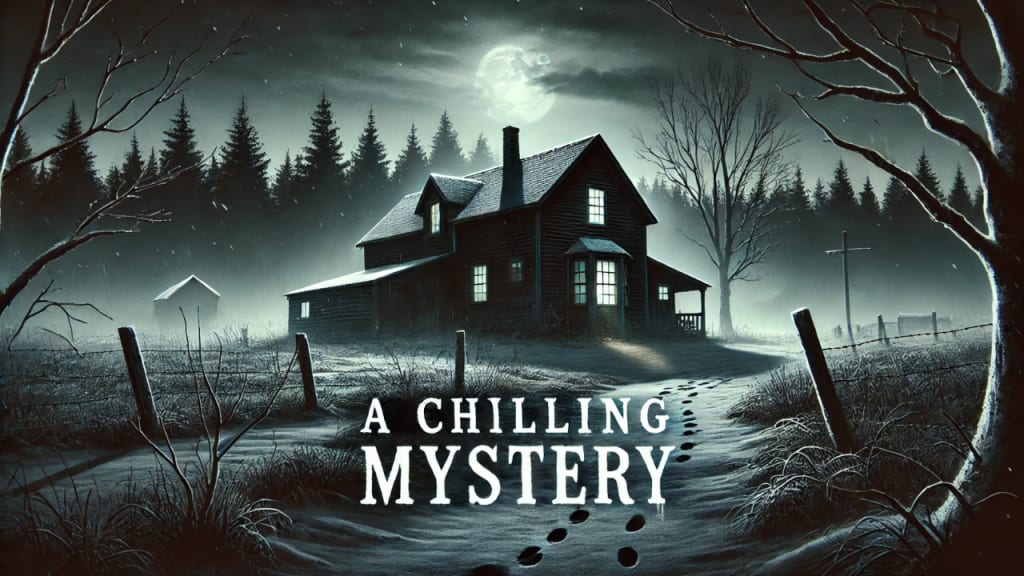
Imagine living in a quiet, isolated farmhouse, far away from the hustle and bustle of the city. Life is peaceful, serene—until one day, you start hearing strange noises in your attic. Footsteps echo above your head, but when you check, there's no one there. Then your keys go missing, and weird things start happening around the house. It sounds like the setup for a horror movie, doesn’t it?
Well, unfortunately for the Gruber family of Hinterkaifeck, Germany, this wasn’t a movie—it was their reality. In 1922, this small Bavarian farm became the scene of one of the most disturbing and perplexing unsolved murders in history. Six people were found brutally murdered, and to this day, no one knows who did it or why.
Welcome to the chilling mystery of the Hinterkaifeck murders, a story filled with eerie details, strange clues, and wild theories. And while this might sound like the perfect campfire tale, it’s a true story—one that remains unsolved more than a century later. Grab a cozy blanket (and maybe lock your doors), because we’re about to explore one of Germany’s creepiest cold cases.
The Gruesome Discovery at Hinterkaifeck Farm
Let’s set the stage. It’s March 31, 1922, in the quiet countryside of Bavaria, about 43 miles north of Munich. Hinterkaifeck is a small, isolated farm occupied by Andreas Gruber, his wife Cäzilia, their widowed daughter Viktoria, and Viktoria’s two children—7-year-old Cäzilia and 2-year-old Josef. Also present is Maria Baumgartner, the family’s maid, who had started working there only one day before the murders.
For days, neighbors noticed something strange: no one had seen the Gruber family around the farm. The mail was piling up, and little Cäzilia hadn’t been at school. Finally, on April 4, worried neighbors ventured to Hinterkaifeck to check on them. What they found would haunt the small village forever.
Inside the barn, the bodies of Andreas, Cäzilia, Viktoria, and little Cäzilia were found stacked on top of each other, brutally bludgeoned to death. In the house, Maria and Josef had met the same horrific fate. Six victims, all murdered with a mattock (yes, the murder weapon of choice was a farm tool—it’s like something out of an Agatha Christie novel, only bloodier).
As if the murders weren’t terrifying enough, there was something even creepier about the crime: the killer (or killers) had stayed at the farm for days after the murders, feeding the animals, eating the family’s food, and generally just making themselves at home. The neighbors, understandably, were horrified.
Who Were the Victims? The Hinterkaifeck Family and Maid
The Gruber family wasn’t exactly what you’d call “normal.” In fact, their lives were a bit of a mess. Andreas Gruber, the patriarch, was known around the village as a grumpy, unpleasant man. Rumors swirled about his relationship with his daughter Viktoria—there were whispers of incest, and at one point, both Andreas and Viktoria had been charged with it. But in rural 1920s Bavaria, these kinds of things were often swept under the rug.
Viktoria, a widow, had two children: young Cäzilia and baby Josef. Here’s where things get even weirder. It’s unclear who Josef’s father was. Some say it was Viktoria’s late husband, Karl Gabriel, but Karl had supposedly died in World War I (although some theories suggest he may not have died after all—more on that later). Others believed Josef was the product of Andreas and Viktoria’s alleged incestuous relationship. Either way, there were a lot of family secrets buried at Hinterkaifeck.
Maria Baumgartner, the family’s new maid, had only just arrived at the farm on March 31—the same day she was murdered. Talk about terrible timing.
And then there was little Cäzilia. According to the post-mortem, she had pulled out her own hair in clumps, possibly while she was still alive, suggesting she survived for several hours after the initial attack. Creepy doesn’t even begin to cover it.
The Creepy Clues Left Behind
Now, let’s talk about the clues. Oh boy, are there some strange ones in this case. For starters, the footprints. Just before the murders, Andreas Gruber had noticed footprints in the snow leading from the forest to the house—but no footprints leading away. In a typical horror movie, this is where you’d scream, “Don’t go inside the house!” But, of course, Andreas did exactly that, and the rest is tragic history.
Then there’s the missing key. The family reported that one of their house keys had gone missing. Had the killer stolen it? Had they been lurking around the house before the murders, waiting for the right moment?
And if that’s not eerie enough, how about the mysterious newspaper? A strange newspaper was found inside the house after the murders, one that no one in the family had purchased. Who brought it there? The killer, perhaps?
Oh, and don’t forget the attic noises. In the days leading up to the murders, Andreas had complained of hearing footsteps in the attic. Naturally, he checked it out but found nothing. Was the killer hiding up there, biding their time?
And finally, we have the murder weapon—a mattock, a farming tool used to dig and chop. Not exactly your everyday choice for a murder, but effective nonetheless.
The Unsolved Murder That Made This Inbred Boy Famous. You'll definitely enjoy this!
Wild Theories: Who Could Have Done It?
So, who was responsible for the Hinterkaifeck murders? Well, there are plenty of theories, each one stranger than the last.
Theory 1: Karl Gabriel, the Not-So-Dead Husband
One of the most popular theories is that Karl Gabriel, Viktoria’s husband who supposedly died in World War I, wasn’t dead after all. Some believe he returned from the war, found out about Viktoria’s affair (or incestuous relationship, depending on which rumor you believe), and snapped, killing the entire family in a fit of rage. But if Karl survived the war, where had he been all that time? And why would he wait so long to exact his revenge?
Theory 2: Lorenz Schlittenbauer, the Suspicious Neighbor
Next up, we have Lorenz Schlittenbauer, the Grubers’ neighbor and, according to some, the father of Josef. Schlittenbauer was one of the first people to discover the bodies, but here’s the thing—he acted kind of weird about it. He knew details about the crime scene that he shouldn’t have, and some people even speculated that he had moved the bodies. Was he trying to cover something up? Did he murder the Grubers out of jealousy or anger?
Theory 3: A Random Drifter or Soldier
Another theory suggests that the murders were committed by a passing drifter or soldier, possibly someone with a grudge against the family or just a dangerous vagrant looking for shelter. This would explain the strange footprints and the fact that no one in the village seemed like an obvious suspect. But without any concrete evidence, this theory remains just that—a theory.
Theory 4: A Family Member?
Some have speculated that the killer might have been a family member—maybe Viktoria herself, driven to madness by the twisted family dynamics. But given that she was also a victim, this theory doesn’t hold much weight.
Theory 5: Multiple Killers?
Could there have been more than one killer? Some believe that the murders were carried out by multiple people, working together to wipe out the Gruber family for reasons unknown. Perhaps it was a robbery gone wrong, or maybe there was a deeper motive. Whatever the case, the mystery endures.
The Legacy of the Hinterkaifeck Murders
So, what’s the legacy of this creepy cold case? Well, for one thing, the Hinterkaifeck murders have become the stuff of true crime legend. Over the years, countless books, documentaries, and even movies have been made about the case. It’s one of those stories that’s so bizarre, so disturbing, that it sticks with you long after you’ve heard it.
Despite multiple investigations, the case remains unsolved. The lack of forensic evidence (this was 1922, after all) and the destruction of key records during World War II means we may never know who committed these heinous crimes. But that hasn’t stopped amateur sleuths and professional detectives alike from trying to crack the case.
Today, a small memorial stands at the site of the Hinterkaifeck farm, a quiet reminder of the horrors that took place there. While the farm itself was demolished in 1923, the mystery of what happened there has never faded. Visitors still come to pay their respects—and perhaps to indulge in a little macabre curiosity.
Conclusion
The Hinterkaifeck murders remain one of the most baffling and chilling cold cases in history. With every eerie clue and outlandish theory, the mystery deepens, leaving us with more questions than answers. Was the killer hiding in plain sight? Were they a member of the family? Or was it a stranger who slipped away into the night, never to be caught?
Whatever the truth may be, one thing is certain: the story of Hinterkaifeck is not for the faint of heart. So, the next time you hear a noise in your attic or notice a strange footprint in the snow, maybe take a cue from the Grubers and don’t go investigating—because some mysteries are better left unsolved.
About the Creator
Keep reading
More stories from Marveline Merab and writers in Criminal and other communities.
The Great Alcatraz Prison ESCAPE
Alcatraz—"The Rock"—was supposed to be unbreakable. It housed the most dangerous, the most notorious, the ones no other prison dared to hold. Locked away on a desolate island, surrounded by icy, shark-infested waters, escape was unthinkable. But in 1962, three bold prisoners turned the impossible into a thrilling reality, pulling off one of the greatest prison breaks in history.
By Marveline Merababout a year ago in Criminal
Two Teens, One Bus, and a Nation Watching
Hello, and welcome to “The True Crime Reader,” where we dig beneath the headlines to unravel the stories that shape our understanding of crime, justice, and society. Today’s episode takes us to Oakland, California, for the story behind Dashka Slater’s powerful nonfiction book, “The 57 Bus”—a case that stunned the Bay Area and reverberated across the country.
By Kristen Barenthalera day ago in Criminal
A Real Story: The Day Ameneh Bahrami Lost Her Sight
In 2005, Tehran woke up to what seemed like an ordinary morning. Buses were running, offices were opening, and students were heading to their universities. The city was moving through its usual routine. No one knew that, in one small part of the city, a tragedy was about to occur—one that would later shock the entire world.
By shakir hamida day ago in Criminal




Comments
There are no comments for this story
Be the first to respond and start the conversation.