
The Great Alcatraz Prison ESCAPE
How They Pulled It Off (Or Did They?)

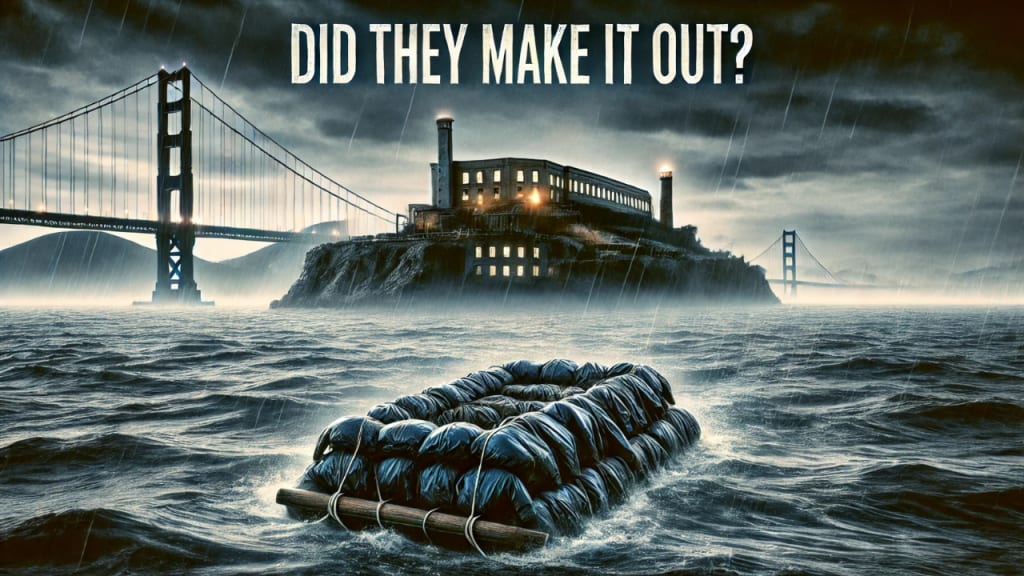
Alcatraz—"The Rock"—was supposed to be unbreakable. It housed the most dangerous, the most notorious, the ones no other prison dared to hold. Locked away on a desolate island, surrounded by icy, shark-infested waters, escape was unthinkable. But in 1962, three bold prisoners turned the impossible into a thrilling reality, pulling off one of the greatest prison breaks in history.
Armed with nothing more than spoons, raincoats, and a wild determination to outsmart the system, these men didn’t just dream of freedom—they engineered it. The details of their daring escape have baffled the FBI and inspired endless speculation. How did they do it? And more importantly... did they make it?
Grab your life jacket, because we’re about to dive into the mind-blowing story of how three prisoners tried to outwit Alcatraz and vanish into the night, leaving behind a mystery that still haunts The Rock to this day.
Life on The Rock: What Made Alcatraz "Inescapable"?
Before we get into the details of the escape, let's talk about Alcatraz itself. Located smack dab in the middle of San Francisco Bay, Alcatraz was the ultimate prison—built to hold the nation’s most dangerous criminals. It was so secure that even if you managed to slip past the guards, you’d still have to face the freezing, shark-infested waters (OK, maybe not as shark-infested as Hollywood would have you believe, but still freezing).
Nicknamed “The Rock” for good reason, Alcatraz opened as a federal prison in 1934, and it didn’t take long for it to earn its tough reputation. Al Capone, George “Machine Gun” Kelly, and other big-time criminals called this place home. But despite its notoriety, Alcatraz wasn’t designed to be a cozy resort. The cells were tiny, the conditions were harsh, and the isolation was intense. Basically, it was the place where dreams went to die—except for a few determined inmates who had bigger plans.
By the early 1960s, after decades of operation, Alcatraz still boasted a perfect track record: no successful escapes. A few had tried, and none had made it. The authorities believed that if you did manage to break out, you wouldn’t survive long enough to enjoy your freedom. The currents of San Francisco Bay were unforgiving, and no one thought anyone could swim through those waters and live to tell the tale.
But apparently, Frank Morris and the Anglin brothers weren’t quite so convinced.
Meet the Escape Artists: Who Were Frank Morris and the Anglin Brothers?
So who were these daring escapees? Let’s start with Frank Morris, the brains of the operation. Born in Washington, D.C., Morris had been in and out of prisons for much of his life, mostly for things like bank robbery. But what made Frank Morris different from your average criminal mastermind was his IQ—he was literally a genius, with an IQ reportedly in the 130s. Not exactly the kind of guy to sit idly by, waiting to rot in a cell.
Then there were the Anglin brothers, John and Clarence. These guys were also career criminals, specializing in bank robbery (hey, it was a popular career choice in the early 20th century). The Anglin brothers were originally from Georgia, but after a few too many heists, they found themselves incarcerated at Alcatraz.
Frank Morris met the Anglin brothers in prison, and together, they formed the ultimate trio. The men shared one thing in common: they weren’t content with spending the rest of their days staring out at the San Francisco skyline from behind bars. Instead, they set their sights on freedom. And why not? Alcatraz might have been called inescapable, but the trio figured they had a shot.
Planning the Perfect Escape: How They Pulled It Off (Or Did They?)
Here’s where things get really interesting. Frank Morris, being the brilliant strategist he was, spent months planning their escape. And believe it or not, the men didn’t use any high-tech equipment or Hollywood-style gadgetry. Instead, they relied on good old fashioned creativity and, yes, spoons.
Yep, spoons. You see, their cells had ventilation grates, and every night, the men worked quietly and slowly to widen the holes around the grates using stolen spoons from the prison cafeteria. Once they’d made the holes big enough, they were able to squeeze through into the utility corridors behind their cells—out of sight of the guards.
But they didn’t stop there. The real genius was in the details. To keep the guards from noticing they were gone at night, the men crafted paper-mâché heads, complete with real human hair (which they’d sneakily collected from the barbershop). These decoys were placed in their beds to make it look like they were sound asleep. Imagine the guard walking by, seeing what looked like a peacefully snoozing inmate, and thinking nothing of it. Classic misdirection!
How 3 Men Escaped the "Unescapable" Prison. You'll definitely enjoy this!
Once out of their cells, they crawled through the utility corridors, climbed up to the roof, and made their way to the shoreline. But how do you cross freezing water without turning into a human popsicle? Simple: build a raft. The men ingeniously stitched together makeshift life vests and a raft out of raincoats—yes, raincoats. Morris and the Anglin brothers had secretly collected over 50 raincoats for their inflatable vessel.
On the night of June 11, 1962, they made their move. Frank Morris, John Anglin, and Clarence Anglin left their cells behind, crawled out through the vents, and set off on their daring voyage to freedom. By morning, the guards had no idea the men were gone. When they finally discovered the empty cells and the lifelike decoy heads, it was too late—the men had vanished.
The Aftermath: Did They Sink or Swim?
Now, here’s where the story gets murky. Authorities quickly launched a massive search effort, scouring the bay and the surrounding areas, but they didn’t find a trace of the escapees. Were the men successful in their daring escape, or did the treacherous waters claim them?
Several items were found floating in the bay—some personal belongings, a paddle, and part of the raincoat raft. But as far as bodies or survivors? Nada. Zip. Zilch. The FBI concluded that the men had likely drowned, but since no bodies were ever recovered, the case remained unsolved.
Over the years, bits of evidence would trickle in—rumored sightings, anonymous letters, even a photo that allegedly shows the Anglin brothers alive in Brazil in the 1970s. The Anglin family has maintained that John and Clarence survived the escape, while the FBI kept the case open for decades before officially closing it in 1979.
Theories, Sightings, and What Happened Next
Of course, with such an audacious escape, theories abound. Some believe that Frank Morris and the Anglin brothers made it safely to shore, disappearing into the world and living the rest of their lives under new identities. Others think they were swept away by the unforgiving currents, their bodies lost to the sea.
One popular theory suggests that the brothers fled to South America, specifically Brazil. In 2015, a photo surfaced that allegedly shows John and Clarence Anglin alive and well in Brazil, 13 years after the escape. The picture was analyzed by experts, and while some believe it to be genuine, others dismiss it as wishful thinking.
Then there’s the letter. In 2013, a letter was sent to the San Francisco Police Department, supposedly written by John Anglin. In it, the writer claimed that he and his brother had survived the escape, but John was now sick and willing to turn himself in exchange for medical treatment. The FBI tested the letter for fingerprints and DNA but couldn’t conclusively prove it was authentic. So, the mystery continued.
Meanwhile, the escape continues to be one of the most talked-about prison breaks in history, with TV shows, documentaries, and even movies (like Escape from Alcatraz starring Clint Eastwood) fueling the fascination.
Conclusion: Did They Really Escape?
The Alcatraz prison escape remains one of the greatest unsolved mysteries of the 20th century. Whether Frank Morris and the Anglin brothers are sipping piña coladas on a beach somewhere (as we like to imagine) or their bones lie at the bottom of San Francisco Bay, one thing is for sure—they pulled off one of the most daring, ingenious prison breaks of all time.
So, next time you're strolling along Fisherman’s Wharf in San Francisco, keep an eye out for some elderly sunbathers who might just have a crazy story to tell. The real question is: would you recognize them if you saw them?
About the Creator
Keep reading
More stories from Marveline Merab and writers in Criminal and other communities.
The BIZZARE Story of Vere St. Leger Goold
In the glamorous world of Monte Carlo, where wealth, high society, and luxury define the scenery, few stories stand out as darkly captivating as the life and crime of Vere St. Leger Goold. A name that once glittered in the annals of sports history, Goold's legacy would not be his Wimbledon triumph but rather his brutal involvement in one of the most infamous murders of the 19th century. From the tennis courts to the courtroom, Goold's tale is a tragic tale of ambition, greed, and ruin. But how did a Wimbledon champion fall from grace so spectacularly? Let’s take a closer look at the fascinating, and at times unbelievable, story of Vere St. Leger Goold and the Monte Carlo murder that rocked Europe.
By Marveline Merababout a year ago in Criminal
Oklahoma Murder for Hire
Murder for hire in 1988 must have been a real monster of a time to find for a woman who was bored, and just lazy. A woman that claimed she was abused, knew how to work a young man up, back in those days it was much easier to find “a knight in shining armor”. Men all over wanted to be one, no man how scuzzy they really were.
By Cassie Moore2 days ago in Criminal
Donald Trump and the Iranian File: Policies, Tensions, and Public Questions
Donald Trump and the Iranian File: Policies, Tensions, and Public Questions Donald Trump’s approach to the Iranian file marked one of the most controversial chapters in modern US foreign policy. During his presidency, relations between the United States and Iran shifted dramatically, moving away from diplomacy toward pressure and confrontation. Trump’s decisions reshaped the Middle East landscape, affected global energy markets, and sparked intense debate both inside and outside the United States. Understanding Trump and the Iranian file requires examining his strategy, its consequences, and the questions people most frequently ask.
By America today 4 days ago in Criminal




Comments
There are no comments for this story
Be the first to respond and start the conversation.