
The Hidden Dangers of Untreated Severe Mental Illness: A Call for Stricter Intervention and Accountability
How Society’s Inaction and Legal Loopholes Enable Harm and Exploitation
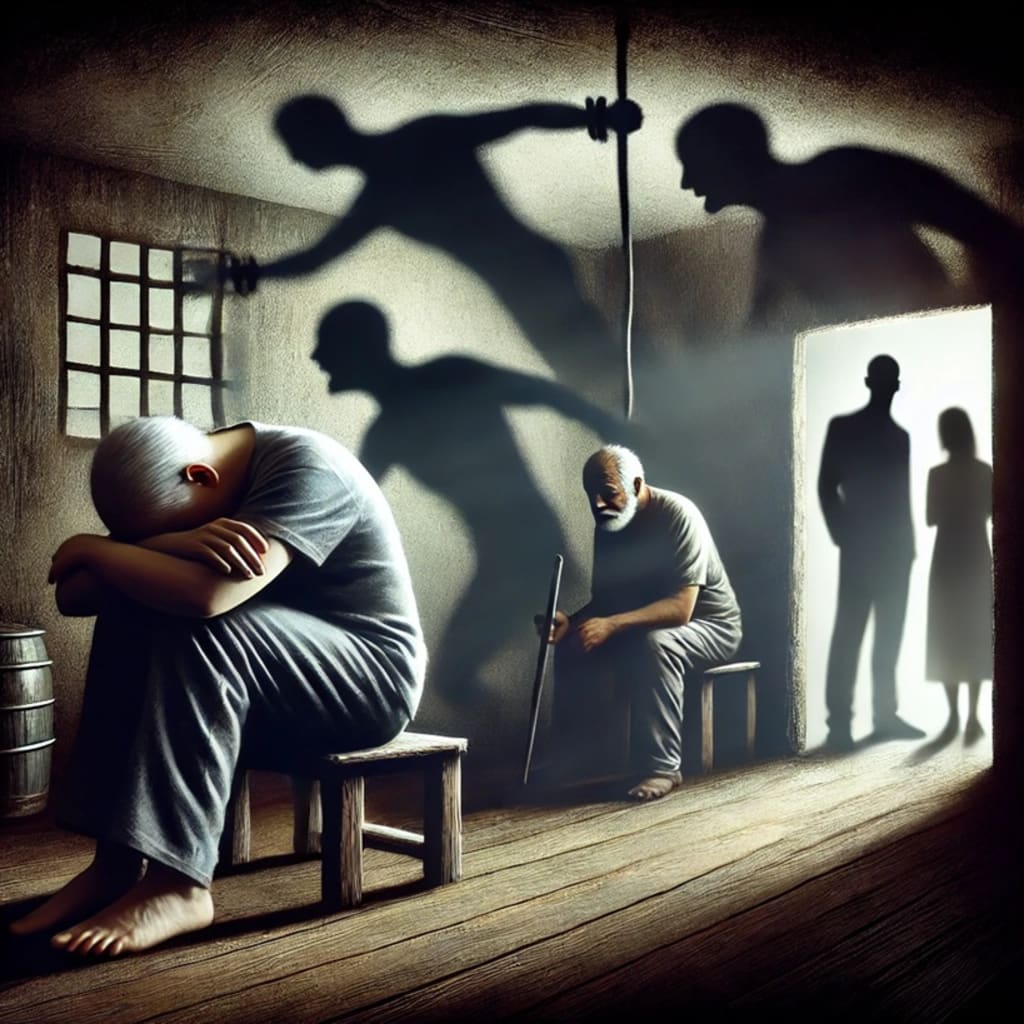
It is deeply concerning that there is no effective mental health assessment to accurately identify individuals with severe mental health issues. If this issue continues to be neglected, those under the care of such individuals could face serious harm, including abuse or even death. The lack of proper regulations by mental health authorities to identify and provide necessary treatment to mentally challenged individuals is alarming. Determining whether they are capable of managing their condition and safely integrating into society is a complex challenge. Allowing such individuals to live freely without adequate support and supervision can lead to significant problems, as many may not recognize the importance of seeking or adhering to proper treatment.
What society fails to recognize is that such individuals often exert control over others, treating them like prisoners and forcing them to comply with their demands, including taking over their financial affairs. This is truly alarming because many do not perceive it as a crime but rather as an unfortunate reality of life. For instance, when these individuals have children or elderly dependents, the consequences can be devastating. By the time law enforcement intervenes, it is often too late. Society’s passive acceptance of their refusal to seek mental health treatment leaves victims unprotected. In doing so, we inadvertently enable their harmful actions and, without realizing it, accelerate the suffering or even death of those under their control.
The issue becomes even more critical when individuals suffering from severe mental health conditions manipulate or exploit legal loopholes to maintain control over others. Some may use emotional blackmail, financial manipulation, or even physical intimidation to silence those who might expose their actions. The legal system, often slow to act in these cases, further compounds the problem. Victims are frequently left without adequate protection, as proving mental incompetence or coercion is not always straightforward.
Did you know that witnessing a crime or knowing something is illegal but choosing to ignore it can also be a crime? Let me list down the regulations for you:
1. **Failure to Report a Crime (Mandatory Reporting Laws)**
In many countries, certain professionals (like doctors, teachers, and social workers) are legally required to report abuse, neglect, or exploitation, especially involving children, the elderly, or disabled individuals.
- Failing to report in these cases can lead to fines or criminal charges.
- Some places have Good Samaritan laws that encourage people to report crimes without fear of legal consequences.
2. **Criminal Negligence**
- If someone knowingly ignores or fails to prevent harm, they can be held responsible.
- Criminal negligence laws apply when a person’s inaction leads to serious harm or death, even if they did not directly commit the crime.
3. **Aiding and Abetting / Complicity**
- If someone actively supports or helps cover up a crime, they may be charged with aiding and abetting.
- Even just remaining silent in some cases could be seen as complicity, depending on the law.
4. **Elder and Child Abuse Laws**
- Many legal systems have specific protections for vulnerable people (children, elderly, disabled).
- Failing to act when witnessing abuse or financial exploitation can be punishable by law.
Ignoring or protecting a criminal by refusing to report their actions is not just morally wrong—it can also be a crime. Many people remain silent out of fear, uncertainty, or the belief that it is not their responsibility. However, by doing so, they unknowingly enable harm to continue, putting more lives at risk.
Society must also address the stigma surrounding mental health. Many individuals with mental health disorders are not dangerous and should not be unfairly judged. However, those with severe and untreated conditions who pose a risk to others must be monitored and given the necessary care. Governments should implement stricter mental health evaluations, particularly for individuals in caregiving positions. Routine psychological assessments should be mandatory for those responsible for vulnerable individuals, such as children or elderly family members.
Raising awareness about this issue is crucial. Society must understand that speaking up can prevent further suffering and even save lives. If you suspect abuse, exploitation, or any form of criminal behavior, it is essential to take action before it is too late. Reporting to the authorities, seeking guidance from legal aid organizations, or reaching out to victim support groups can make a significant difference. Remember, staying silent does not protect anyone—it only allows injustice to thrive.
We must all take responsibility for ensuring that individuals with severe mental illnesses receive the care they need while also preventing them from causing harm to others. Governments, mental health professionals, and communities must work together to develop better intervention strategies. Only then can we create a society where both vulnerable individuals and those around them are protected from harm.
About the Creator
Keep reading
More stories from Rosemarie Chung and writers in Criminal and other communities.
The Irony of AI Detection in Writing
One day, while browsing YouTube, I came across a woman discussing how to earn money through writing on Vocal. She not only explained the process but also introduced tools to help improve writing. Curious, I followed her advice and rewrote the content of a video into an article—summarizing its key points and sharing my thoughts. Since I wasn’t copying word-for-word but simply discussing the video’s story, I assumed this was completely acceptable.
By Rosemarie Chung11 months ago in Education
Inside The Br@ tal Methods Of N@ zi Secret Police GESTAPO
They worked deep undercover with a name feared as words moved across Nazi occupied Europe. Gestapo: short form of Geheime Staatspolizel, or Secret State Police: the steel fist of Hitler and his machine of terror, entrusted with the job of tracking down foes of the Reich. However their actions behind the scenes were more terrible than many would ever imagine. In contrast to ordinary police, Gestapo never faced any supervision, did not present any warrant, and acted freely. Their methods was cruel: they could arrest a person because somebody whispered something, because a neighbour pointed an accusing finger, even because he shared a joke. Upon arrest individuals just vanished off the face of the earth with some never being heard of once again... (more)
By Live World Stories5 days ago in Criminal
When Custody Becomes Commerce
Prison Blood, Political Access, and the Quiet Economy of Discretion (1960–2026) There is a moment that comes in long investigations when the facts stop behaving like isolated events and begin to line up. Not because someone is forcing them into a theory, but because they keep repeating the same shape.
By SunshineChristinaa day ago in Criminal




Comments