
The Haunting of Stanford Chapel: The Murder of Arlis Perry
A young woman was found murdered in a chapel in a ritualistic killing, positioned in a disturbing manner with candles placed around her body. A decades-old mystery that was only solved recently.

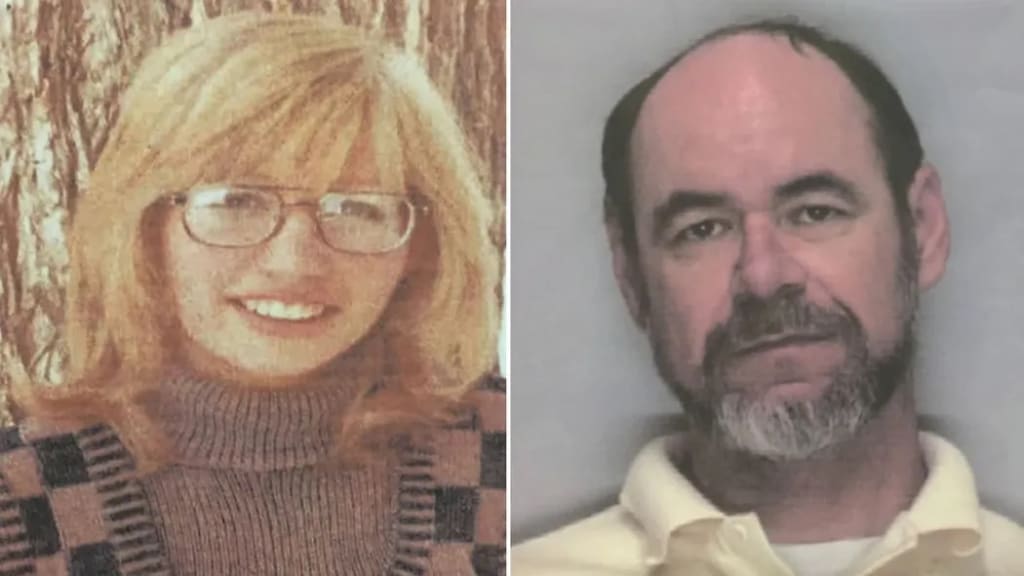
On the night of October 12, 1974, a chilling crime unfolded in one of the most unlikely places — a church. Arlis Perry, a 19-year-old newlywed, was found brutally murdered inside the Memorial Church at Stanford University, her body positioned in what appeared to be a ritualistic display. The case baffled investigators for decades, surrounded by whispers of satanic cults, ritual sacrifices, and eerie coincidences. It would take nearly 44 years before justice would catch up to her killer, but even now, the murder of Arlis Perry lingers as one of the most disturbing crimes in California’s history.
The Bright-Eyed Newlywed
Arlis Perry was the kind of person who radiated warmth. Friends and family described her as kind-hearted, deeply religious, and eager to start a new chapter in life. Originally from Bismarck, North Dakota, she had married her high school sweetheart, Bruce Perry, and moved to California to be with him while he studied at Stanford University.
Though she was excited about her new life, adjusting to California had not been easy. The environment was vastly different from the conservative Christian upbringing she had known. Arlis, a devout Christian, struggled with what she saw as the growing secularism of her surroundings. Some say she had even tried to convert those around her, engaging in faith-based discussions with strangers. This zeal would later feed into some of the more sinister theories surrounding her murder.
Arlis had only been in California for a short while before her tragic death. She had not made many close friends yet, but those who knew her described her as a bright and sincere woman, someone who was passionate about her beliefs but never unkind about them. She often visited the Memorial Church, drawn to its tranquility and spiritual significance. It was a place she found comfort in — a place where she felt safe.
A Late-Night Visit to the Church
The night of October 12 was supposed to be uneventful. Arlis and Bruce had gotten into a minor disagreement about car troubles, something inconsequential, the kind of argument young couples have and forget about the next morning. Arlis decided to take a walk to cool off and, in keeping with her faith, said she wanted to pray at the Stanford Memorial Church.
Bruce assumed she would return soon. It wasn’t unusual for her to seek solitude in prayer. But as time passed and she didn’t come back, worry began creeping in. He left their apartment around 3 a.m. to look for her.
The church doors were locked. He knocked, called her name, and circled the building, peering through the stained-glass windows. Nothing.
Worried but unsure of what else to do, Bruce went home, thinking perhaps she had returned by another route. But as morning arrived and there was still no sign of Arlis, his concern turned to fear.
The Horrifying Discovery
The next morning, a security guard named Stephen Crawford was making his routine rounds when he noticed something was off. The church doors, which he had locked the night before, were slightly ajar.
What he found inside would become the stuff of nightmares.
Arlis’s body was discovered near the altar. She had been brutally murdered in what appeared to be a sadistic and ritualistic fashion. She was lying on her back, her arms outstretched as if in a mock crucifixion. Her jeans had been removed and were placed neatly beside her. A 24-inch altar candle was inserted into her body. Another candle was positioned between her breasts.
She had been strangled and bludgeoned. Her face was swollen from the beating, and there were signs that she had fought her attacker. The brutality of the crime scene stunned investigators. This was not just a murder — it was something far more sinister.
Immediately, the gruesome scene ignited theories of ritualistic sacrifice, satanic cult activity, and revenge killings. But none of it made sense. Who would want to kill a kind-hearted young woman in such a brutal way? And why in a church?
A Case with No Leads
At first, the police had very little to go on. Bruce Perry was investigated but was quickly ruled out — he had no history of violence, no motive, and had been home when Arlis was murdered.
Stephen Crawford, the security guard who discovered her body, was questioned but never formally charged. He claimed he had locked the church at midnight and found nothing suspicious at the time. When he returned in the morning, he was met with the gruesome scene.
Fingerprints at the scene led nowhere. No signs of forced entry suggested Arlis had either let her killer in willingly or that they had been hiding inside the church. Blood evidence was minimal. It was as if the murderer had executed a near-perfect crime, leaving no trace behind.
Detectives followed every lead they could. They interviewed those who had been at the church earlier that evening, as well as nearby residents. But nothing substantial ever emerged. The case, once hot with theories and speculation, soon turned ice cold.
The Satanic Panic and Bizarre Theories
By the 1980s, America was in the grip of the Satanic Panic. Stories of cults performing human sacrifices and secret societies spread like wildfire. Arlis’s murder fit perfectly into these fears.
Rumors swirled that she had been targeted by a cult, possibly from her hometown in North Dakota, after trying to convert its members to Christianity. Some even claimed she had been followed to California.
A particularly chilling theory emerged that linked Arlis’s murder to David Berkowitz, the infamous “Son of Sam” serial killer. Berkowitz, who was arrested in 1977, later hinted that Arlis had been killed as part of a cult ritual — one that he himself had knowledge of. However, no direct evidence ever connected Berkowitz to the crime.
Years passed, and the case went cold.
A Break in the Case — 44 Years Later
For decades, Arlis’s murder remained an unsolved mystery. But in 2018, forensic technology finally caught up with her killer.
New DNA testing on evidence collected from the crime scene pointed to one man: Stephen Crawford — the very security guard who had “discovered” her body.
When authorities arrived at Crawford’s home to arrest him, he refused to go quietly. Instead, he pulled out a gun and shot himself. He died instantly.
The case was officially closed, but questions lingered. Had Crawford acted alone? Had he been waiting inside the church that night, knowing that Arlis would come in to pray? Or was there truth to the rumors of cult involvement? If he had connections to something more sinister, he took those secrets to the grave.
The Legacy of Arlis Perry
Even after the case was solved, Arlis Perry’s murder continues to haunt those who hear about it. The brutality of the crime, the eerie church setting, and the decades of mystery surrounding it make it one of the most chilling true crime cases in modern history.
For her family, justice came late — 44 years too late. But in the end, the truth was unearthed. The monster who had taken Arlis’s life had evaded capture for decades, hiding in plain sight, but he couldn’t run forever.
And while the whispers of satanic cults and dark rituals may never fully fade, one fact remains: Arlis Perry was an innocent woman who walked into a church to pray and never walked out. Her story serves as a haunting reminder that even the safest places can harbor unspeakable horrors.
Thank you for reading!
If you find this piece interesting, please leave a clap, comment, or even subscribe! Your support means a lot to me as a writer!
About the Creator
Victoria Velkova
With a passion for words and a love of storytelling.
Keep reading
More stories from Victoria Velkova and writers in Criminal and other communities.
The Keddie Cabin Murders: A Cold Case That Haunts Time
Nestled in the Sierra Nevada mountains of Northern California, the small, quiet town of Keddie was anything but a place for nightmares. The town was the kind of place where everyone knew each other, and the air was crisp and clean, filled with the scent of pine trees and mountain wildflowers. It seemed like an idyllic place to live, a serene escape for those looking for peace. But on April 12, 1981, a horrifying tragedy would change the face of Keddie forever.
By Victoria Velkova12 months ago in Criminal
Flames of Deception: Boston’s Arson Epidemic
Welcome to The True Crime Reader, the podcast that goes deep into the world of true crime literature, bringing you the stories behind today’s most gripping investigative works and in this episode, we take you to a city under siege—not by an outside force, but from within.
By Kristen Barenthaler5 days ago in Criminal
Rachel Reviews: The Spiral Archive by Pieter Hendrik
It's difficult for me to know where to start with a review of this book as it was, for me, an entirely unique experience and one that I'll probably never have again. I don't want that to be interpreted as unenjoyable but it has left me scratching my head a little and ruminating on its content, its themes and its characters.
By Rachel Deeming3 days ago in BookClub


Comments
There are no comments for this story
Be the first to respond and start the conversation.